
Pharmacist Responsibility for Reporting Generic Drug Problems: A Practical Guide
 May, 27 2026
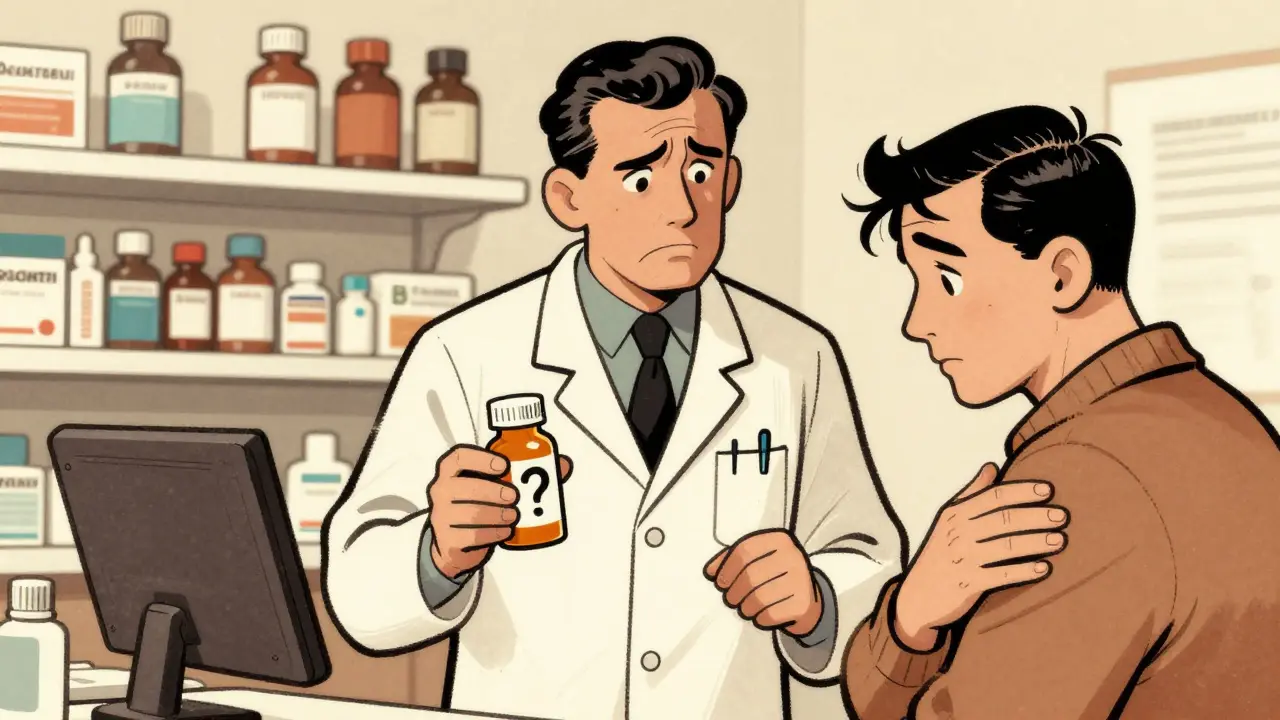
You hand a patient a bottle of generic metoprolol. Two weeks later, they call you back. Their heart rate is erratic, and they feel dizzy-symptoms they never experienced on the brand-name version. You suspect the generic isn't working right. What do you do? Do you shrug it off as a rare side effect? Or do you pick up the phone and report it?
This scenario highlights a critical gap in our healthcare system. Pharmacists are the frontline experts who dispense nearly 90% of all generic medications in the United States. Yet, despite being in the best position to spot problems, we contribute less than 3% of all adverse event reports to the Food and Drug Administration (FDA). This article breaks down your professional responsibility, the legal landscape, and the practical steps you need to take when you suspect a generic drug problem.
The Legal Reality: Voluntary but Vital
Let’s clear up a common misconception first. Under federal law, specifically the Federal Food, Drug, and Cosmetic Act and the 2013 FDA Safety and Innovation Act, there is no mandatory requirement for individual healthcare professionals to report adverse drug events (ADEs). The FDA encourages reporting through its MedWatch program, but it does not compel pharmacists to file reports.
However, "not legally required" does not mean "not professionally responsible." The American Society of Health-System Pharmacists (ASHP) Guidelines, updated in April 2022, explicitly state that medication safety monitoring and adverse event reporting are fundamental professional responsibilities. Some states have taken this further. For example, the California State Board of Pharmacy requires pharmacists to maintain a system for identifying and reporting adverse reactions. Twenty-eight states now incorporate specific reporting expectations into their board regulations, with four states (California, Illinois, Massachusetts, and New York) mandating reports for serious events.
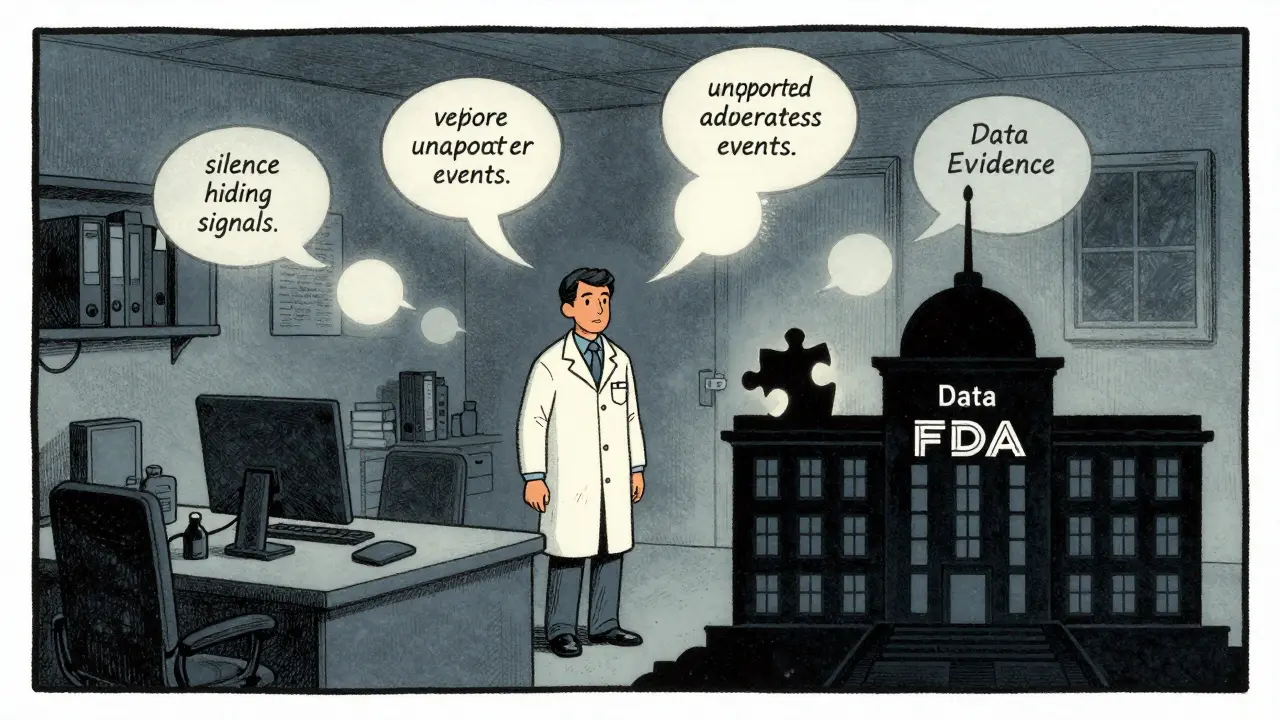
Why does this matter? Because silence hides signals. When pharmacists don’t report, the FDA misses crucial real-world data about how generics perform outside of controlled clinical trials.
Understanding Therapeutic Inequivalence
Most pharmacists know that generic drugs must be bioequivalent to their brand-name counterparts. But what happens when they aren’t? The FDA defines therapeutic inequivalence as a situation where a generic product fails to demonstrate bioequivalence in clinical practice, even if it meets regulatory standards during approval.
This is distinct from a simple side effect. It’s when a patient switches from Brand X to Generic Y and experiences a loss of efficacy or new toxicity that wasn’t present before. The FDA’s Office of Generic Drugs, established in 2015 under the Generic Drug User Fee Amendments (GDUFA), actively investigates these claims. In fact, pharmacist reports of therapeutic inequivalence are considered particularly valuable because they provide real-world evidence that might have been missed during the Abbreviated New Drug Application (ANDA) review process.
If you see a pattern-a patient struggles with one manufacturer’s generic but thrives on another-you are witnessing potential therapeutic inequivalence. This is exactly what the FDA wants to hear about.
Who Is Responsible for Reporting?
Here is where things get tricky. The 1984 Hatch-Waxman Amendments require generic manufacturers to keep their labeling identical to the reference listed drug (the brand name). This creates a legal quagmire. The Supreme Court’s 2011 decision in PLIVA v. Mensing ruled that generic manufacturers cannot be held liable for failure to warn because they can’t change their labels independently.
This preemption has had unintended consequences. A 2020 study by Duke University researchers found that adverse event reports for generic drugs dropped by 17.3% in the three years following this decision. Why? Because liability shifted, and reporting incentives diminished. Now, the burden falls heavily on healthcare providers-especially pharmacists-to fill the data void.
Brand manufacturers often receive reports for products that were actually dispensed as generics, leading to data attribution errors. If you don’t specify that the product was generic, the signal gets lost in the noise. Your report needs to be precise to help the FDA identify the specific generic manufacturer involved.
How to Report: The MedWatch Process
Reporting doesn’t have to be a bureaucratic nightmare. The FDA’s MedWatch Form 3500 (currently version 4.1) is the standard tool. You can submit reports online via the MedWatch portal, which was updated in April 2023 to include a specific "generic drug concern" category. This makes it easier to flag issues related to therapeutic inequivalence, manufacturing quality, or labeling discrepancies.
To ensure your report is actionable, you must include four key data elements:
- An identifiable patient (or at least enough detail to follow up)
- A suspect drug (include the National Drug Code [NDC] and lot number)
- An adverse event (specific clinical details, not just "patient felt bad")
- An identifiable reporter (you)
For serious adverse events-those that are fatal, life-threatening, require hospitalization, or cause permanent disability-you should aim to submit within 15 calendar days of initial receipt. The FDA emphasizes that reports stating only "a patient experienced an injury" without further details are insufficient. Be specific. Did the blood pressure spike? Did the seizure threshold lower? Provide the clinical context.
| Feature | Serious ADE | Non-Serious ADE |
|---|---|---|
| Definition | Fatal, life-threatening, hospitalization, disability, congenital anomaly | Mild symptoms, no permanent harm, no hospitalization |
| Reporting Urgency | Within 15 calendar days | As soon as feasible, but no strict deadline |
| Clinical Impact | Immediate intervention often required | Monitoring or minor adjustment may suffice |
| Example | Generic warfarin leads to intracranial hemorrhage | Generic ibuprofen causes mild stomach upset |
Overcoming Barriers to Reporting
We know you’re busy. A 2023 Pharmacy Times survey of 1,247 community pharmacists revealed that 68.4% cite lack of time as the primary barrier to reporting. Another 52.1% are unsure if an event meets the criteria for reporting, and 41.7% struggle to determine if the issue is brand-specific or generic-specific.
These are valid concerns. However, consider the alternative. The FDA’s Adverse Event Reporting System (FAERS) contains over 25 million reports. Reports mentioning generic drug issues jumped 131% between 2015 and 2022. Yet, pharmacists still represent a tiny fraction of reporters. If you notice a pattern across multiple patients, your report could trigger a broader investigation. In 2022, the FDA’s Generic Drug Program received 1,842 reports of therapeutic inequivalence, with 387 coming from pharmacists. Those reports led to 147 additional reviews and 12 safety communications to healthcare providers.
To streamline the process, use the FDA’s MedWatch Training Portal. Module 4, updated in January 2023, offers quick guidance on reporting for healthcare professionals. Keep a template in your pharmacy software for common generic issues. Document the NDC, lot number, and manufacturer immediately upon dispensing. This small habit saves hours when an adverse event occurs.
The Professional Imperative
At the end of the day, reporting generic drug problems is part of your duty of care. The Institute for Safe Medication Practices (ISMP) includes adverse event reporting as a core component of their 2023 Medication Safety Self-Assessment for Community Pharmacies. Pharmacies scoring below 75% on reporting practices are flagged for significant safety concerns.
You are the last line of defense before a patient takes a medication. You see the outcomes firsthand. When a generic fails, it’s not just a business issue; it’s a patient safety issue. By reporting, you contribute to a safer supply chain for everyone. You help the FDA identify problematic manufacturers, update guidelines, and protect future patients. Don’t let uncertainty stop you. If you suspect a generic drug problem, report it. Your voice matters.
Is it legally mandatory for pharmacists to report adverse drug events?
Under federal law, no. The FDA encourages reporting through the MedWatch program, but there is no national mandate for individual healthcare professionals. However, some states like California, Illinois, Massachusetts, and New York have implemented mandatory reporting requirements for serious adverse events. Additionally, professional guidelines from ASHP and other bodies consider it a fundamental responsibility.
What is therapeutic inequivalence in generic drugs?
Therapeutic inequivalence occurs when a generic drug fails to demonstrate bioequivalence in clinical practice, despite meeting regulatory standards during approval. This means a patient may experience different efficacy or safety profiles compared to the brand-name drug or another generic manufacturer’s version. It is a key focus for the FDA’s Office of Generic Drugs.
How do I report a generic drug problem to the FDA?
You can report via the FDA’s MedWatch program using Form 3500. The online portal allows you to select "generic drug concern" and specify issues like therapeutic inequivalence or manufacturing quality. Ensure you include the National Drug Code (NDC), lot number, manufacturer name, and detailed clinical information about the adverse event.
Why are pharmacists underrepresented in adverse event reporting?
Despite dispensing 90% of generic prescriptions, pharmacists contribute less than 3% of FDA adverse event reports. Primary barriers include lack of time (cited by 68.4% of pharmacists), uncertainty about reporting criteria, and difficulty attributing issues to specific generic manufacturers due to labeling complexities.
What information is required for a valid MedWatch report?
A valid report must include an identifiable patient, a suspect drug (with NDC and lot number), a specific adverse event description, and an identifiable reporter. Vague statements like "patient felt bad" are insufficient. For serious events, submission within 15 days is recommended.