
Wholesale Economics: How Generic Drug Distribution and Pricing Really Work
 Aug, 14 2026
When you pick up a prescription for a generic medication, the price tag on the bottle tells only a fraction of the story. The real economic drama happens in the background, within a complex web of manufacturers, wholesalers, pharmacies, and insurance payers. For years, the assumption was that generic drugs were cheap because they lacked expensive research and development costs. But if you look closer at the numbers, you find a system where intermediaries often capture more value from generics than the companies that actually make them.
This isn't just about supply chain logistics; it's about power dynamics. The modern pharmaceutical wholesale system is dominated by a few massive players who control the flow of medications from factory floors to pharmacy shelves. Understanding this ecosystem is crucial for anyone trying to grasp why drug prices fluctuate, why shortages happen, and who really profits when you buy a $5 bottle of pills.
The Big Three and Market Concentration
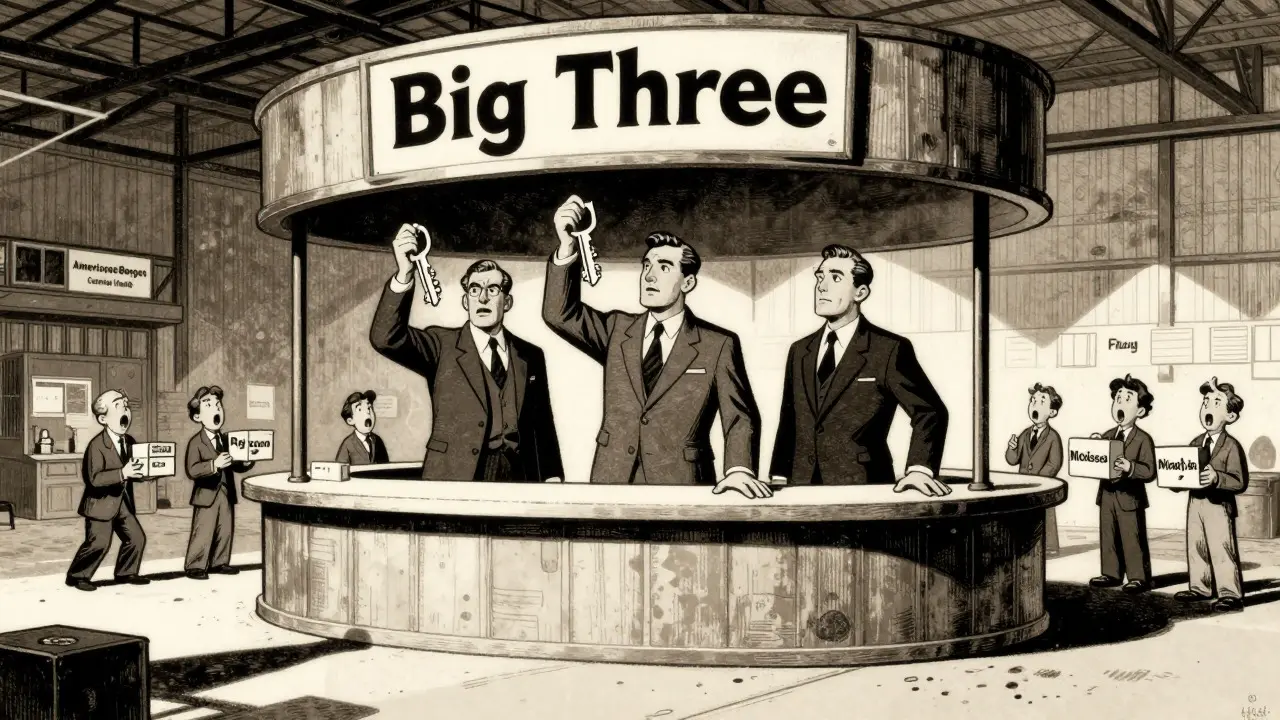
The U.S. pharmaceutical wholesale market is not a free-for-all; it is an oligopoly. As of 2023, three companies-AmerisourceBergen, Cardinal Health, and McKesson-collectively control approximately 85% of the market. This concentration gives these "Big Three" wholesalers immense bargaining power against both manufacturers and retail pharmacies.
This structure didn't happen overnight. It evolved significantly after the passage of the Prescription Drug Marketing Act of 1987, which formalized the three-tier distribution system involving manufacturers, wholesalers, and pharmacies. By streamlining how drugs move through the supply chain, the act inadvertently paved the way for consolidation. Today, smaller distributors struggle to compete with the logistical efficiency and volume discounts offered by the giants.
Why does this matter? Because when three entities control nearly nine out of ten dollars in wholesale sales, they dictate the terms of engagement. They can demand deeper discounts from generic manufacturers in exchange for shelf space and guaranteed volume. This dynamic shifts the profit center away from production and toward distribution.
The Profit Inversion: Generics vs. Brand Names
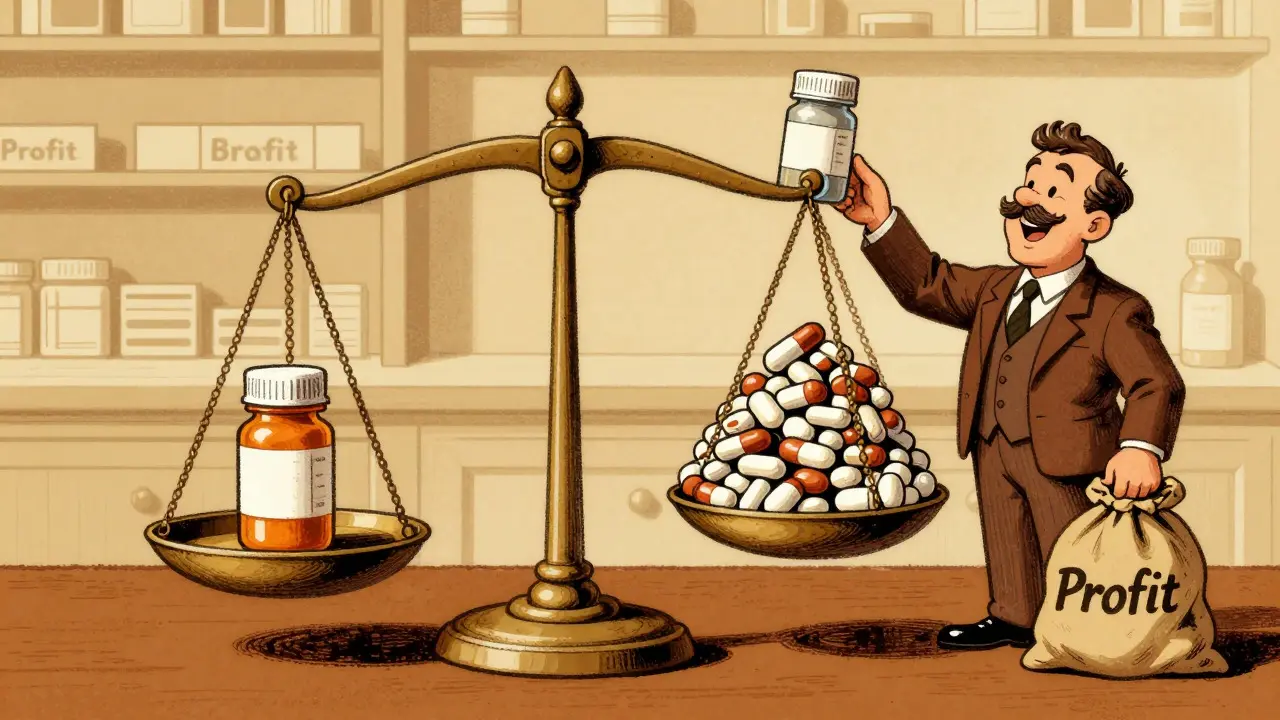
Here is the counterintuitive part of wholesale economics: while branded drugs generate more total revenue, generic drugs often generate more profit for wholesalers and pharmacies. A landmark study by the USC Schaeffer Center, led by Dr. Neeraj Sood, revealed a stark disparity in how money flows through the system.
| Entity | Gross Margin (Branded) | Gross Margin (Generic) | Profit per Unit Spent (Branded) | Profit per Unit Spent (Generic) |
|---|---|---|---|---|
| Manufacturers | 76.3% | 49.8% | $58 | $18 |
| Wholesalers | Low | High | $3 | $32 |
| Pharmacies | Low | 42.7% | $3 | $32 |
Notice the inversion. Manufacturers capture the lion's share of gross margins on branded drugs (76.3%), but their margin drops to 49.8% for generics. Meanwhile, wholesalers and pharmacies see their profitability skyrocket with generics. Wholesalers make eleven times as much profit on every dollar spent on generic drugs compared to brand-name drugs ($32 versus $3). Pharmacies follow a similar pattern, making almost twelve times as much on generics.
This creates a misalignment of incentives. Wholesalers have a financial motive to push generic alternatives over branded ones, not necessarily because they are clinically superior (though they are bioequivalent), but because the economics favor the distributor. This pressure forces generic manufacturers to offer significant price concessions to win supply contracts, further squeezing their own margins.
Pricing Strategies and Volume Discounts
How do wholesalers set these prices? They don't use a one-size-fits-all approach. Instead, they employ sophisticated pricing strategies designed to maximize volume and lock in long-term relationships. The four primary methods include cost-plus, market-based, value-based, and tiered pricing.
Tiered pricing is particularly common in generic distribution. It rewards bulk purchasing with lower per-unit costs. For example, a wholesaler might charge $10 per unit for orders under 100 units, but drop the price to $8 per unit for orders exceeding 100 units. Some structures go even further, offering 15-25% discounts for orders above 500 units. This encourages pharmacies and health systems to consolidate their purchasing with fewer suppliers, reinforcing the dominance of the Big Three.
Cost-plus pricing involves adding a fixed markup to the cost of goods sold (COGS). If the COGS is $10 and shipping is $2, the wholesaler might set the price at $12 or higher to ensure a target profit margin. However, this method ignores market demand. In contrast, market-based pricing aligns with competitor rates, ensuring competitiveness but creating uncertainty around margins. Value-based pricing is less common in generic wholesale because the products are commoditized; there is little perceived difference between one manufacturer's metformin and another's.
Shipping costs are a critical hidden factor. As noted by industry analysts, if the COGS is low but logistics are expensive, the wholesale price must absorb those costs. Inefficient logistics can erase thin margins, which is why the Big Three invest heavily in automated distribution centers and data analytics to optimize delivery routes.
Volatile Markets: Shortages and Inflation
The stability of generic pricing is fragile. For years, generic drug prices trended downward due to intense competition among manufacturers. However, recent years have seen dramatic shifts. During the COVID-19 pandemic, inflationary pressures pushed prices up in 2020. This was followed by a deflationary cycle in 2021 and 2022 as the market stabilized.
But in 2023, the trend reversed again. According to Adam J. Fein, President of the Drug Channels Institute, the emergence of widespread generic drug shortages triggered "pockets of inflation." When supply chains break down, the leverage shifts back to manufacturers. Wholesalers can no longer demand deep discounts if there is only one source for a critical medication. This volatility highlights the risks of relying on a highly concentrated distribution network.
The Commonwealth Fund identified four key areas where wholesalers influence this volatility:
- Setting generic drug prices through contract negotiations.
- Leveraging list price increases from manufacturers.
- Competing in specialty drug distribution, which offers higher margins.
- Affecting drug shortages through inventory management practices.
Shortages are not just inconveniences; they are economic events. When a drug becomes scarce, its price spikes, disrupting the predictable margin models that wholesalers rely on. This unpredictability makes long-term planning difficult for all parties involved.
The Role of PBMs and Insurance Payers
You cannot discuss wholesale economics without mentioning Pharmacy Benefit Managers (PBMs). These entities sit between insurers and pharmacies, negotiating rebates and setting formularies. PBMs also benefit disproportionately from generic drugs. Research shows that PBMs make four times as much on generic drugs compared to brands.
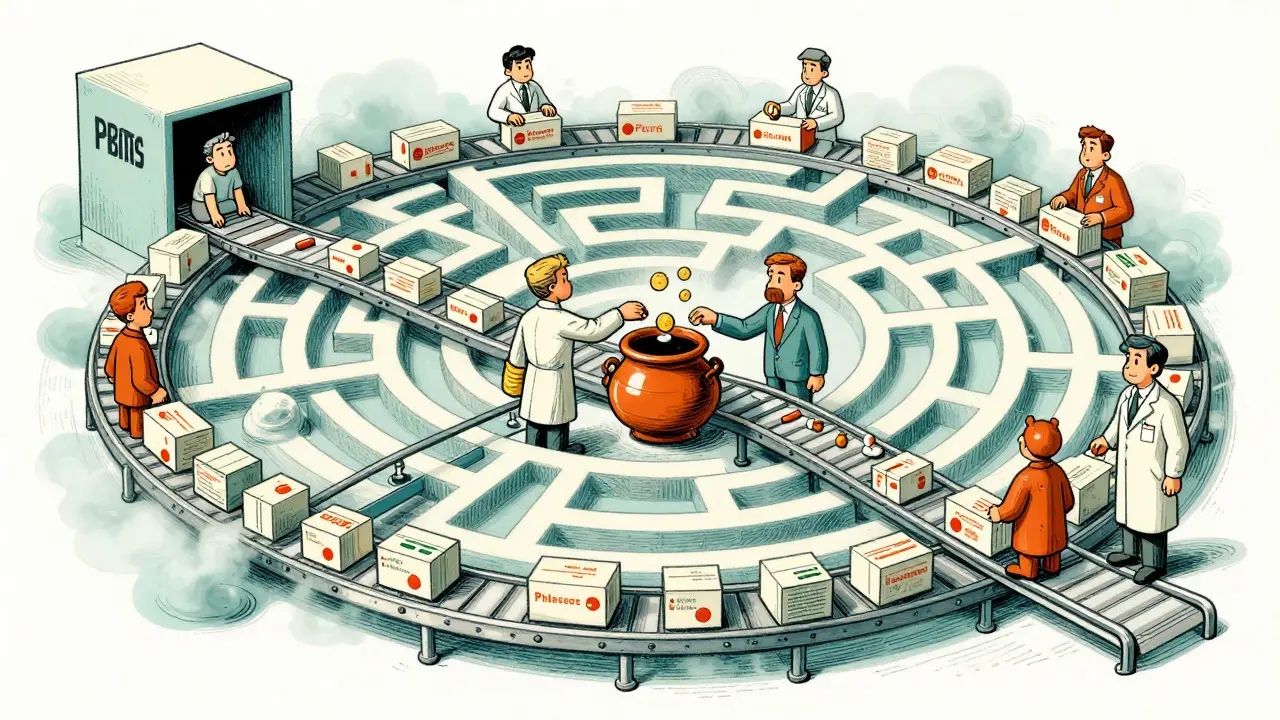
The interaction between PBMs and wholesalers is complex. PBMs often steer patients toward specific generics based on rebate agreements with manufacturers. Wholesalers then fulfill these prescriptions, earning their margin. This creates a closed loop where the patient pays a copay, the insurer covers the rest, the manufacturer provides a rebate to the PBM, and the wholesaler takes a cut of the transaction. The result is a system where transparency is low, and the true cost of care is obscured.
Critics argue that this lack of transparency allows intermediaries to extract excessive profits. Dr. Sood’s research suggests that greater scrutiny of pricing policies and more competition throughout the distribution system are warranted. Without reform, the current model continues to prioritize distributor profitability over cost containment for consumers.
Future Outlook and Regulatory Scrutiny
As we move into 2026, the landscape is shifting. Regulatory bodies are paying closer attention to the role of wholesalers in driving up drug spending. The Commonwealth Fund predicts increased oversight, particularly regarding how wholesalers handle drug shortages and price setting.
Consolidation is likely to continue, putting further pressure on smaller distributors. At the same time, the rise of specialty pharmaceuticals-high-cost drugs for complex conditions like cancer or autoimmune diseases-is creating new competitive dynamics. Specialty drugs require different handling, storage, and distribution protocols, offering wholesalers a chance to diversify beyond generic commodities.
For healthcare providers and policymakers, the takeaway is clear: the economics of generic drug distribution are not static. They are shaped by market concentration, pricing strategies, and regulatory frameworks. Understanding these forces is essential for navigating the complexities of modern healthcare financing.
Who controls the majority of the U.S. pharmaceutical wholesale market?
The "Big Three" wholesalers-AmerisourceBergen, Cardinal Health, and McKesson-control approximately 85% of the U.S. pharmaceutical wholesale market as of 2023. This high level of concentration gives them significant bargaining power over manufacturers and pharmacies.
Do wholesalers make more money on generic drugs or brand-name drugs?
Wholesalers make significantly more money on generic drugs. According to research from the USC Schaeffer Center, wholesalers earn eleven times as much profit on every dollar spent on generic drugs ($32) compared to brand-name drugs ($3). This is due to higher gross margins and volume-based business models.
What is tiered pricing in wholesale distribution?
Tiered pricing is a strategy where the per-unit cost decreases as the order volume increases. For example, a wholesaler might offer a 5-15% discount for orders exceeding 100 units and 15-25% for orders above 500 units. This encourages buyers to consolidate their purchases with larger suppliers.
Why did generic drug prices become volatile in 2023?
After a period of deflation in 2021-2022, generic drug prices saw pockets of inflation in 2023 due to widespread drug shortages. Supply chain disruptions reduced competition, allowing manufacturers to raise prices and weakening the bargaining power of wholesalers.
How do PBMs affect generic drug pricing?
Pharmacy Benefit Managers (PBMs) negotiate rebates with manufacturers and steer patients toward specific generics. PBMs make four times as much profit on generic drugs compared to brands. Their influence shapes which generics are available and affordable, impacting the overall economics of the distribution chain.
Jw George John Warren
August 15, 2026 AT 21:14Oh, look at us pretending we understand the "complex web" of economics. 🙄 It's not a web, it's a rigged casino where the house always wins and you're just the sucker buying the chips. The article says "intermediaries capture value," but let's be real, they steal it. 💸 They don't deserve a dime of that profit because they do literally nothing except move boxes from Point A to Point B while charging a premium for breathing the same air as the drugs. It’s absolute theater.
Rachel Robinson Interiors
August 16, 2026 AT 23:35This is such an important topic that often gets overlooked in everyday conversations about healthcare costs. It is truly fascinating to see how the margins shift depending on whether a drug is branded or generic. The data presented here really highlights the need for more transparency in the industry so that patients can make informed decisions. Thank you for sharing this insightful analysis with the community!
Jesse Barlau
August 17, 2026 AT 19:44While the points raised regarding market concentration are certainly valid, it is perhaps worth considering that the logistical efficiencies provided by these large wholesalers also contribute to the stability of the supply chain, which is a factor that should not be entirely dismissed when evaluating their overall role in the ecosystem. Furthermore, the regulatory frameworks mentioned earlier have evolved significantly over the past few decades, suggesting that future changes may address some of these concerns without requiring drastic structural overhauls of the current system.
olatunde oluranti
August 18, 2026 AT 15:35Wake up sheeple! The Big Three aren't just companies, they are fronts for deeper organizations controlling our health outcomes through subtle manipulation of supply chains. Why do you think shortages happen exactly when political elections are near? It's not coincidence, it's design. They want you dependent, confused, and broke. The generics are cheap only because they cut corners on purity, trust me I know things you don't. Follow the money, it leads straight to the shadow government. 🕵️♂️
teresa baldini
August 20, 2026 AT 01:16Actually,, the premise that wholesalers are the primary villains is deeply flawed; one must consider the intricate dance of PBMs who hold the true power;; furthermore;; the notion that generics are purely commoditized ignores the nuanced quality differences that exist between manufacturers;; thus;; the argument collapses under its own weight!!
Daniel Cook
August 21, 2026 AT 23:41I guess this makes sense. I've noticed my copays change randomly anyway. Not gonna lie, $32 profit per dollar spent on generics seems insane though. Just watching the chaos unfold from here.
Michael Smith
August 23, 2026 AT 17:30sure yeah the big three control everything and they love making money off your asthma meds lol classic capitalism at work nothing new here just another day in paradise
Eunice Chen
August 25, 2026 AT 17:13i mean its kinda wild how much they make on generics tho like why is it so high? maybe if we had more competition it would go down? just a thought
Usha Ranji
August 26, 2026 AT 01:28It is interesting to note that in many other countries, the distribution model is quite different, often involving more direct negotiations between pharmacies and manufacturers. This comparison might provide valuable insights into potential reforms for the U.S. system. The role of PBMs is particularly complex and warrants further discussion in terms of how they influence patient choice.
sonia rockett
August 26, 2026 AT 18:07Let's fix this NOW! We need immediate action to break up these monopolies before they crush small businesses completely. Everyone needs to speak up and demand better pricing structures today! Don't let them get away with this greed anymore! Fight for your rights! 💪🔥
Ella Mentry
August 27, 2026 AT 18:04Oh honey, you really think you're the first person to figure this out? 😒 I've been saying for years that the whole system is designed to bleed us dry. And don't even get me started on the insurance companies-they're all in on it together. You guys are cute trying to analyze charts while the wolves are eating the sheep. Next time check your pockets before you post. 🙄💅
Saher Ghattas
August 28, 2026 AT 22:31The oligopolistic structure is merely a symptom of deeper systemic failures rooted in deregulatory policies favoring capital accumulation over public welfare. The term 'wholesaler' is a misnomer; they are rent-seekers exploiting informational asymmetries. The market failure here is textbook, yet policymakers remain obtuse. It is not just about price; it is about the extraction of surplus value through artificial scarcity mechanisms.
Darcy Galway
August 30, 2026 AT 16:23In my country, we have similar issues but the government steps in more often. It is sad to see people paying so much for basic medicine. Maybe we can learn from each other and find a better way to help everyone stay healthy without going bankrupt.
Marc-Alexandre Rizzo
August 30, 2026 AT 20:44Look, it's a bit of a circus out there, ain't it? But hey, someone's gotta keep the lights on, right? These big players are like the bouncers at a club-annoying, sure, but they keep the riff-raff out. Let's not throw the baby out with the bathwater. We need a balanced approach, folks, not just shouting matches. Keep it classy, keep it cool, and maybe we'll all end up with a little less stress and a lot more clarity. 🌟