
Teaching Children About Medication Safety at Home and School: A Complete Guide
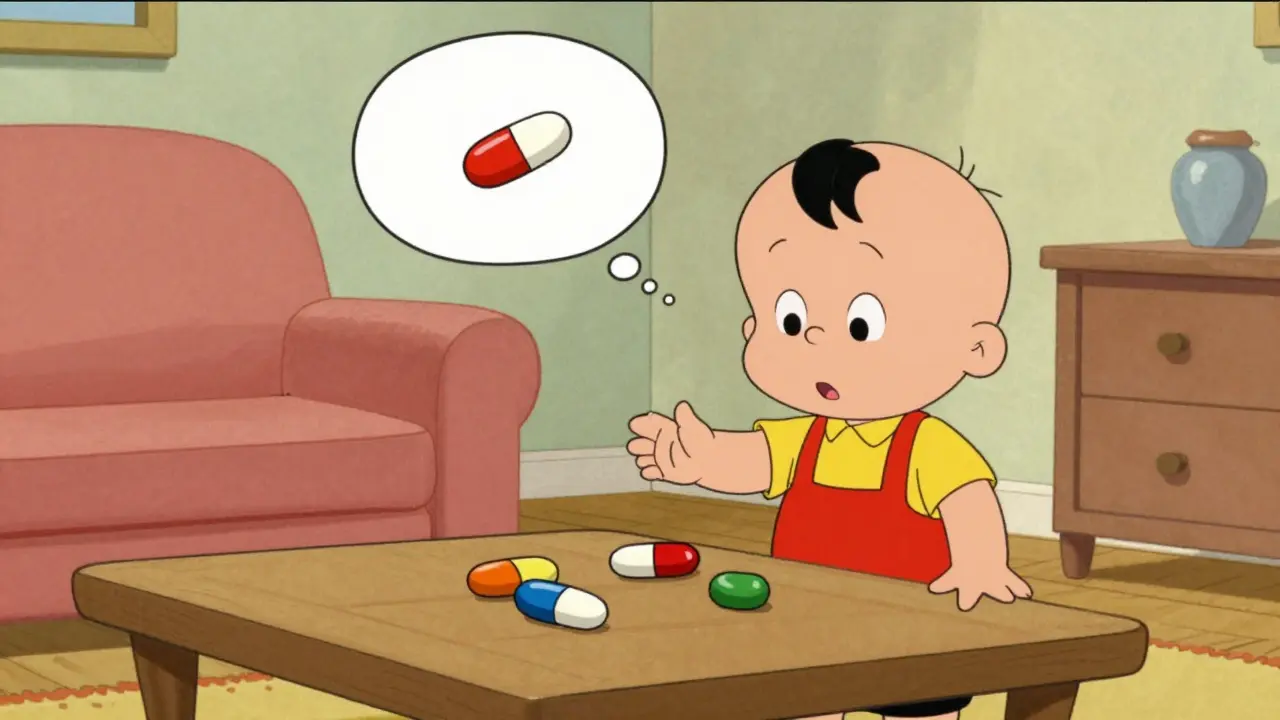 Apr, 10 2026
Teaching kids about medication safety for children isn't about scaring them. It's about giving them the tools to recognize danger and the confidence to ask for help. Whether you're a parent managing a home pharmacy or a teacher coordinating with a school nurse, the goal is the same: moving from accidental ingestion to informed caution. This guide breaks down exactly how to handle these conversations based on your child's age and how to secure your environment to keep them safe.
| Focus Area | Critical Action | Expected Outcome |
|---|---|---|
| Storage | Use locked boxes, not just child-resistant caps | Prevents 67% of ingestions (ages 1-4) |
| Language | Never call medicine "candy" | Reduces ingestion risk by 220% |
| Dosing | Use oral syringes, never kitchen spoons | Eliminates 40-98% measurement error |
| Education | Age-appropriate role-playing | 47% better recognition of meds vs. candy |
Age-by-Age Guide to Medication Safety
Children process information differently as they grow. A toddler needs simple boundaries, while an eight-year-old can handle the logic behind a dosage. Using the developmental milestones suggested by the FDA, you can tailor your approach.Ages 3 to 4: The "Ask First" Phase
At this age, the focus is on immediate action. Children should be taught that if they find a pill or a liquid they don't recognize, they must give it to an adult immediately without tasting it. The rule is simple: only take medicine when a parent or trusted adult gives it to them. It's also important to teach them to report if they see another child playing with a medicine bottle.
Age 5: Ownership and Awareness
Five-year-olds are starting to read and recognize patterns. This is a great time to let them help personalize their own medicine bottles with stickers or their names. They should begin to understand that all medicines must be kept high up and out of reach of younger siblings. They should also know how to tell you if they feel "weird" or worse after taking a dose.
Age 6 to 7: Active Participation
Now you can bring them into the process. Let six-year-olds help you read the label and track the time the medicine was taken. By age seven, children can independently verify a label against the doctor's instructions. A critical lesson here is social modeling: teach them never to take medicine in front of toddlers, as children under four are highly likely to imitate the behavior within seconds.
Age 8 and Beyond: Precision and Logic
By eight, children should understand the concept of weight-based dosing. They should know their current weight and why it matters for the amount of medicine they receive. This is the stage where you transition from "because I said so" to explaining how the medication actually works in the body.
Securing the Home Environment
Many parents rely on child-resistant caps, but these are not child-proof. Data shows that locked storage is significantly more effective, with 86% of parents maintaining safety when using locks compared to only 29% who rely solely on caps.Start by identifying "danger zones." Common culprits include bedside tables, kitchen counters, and purses. These are often where adults keep medications for convenience, but they are precisely where children look. The CDC recommends an "up and away" strategy-storing medications in high cabinets with a physical lock.
Another hidden risk is the "grandparent effect." Many grandparents don't follow the same strict storage rules when children visit, often leaving medications in purses or suitcases. If you have children visiting, it's a good idea to provide a locked box or a designated high shelf for the guests' medications to ensure the environment remains safe.
Navigating Medication Safety at School
School introduces a new layer of complexity because the child is away from their primary caregiver. Whether your child has a chronic condition like asthma or diabetes, or just needs an occasional allergy pill, the protocol must be airtight.The Role of the School Nurse
Ideally, medications are handled by a licensed professional. However, many districts lack full-time nursing staff, especially in rural areas. If your school doesn't have a dedicated nurse, you need to know exactly who is responsible for administration and how that person is trained. Programs like Head Start set a high bar by requiring staff to undergo specific training in consent procedures and side-effect recognition.
Communication and Documentation
Errors often happen during transitions-like when a child moves from one classroom to another. To prevent this, insist on a written medication log. When the school maintains a 100% accurate record of when a dose was given and by whom, the risk of double-dosing or missed doses drops significantly. Ensure the school has your current contact information and a clear set of written instructions that match the pharmacy label exactly.
Practical Tools for Parents and Educators
Knowing what to do is only half the battle; having the right tools makes it happen. Avoid the temptation to use a kitchen spoon for liquid medicine. Pediatric pharmacologists warn that household spoons can lead to measurement errors as high as 98%. Always use a calibrated oral syringe or a dosing cup provided by the pharmacy.For those looking for structured education, the Generation Rx toolkit offers role-playing scenarios that help kids distinguish between candy and medicine. This is vital because 63% of parents struggle with kids mistaking medications for treats. The best approach is a consistent, blunt phrase: "Medicine is not candy."
| Tool | Purpose | Standard/Source |
|---|---|---|
| Oral Syringe | Precise weight-based dosing | Pharmacy-provided / Calibrated |
| Lock Box | Preventing unauthorized access | ASTM F2057-22 Standard |
| Poison Help Number | Immediate emergency guidance | 1-800-222-1222 |
| Medication Log | Tracking administration and timing | School/Home Checklist |
Handling the "Tough Questions"
Children are curious. They will eventually ask, "Why can Daddy take this pill, but I can't?" Avoiding the question or giving a vague answer can actually make the medication more tempting.Instead, use analogies. One effective method is explaining that medicines are like "special tools." Just as a giant hammer is great for a carpenter but too heavy and dangerous for a toddler, some medicines are designed only for adult bodies. Explain that the medicine is made to fix a specific problem in an adult, and if it goes into a child's body, it might "break" things instead of fixing them because the child's body is still growing.
Closing the Adolescent Gap
Most safety programs stop around age ten, but the risk doesn't vanish; it just changes. While toddlers face the risk of accidental ingestion, teenagers face the risk of prescription misuse. Prescription misuse peaks around age 16 and remains a leading cause of unintentional injury death for youth.As your children enter their teens, the conversation needs to shift from "don't touch this" to a discussion about the dangers of sharing medications. Explain the risks of respiratory depression or addiction associated with opioids and the dangers of taking someone else's prescription. This is the time to implement a "drug take-back" routine at home, where you dispose of expired or unused medications at a pharmacy to ensure they aren't found in the back of a cabinet years later.
Why is it dangerous to call medicine "candy" to get a child to take it?
Calling medicine candy creates a dangerous mental association. According to research from the Rocky Mountain Poison and Drug Center, this practice increases the risk of a child intentionally ingesting the medication later because they perceive it as a treat, raising the risk of poisoning by up to 220%.
Are child-resistant caps enough to keep my toddler safe?
No. While they provide a layer of protection, many children can eventually open them, or the caps may not be screwed on tightly. Data shows that locked storage is far more effective, preventing a much higher percentage of accidental ingestions than caps alone.
How should I measure liquid medication for my child?
You should always use an oral syringe or a calibrated dosing cup provided by the pharmacy. Never use a standard kitchen spoon, as these vary wildly in size and can cause dosing errors between 40% and 98%, which can be dangerous depending on the medication.
What should I do if I suspect my child has swallowed medicine?
Immediately call the Poison Help number at 1-800-222-1222. Most poisoning calls occur within an hour of the incident, and immediate professional guidance is critical. Have the medication bottle ready so you can tell the specialist exactly what was ingested and the dosage.
How do I handle medication for a child with a chronic condition at school?
Establish a formal protocol with the school. Ensure the medication is stored with the school nurse or a trained staff member, maintain a detailed medication log, and provide a written doctor's note that matches the pharmacy label. Clearly communicate any potential side effects the staff should watch for.
Next Steps for Parents and Caregivers
If you're feeling overwhelmed, start with these three immediate actions:- Audit your storage: Move all medications from counters and purses into a locked box or a high cabinet.
- Program the number: Save 1-800-222-1222 in every phone in your house and share it with grandparents or babysitters.
- Practice a scenario: Spend 10 minutes this week role-playing with your child: "What do you do if you find a pill on the floor?"
Robin Walton
April 12, 2026 AT 09:10This is such a helpful reminder for all of us. It's easy to forget how curious little ones can be until it's almost too late.
danny Gaming
April 13, 2026 AT 11:45those stats r fake as hell man lol we dont need the govt tellin us how to keep our kids safe in america we did just fine before these fancy lock boxes came along just put the stuff high up and stop overthinkin everything
Chad Miller
April 14, 2026 AT 16:56honestly just common sense people some of u act like this is rocket scence just dont leave pills on the table lol
Ben hogan
April 15, 2026 AT 20:12The sheer banality of this guide is almost impressive. It attempts to quantify parental intuition through a series of arbitrary percentages, as if human safety could be reduced to a spreadsheet. Truly a pedestrian approach to a complex domestic reality.
Suchita Jain
April 17, 2026 AT 15:24I must express my utmost concern regarding the lack of emphasis on the spiritual well-being of the child during such educational processes. One must ensure that the child is not only physically safe but emotionally grounded in truth and discipline, which seems entirely absent from this clinical list of instructions.
Danny Wilks
April 19, 2026 AT 03:13It is quite fascinating to observe how different cultures approach the concept of autonomy in childhood, though in the American context, the shift towards a more clinical, risk-averse parenting style is quite evident in the way these guidelines are structured to minimize every possible variable of human error.
Kelly DeVries
April 19, 2026 AT 21:54omg the grandparent effect is so real lol my grandma literally keeps her heart meds in a little floral purse right on the coffee table and it drives me crazy every time i visit like hello some of us actually care about safety here
Franklin Anthony
April 21, 2026 AT 14:55funny how they want us to buy special locks when the big pharma companies make these pills look like candy on purpose just to keep us dependent and scared lol stay woke people the whole thing is a racket
Simon Stockdale
April 21, 2026 AT 16:34I swear to god the schools are just a mess these days because nobody knows who is actually in charge of the meds and it's just laaaaafable that we gotta fight with the school board just to make sure our kids dont get the wrong dose of an inhaler like come on we are the greatest country on earth why cant we get a simple log book right for once in our lives
Ryan Hogg
April 21, 2026 AT 18:52I remember when I was a kid and I almost swallowed some old pills I found in a drawer and the panic I felt in that moment still haunts me to this day because no one ever talked to me about it. It's just so draining to think about how many kids are going through that right now while their parents are just oblivious to the danger lurking in their own bedside tables. I can't even sleep thinking about the sheer number of emergency room visits mentioned here. It's a nightmare. Truly a nightmare.
Thabo Leshoro
April 23, 2026 AT 10:40The pharmacokinetic profile of pediatric dosing is so critical... especially with narrow therapeutic index drugs!!! One must be so careful with the mg/kg calculations... it's just heart-breaking when mistakes happen... truly...!
Lynn Bowen
April 24, 2026 AT 13:21Using an oral syringe is definitely the way to go, way better than those old spoons.