
Sunscreen Science Explained: SPF, UVA vs UVB, and Daily Protection Guide
 Jul, 14 2026
Most of us think about sunscreen only when we’re planning a beach day or a ski trip. We grab a bottle, slather it on, and feel safe for the day. But here is the hard truth: your skin is taking a beating from ultraviolet radiation every single day, even when it’s cloudy, even in winter, and even if you are sitting behind a window at your desk. The science of sun protection has moved far beyond just preventing that painful red burn. It is now about stopping invisible damage that ages your skin and increases cancer risk long before you ever see a spot.
If you have ever stared at a sunscreen bottle confused by terms like 'SPF 50+', 'Broad Spectrum,' or 'UVA-PF,' you are not alone. The labeling can feel like a foreign language. This guide breaks down exactly what those numbers mean, why the type of filter matters as much as the number, and how to actually build a routine that protects you without ruining your complexion.
The Real Meaning Behind SPF Numbers
Let’s start with the big number on the front of the bottle: SPF. Stands for Sun Protection Factor. Since Franz Greiter introduced this metric in 1962, it has been the gold standard for measuring protection against UVB rays-the specific wavelength responsible for sunburns. But there is a massive misconception about what these numbers actually do.
SPF is not linear. Many people assume that SPF 50 offers twice the protection of SPF 25. It does not. The math works like this: absorption equals 100 minus (100 divided by SPF). Here is what that looks like in real life:
- SPF 15 blocks approximately 93.3% of UVB rays.
- SPF 30 blocks 96.7% of UVB rays.
- SPF 50 blocks 98% of UVB rays.
Notice the jump? Going from SPF 30 to SPF 50 only gives you an extra 1.3% of protection. That tiny difference is why some European researchers argue that SPF values above 30 offer minimal additional benefit for most users. However, American dermatologists often recommend higher SPFs for a different reason: human error. The American Academy of Dermatology reports that 90% of people apply only 25-50% of the recommended amount. If you under-apply SPF 50, you might end up with the equivalent protection of SPF 15. So, the higher number acts as a buffer for our bad habits.
Understanding the Invisible Threat: UVA vs. UVB
Knowing your SPF is step one. Step two is understanding that UVB is only half the story. The sun emits two main types of harmful rays that hit your skin: UVA and UVB. You need protection from both, which is why 'Broad Spectrum' is the most important label you will look for.
| Feature | UVB Rays | UVA Rays |
|---|---|---|
| Wavelength | Shorter (290-320 nm) | Longer (320-400 nm) |
| Primary Effect | Burning (Erythema) | Aging (Photoaging) |
| Skin Penetration | Epidermis (Surface) | Dermis (Deep Layers) |
| Intensity Variation | Varies by time/weather | Constant throughout the day/year |
| Penetrates Glass? | No | Yes |
Think of UVB as the 'burning' rays. They are strongest between 10 AM and 4 PM. They cause direct DNA mutations that lead to skin cancer. UVA, on the other hand, are the 'aging' rays. They make up to 95% of the ultraviolet radiation reaching Earth. Because they have longer wavelengths, they penetrate deep into the dermis, destroying collagen and elastin fibers. This leads to wrinkles, sagging, and dark spots. Crucially, UVA rays are equally intense during all daylight hours, regardless of the season, and they can pass right through window glass. If you work near a window or drive a lot, you are still being exposed to UVA damage.
To be labeled 'Broad Spectrum' by the FDA, a sunscreen must meet strict criteria. It needs a critical wavelength of at least 370 nanometers and must provide UVA protection proportional to its SPF. For example, an SPF 50 product must have a UVA Protection Factor (UVA-PF) of at least 16.6 (one-third of the SPF). The Skin Cancer Foundation updated their Seal of Recommendation in 2023 to enforce this strictly, requiring higher minimums to ensure products aren't just high in SPF but also balanced in coverage.
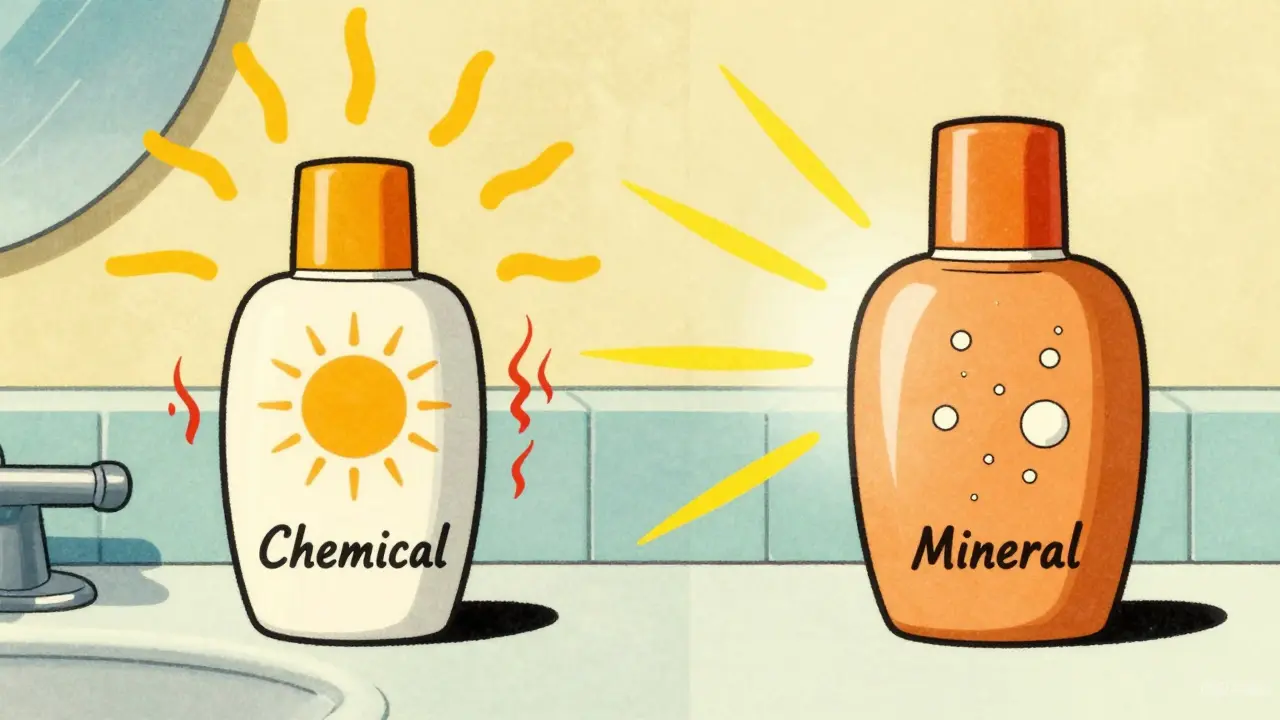
Chemical vs. Mineral Filters: Which One Is Right for You?
Once you understand the rays, you need to choose how to block them. There are two main categories of sunscreen filters: chemical and mineral (also known as physical). Neither is inherently 'better,' but they work very differently on your skin.
Chemical Sunscreens contain organic compounds like avobenzone, octinoxate, and oxybenzone. These ingredients sit on your skin and absorb UV radiation, converting it into heat before it can damage your cells. They tend to be lighter, more transparent, and easier to blend under makeup. However, because they absorb into the epidermis, they can sometimes irritate sensitive skin or trigger breakouts in acne-prone individuals. Some users also report a stinging sensation around the eyes.
Mineral Sunscreens use inorganic minerals, specifically zinc oxide and titanium dioxide. Instead of absorbing UV rays, they sit on top of the skin and physically reflect or scatter the radiation away. Zinc oxide is particularly effective because it covers both UVA and UVB ranges broadly. Titanium dioxide is great for UVB but has limited UVA protection unless formulated carefully. Mineral sunscreens are less likely to cause allergic reactions, making them ideal for sensitive skin, rosacea, or post-procedure care. The downside? They can leave a white cast, especially on deeper skin tones, and may feel heavier or pillier under makeup if not applied correctly.
User feedback from skincare communities highlights this trade-off clearly. In surveys of over 1,200 users, 78% reported fewer skin reactions with mineral formulas compared to chemical ones. Yet, 63% complained about the cosmetic elegance of mineral options, citing the white cast as a major deterrent. If you have darker skin, look for 'micronized' mineral sunscreens or hybrid formulas that combine both types to minimize visibility while maximizing protection.
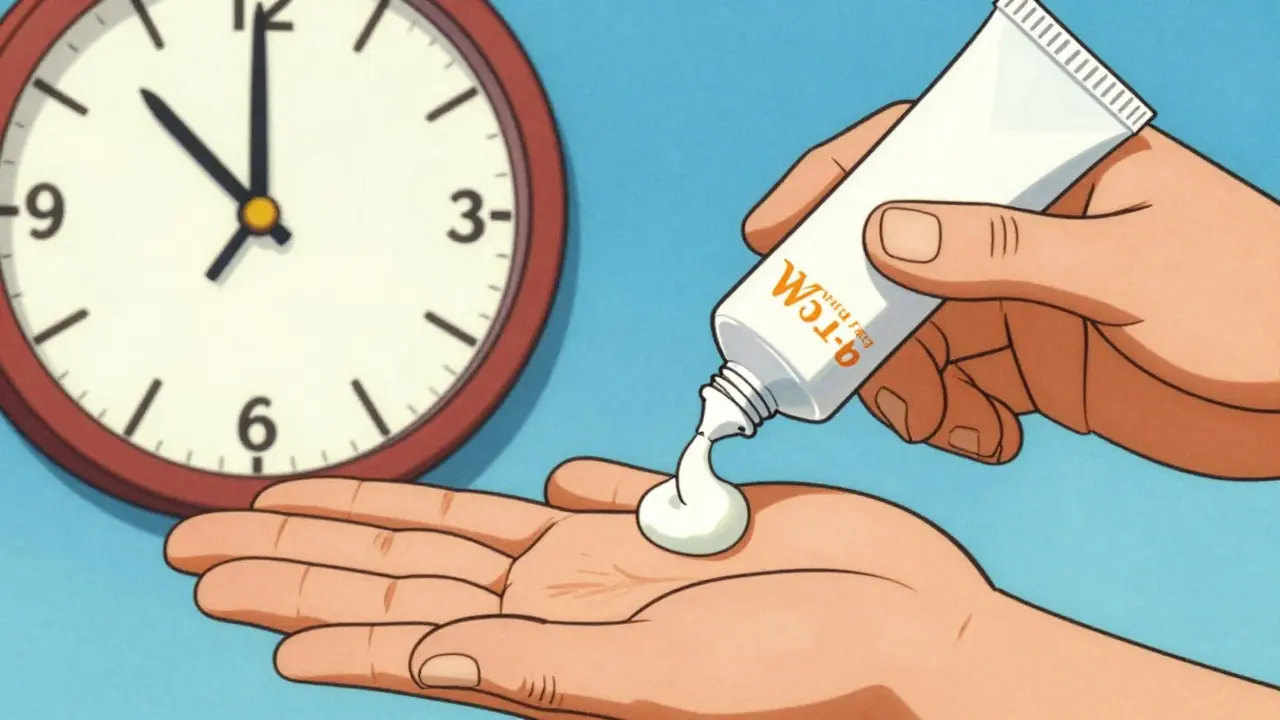
The Application Gap: Why Your SPF Might Be Failing
You can buy the most expensive, scientifically advanced sunscreen on the market, but it will fail if you do not apply it correctly. This is where most people lose their protection.
The standard medical recommendation is 2 milligrams per square centimeter of skin. Translated to everyday measurements, that is roughly one-quarter teaspoon for your face and neck alone. Most people apply a pea-sized amount, which effectively drops an SPF 30 product down to SPF 7.5 or 15. That is why experts often suggest starting with a higher SPF-to account for the inevitable under-application.
Timing and reapplication matter just as much. Sunscreen starts working immediately upon application, but it degrades over time due to sweat, oil production, and friction from clothing or towels. The general rule is to reapply every two hours. If you are swimming or sweating heavily, check the water resistance label. Products labeled 'water resistant' maintain their SPF for either 40 or 80 minutes. Note that no sunscreen is 'waterproof.'
For daily wear, try applying sunscreen as the final step of your skincare routine, after serums and moisturizers but before makeup. Allow it 15 minutes to set and form a film on your skin. If you wear makeup, consider using a SPF-infused setting spray or powder for touch-ups, though these should supplement, not replace, your initial liquid or cream application.
Future Trends and Regulatory Changes
The world of sunscreen science is evolving rapidly. As of 2024, the FDA has mandated clearer labeling for 'broad spectrum' status, aiming to reduce consumer confusion by December 2025. There is also growing scrutiny on certain chemical filters like oxybenzone and octinoxate due to concerns about coral reef health. This has driven a surge in 'reef-safe' formulations, which typically rely on non-nano zinc oxide and titanium dioxide.
Looking ahead, the industry is beginning to address blue light and infrared radiation. While the sun is the primary source of UV damage, digital screens and indoor lighting emit high-energy visible (HEV) light that can contribute to hyperpigmentation, particularly in darker skin tones. By 2030, many dermatologists predict that multi-spectrum protection covering UV, blue light, and infrared will become the new standard for premium skincare products.
Ultimately, sunscreen is not just a summer accessory. It is a daily health necessity. Whether you choose a lightweight chemical gel or a robust mineral cream, the best sunscreen is the one you will actually wear every day. Consistency beats perfection when it comes to protecting your skin's future.
Does SPF 50 really offer much better protection than SPF 30?
Technically, the difference is small. SPF 30 blocks 96.7% of UVB rays, while SPF 50 blocks 98%. That is only a 1.3% increase in protection. However, because most people do not apply enough sunscreen, the higher SPF provides a safety net. If you under-apply SPF 50, you still get better protection than if you under-apply SPF 30.
Do I need to wear sunscreen if it is cloudy or I am indoors?
Yes. Up to 80% of UV rays can penetrate clouds. Furthermore, UVA rays, which cause aging and DNA damage, can pass through window glass. If you sit near a window at work or drive frequently, you are still exposed to harmful radiation. Daily use is recommended regardless of weather or location.
What is the difference between chemical and mineral sunscreen?
Chemical sunscreens absorb UV rays and convert them to heat; they are usually lighter and more transparent but can irritate sensitive skin. Mineral sunscreens sit on top of the skin and reflect UV rays; they are gentler and safer for sensitive skin but may leave a white cast. Mineral filters include zinc oxide and titanium dioxide.
How much sunscreen should I apply to my face?
You should apply approximately one-quarter teaspoon (about the size of a nickel) to cover your face and neck adequately. Most people apply far less, which significantly reduces the effective SPF. Proper application ensures you get the protection level listed on the bottle.
What does 'Broad Spectrum' mean on sunscreen labels?
'Broad Spectrum' means the sunscreen protects against both UVA (aging) and UVB (burning) rays. According to FDA regulations, a broad-spectrum product must have a critical wavelength of at least 370 nanometers and provide UVA protection proportional to its SPF rating. Always look for this term to ensure comprehensive protection.