
SGLT2 Inhibitors and Bone Health: Fracture Risk Considerations
 Jul, 13 2026
SGLT2 Inhibitor Fracture Risk Checker
Evaluate potential bone fracture risks based on your specific SGLT2 inhibitor medication and personal health factors.
Imagine you are managing your type 2 diabetes with a medication that protects your heart and kidneys. It sounds like a win-win, right? But then you hear whispers about bones breaking. Specifically, you hear that SGLT2 inhibitors is a class of antidiabetic medications that lower blood glucose by inhibiting renal glucose reabsorption might weaken your skeleton. If you have osteoporosis or a history of falls, this news can be terrifying. You start wondering if the drug saving your heart is silently destroying your hips.
The short answer is: it depends on which drug you take. The story isn't as simple as "these drugs break bones." It’s a nuanced tale of one specific medication standing out from the crowd, while its siblings seem to pose little to no threat. Understanding this difference is crucial for making safe, informed decisions about your treatment plan.
The Origin of the Fear: Canagliflozin and the CANVAS Trial
To understand where the fear comes from, we have to look back at 2015. That was when the FDA first raised alarms about bone fractures linked to canagliflozin (brand name Invokana). This warning wasn't based on a hunch; it came from hard data in the CANVAS (Canagliflozin Cardiovascular Assessment Study) trial.
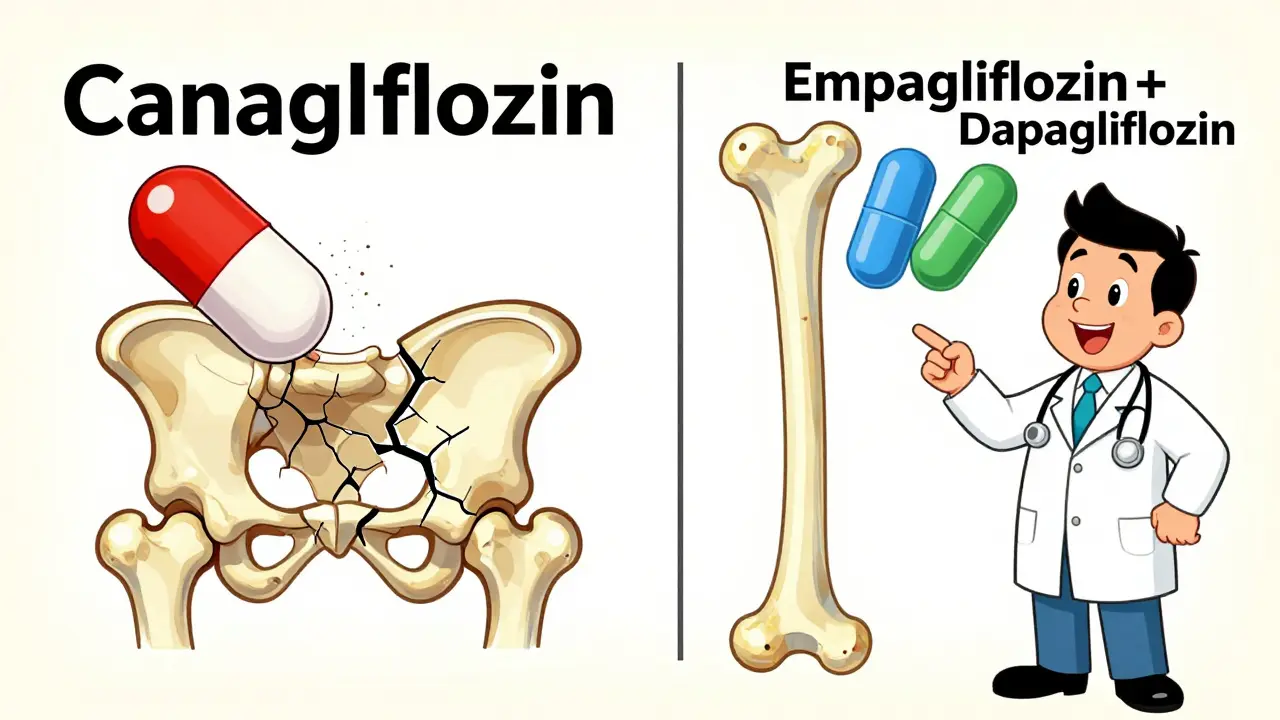
In this large-scale study, patients taking canagliflozin experienced a higher rate of fractures compared to those on a placebo. The numbers were stark: 15.4 fractures per 1,000 person-years versus 11.9 for the placebo group. This translated to a hazard ratio of 1.26, meaning there was a 26% increased relative risk. Most of these breaks happened after minor trauma, like falling from a standing height. They weren’t spontaneous shatters, but they were more frequent than expected.
This single finding cast a shadow over the entire class of SGLT2 inhibitors. For years, doctors and patients alike worried that all drugs in this family-empagliflozin (Jardiance) and dapagliflozin (Farxiga) included-might carry the same baggage. But as more data poured in, the picture became clearer. The risk wasn't uniform across the board.
Why Do These Drugs Affect Bones?
If canagliflozin does impact bone density, how does it work? Scientists have identified several mechanisms that explain why these drugs might interact with your skeletal system.
- Weight Loss: SGLT2 inhibitors typically cause a weight loss of 2-4 kg. While losing weight is generally good for metabolic health, rapid weight loss can sometimes correlate with markers of bone resorption (breakdown). However, research suggests weight loss alone explains only about 3% of the variance in these bone markers, so it’s not the whole story.
- Phosphate Handling: These drugs increase urinary phosphate excretion. To compensate, your body releases parathyroid hormone and fibroblast growth factor 23, hormones that regulate calcium and phosphate. Chronic shifts in these levels can theoretically harm bone mineral density.
- Hormonal Changes: Some studies noted that women taking high-dose canagliflozin (300 mg) saw a 9.2% decrease in estradiol levels. Since estrogen is vital for maintaining bone strength in postmenopausal women, this drop could contribute to weaker bones.
- Fall Risk: SGLT2 inhibitors can cause postural hypotension (a drop in blood pressure when standing up), occurring in 0.4-1.0% of patients. If you get dizzy and fall, the risk of fracture goes up, regardless of bone density.
A pivotal FDA-mandated trial involving 714 patients highlighted these differences. Over two years, canagliflozin caused a greater loss in bone mineral density (BMD) at the hip (-0.92% vs -0.24% for placebo) and lumbar spine (-1.04% vs -0.44%) compared to other agents. This concrete data helps explain why the warning sticks specifically to canagliflozin.
The Other Players: Empagliflozin and Dapagliflozin
Here is the good news: the other major SGLT2 inhibitors do not share canagliflozin’s bad reputation regarding bones. Major cardiovascular outcome trials provided reassurance for millions of patients.
The EMPA-REG OUTCOME trial (2015), which studied empagliflozin, showed no significant increase in fracture risk. Similarly, the DECLARE-TIMI 58 trial (2019) found no elevated fracture rates for dapagliflozin. When you look at the big picture, the evidence suggests that the fracture risk is not a class-wide effect but rather specific to canagliflozin, particularly at the higher 300 mg dose.
| Drug Name | Brand Name | Fracture Risk Signal | Key Trial Evidence | FDA Warning Status |
|---|---|---|---|---|
| Canagliflozin | Invokana | Moderate Increase | CANVAS Trial (HR 1.26) | Yes (Warning & Precaution) |
| Empagliflozin | Jardiance | No Significant Increase | EMPA-REG OUTCOME | No |
| Dapagliflozin | Farxiga | No Significant Increase | DECLARE-TIMI 58 | No |
A 2023 meta-analysis published in the Journal of Parathyroid Disease analyzed real-world evidence and concluded there is no connection between SGLT2 inhibitors as a class and fracture risk. Another updated meta-analysis in HIV/NATAP combined 27 randomized controlled trials with over 20,000 participants. The pooled relative risk was 1.02, indicating essentially no correlation between SGLT2 inhibitor use and higher fracture risk overall.
Who Should Be Cautious?
Even though empagliflozin and dapagliflozin appear safer, caution is still advised for certain groups. The American Association of Clinical Endocrinologists (AACE) recommends assessing bone mineral density before starting canagliflozin in patients with established osteoporosis or a prior fracture history. They do not extend this strict recommendation to other SGLT2 inhibitors, but prudence never hurts.
If you fall into any of these categories, talk to your doctor:
- You have a T-score below -2.0 on a DXA scan (indicating low bone mass).
- You have had a previous fragility fracture (a break from a minor fall).
- You are elderly and prone to dizziness or falls.
- You are already taking other medications that affect bone health, such as long-term corticosteroids.
The American Geriatrics Society’s Beers Criteria (2023 update) lists canagliflozin as a "potentially inappropriate medication" for older adults with osteoporosis. It does not include empagliflozin or dapagliflozin in this category. This distinction is vital for clinicians prescribing to seniors.
Real-World Perspectives and Patient Anxiety
Data tells one story, but patient experience tells another. On the American Diabetes Association's online community, 78% of discussions about SGLT2 inhibitors and bone health expressed concern. Twenty-three patients reported falls while on canagliflozin, compared to seven on empagliflozin. This disparity highlights the importance of individual monitoring.
Dr. Sarah Chen, an endocrinologist at Mayo Clinic, shared her clinical observations in a 2023 webinar. She noted seeing approximately 3-4 fractures per 1,000 patient-years with canagliflozin versus 2-3 with other SGLT2 inhibitors among elderly patients with multiple comorbidities. Conversely, Dr. Michael Rodriguez from Johns Hopkins reported finding no statistically significant difference in fracture rates between SGLT2 inhibitor types when controlling for age and baseline risk in a database of over 15,000 patients.
This variation in expert opinion reflects the complexity of real-world medicine. While large trials show safety for most, individual susceptibility varies. The key is personalized care. Don’t let fear stop you from using a life-saving drug, but don’t ignore your personal risk factors either.
Practical Steps for Patients and Doctors
If you are considering an SGLT2 inhibitor, here is a practical checklist to discuss with your healthcare provider:
- Assess Your Baseline Risk: Have you had a recent DXA scan? If not, ask if one is appropriate given your age and medical history.
- Choose the Right Drug: If you have significant bone concerns, empagliflozin or dapagliflozin may be preferred over canagliflozin.
- Monitor for Side Effects: Watch for signs of dehydration or dizziness, which can increase fall risk. Stay hydrated and stand up slowly.
- Maintain Bone Health: Ensure you are getting enough calcium and vitamin D. Weight-bearing exercise is also crucial for maintaining bone density.
- Regular Follow-Up: Report any unexplained pain or falls to your doctor immediately.
The American Diabetes Association’s 2023 Standards of Care now state that "SGLT2 inhibitors as a class do not appear to increase fracture risk, though canagliflozin specifically has shown modest increases in some studies." This language shift reflects the evolving consensus. The goal is to maximize the cardiovascular and renal benefits of these drugs while minimizing potential skeletal risks.
Conclusion: Balancing Benefits and Risks
The narrative around SGLT2 inhibitors and bone health has evolved from alarm to nuance. While canagliflozin carries a specific warning for fracture risk, especially in vulnerable populations, empagliflozin and dapagliflozin have demonstrated strong safety profiles in this regard. For most patients, the benefits of improved glycemic control, heart protection, and kidney preservation far outweigh the minimal risk of bone fractures.
However, "most" doesn't mean "everyone." If you have osteoporosis, a history of falls, or other risk factors, a detailed conversation with your endocrinologist is essential. They can help you choose the right agent within the class and implement monitoring strategies to keep both your bones and your heart healthy. Remember, knowledge is power. Understanding the specific risks associated with each drug empowers you to take an active role in your health journey.
Do all SGLT2 inhibitors increase the risk of bone fractures?
No. Current evidence suggests that the increased fracture risk is primarily associated with canagliflozin (Invokana). Other SGLT2 inhibitors like empagliflozin (Jardiance) and dapagliflozin (Farxiga) have not shown a significant increase in fracture risk in major clinical trials.
Which SGLT2 inhibitor is safest for people with osteoporosis?
For patients with osteoporosis or a high risk of fractures, empagliflozin and dapagliflozin are generally considered safer options than canagliflozin. The American Geriatrics Society’s Beers Criteria lists canagliflozin as potentially inappropriate for older adults with osteoporosis, but does not include the other two agents.
How do SGLT2 inhibitors affect bone mineral density?
SGLT2 inhibitors can affect bone mineral density through mechanisms like increased urinary phosphate excretion, hormonal changes, and weight loss. Canagliflozin has been shown to cause a greater decrease in BMD at the hip and lumbar spine compared to placebo, while other agents in the class have shown minimal to no effect.
Should I avoid SGLT2 inhibitors if I have fallen recently?
If you have a history of falls, you should discuss this with your doctor. While SGLT2 inhibitors can cause mild dehydration and dizziness (increasing fall risk), their cardiovascular benefits are significant. Your doctor may recommend choosing empagliflozin or dapagliflozin over canagliflozin and ensuring you stay well-hydrated.
What did the CANVAS trial find regarding fractures?
The CANVAS trial found that patients taking canagliflozin had a 26% higher relative risk of fractures compared to those on a placebo. This led to an FDA warning specifically for canagliflozin, noting that fractures often occurred after minor trauma.