
Sedative-Hypnotics: Benzodiazepines vs. Non-Benzodiazepines for Sleep
 Mar, 16 2026
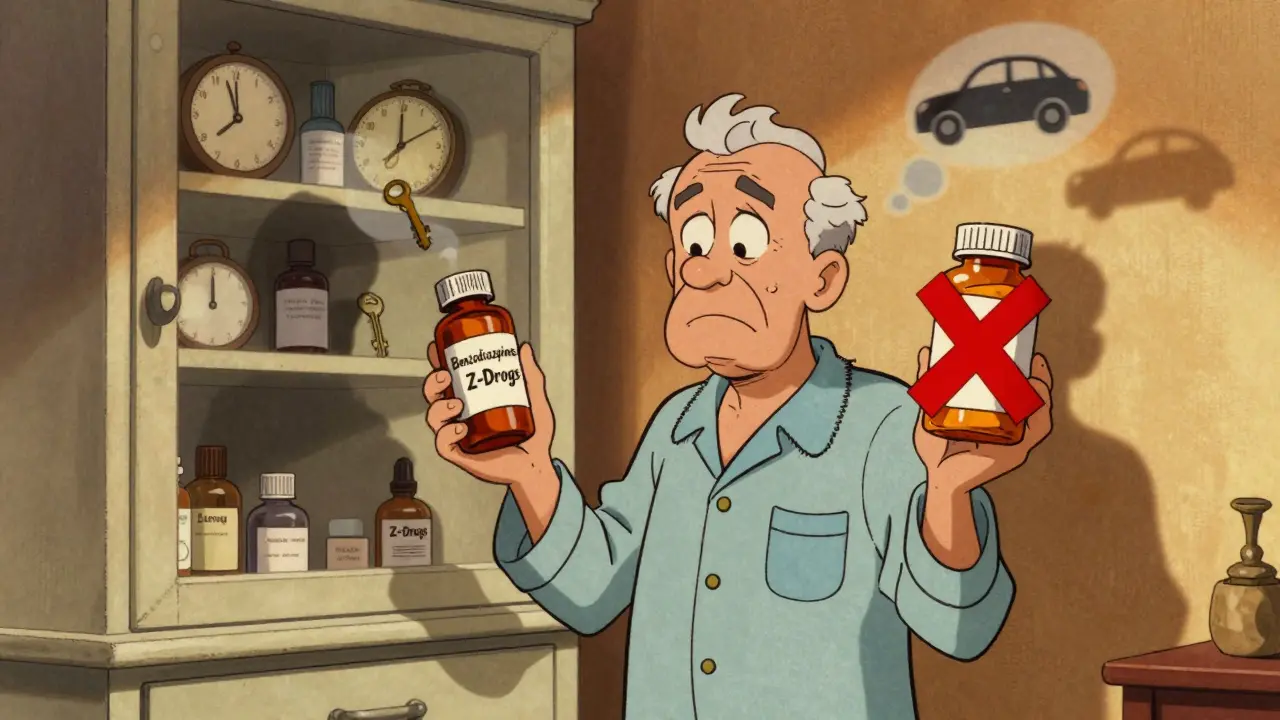
More than 6 million Americans get prescribed sleeping pills every year. But what most people don’t realize is that these drugs - whether they’re called benzodiazepines or Z-drugs - are not the long-term solution they’re often sold as. In fact, the VA’s own clinical guidelines now say: It is no longer recommended to take a sedative-hypnotic drug to treat insomnia or anxiety. And they’re not alone. Doctors, researchers, and patient groups are sounding the alarm on these medications. The risks? Memory loss, falls, next-day drowsiness, and addiction. The benefits? Often fleeting.
What Are Benzodiazepines and Non-Benzodiazepines?
Benzodiazepines are older sedatives first developed in the 1950s and 60s. Common ones include alprazolam (Xanax), temazepam (Restoril), and flurazepam (Dalmane). They were originally meant for anxiety, but doctors started prescribing them for sleep because they calm the brain.
Non-benzodiazepines - also called Z-drugs - came later, in the 1980s and 90s. These include zolpidem (Ambien), eszopiclone (Lunesta), and zaleplon (Sonata). They were designed to be more targeted, hitting only the brain receptors linked to sleep, not anxiety.
At first glance, Z-drugs looked like an upgrade. Safer. Cleaner. Less addictive. But over time, the data showed otherwise.
How They Work - And Why It Matters
Both classes work the same way: they boost GABA, the brain’s main calming chemical. But here’s the catch - benzodiazepines bind to multiple GABA receptor sites. That means they don’t just help you fall asleep. They also affect muscle relaxation, anxiety, and memory. That’s why you get side effects like dizziness, confusion, and trouble thinking clearly the next day.
Non-benzodiazepines were made to bind only to the omega-1 receptor - the one tied to sleep. In theory, that should mean fewer side effects. But in practice? The difference isn’t as clear as the marketing suggested. A 2013 study by Dr. Daniel Kripke found that even short-term use of zolpidem caused memory problems and didn’t improve daytime function. The brain doesn’t care if the drug is "targeted" - it still slows everything down.
Side Effects: What You Actually Experience
Let’s talk real symptoms, not just clinical terms.
With benzodiazepines, people report:
- Next-day fog - like you slept in a thick cloud
- Waking up with no memory of the last hour
- Severe withdrawal: panic attacks, shaking, insomnia that’s worse than before
- Increased risk of hip fractures - 2.3 times higher in people over 65
With non-benzodiazepines:
- "Sleep driving" - people have woken up miles from home, with no idea how they got there
- Taste disturbances - Lunesta users often say everything tastes metallic
- Burning or tingling in hands and feet - a common complaint with Ambien
- Rebound insomnia - sleep gets worse after you stop, even after just two weeks
A 2021 meta-analysis found that 34% of users said daytime drowsiness was bad enough to affect their job or driving. And that’s just the ones who reported it. Many don’t realize their sluggishness isn’t normal - they think it’s just aging.
Which Is More Dangerous?
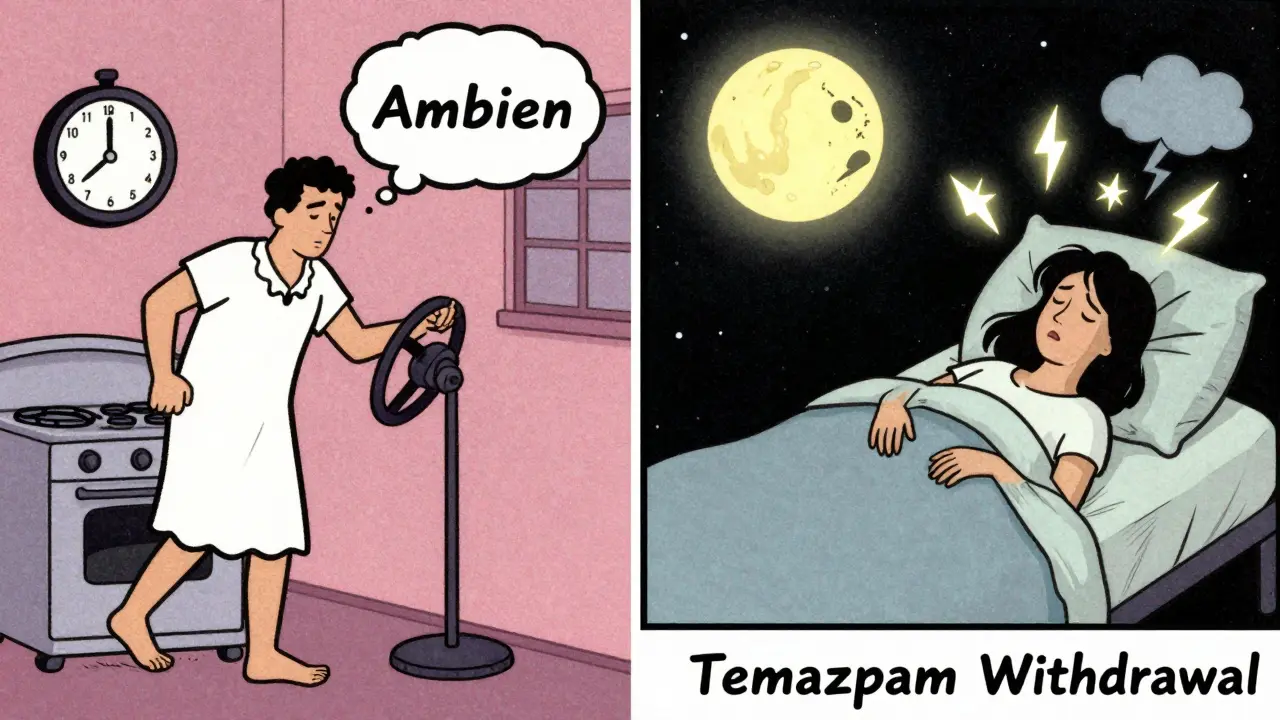
It’s not a simple answer. Benzodiazepines are more likely to cause dependence and severe withdrawal. One Reddit user described quitting temazepam after eight months: "I had panic attacks for three weeks straight. I thought I was dying."
Non-benzodiazepines may seem gentler, but they’re linked to more bizarre and dangerous behaviors. The FDA got so many reports of people sleep-driving, cooking, or even having sex while asleep on zolpidem that they cut the recommended dose in half for women in 2013. Why? Because women metabolize it slower - meaning more of the drug stays in their system overnight.
Both classes increase fall risk. For older adults, that’s not just inconvenient - it’s deadly. A 2012 JAMA study showed benzodiazepines raised hip fracture risk by 2.3 times. Non-benzodiazepines? Still 1.8 times higher. In a population where one in three over-65s has insomnia, that’s a massive public health problem.
Prescribing Trends - And Why They’re Changing
In 2013, 5.6% of U.S. adults got a benzodiazepine prescription. By 2022, that dropped to 3.8%. Meanwhile, non-benzodiazepine prescriptions rose from 2% to 2.5%. Why? Marketing. Drug companies pushed Z-drugs as "new and safe." But here’s the truth: a 2019 JAMA study found no meaningful difference in long-term safety between the two.
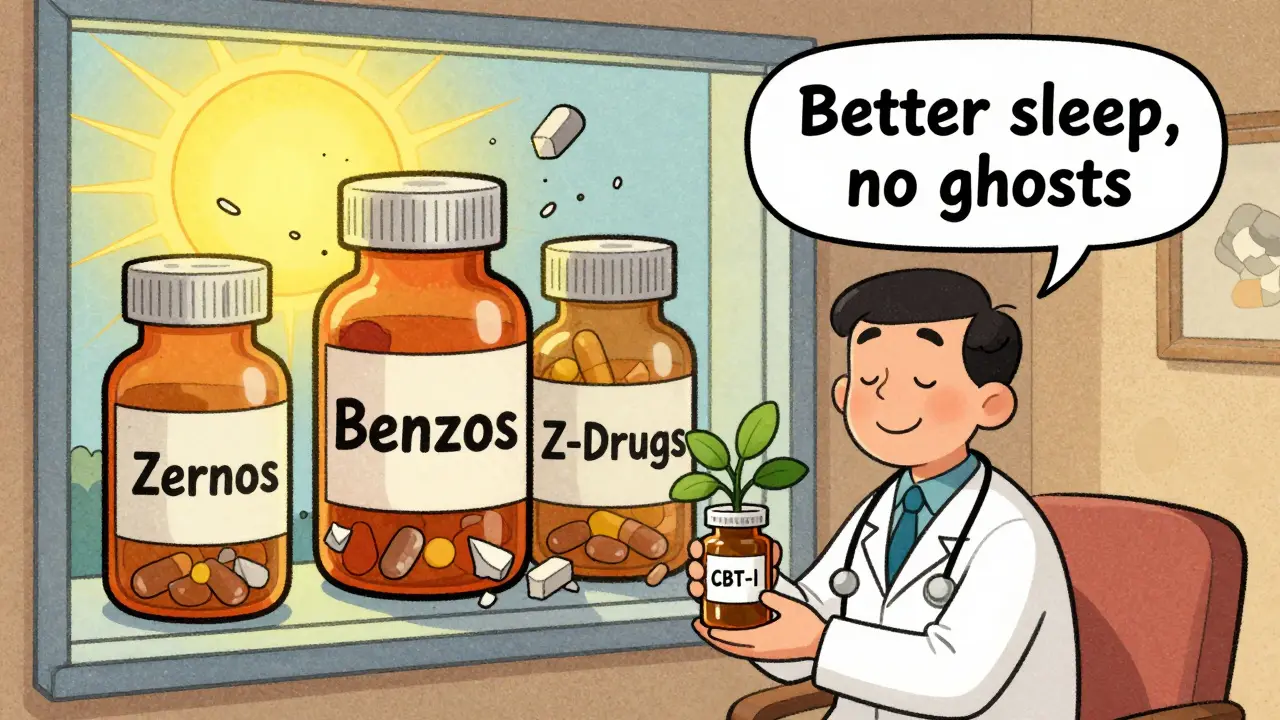
The American Academy of Sleep Medicine now says CBT-I - Cognitive Behavioral Therapy for Insomnia - should be the first line of treatment. Not pills. Therapy. It works. Studies show it’s as effective as sleeping pills… and lasts longer.
The VA, CDC, and American Geriatrics Society all agree: these drugs are risky for older adults. The Beers Criteria (2019) lists both classes as "potentially inappropriate" for people over 65. That’s not a suggestion - it’s a warning.
What About Tolerance and Addiction?
Both classes cause tolerance. That means you need more over time to get the same effect. A Reddit user wrote: "Zolpidem stopped working after two weeks. I doubled the dose. Then tripled. I was terrified to stop."
Dependence isn’t just about cravings. It’s about your brain rewiring itself. When you stop, your GABA system is underactive. That’s why withdrawal can feel like severe anxiety, tremors, seizures - even hallucinations.
Benzodiazepine withdrawal is often more intense. Doctors recommend tapering slowly - reducing by 10% every one to two weeks. Non-benzodiazepines may be easier to quit, but that doesn’t mean it’s safe. Abruptly stopping zolpidem can trigger rebound insomnia worse than your original problem.
Who Should Avoid These Drugs?
These medications aren’t safe for everyone. Avoid them if you:
- Have sleep apnea - these drugs can shut your breathing down even more
- Have liver disease - both classes are processed by the liver, and impaired function means drug buildup
- Take opioids or antidepressants - mixing them can cause fatal breathing depression
- Are over 65 - fall risk skyrockets
- Have a history of substance abuse - these drugs can be habit-forming
Even alcohol is dangerous. One drink with a sleeping pill can double the sedation. That’s why the FDA warns: "Never mix sleep aids with alcohol."
What Are the Alternatives?
If these drugs aren’t the answer, what is?
- CBT-I: The gold standard. Trains your brain to sleep better without pills. Studies show it works for 70-80% of people.
- Light therapy: Exposure to bright morning light helps reset your body clock.
- Improved sleep hygiene: No screens an hour before bed. Consistent sleep schedule. Cool, dark room.
- Orexin blockers: Newer drugs like suvorexant (Belsomra) and lemborexant (Dayvigo) target wakefulness, not sleep. They’re less sedating and have fewer next-day side effects.
None of these are quick fixes. But they’re the only ones that don’t come with a 5-fold risk of memory loss or a 2-fold risk of fractures.
The Bottom Line
Benzodiazepines and non-benzodiazepines both promise rest. But what they deliver is often temporary relief - and long-term risk. The data doesn’t lie: these drugs impair memory, increase falls, cause addiction, and can trigger dangerous behaviors.
Doctors still prescribe them. Pharmacies still fill them. But the tide is turning. The VA, FDA, and sleep specialists now say: Use them only if absolutely necessary, for no longer than a few weeks.
If you’re on one of these drugs right now - don’t stop cold turkey. Talk to your doctor. There are safer, longer-lasting ways to sleep. And they don’t come with a warning label that reads: "May cause you to forget your life."
Are benzodiazepines more addictive than non-benzodiazepines?
Yes, generally. Benzodiazepines affect more brain receptors and are more likely to cause physical dependence. Withdrawal can include seizures, severe anxiety, and hallucinations. Non-benzodiazepines (Z-drugs) are less likely to cause severe withdrawal, but they still lead to tolerance and psychological dependence. Both can be hard to quit without medical supervision.
Can I take sleeping pills every night?
No. All sedative-hypnotics are meant for short-term use - typically 2 to 4 weeks. Taking them nightly increases the risk of tolerance, dependence, and next-day impairment. Long-term use doesn’t improve sleep quality - it makes it worse. The brain adapts, and you end up needing more just to feel normal.
Why do Z-drugs cause sleepwalking or sleep driving?
These drugs suppress brain activity unevenly. While they make you fall asleep, they don’t fully shut down the parts of the brain that control movement. This creates a state between sleep and wakefulness - where you can walk, drive, or even cook without being conscious of it. The FDA has received over 800 reports of such incidents linked to zolpidem alone.
Is it safe to take sleeping pills with alcohol?
Never. Alcohol and sleeping pills both depress the central nervous system. Together, they can slow your breathing to dangerous levels - even stopping it completely. This combination is responsible for thousands of emergency room visits each year. The FDA warns that even one drink can double the sedative effect.
What should I do if I want to stop taking a sleeping pill?
Don’t quit cold turkey. Talk to your doctor about a tapering plan. For benzodiazepines, a slow reduction - 10% every 1-2 weeks - is usually needed. For Z-drugs, a 2-4 week taper may suffice. During this time, consider starting CBT-I to help your brain relearn healthy sleep patterns. Support from a sleep specialist improves success rates dramatically.
Are there any sleeping pills that are truly safe for long-term use?
No. All sedative-hypnotics carry risks with long-term use. Even newer drugs like lemborexant (Dayvigo) and suvorexant (Belsomra), which target wakefulness instead of sleep, can cause drowsiness, dizziness, and next-day impairment. The safest long-term solution isn’t a pill - it’s behavior change. CBT-I, sleep hygiene, and light regulation are the only methods proven to improve sleep without addiction or cognitive decline.
Amadi Kenneth
March 18, 2026 AT 10:13Shameer Ahammad
March 19, 2026 AT 13:33Alexander Pitt
March 19, 2026 AT 18:30Manish Singh
March 19, 2026 AT 21:30Nilesh Khedekar
March 21, 2026 AT 07:42Robin Hall
March 21, 2026 AT 15:28jared baker
March 22, 2026 AT 15:37Michelle Jackson
March 23, 2026 AT 05:07Suchi G.
March 24, 2026 AT 23:27becca roberts
March 25, 2026 AT 13:33