
Proton Pump Inhibitors and Bone Health: Understanding Fracture Risks
 Apr, 14 2026
PPI Bone Health Risk Evaluator
Disclaimer: This tool is for educational purposes only and does not provide a medical diagnosis. Please consult your healthcare provider for professional medical advice.
Risk Level: Unknown
Recommended Action:
Supplement Advice:
Switch to Calcium Citrate (acid-independent) instead of Calcium Carbonate.
| Feature | Proton Pump Inhibitors (PPIs) | H2-Receptor Antagonists (H2RAs) |
|---|---|---|
| Acid Suppression Strength | High (Strong) | Moderate |
| Long-term Fracture Risk | Modest increase (especially hip/spine) | Lower/Negligible evidence of risk |
| Common Examples | Omeprazole, Lansoprazole | Famotidine, Cimetidine |
| Primary Bone Concern | Impaired Calcium Absorption | Generally minimal impact |
The Connection Between Acid and Bones
How does a stomach medication affect your hips or wrists? It all comes down to how your body absorbs minerals. Proton Pump Inhibitors work by shutting down the H+/K+ ATPase enzyme system in your stomach lining. This effectively turns off the acid pumps. While that's great for a healing ulcer, your body actually needs some acid to break down certain minerals. Calcium Carbonate, which is the most common form of calcium supplement, requires an acidic environment to dissolve and enter your bloodstream. When you suppress stomach acid for years, your body may struggle to absorb enough calcium. Because the heart and muscles get priority for calcium, your bones-the body's storage warehouse-end up paying the price. Over time, this can lead to Osteoporosis, a condition where bones become porous and brittle, making them much easier to break during a simple fall.Measuring the Risk: What the Data Says
It is a mistake to panic after one dose of a PPI. The risk isn't immediate; it's cumulative. Research shows that the danger increases significantly the longer you stay on the medication. For example, a study in Manitoba found that people using PPIs for less than five years had a relatively low risk, but those using them for seven or more years saw a dramatic jump in hip fracture risk. Specific data points highlight a "dose-response" relationship. This means the higher the dose and the longer the duration, the higher the risk. In some cohorts, long-term users showed a 27% to 67% increase in hip fracture risk compared to those using milder acid suppressors like H2 blockers. However, the absolute risk remains small for most people. For a healthy adult under 60 with no other risk factors, the danger is minimal. The real concern is for those already predisposed to bone loss, such as postmenopausal women or people taking corticosteroids.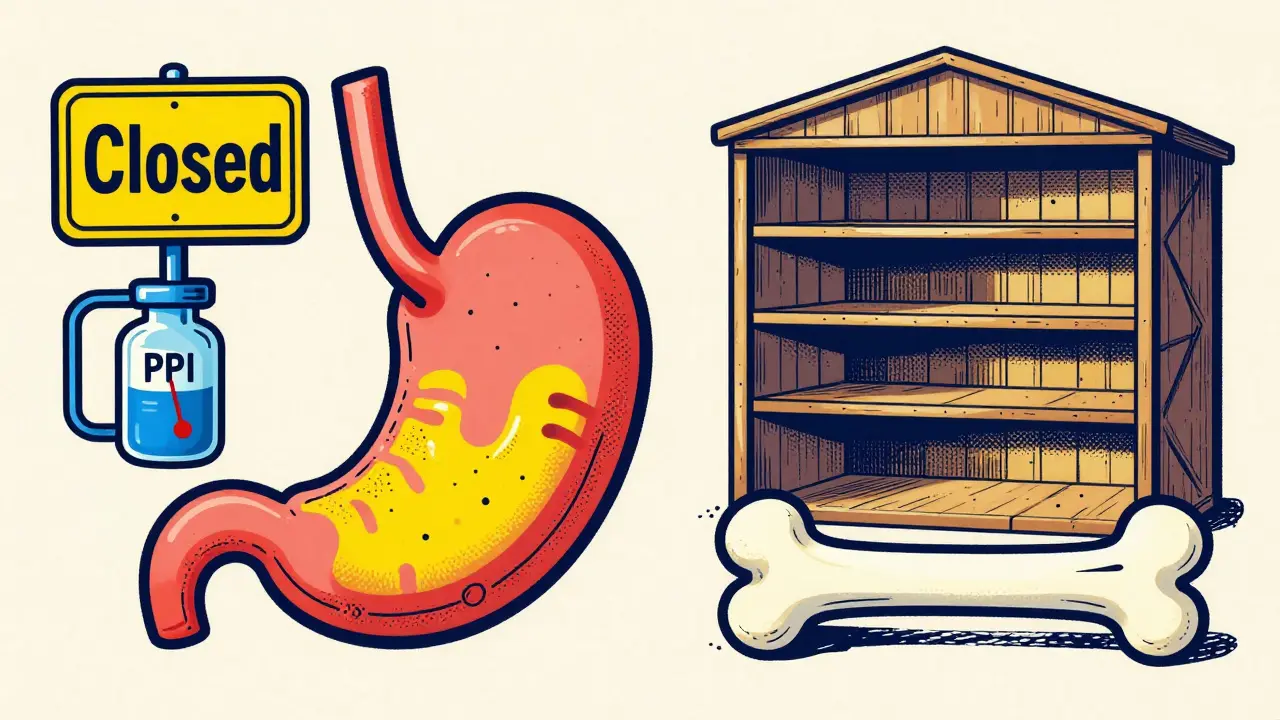
Who Is Most at Risk?
Not everyone reacts to PPIs the same way. If you are wondering whether you should be concerned, look at your personal profile. Doctors generally flag a higher risk for patients who fit these criteria:- Age: Those over 65 are significantly more vulnerable.
- Gender: Postmenopausal women face a higher risk due to the natural drop in estrogen, which already weakens bones.
- Weight: Individuals weighing less than 57 kg (roughly 125 lbs) may have lower bone mass to begin with.
- Medical History: If you've already broken a bone or have a diagnosis of osteoporosis, PPIs can act as an additive risk.
- Other Meds: Long-term use of steroids (corticosteroids) already strips calcium from bones; adding a PPI can accelerate this process.
Practical Strategies for Safe Use
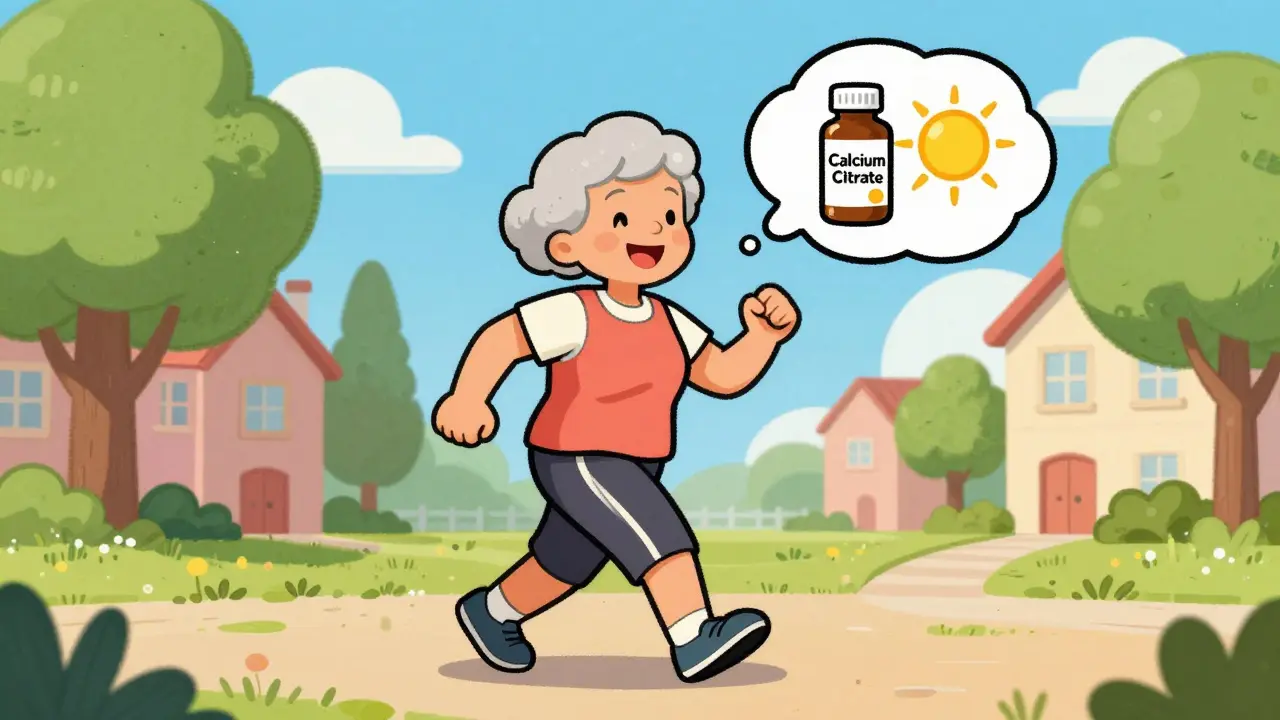
If you need a PPI to manage a serious condition like GERD (Gastroesophageal Reflux Disease), you shouldn't just stop taking it. Instead, focus on mitigation strategies to keep your bones strong. First, talk to your doctor about the "lowest effective dose." Many people stay on high-dose PPIs for years when a lower dose or an intermittent schedule (taking it every other day) would suffice. The goal is to maintain the benefit for your stomach while minimizing the impact on your mineral absorption. Second, rethink your supplements. Since Calcium Carbonate needs acid to work, it's a poor choice for PPI users. Instead, switch to Calcium Citrate. This form of calcium is acid-independent, meaning your body can absorb it regardless of how much acid your stomach is producing. Pair this with adequate Vitamin D to ensure the calcium actually reaches your bone matrix. Finally, if you are in a high-risk group, ask about a bone density scan (DEXA scan). This provides a baseline measurement of your bone mineral density, allowing your doctor to catch thinning bones before they result in a fracture.The Bigger Picture: Benefits vs. Risks
It is easy to get caught up in the "scare" of potential fractures, but we have to weigh this against the dangers of untreated acid reflux. Severe GERD can lead to Barrett's Esophagus or esophageal cancer. For many, the risk of a potential bone fracture in twenty years is far less urgent than the risk of severe esophageal damage today. Major health organizations, including the FDA and the MHRA, maintain that the benefits of PPIs generally outweigh the risks when used correctly. The key is moving away from "indefinite use" and toward "indicated use." PPIs were originally designed for 4-to-8-week courses, yet many people take them as a permanent daily supplement. Shifting back to a targeted approach-using the drug only when necessary and for the required time-is the best way to ensure your stomach stays healed and your bones stay strong.Should I stop taking my PPI immediately if I'm worried about my bones?
No. Stopping PPIs abruptly can cause "rebound acid hypersecretion," where your stomach produces more acid than ever before, worsening your symptoms. Always consult your doctor to taper off the medication slowly or switch to a different class of acid suppressors.
Why is Calcium Citrate better than Calcium Carbonate for me?
Calcium Carbonate requires stomach acid to break down and be absorbed. Since PPIs reduce that acid, the supplement becomes less effective. Calcium Citrate does not require an acidic environment, making it the preferred choice for anyone on long-term acid-blocking therapy.
How long is "long-term" use of a PPI?
While original labels suggested 4-8 weeks, many studies define "long-term" as use extending beyond six months or several years. The highest fracture risks are generally associated with continuous use over five to seven years.
Do all PPIs carry the same risk?
Generally, yes. Whether it's omeprazole, pantoprazole, or esomeprazole, the mechanism of inhibiting the proton pump is the same across the class. The risk is more closely tied to the dose and duration of use than the specific brand of medication.
Can exercise help offset the risk of PPI-related fractures?
Yes. Weight-bearing exercises (like walking, jogging, or weightlifting) put healthy stress on the bones, which stimulates bone remodeling and increases density. This is a critical part of a bone-protection plan for anyone on long-term medication.
william wang
April 15, 2026 AT 04:52Swapping to calcium citrate is a total game changer here. A lot of people just grab the cheapest bottle at the drugstore without realizing the bioavailability differs based on gastric pH. It's a simple switch that makes a huge difference for long-term bone density maintenance.
Nell O'Leary
April 16, 2026 AT 03:23Totally agree! The pharmacokinetics of citrate-based supplementation are way more favorable when you're dealing with hypochlorhydria induced by PPIs :) It's all about that optimal absorption coefficient! 💊✨
Nikki Grote
April 17, 2026 AT 13:44To add to that, the synergistic effect of Vitamin D3 and K2 is crucial for directing the calcium into the bone matrix rather than the arterial walls. Without adequate D3, the VDR (Vitamin D Receptor) pathways aren't optimized, and you're essentially wasting your supplements. It's about the entire endocrine axis and ensuring that calcium doesn't just sit in the gut or end up as soft tissue calcification.
Maggie Graziano
April 18, 2026 AT 22:25big pharma just wants us on these forever to sell more bone meds later they hide the real data
Colleen Tankard
April 20, 2026 AT 07:07Just glad this info is out there 🌸 keep those bones strong everyone! 🦴✨
Sophia Rice
April 20, 2026 AT 17:48I’ve bean taking these for years and never knew about the bone stuff thx for sharing this’n info!
Nathan Berlin
April 21, 2026 AT 11:45imagine needing a reddit post to tell you how to take a pill lol 🙄 my country has way better healthcare systems than the west 🇮🇳🔥 you people are just sheep 🤡
Anmol Garg
April 23, 2026 AT 05:44We all have our own paths to health, and it's okay to feel a bit overwhelmed by the trade-offs of modern medicine. It's a balance between the immediate relief of our stomach and the long-term health of our frame. Just take it one day at a time and be kind to your body.
Theresa Griffin MEP
April 24, 2026 AT 09:07One must prioritize preventative screening. A DEXA scan is mandatory for high-risk individuals. Efficiency is paramount.
ira fitriani
April 25, 2026 AT 03:08OH MY GOSH!!! 😱 I had no idea about the calcium carbonate vs citrate thing!! This is literally a life saver!! 🌟 Let's all get those scans and stay healthy!! 💪💖✨
Rock Stone
April 25, 2026 AT 12:41Just keep moving, guys. A little bit of walking or lifting goes a long way in keeping the skeleton happy while you manage the reflux stuff. No need to stress too much, just adjust and keep going.
Bonnie Piersall
April 25, 2026 AT 19:16This is a real eye-opener. It's a bit of a wild ride when you realize your meds have these hidden quirks, but hey, that's why we stay informed. Definitely worth looking into the citrate options to keep the frame sturdy!
Michael Lewis
April 27, 2026 AT 18:20Stop settling for high doses if you don't need them! Push your doctors for the lowest effective dose. Be assertive about your bone health now so you aren't dealing with a broken hip at 70. Get it done!
Jon lee
April 29, 2026 AT 15:55I think it's really important that we support each other in these conversations with our doctors. It can be intimidating to bring up side effects, but advocating for your own health is the best way to ensure a long and active life. Just remember to be patient with the process and your medical team.