
Post-Marketing Pharmacovigilance: How New Medication Side Effects Are Found
 Jul, 6 2026
Post-Marketing Surveillance Impact Calculator
1. The Sample Size Gap
Clinical trials typically involve 1,000–5,000 participants. If a side effect is rare, how many people need to take the drug for it to appear?
2. The Underreporting Crisis
Only 1-10% of adverse events are reported. See how this affects data quality.
Imagine taking a new pill prescribed by your doctor. It works wonders for your condition, but months later, you notice something strange-a rash, fatigue, or a change in how you feel. You aren't alone. In fact, the majority of serious side effects from new medications are not found during the initial testing phases. They show up only after millions of people start using the drug in the real world.
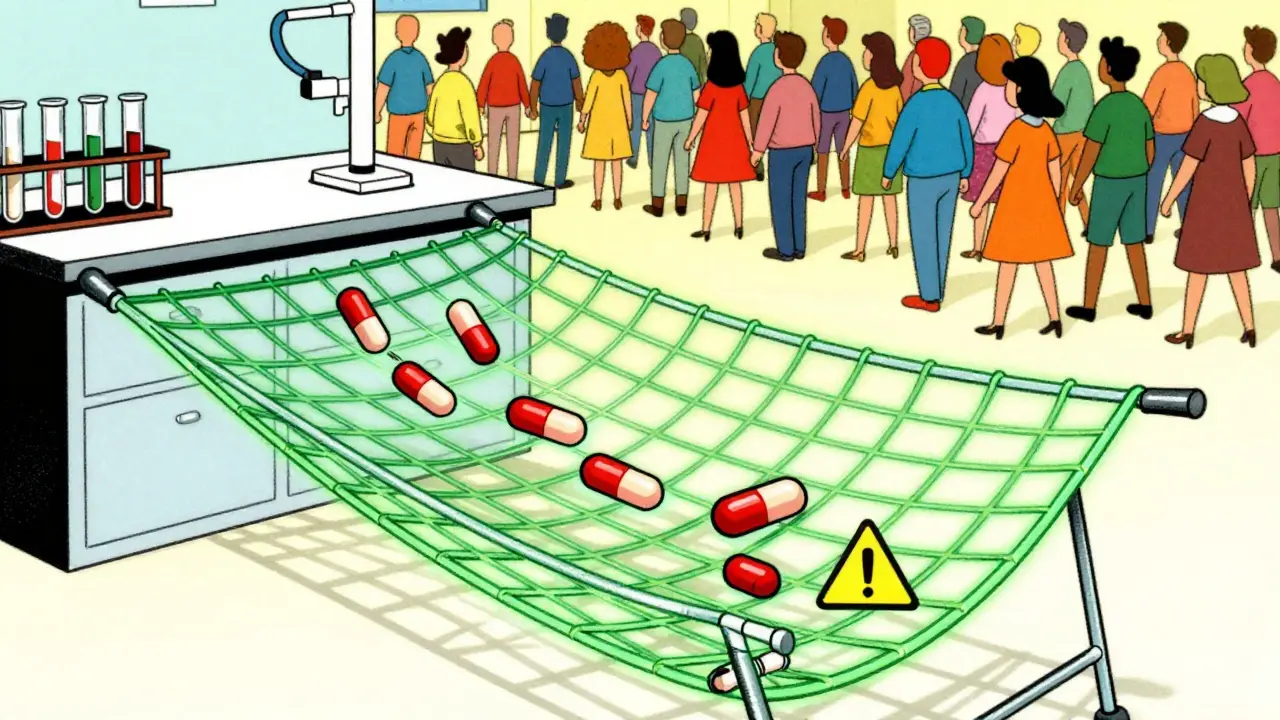
This is where post-marketing pharmacovigilance comes in. It is the systematic science and practice of monitoring drug safety after regulatory approval. Think of it as the ongoing safety net that catches risks clinical trials missed. Without this process, we would be flying blind regarding long-term medication safety.
Why Clinical Trials Aren't Enough
You might wonder why doctors can't just test everything before approving a drug. The truth is, clinical trials have strict limits. A typical trial involves between 1,000 and 5,000 participants. That sounds like a lot, but compared to the hundreds of thousands or millions who will eventually take the medication, it’s a tiny fraction.
Trials also exclude many people. If you are pregnant, elderly, have multiple chronic conditions, or take other medications, you likely wouldn’t qualify for most early-stage studies. This creates a "perfect patient" scenario that doesn't reflect real life. Post-marketing surveillance fills this gap by watching how drugs perform in diverse, large-scale populations with varying health backgrounds.
For example, the FDA’s Adverse Event Reporting System (FAERS) processes approximately 2 million reports annually. These reports come from everyday users, not just trial volunteers. This massive influx of data helps regulators spot patterns that small trials simply cannot see.
The History Behind Modern Drug Safety
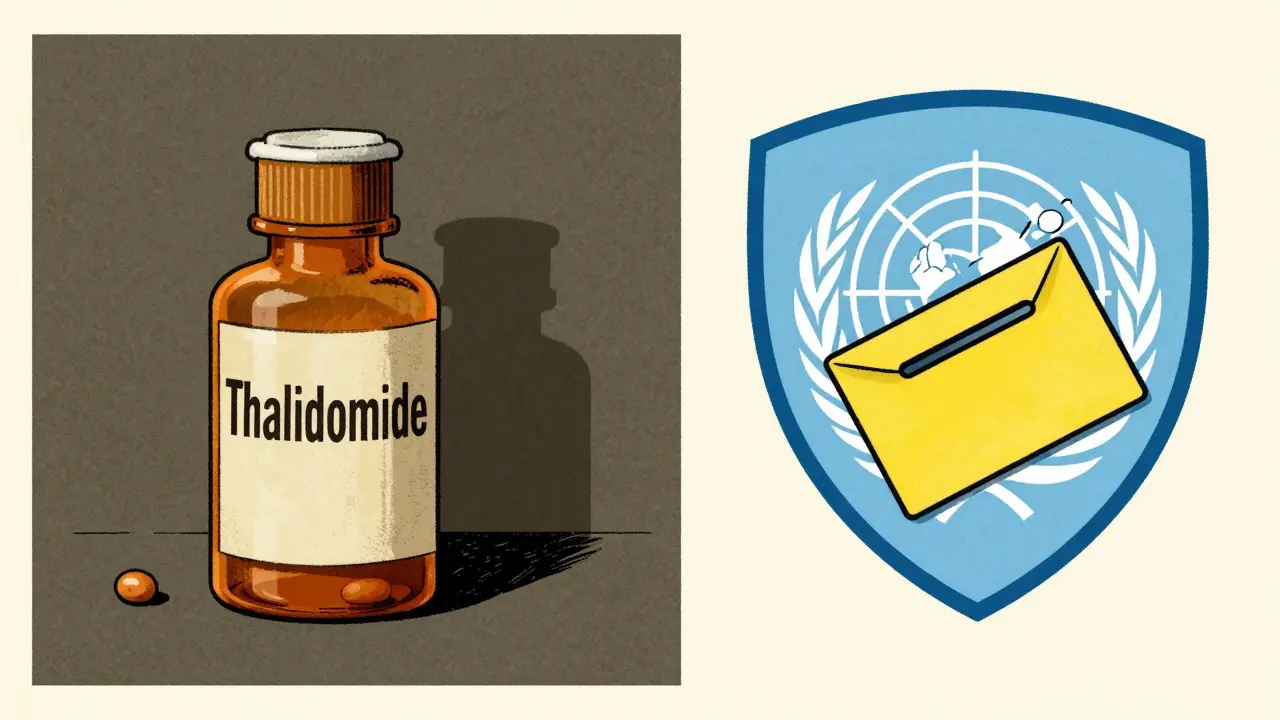
Pharmacovigilance didn't exist forever. Its modern roots trace back to a tragedy in the early 1960s involving thalidomide, a sedative prescribed to pregnant women that caused severe birth defects. This disaster shocked the world and highlighted the urgent need for better drug monitoring.
In response, the World Health Organization (WHO) launched its International Drug Monitoring Programme in 1968. Since then, countries have built robust systems. The UK’s Yellow Card Scheme, established in 1964, was actually the world's first pharmacovigilance program. Today, 94% of countries have national pharmacovigilance centers, up from just 79% in 2015.
How Side Effects Are Detected: The Tools of the Trade
Finding hidden side effects requires a mix of passive and active surveillance methods. Here is how the system works on the ground:
- Spontaneous Reporting Systems: These rely on healthcare providers and patients to report suspected adverse reactions. The FDA’s MedWatch program, established in 1993, receives about 1.2 million reports a year. Similarly, Europe’s EudraVigilance database processed 28.5 million individual case safety reports from 108 countries as of late 2022.
- Electronic Health Record (EHR) Mining: Instead of waiting for reports, systems actively scan medical records. The FDA’s Sentinel Initiative, launched in 2008, accesses data from over 300 million patient records. It uses algorithms to flag unusual trends automatically.
- Patient Registries: These follow specific groups of patients over time. For instance, if a drug treats a rare disease, a registry tracks all known users to monitor long-term outcomes.
- Record Linkage: Databases are connected to find correlations. The UK’s Clinical Practice Research Datalink covers 45 million patients, allowing researchers to link prescription data with hospital admissions and lab results.
The Role of Artificial Intelligence in Signal Detection
With millions of reports coming in, humans alone can’t keep up. This is where technology steps in. The FDA launched an AI-powered version of its Sentinel System in 2023. It processes 5 million new patient records daily using natural language processing. This allows the system to identify potential safety signals 73% faster than previous methods.
AI isn't just about speed; it’s about accuracy. IBM Watson Health’s 2023 system achieved 87.4% accuracy in predicting adverse drug reactions from social media data. While social media isn't a primary source, it provides real-time insights into how patients experience side effects outside clinical settings.
The European Medicines Agency (EMA) is also modernizing. By December 2025, the EU Single Database will consolidate all pharmacovigilance activities, replacing 27 separate national systems. This harmonization aims to reduce signal detection time significantly.
Real-World Impact: When Surveillance Saves Lives
Post-marketing pharmacovigilance isn't just bureaucracy; it directly impacts public health. Consider the case of Vioxx (rofecoxib), a painkiller approved in 1999. Initial trials involved 5,000 patients and showed no major heart risks. However, post-marketing surveillance of over 80 million users revealed a 1.97-fold increased risk of myocardial infarction. The drug was withdrawn in 2004, preventing countless heart attacks.
Dr. Jeffrey Kelman, Director of the FDA's Office of Surveillance and Epidemiology, noted in 2022 that post-marketing surveillance identified 78% of serious safety issues for drugs approved between 2001 and 2010. Alarmingly, 31% of these issues emerged more than five years after approval. This proves that vigilance must continue indefinitely.
Challenges in the Current System
Despite its importance, the system has flaws. One major issue is underreporting. Harvard Medical School research in 2020 estimated that only 1-10% of adverse events are reported to MedWatch. Why? Because reporting is cumbersome. A 2022 survey found that 68% of physicians found the process tedious, taking an average of 22 minutes per report.
Data quality is another hurdle. An FDA analysis in 2022 showed that 37% of FAERS reports lack complete dosage information. Without accurate details, it’s hard to determine if the drug caused the reaction or if it was due to an incorrect dose.
Small biotech companies also struggle. While top pharmaceutical firms have nearly 60 full-time staff dedicated to pharmacovigilance, small biotechs average just 3.2. This resource gap can delay safety assessments and leave patients at risk.
What You Can Do: Patient Empowerment
You play a crucial role in this ecosystem. Only 12% of consumers were aware of MedWatch in a 2021 FDA focus group, yet 83% said they would report side effects if given easy digital tools. Here’s how you can help:
- Keep a Symptom Diary: Note when you start a new medication and any changes in how you feel. Include dates and severity.
- Report Suspected Reactions: Don’t assume your side effect is normal. Contact your doctor or use online portals like MedWatch (US) or the Yellow Card Scheme (UK).
- Share Information: Tell your pharmacist about all supplements and other drugs you take. Interactions often cause unexpected side effects.
- Stay Informed: Read patient leaflets and check for updates on drug safety warnings from official health agencies.
Remember, your report could be the missing piece that protects others. As Professor Munir Pirmohamed emphasized, integrating patient feedback with genetic data can identify at-risk populations, reducing incidents of severe reactions like Stevens-Johnson syndrome by up to 95% in some cases.
Global Differences in Pharmacovigilance
Not all countries handle drug safety the same way. The US relies heavily on passive surveillance via MedWatch, supplemented by active Sentinel data. Europe operates under a harmonized framework with mandatory Good Pharmacovigilance Practices (GVP). Japan takes a stricter approach, requiring 4-10 years of mandatory reexamination periods for new drugs.
| Region | Primary System | Annual Reports (Approx.) | Key Feature |
|---|---|---|---|
| United States | MedWatch / Sentinel | 1.2 million (MedWatch) | Active surveillance via EHR mining |
| European Union | EudraVigilance | 2.4 million | Harmonized GVP modules across 30 countries |
| United Kingdom | Yellow Card Scheme | 87,000 | World’s first PV program; high professional participation |
| Japan | PMS System | 150,000 | Mandatory 4-10 year reexamination periods |
Emerging markets face significant challenges. Africa has only 38 operational national pharmacovigilance centers serving 54 countries. This results in a reporting rate of just 0.2 reports per 100,000 population, compared to 182.7 in the EU. Bridging this gap is critical for global health equity.
The Future of Drug Safety Monitoring
The landscape is evolving rapidly. Blockchain technology is being piloted by companies like Novartis and Roche to ensure secure data sharing, achieving 99.8% data integrity in trials. Wearable devices are also integrating into pharmacovigilance. Apple’s partnership with Pfizer allows for continuous atrial fibrillation monitoring, providing real-world data on drug efficacy and safety.
By 2030, the WHO aims to increase global reporting rates by 50% and reduce signal detection time by 75%. McKinsey & Company projects that real-world evidence from pharmacovigilance will influence 65% of regulatory decisions by 2030, up from 28% in 2022. This shift means your daily experiences with medication will increasingly shape drug policy worldwide.
Post-marketing pharmacovigilance is not just a regulatory requirement; it is a collaborative effort involving scientists, doctors, companies, and patients. Understanding how it works empowers you to take control of your health and contribute to a safer medical environment for everyone.
What is post-marketing pharmacovigilance?
Post-marketing pharmacovigilance is the systematic monitoring of drug safety after a medication has been approved and released to the market. Its goal is to detect, assess, and prevent adverse drug reactions that were not identified during pre-approval clinical trials.
Why are side effects not always found in clinical trials?
Clinical trials typically involve small sample sizes (1,000-5,000 participants) and exclude people with complex health conditions. Rare side effects or those arising from drug interactions may not appear until the drug is used by millions of diverse patients in real-world settings.
How can I report a side effect?
In the US, you can use the FDA’s MedWatch program. In the UK, you can submit a report via the Yellow Card Scheme. Many countries have similar online portals. You can also inform your doctor or pharmacist, who can report it on your behalf.
What is the role of AI in pharmacovigilance?
AI helps process vast amounts of data quickly. Systems like the FDA’s Sentinel 3.0 use natural language processing to analyze millions of patient records daily, identifying potential safety signals much faster than manual review. AI also predicts adverse reactions from social media and electronic health records.
Is pharmacovigilance mandatory for all drugs?
Yes, in most developed countries, pharmacovigilance is a mandatory regulatory requirement. Pharmaceutical companies must submit periodic safety update reports and implement risk management plans for high-risk products.
What happened with Vioxx?
Vioxx was a painkiller withdrawn in 2004 because post-marketing surveillance revealed a significantly increased risk of heart attacks. Initial clinical trials with 5,000 patients missed this risk, which became apparent only after millions of people used the drug.
Why is underreporting a problem?
Underreporting means dangerous side effects might go undetected. Studies suggest only 1-10% of adverse events are reported. This delays regulatory action and puts more patients at risk. Simplified reporting tools aim to address this issue.
How does pharmacovigilance differ globally?
Systems vary by region. The US uses a mix of passive and active surveillance. Europe has a harmonized framework with EudraVigilance. Japan mandates long reexamination periods. Emerging markets often lack sufficient infrastructure, leading to lower reporting rates.
What is the future of drug safety monitoring?
The future includes greater use of AI, blockchain for data security, and integration of wearable device data. Real-world evidence will increasingly drive regulatory decisions, aiming to detect signals faster and protect patients more effectively.
Can patients influence drug safety policies?
Yes, by reporting side effects and participating in registries. Patient-generated data is becoming a key component of pharmacovigilance. Your reports help identify risks and shape future drug approvals and warnings.
Sarah Boomgaard
July 7, 2026 AT 08:36It is absolutely disgusting how these big pharma companies get away with killing people and then just shrug it off as a 'statistical anomaly'.
Gilbert Bankual
July 9, 2026 AT 05:52This is actually really important info. We need to keep pushing for better transparency in the system. Every report counts, so don't be shy about submitting them if something feels off!
Ashley Loera
July 9, 2026 AT 17:36OMG I had no idea it was this bad!! My doctor never told me any of this stuff and i feel like such an idiot for trusting him blindly. Why is everyone so lazy??
fred morgan
July 10, 2026 AT 10:31The statistical limitations of clinical trials are well-documented. The reliance on post-marketing surveillance is not a failure of design but a necessity of scale. It is prudent to acknowledge that no finite sample can capture infinite variability.
Dawn Renee
July 10, 2026 AT 21:18You think its real? Please. The FDA is owned by the same corporations they claim to regulate. All those 'side effects' are suppressed until the stock price drops enough. Wake up sheeple.
Anna Bartle
July 11, 2026 AT 18:59Great points here! Did you know you can also use apps to track your symptoms now? It makes reporting SO much easier! Don't forget to check your local health agency's website for updates too!!!
Divya Prakash
July 13, 2026 AT 10:52One must consider the epistemological implications of relying on anecdotal evidence from untrained individuals. The sheer volume of data does not equate to quality. It is a chaotic mess of subjective interpretation masquerading as scientific rigor, which is precisely why we have experts to filter out the noise from the layperson's hysterical claims.
Mohit Patil
July 13, 2026 AT 23:47they want us sick so we buy more meds. its a control mechanism. look at the history of thalidomide. they knew. they always know. but who cares about the truth when there is profit to be made from your suffering
Katie Dixon
July 15, 2026 AT 05:50Honey, this is exactly why American medicine is superior. We have the best tech, the best AI, and the best systems. Other countries are lucky to have our standards exported to them. You should be proud to live where innovation happens first!
Amrithaa Thayaparan
July 15, 2026 AT 14:27Its pathetic how people just take pills without thinking. You are basically volunteering to be a lab rat for free. Big Pharma loves you for it. Stop being so naive and do your own research instead of trusting these corrupt institutions.
Chris Munton
July 17, 2026 AT 04:13The moral decay of society is evident in how we treat medical safety as an afterthought rather than a primary concern. We prioritize speed to market over human life, and this systemic negligence is a direct reflection of our collective ethical bankruptcy. We must demand accountability.
Chandan Sharma
July 18, 2026 AT 22:49Indeed, the tapestry of pharmacovigilance is woven with threads of both triumph and tragedy. It is a delicate dance between innovation and caution, requiring a nuanced understanding that eludes the casual observer. One must appreciate the intricate ballet of data mining and regulatory oversight that keeps the specter of adverse events at bay.