
Pharmacist Advocacy: Boosting Immunization Rates and Generic Prescriptions
 Apr, 20 2026
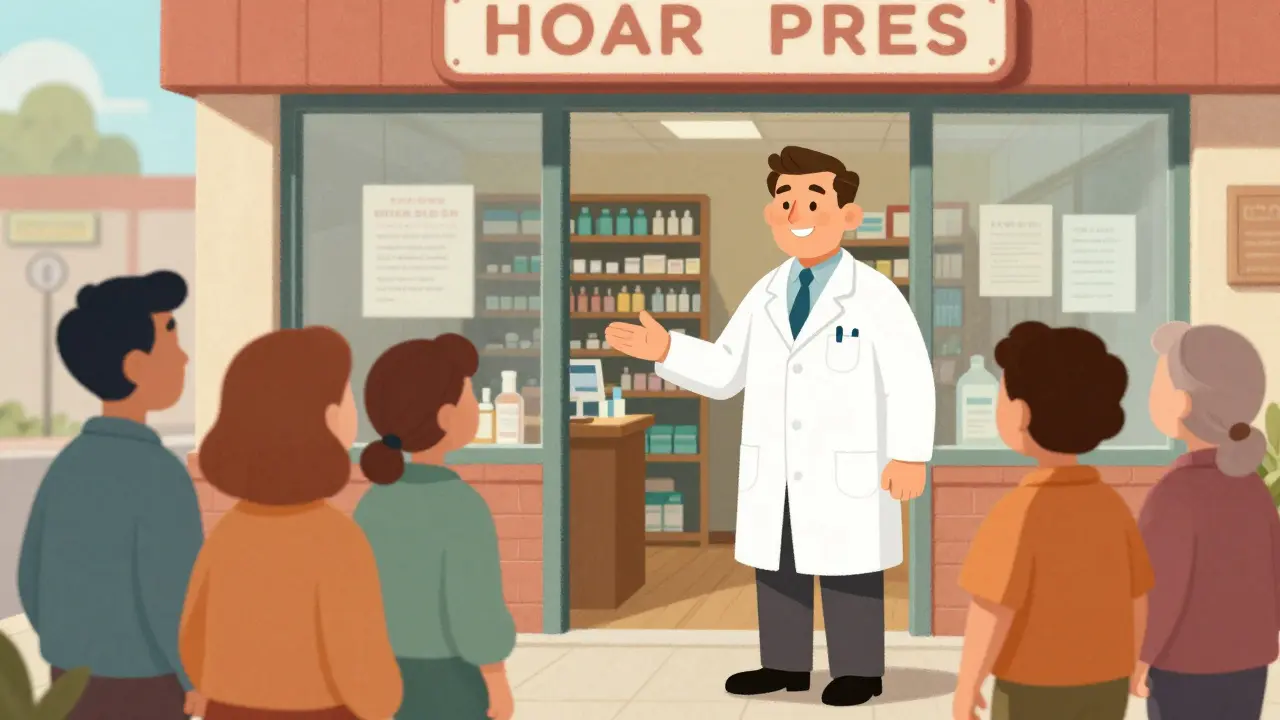
Walking into a local pharmacy is often the easiest way to get healthcare. For many of us, the pharmacist is the only provider we can see without a three-week wait or a formal appointment. But the role of the pharmacist has shifted. They aren't just counting pills and putting them in orange bottles anymore; they've become essential advocates for public health. By pushing for higher pharmacist advocacy in immunizations and the use of generic medications, these professionals are closing the gap in patient care and making healthcare more affordable.
Why Your Local Pharmacy is the New Vaccination Hub
Think about where you live. Statistically, about 93% of Americans are within five miles of a community pharmacy. Compare that to the trek to a specialist's office or a large hospital, and the choice is obvious. Pharmacies offer extended hours and a "walk-in" culture that removes the biggest barrier to healthcare: inconvenience.
This accessibility has turned pharmacies into a powerhouse for public health. For example, during the 2019-2020 season, the CDC reported that community pharmacies handled 32% of all adult flu shots. When you add in the massive scale of chain pharmacies, which administered over 35 million flu vaccines in a single season, it's clear that pharmacists are doing the heavy lifting in preventative medicine.
But it's not just about the shot in the arm. Pharmacists act as a bridge for the vaccine-hesitant. Many people who feel nervous about mRNA technology or potential side effects find it easier to have a quick, informal chat with their pharmacist than to schedule a formal consultation. These 7-to-10-minute conversations often solve more problems than a formal brochure ever could.
The Fight for Generic Prescriptions and Lower Costs
Advocacy isn't just about vaccines; it's about the wallet. One of the most impactful ways a pharmacist helps a patient is by suggesting lower-cost medication alternatives. When a doctor prescribes a brand-name drug, the pharmacist is often the first person to spot a generic prescription that is bioequivalent-meaning it works exactly the same way-but costs a fraction of the price.
This is a critical service because medication non-compliance is often driven by cost. When a patient sees a $200 price tag for a brand-name drug, they might skip doses or stop taking the medicine entirely. By advocating for the generic version, pharmacists ensure that the patient actually takes their medication, which prevents expensive emergency room visits down the line.
| Feature | Traditional Clinic | Community Pharmacy |
|---|---|---|
| Wait Time | Days/Weeks | Minutes/Hours |
| Appointment Required | Usually Yes | Usually No |
| Cost Optimization | Physician-led | Pharmacist-led (Generic focus) |
| Accessibility | Zoned/Regional | High Density (Local) |
Navigating the Legal Patchwork
If you're a pharmacist, you know that your ability to help patients often depends on which state line you're standing behind. In the 90s, only a handful of states let pharmacists give vaccines. Today, it's all 50 states, but the "how" varies. Some areas use standing orders, while others require a direct prescription from a doctor.
Take California, for example. Legislation like AB 577 has expanded the scope of practice, allowing pharmacists to initiate and administer almost any FDA-approved immunization for people aged three and older. This isn't just a legal win; it's a practical one. It means a parent doesn't have to make two separate trips-one to the pediatrician for a script and one to the pharmacy for the shot.
However, the administrative burden is still a headache. Many pharmacists describe the current system as a "patchwork" of laws. When rules change from city to city or state to state, it creates a mountain of paperwork that takes time away from actual patient care. This is why professional organizations are pushing for a unified national standard.
The Money Problem: PBMs and Reimbursement
Here is the part that patients rarely see: the financial struggle of the independent pharmacist. While the market for immunization services has grown to billions of dollars, the money doesn't always reach the person giving the shot. Pharmacy Benefit Managers, or PBMs, often sit in the middle of the transaction and slash the reimbursement rates.
The National Community Pharmacists Association (NCPA) has found that about 78% of independent pharmacists feel that PBM practices have actively harmed their ability to provide care. When a pharmacist is reimbursed at a rate that covers only 87% of the actual cost of the service (as noted by MedPAC), it becomes a struggle to keep the lights on, let alone invest in new vaccine refrigerators or specialized training.
This financial pressure is why the "Finish the Fight" campaign is so important. By mobilizing thousands of letters to Congress, the profession is fighting for a fair payment model that recognizes the clinical value of the pharmacist, not just the product they sell.
Bridging the Gap with Primary Care
One of the biggest risks of the "pharmacy-first" model is the potential for a communication breakdown. If you get your flu shot at the drugstore but your primary doctor doesn't know about it, your medical records become fragmented. Dr. William Schaffner from Vanderbilt University has pointed out that coordination is essential to prevent missed opportunities for other vaccines.
The solution isn't to stop using pharmacies, but to fix the technology. We need integrated electronic health records (EHR) that allow a pharmacy in one town to instantly update a doctor's file in another. Currently, 89% of pharmacists support these integrated systems. Until that happens, the burden of "carrying the card" or remembering the date of the last shot still falls on the patient.
How Pharmacists Get Ready to Advocate
Becoming an immunizer isn't as simple as reading a manual. It requires a significant time investment. Most pharmacists undergo 20-30 hours of didactic and practical training. The American Pharmacists Association (APhA) now ensures that 98% of pharmacy schools include this training in their curriculum, treating vaccination as a core clinical skill rather than an optional add-on.
Beyond the needle, they also have to manage the science of storage. Vaccine spoilage due to temperature changes is a real risk, with some pharmacies losing over $1,000 in a single incident because a fridge failed. This level of technical oversight is part of the "invisible" work pharmacists do to ensure that the vaccine you get is actually effective.
Can a pharmacist prescribe a generic drug if the doctor wrote a brand-name one?
In most cases, pharmacists can substitute a generic for a brand-name drug unless the physician specifically writes "do not substitute" or "dispense as written." Pharmacists advocate for generics to help patients save money and stay consistent with their treatment.
Are pharmacy-administered vaccines as safe as those at a doctor's office?
Yes. Pharmacists undergo rigorous certification and training, often through the APhA, and follow strict CDC guidelines for administration and storage to ensure safety and efficacy.
Why are some vaccines not available at pharmacies?
This is usually due to state scope-of-practice laws or age restrictions. While many states are removing these limits, some still require pediatric vaccines to be administered by a physician.
What are PBMs and why do they affect my pharmacy?
Pharmacy Benefit Managers (PBMs) are third-party administrators of prescription drug programs. They negotiate prices between insurers and pharmacies, but their pricing models can sometimes reduce the amount a pharmacy is paid, making it harder for small pharmacies to survive.
How do I know if a generic version of my medicine is available?
The best way is to ask your pharmacist. They have access to databases that identify bioequivalent generics and can discuss the cost savings and effectiveness with you and your doctor.
Next Steps for Patients and Providers
If you are a patient, the next time you pick up a prescription, ask your pharmacist if you are up to date on your immunizations. It takes two minutes to check and can save you a trip to the clinic. If you're struggling with the cost of a medication, specifically ask, "Is there a generic alternative that would work just as well?"
For pharmacists, the focus remains on policy. Supporting legislation that removes age restrictions for vaccines and pushing for PBM transparency are the only ways to ensure the pharmacy remains a viable part of the healthcare team. The goal is simple: a world where the most accessible healthcare provider is also the most empowered one.