
Naloxone Co-Prescribing: A Practical Guide to Overdose Prevention for Opioid Patients
 May, 25 2026
Opioid Risk & Naloxone Eligibility Calculator
1. Medication Dosage
Enter the total daily dosage for each medication you are currently taking.
2. Additional Risk Factors
Your Assessment
Did You Know?
The CDC recommends offering naloxone to patients taking 50 or more MME per day. However, combining opioids with benzodiazepines multiplies the risk regardless of dose.
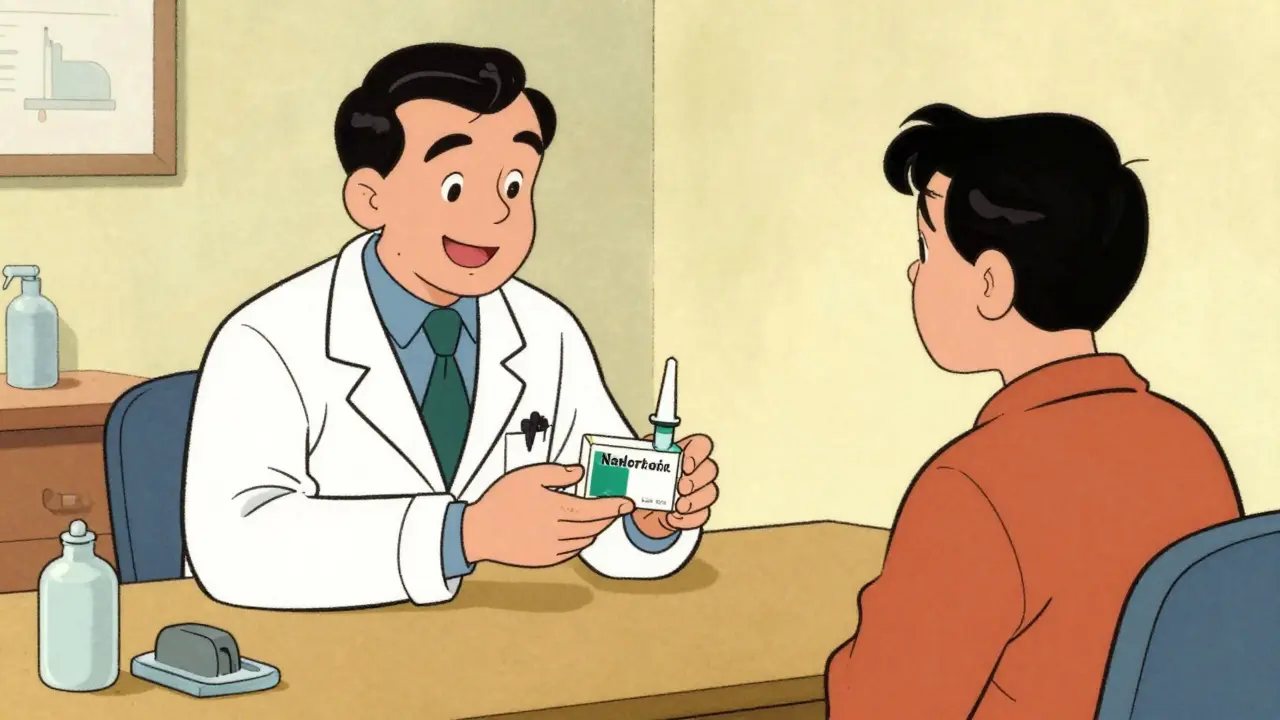
Imagine you are a doctor sitting across from a patient who needs strong pain medication. You know the risks. You know that opioids can slow breathing to a dangerous stop. For years, this was a silent tension in medical offices. Today, there is a clear solution: naloxone co-prescribing. This practice involves giving patients an emergency antidote alongside their painkillers. It is not about judging anyone. It is about keeping people alive.
This guide explains why healthcare providers prescribe naloxone with opioids, who really needs it, and how to use it effectively. We will look at the science, the costs, and the real-world stories of how this simple step saves lives.
Key Takeaways
- Naloxone is a life-saving medication that reverses opioid overdoses by blocking opioid receptors in the brain.
- Clinicians should offer naloxone to patients taking 50 or more morphine milligram equivalents (MME) per day, or those with additional risk factors like sleep apnea or benzodiazepine use.
- Intranasal sprays like Narcan® are the preferred method because they are easy to use and require no needles.
- Federal laws and most insurance plans now cover naloxone, often with little to no cost to the patient.
- Education is critical; patients and families must know the signs of overdose and how to administer the drug immediately.
What Is Naloxone Co-Prescribing?
Naloxone is an opioid antagonist medication that rapidly reverses respiratory depression caused by opioid overdose. It works by attaching to opioid receptors in the brain more strongly than opioids do. When someone is overdosing, their breathing slows down dangerously. Naloxone kicks the opioids off those receptors, waking the person up and restoring normal breathing within minutes.
Co-prescribing is the clinical practice of prescribing naloxone simultaneously with opioid analgesics to patients at risk of overdose. This concept became standard care after the Centers for Disease Control and Prevention (CDC) issued its guideline in 2016. Before this, many doctors felt uncomfortable discussing overdose risk. They feared it would upset patients or damage the doctor-patient relationship. But data showed that silence was deadly. With nearly 48,000 opioid-related deaths in the U.S. in 2017 alone, the medical community shifted toward harm reduction. The goal changed from just managing pain to ensuring safety.
Think of naloxone like a fire extinguisher in your kitchen. You hope you never need it. But if you have a stove, you should have one nearby. For patients on long-term opioid therapy, naloxone is that safety net.
Who Needs Naloxone? Identifying High-Risk Patients
Not every patient taking ibuprofen needs naloxone. But for those on prescription opioids, specific markers indicate higher danger. The CDC and the Department of Health and Human Services (HHS) provide clear criteria. If any of these apply, co-prescribing is recommended:
- High Dosage: Patients taking 50 or more morphine milligram equivalents (MME) per day. At this level, the risk of overdose doubles compared to lower doses.
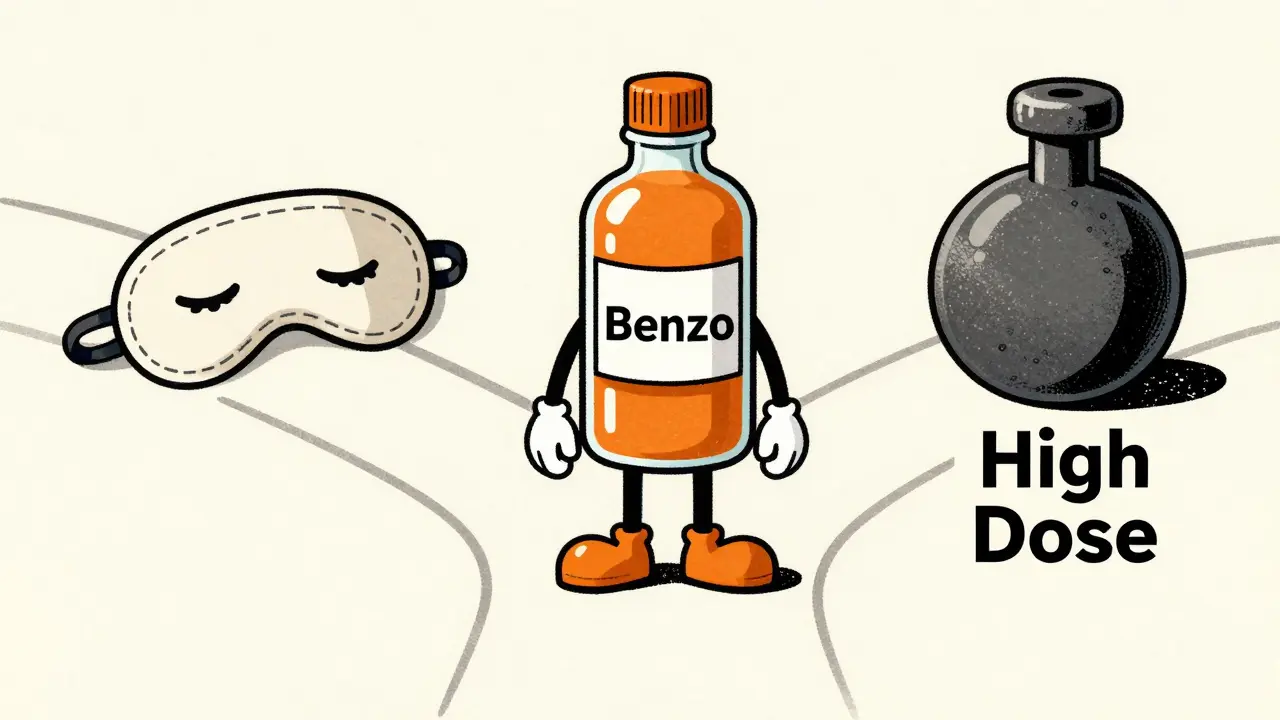
- Concurrent Benzodiazepines: Taking drugs like Xanax or Valium with opioids is extremely dangerous. Both suppress breathing. Combining them multiplies the risk regardless of the opioid dose.
- History of Overdose: A previous non-fatal overdose is the strongest predictor of a future fatal one.
- Respiratory Conditions: Diseases like COPD or obstructive sleep apnea already strain the lungs. Adding opioids makes breathing failure more likely.
- Mental Health or Substance Use Disorders: Depression, anxiety, or past struggles with addiction increase vulnerability.
- Recent Release from Incarceration: Prison time lowers opioid tolerance. Returning to previous doses upon release can be fatal.
It is important to note that state laws vary. In New York, for example, providers must offer naloxone to all patients receiving opioid prescriptions. In California, the mandate kicks in at 90 MME/day. Always check local regulations, but err on the side of caution. Saving a life is worth the extra conversation.
How to Calculate Risk: Understanding MME
You might wonder, "Is my dose high?" Doctors use a metric called Morphine Milligram Equivalents (MME). Different opioids have different strengths. Oxycodone is stronger than hydrocodone. Fentanyl is vastly stronger than both. To compare them fairly, we convert everything to MME.
| Opioid Medication | Daily Dose Example | MME Equivalent | Risk Level |
|---|---|---|---|
| Oral Morphine | 30 mg | 30 MME | Low/Moderate |
| Oral Oxycodone | 20 mg | 30 MME | Low/Moderate |
| Oral Hydrocodone | 15 mg | 30 MME | Low/Moderate |
| Transdermal Fentanyl | 25 mcg/hour patch | 30 MME | Low/Moderate |
| Combined High Dose | Varying | ≥50 MME | High (Co-prescribe) |
The CDC provides an online MME calculator. Doctors use this tool daily. If your total daily intake hits 50 MME, ask your provider about naloxone. Do not wait for a warning sign. Prevention is proactive.
Types of Naloxone and How to Use Them
When you get a naloxone prescription, you will likely receive one of two main forms. Knowing the difference matters in an emergency.
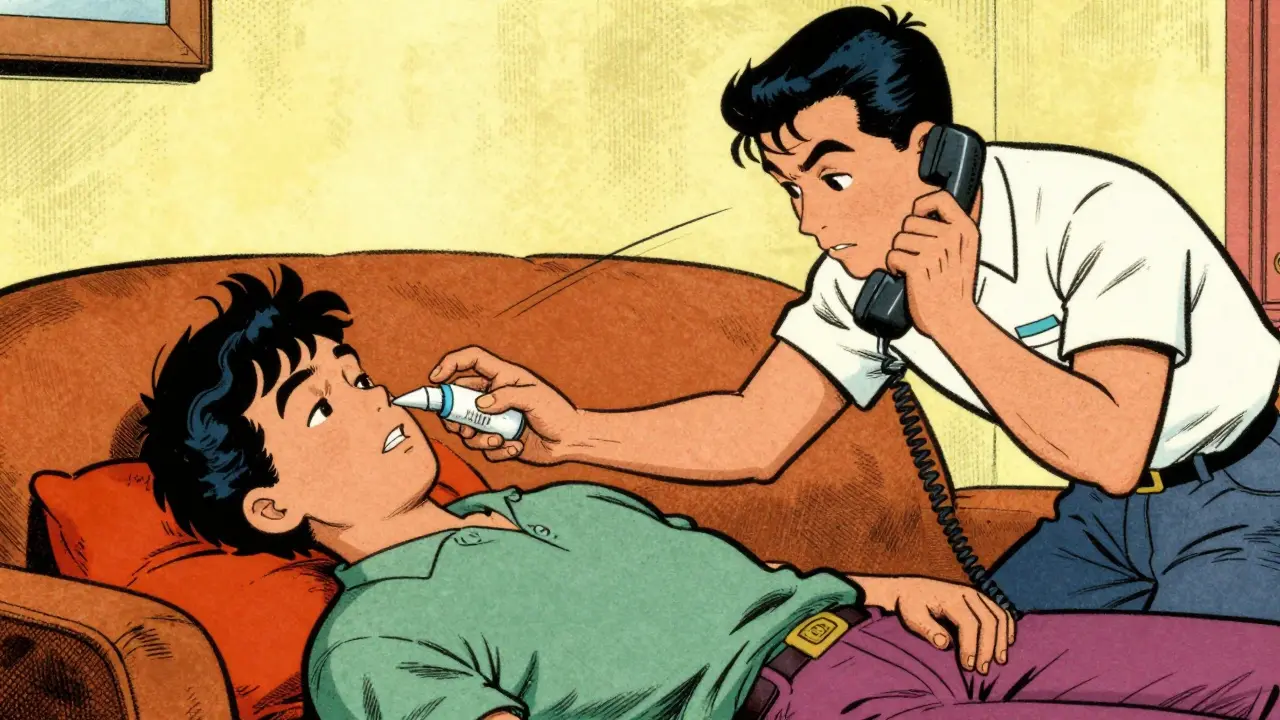
- Intranasal Spray (e.g., Narcan®, Kloxxado™): This is the gold standard for home use. It comes in a pre-filled device. No needles. No mixing. You simply insert the tip into one nostril and press the plunger. It delivers a fixed dose (usually 4 mg) directly into the bloodstream through the nasal mucosa. It is fast, discreet, and easy for laypeople to use.
- Injectable Kits: These involve drawing liquid naloxone into a syringe and injecting it into a muscle or vein. While effective, they require training and carry the risk of needle-stick injuries. Most patients prefer the spray.
Here is what to do in an overdose situation. Remember the acronym S.L.A.M.:
- S - Signs: Check for pinpoint pupils, unresponsiveness, and slow or stopped breathing.
- L - Life-saving steps: Call 911 immediately. Start rescue breathing if trained.
- A - Administer: Give the naloxone spray into the nose.
- M - Monitor: Watch the person closely. If they do not wake up in 2-3 minutes, give a second dose. Stay with them until help arrives. Note that naloxone wears off faster than some opioids, so repeated dosing may be needed.
Cost, Insurance, and Access
Money should not stand between a patient and survival. Historically, brand-name Narcan® cost around $130-$150 out of pocket. That price tag scared many people away. However, the landscape has changed significantly.
The SUPPORT for Patients and Communities Act of 2018 required Medicare Part D and Medicaid to cover naloxone without restrictions. Most private insurers follow suit. Today, generic naloxone kits cost between $25 and $50. Many pharmacies offer them over-the-counter now, meaning you do not even need a prescription to buy them in many states.
If cost is still a barrier, look for community programs. Organizations like Facing Addiction and local health departments often distribute free naloxone kits. Pharmacies in urban areas stock it consistently, though rural access remains a challenge. As of 2024, federal standing orders allow pharmacists to dispense naloxone widely, bridging the gap in underserved regions.
Overcoming Stigma and Building Trust
Let’s address the elephant in the room. Some patients feel judged when offered naloxone. They think, "My doctor thinks I’m going to die." Or, "This means I’m an addict." This stigma is real. A 2021 survey found that 42% of patients cited fear of judgment as a reason for refusing naloxone.
Doctors are learning to frame the conversation differently. Instead of focusing on risk, focus on safety. "I give this to all my patients on high-dose pain meds. It’s like a seatbelt. We don’t wear seatbelts because we plan to crash. We wear them because accidents happen."
Patient testimonials support this approach. Sarah Johnson, a chronic pain patient in Ohio, initially felt offended by the prescription. But when her teenage son accidentally took her pills, the naloxone spray saved his life. She later said, "I was wrong to be angry. That little bottle is the most important thing in our house."
For caregivers, knowing how to use naloxone brings peace of mind. A 2022 survey found that 78% of family members felt more secure having naloxone available. Education reduces fear. Ignorance fuels it.
Implementation Tips for Providers and Patients
Getting naloxone into hands requires action. Here is a checklist for smooth implementation:
- For Providers: Use EHR templates to automate risk assessment. Include naloxone education in routine visits. Spend 5-7 minutes explaining usage. Provide written instructions.
- For Patients: Keep naloxone accessible, not locked away. Ensure family members know where it is. Practice using a trainer device if available. Check expiration dates regularly.
- For Families: Learn the signs of overdose. Do not hesitate to call 911. Good Samaritan laws protect bystanders who seek help during an overdose in most states.
Remember, naloxone is not a cure for opioid use disorder. It is a bridge. It buys time. Comprehensive treatment, including counseling and medication-assisted therapy, addresses the root causes. But first, you must survive the night. Naloxone ensures that chance.
Does naloxone work on fentanyl?
Yes, naloxone works on fentanyl. However, fentanyl is much more potent than other opioids. You may need to administer multiple doses of naloxone (every 2-3 minutes) to reverse a fentanyl overdose. Do not stop trying if the first dose does not work immediately.
Can naloxone cause withdrawal symptoms?
Yes, if given to someone physically dependent on opioids, naloxone can trigger sudden withdrawal. Symptoms include nausea, vomiting, agitation, and sweating. While unpleasant, these symptoms are not life-threatening. Saving a life from respiratory arrest takes priority over temporary discomfort.
How long does naloxone last in the body?
Naloxone typically lasts 30 to 90 minutes. Many prescription opioids last longer. This means the person could slip back into overdose once the naloxone wears off. Continuous monitoring and repeated doses are essential until emergency medical services arrive.
Do I need a prescription for naloxone?
In many states, you can buy naloxone over-the-counter without a prescription. However, getting a prescription allows insurance coverage, reducing out-of-pocket costs. Check your local pharmacy laws and insurance benefits.
What if I am not sure if someone is overdosing?
If someone is unconscious and not breathing normally, assume it is an overdose. Administer naloxone. It has no effect on someone who has not taken opioids. There is no harm in giving it, but there is great risk in waiting.