
Managing Medication Storage in Hot Climates While Traveling
 Mar, 6 2026
Medication storage isn’t just about keeping pills in a bottle. When you’re traveling through a hot climate-whether it’s a desert road trip, a beach vacation, or a city where the thermometer hits 100°F-your meds can start breaking down before you even reach your destination. And if they lose potency, it’s not just inconvenient. It’s dangerous.
Why Heat Ruins Your Medication
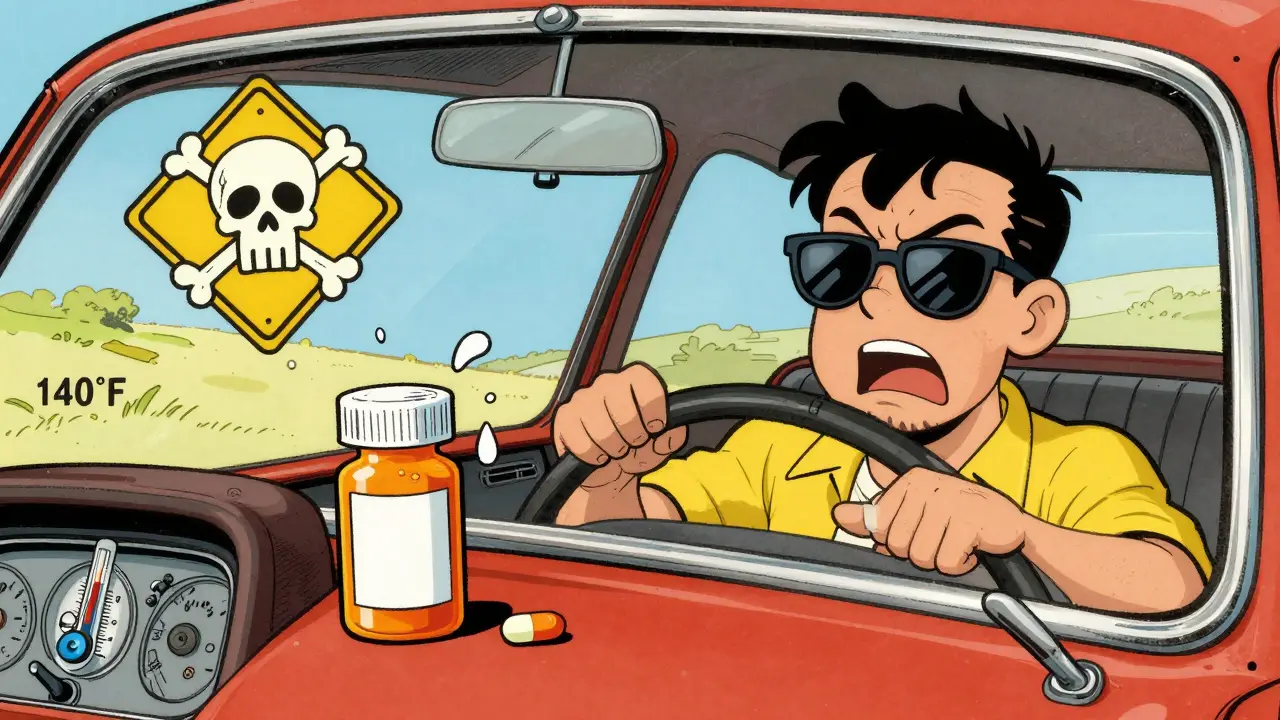
Most pills and liquids are designed to stay stable between 68°F and 77°F (20°C to 25°C). That’s the official "room temperature" range for medications, not the 85°F your house might hit in summer. In a car parked under the sun, temperatures can spike to 140°F in under 30 minutes. That’s not just hot-it’s destructive.Insulin, EpiPens, birth control pills, thyroid meds, and even some antibiotics begin to degrade above 86°F (30°C). Research from Cedars-Sinai shows that after just 24 hours at 104°F, some hormonal medications lose up to 32% of their effectiveness. That’s not a small drop. For someone relying on insulin or an EpiPen, that loss could mean the difference between life and emergency.
It’s not just about pills. Inhalers like albuterol can clog or leak. Liquid antibiotics can separate. Suppositories can melt. Even vitamins and supplements aren’t immune. If your meds look discolored, sticky, or smell odd, they’ve likely been damaged.
What You Should Never Do
- Leave meds in the car. Glove compartments, center consoles, and trunks are death traps. A 2021 study from A4PC.org found that even on a mild 85°F day, a car’s interior can hit 120°F in 20 minutes. By 30 minutes, it’s over 140°F.
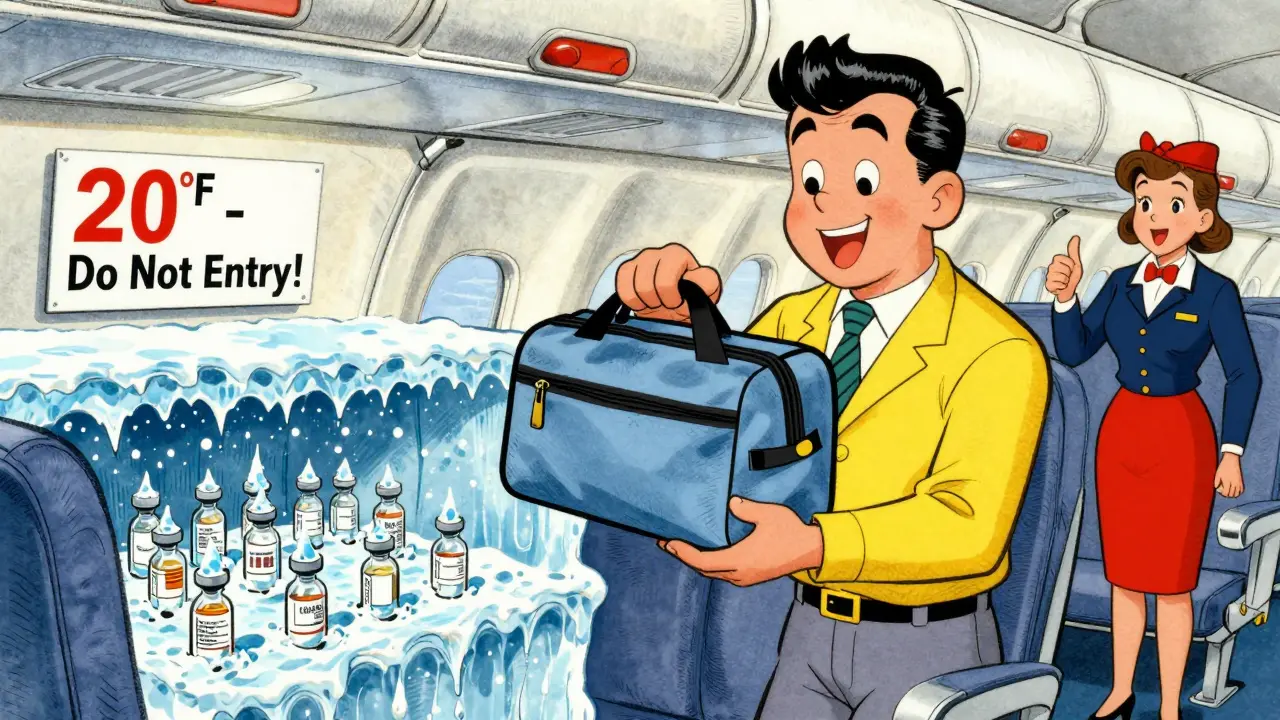
- Check your bag. Airline cargo holds can drop below freezing. The International Air Transport Association confirmed that checked luggage can reach 20°F (-6.7°C) during long flights. Freezing can ruin insulin, liquid meds, and some injectables.
- Assume your hotel fridge is safe. Standard hotel fridges cycle between 35°F and 45°F, which is okay for refrigerated meds-but they also have humidity spikes and temperature swings. Without monitoring, you’re gambling.
How to Pack Medication for Heat
There’s a simple system: cool chain. It’s not fancy. It’s just insulation + temperature control.
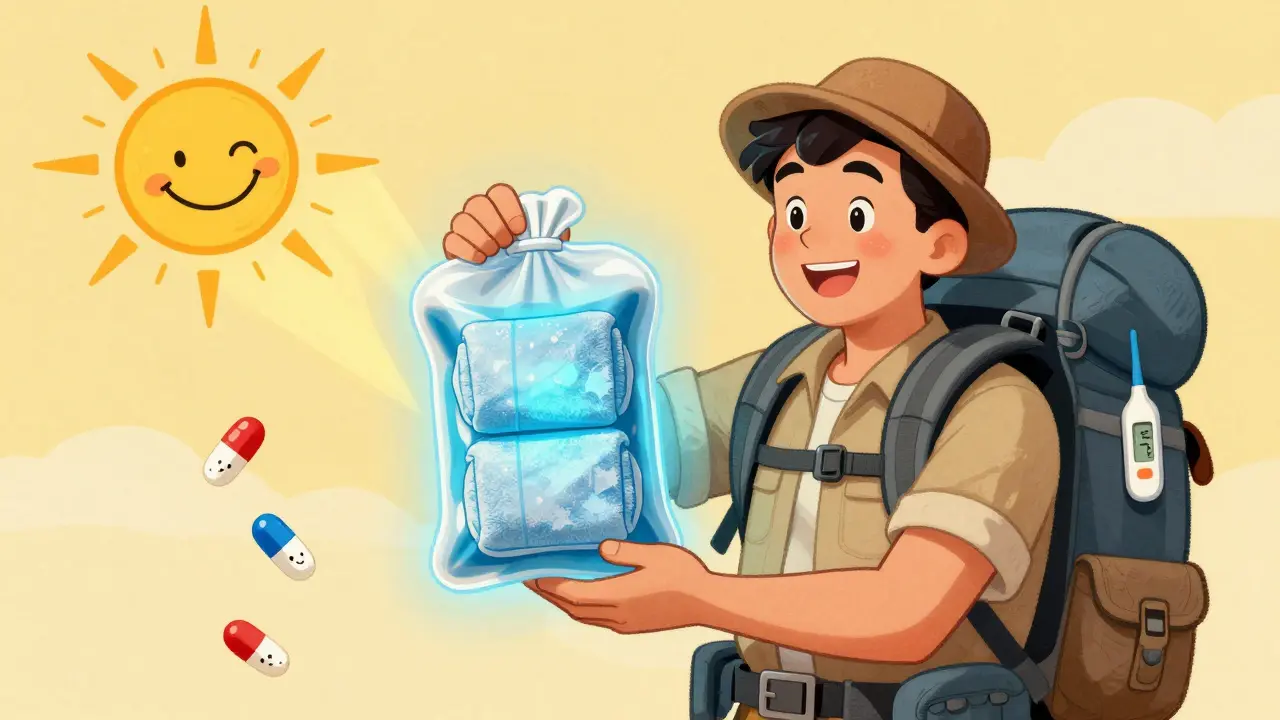
- Start with the right container. Use an insulated medication bag with phase-change material. Products like the MedActiv Travel Case ($34.99) or Frio Insulated Wallet ($24.99) maintain 59°F-77°F for 48-72 hours-even in 100°F heat. These aren’t regular coolers. They’re designed specifically for meds.
- Use frozen gel packs the right way. Freeze two gel packs for at least 24 hours. Wrap them in a thin towel before placing them next to your meds. Direct contact can freeze your insulin or crack pills. Never let ice touch the medication.
- Keep it out of direct sun. Even with insulation, leave your bag in the shade. A shaded car seat is better than a sun-baked dashboard. Use a towel to cover the bag if you’re outdoors.
- Carry a thermometer. The American Society of Health-System Pharmacists now recommends every traveler carry a small digital thermometer. You don’t need to be a scientist. Just check the temp inside your bag every few hours. If it’s above 80°F, take action.
Smart Solutions for Serious Needs
If you’re on insulin, chemotherapy, or other high-risk meds, basic insulation isn’t enough. Consider a smart cooler.
The TempSure Medication Cooler ($129.99) and TempTraq Medication Monitor ($49.95) connect via Bluetooth to your phone. They track real-time temperature, send alerts if it goes out of range, and log data you can show to your pharmacist. Sales of these devices jumped 220% in Q2 2023. Why? Because people have learned the hard way.
One user on Reddit (u/NurseTraveler2023) shared how her patient became pregnant after leaving birth control pills in a car for two days. The pills were still in the blister pack-looked fine. But heat had broken them down. No one knew until it was too late.
Air Travel: The Hidden Danger
Planes are tricky. The cabin stays cool-68°F to 75°F-so carry your meds in your personal item. But the cargo hold? It’s a freezer. The American Journal of Health-System Pharmacy found that refrigerated meds stored in regular coolers during long flights degraded 47% faster than those in medical-grade containers.
Here’s what to do:
- Keep all meds in your carry-on. Never check them.
- Use a TSA-approved insulated bag with gel packs. Wrap them in towels.
- Have your prescriptions in original bottles with pharmacy labels. TSA requires this.
- Ask for a hand inspection if you’re nervous. You have the right to request it.
What to Do If Your Meds Get Too Hot
If you realize your insulin was left in the car for an hour, or your EpiPen got baked in the sun-don’t panic. But don’t use it either.
The FDA’s 2022 Drug Stability Guidelines say: if a medication was exposed to extreme heat for more than 24 hours, consult your pharmacist before using it. For short exposures (under 4 hours), check the appearance. If it’s discolored, cloudy, or smells weird, toss it. If it looks normal, replace it as soon as possible. Don’t risk it.
Some travel insurance providers, like Allianz, now cover replacement costs for heat-damaged meds. Check your policy. You might be covered.
What’s Changing in 2026
More is being done to protect travelers. By late 2024, the International Air Transport Association plans to install temperature-controlled compartments in aircraft cabins for medical supplies. The FDA is rolling out new labeling standards in early 2024-color-coded heat indicators on pill bottles will show if meds were exposed to unsafe temps.
And pharmacies? More are now giving out storage instructions with prescriptions. In 2020, only 42% of Medicare patients got this info. Now it’s 68%. That’s progress.
Final Checklist Before You Leave
- ✅ All meds in original containers with labels
- ✅ Insulated bag with phase-change material (not a regular cooler)
- ✅ Two frozen gel packs wrapped in towels
- ✅ Portable thermometer
- ✅ Backup supply of critical meds (insulin, EpiPen, seizure meds)
- ✅ Contact info for local pharmacy at your destination
- ✅ Travel insurance that covers medication replacement
Hot climates aren’t going away. In fact, the World Health Organization predicts medication storage challenges will rise 15-20% each year due to rising global temperatures. The solution isn’t luck. It’s preparation.
Can I leave my medication in a hotel room safe?
No. Hotel safes are often poorly insulated and can get very hot, especially in sunny climates. Many are located near windows or on exterior walls. The temperature inside can easily exceed 90°F. Always keep meds in a cooler or insulated bag, even in your hotel room.
Do I need to refrigerate all my pills?
No. Only specific meds need refrigeration: insulin, some antibiotics, eye drops, EpiPens, and certain hormone treatments. Most tablets and capsules are fine at room temperature (68°F-77°F). Check the label or ask your pharmacist. If it doesn’t say "refrigerate," keep it cool and dry.
Is it safe to use a regular cooler for meds?
Not for long trips or extreme heat. Regular coolers let in warm air, and ice melts unevenly. Temperatures can swing 22°F or more, which can damage meds. Insulated medication bags with phase-change materials are designed to hold steady temps for days. For anything critical, skip the regular cooler.
What if I run out of my meds while traveling?
Call your pharmacy back home-they can often fax a prescription to a local pharmacy. Many U.S. pharmacies accept out-of-state prescriptions. You can also use services like GoodRx to find low-cost options. Always carry a list of your meds, doses, and your doctor’s contact info. If you’re abroad, contact your country’s embassy for medical referrals.
Can heat damage my inhaler?
Yes. Heat can cause the propellant in inhalers like albuterol to expand, leading to leaks or pressure loss. Some users report their inhalers stop working entirely after being left in a hot car. Always store inhalers in your insulated bag. If it doesn’t spray properly after heat exposure, get a replacement immediately.
Roland Silber
March 6, 2026 AT 18:26Pro tip: If you’re flying, put the gel packs in a ziplock before freezing. Condensation turns into ice crystals that crack the plastic. Learned that the hard way.
Adebayo Muhammad
March 7, 2026 AT 04:35Bridget Verwey
March 9, 2026 AT 00:26Anyway. I got my insulin delivered to my Airbnb last month because I forgot mine. No shame. Just don’t be like me. Prep. Like. A. Pro.
Ian Kiplagat
March 10, 2026 AT 02:58Insulated bags are cheap. Thermometers are cheaper. Don’t risk it. Your body doesn’t negotiate.
Amina Aminkhuslen
March 10, 2026 AT 07:31Stop being a hero. Be smart.
amber carrillo
March 12, 2026 AT 00:10Tim Hnatko
March 12, 2026 AT 16:01Aaron Pace
March 13, 2026 AT 19:46