
Heart Failure Medications: Special Monitoring for High-Risk Groups
 Aug, 17 2026
Heart Failure Medication Monitoring Planner
Select your current medications and patient profile below to see exactly what you need to watch for, when to check it, and any special risks associated with your demographic group.
Select your medications and press Generate My Watchlist to see your specific monitoring needs.
Managing heart failure is less about taking pills and more about watching the numbers. For many patients, the difference between staying out of the hospital and ending up in one comes down to how closely their medications are monitored. When you add complex health histories-like kidney issues, advanced age, or specific ethnic backgrounds-the standard "take this daily" advice isn't enough. You need a tailored watchlist.
The goal here is simple: keep you safe while getting your heart medication doses right. Current guidelines emphasize four main drug classes for heart failure with reduced ejection fraction (HFrEF). Each one has unique risks that require different eyes on the data. If you’re managing these meds yourself or supporting a family member, knowing what to watch for can prevent dangerous surprises.
Key Takeaways
- Potassium is the big risk with MRAs: Spironolactone and eplerenone require blood tests within 3-7 days of starting or changing doses to catch high potassium early.
- Beta-blockers need patience: It’s better to stay at a lower dose than to push too fast; aim for a resting heart rate of 50-60 beats per minute if tolerated.
- SGLT2 inhibitors need volume checks: Watch for signs of dehydration, especially in older adults, as these drugs act like mild diuretics.
- ARNIs can drop blood pressure: Check your BP within two weeks of starting sacubitril/valsartan to avoid dizziness or fainting.
- Special groups need tweaks: Non-Caucasian patients have higher hyperkalemia risks, and women may need slower dose increases for ARNIs.
Why Standard Monitoring Isn’t Enough
Most people think heart failure meds work the same for everyone. They don’t. Your body’s chemistry changes based on age, genetics, and other conditions. This is where Guideline-Directed Medical Therapy (GDMT) is a standardized approach using four key drug classes to treat heart failure with reduced ejection fraction. The four pillars are Angiotensin Receptor-Neprilysin Inhibitors (ARNIs), Beta-Blockers, Mineralocorticoid Receptor Antagonists (MRAs), and Sodium-Glucose Cotransporter-2 Inhibitors (SGLT2i).
Here’s the problem: only about 30-40% of eligible patients actually get all four drugs at target doses. Why? Often, it’s because monitoring feels burdensome or scary. Doctors might hold back on increasing doses if they aren’t sure about kidney function or potassium levels. But skipping proper monitoring means missing the chance to reduce mortality by up to 35%. So, let’s break down exactly what needs watching for each drug class.
Mineralocorticoid Receptor Antagonists (MRAs): The Potassium Watch
If you take spironolactone or eplerenone, your biggest enemy is high potassium. These drugs block aldosterone, which helps your kidneys excrete sodium but also holds onto potassium. Too much potassium can stop your heart from beating correctly.
You don’t just check this once. The protocol is strict:
- Before starting: Get a baseline kidney function test and potassium level.
- After starting or increasing dose: Retest within 3 to 7 days. This is critical.
- Ongoing: Check every 3 to 6 months, or sooner if you change diuretics or have an illness.
Special note for non-Caucasian patients: Studies show a significantly higher rate of hyperkalemia (high potassium) in this group compared to White patients. If you fall into this category, your doctor might monitor even more frequently. Also, if you have chronic kidney disease, the risk jumps. Don’t ignore symptoms like muscle weakness or irregular heartbeat-those could be your potassium spiking.
Beta-Blockers: Patience Over Speed
Beta-blockers slow your heart rate and reduce strain on the heart. Common ones include carvedilol, metoprolol succinate, and bisoprolol. The temptation is often to increase the dose quickly to get to the "target." Resist that urge.
Rapid titration can make you feel awful-fatigue, low blood pressure, or even worsening heart failure symptoms. The sweet spot for resting heart rate is usually between 50 and 60 beats per minute. If your heart rate drops below 50, or you feel dizzy, pause the increase.
For patients whose heart rate stays above 70 beats per minute despite maxed-out beta-blockers, there’s another option: ivabradine. This drug works differently by targeting the sinus node directly. However, it has its own monitoring needs. If you’re over 75 or have conduction issues, start low (2.5 mg twice daily) rather than the standard 5 mg. And watch out for interactions; combining ivabradine with certain antibiotics or antifungals can spike its levels in your blood, causing visual disturbances or extreme bradycardia.
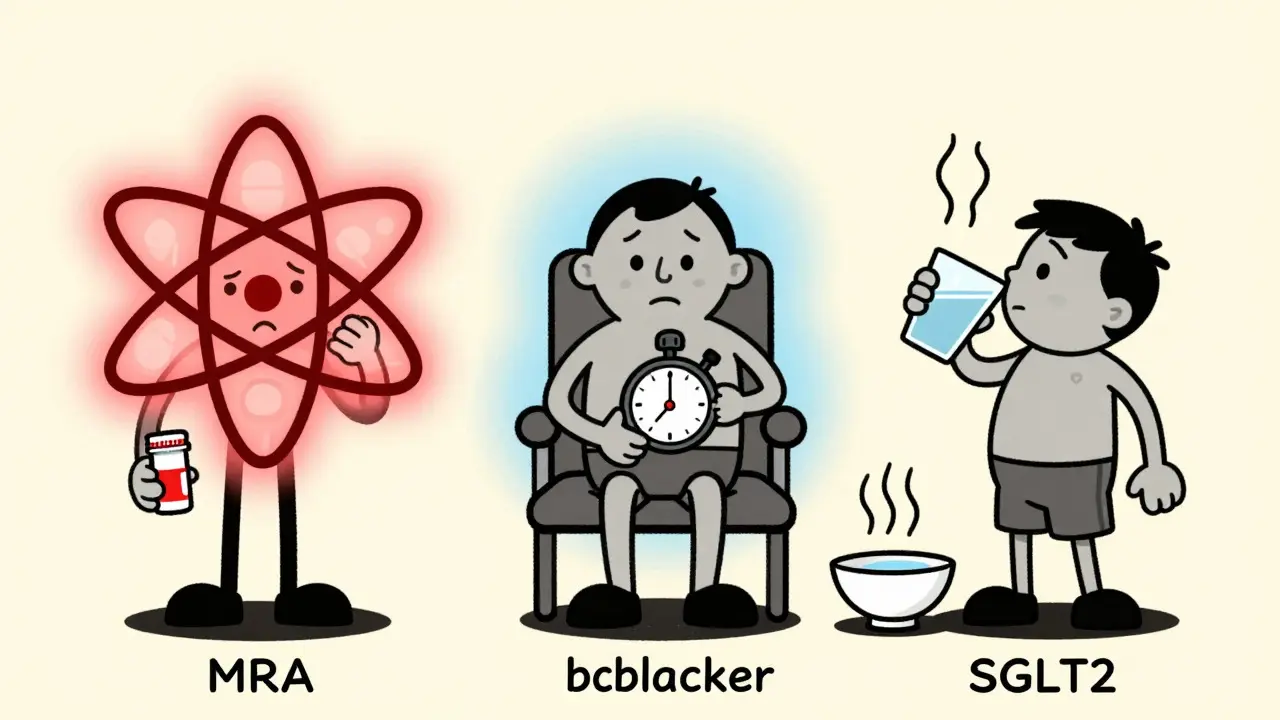
SGLT2 Inhibitors: Hydration and Infection Checks
Dapagliflozin and empagliflozin are game-changers. They were originally for diabetes but now help almost all types of heart failure. They work by making you pee out extra sugar and salt. Because of this, they act like mild water pills.
This creates a specific monitoring need: volume status. Are you drinking enough? Are you urinating too much? Signs of dehydration include dark urine, dry mouth, or feeling lightheaded when standing up. Older adults are particularly vulnerable here. If you’re on other diuretics like furosemide, your doctor might need to adjust those doses to prevent your blood pressure from crashing.
Another thing to watch: genital yeast infections. Clinical trials showed an increased incidence of these infections compared to placebo. It’s not life-threatening, but it’s uncomfortable. Keep the area clean and dry, and report any itching or discharge. Rarely, these drugs can cause diabetic ketoacidosis even with normal blood sugar levels. If you feel nausea, vomiting, or unusual fatigue, get checked immediately.
ARNIs: Blood Pressure Vigilance
Sacubitril/valsartan (Entresto) replaced ACE inhibitors for many patients because it’s more effective. But it lowers blood pressure more aggressively. That’s why you need to check your blood pressure within 1 to 2 weeks of starting the drug or increasing the dose.
In major trials, symptomatic hypotension (low BP causing dizziness) occurred in about 14% of patients. If you feel faint or see spots in your vision, sit down and check your BP. If it’s consistently low, your doctor might keep you at a lower dose. Interestingly, women metabolize this drug slightly differently, leading to higher exposure. This means titration should be extra careful in female patients to avoid side effects.
Comparison of Monitoring Needs
| Drug Class | Primary Risk | Initial Monitoring Window | Ongoing Checks |
|---|---|---|---|
| MRAs (Spironolactone/Eplerenone) | Hyperkalemia (High Potassium) | 3-7 days after start/dose change | Every 3-6 months |
| Beta-Blockers | Bradycardia / Fatigue | With each dose increase | Monthly during titration, then as needed |
| SGLT2 Inhibitors | Dehydration / Genital Infections | First month of use | Regular renal function & symptom review |
| ARNIs (Sacubitril/Valsartan) | Hypotension (Low BP) | 1-2 weeks after start/dose change | BP checks with visits |

Special Populations: What Changes?
Your demographic matters. Here’s how monitoring shifts for specific groups:
- Older Adults (75+): Kidneys clear drugs slower. Start MRAs at lower doses. Be aggressive with hydration checks for SGLT2 inhibitors. Use lower starting doses for ivabradine if prescribed.
- Non-Caucasian Patients: Higher baseline risk for hyperkalemia. Consider more frequent potassium checks (e.g., monthly instead of quarterly) when on MRAs.
- Women: Higher drug exposure with ARNIs. Titrate slowly. Monitor for angioedema (rare but serious swelling) more closely than men.
- Patients with Kidney Disease: This is the highest-risk group for MRAs. If your eGFR is below 30, MRAs might not be suitable, or monitoring must be weekly initially. Always check creatinine alongside potassium.
Don’t assume your neighbor’s schedule works for you. A pharmacist-led titration program can help bridge the gap, ensuring you hit target doses safely without endless clinic visits for minor adjustments.
Practical Tips for Self-Monitoring
You don’t need a lab coat to be proactive. Here’s what you can do at home:
- Keep a Log: Track your weight daily (same time, same scale). A gain of 2-3 pounds in a day or 5 pounds in a week means fluid buildup. Call your doctor before it gets worse.
- Check Your Pulse: Learn how to take your pulse manually. If it’s consistently below 50 or above 90, note it for your next visit.
- Hydrate Wisely: If you’re on SGLT2 inhibitors, drink water consistently throughout the day. Don’t wait until you’re thirsty.
- Watch for Red Flags: Dizziness, muscle cramps, or unusual fatigue are signals to call your care team. Don’t wait for your next appointment.
Technology is helping too. Remote monitoring devices that track pulmonary artery pressure have shown a 30% reduction in hospitalizations for high-risk patients. While not yet widespread, ask your cardiologist if you qualify for remote telemetry. It’s a game-changer for catching issues before they become emergencies.
Frequently Asked Questions
How often do I really need to check my potassium levels on spironolactone?
The most critical window is 3 to 7 days after starting the medication or increasing the dose. After that stable period, most guidelines recommend checking every 3 to 6 months. However, if you have kidney disease or are on other potassium-sparing drugs, your doctor may want monthly checks.
What is the target heart rate for beta-blockers in heart failure?
Aim for a resting heart rate between 50 and 60 beats per minute. If your rate drops below 50, or you feel dizzy or unusually tired, your doctor may keep you at the current dose rather than increasing it further. The goal is tolerance, not just hitting a number.
Can I take SGLT2 inhibitors if I’m not diabetic?
Yes. Since recent guideline updates, SGLT2 inhibitors like dapagliflozin and empagliflozin are recommended for heart failure regardless of diabetes status. They improve survival and reduce hospitalizations. Just remember to monitor for dehydration and genital infections, which are more common with these drugs.
Why is my blood pressure dropping so much after starting Entresto?
Sacubitril/valsartan is potent. Symptomatic low blood pressure happens in about 14% of patients. It’s usually managed by keeping the dose lower or adjusting other blood pressure meds. Always check your BP within two weeks of any dose change. If you feel faint, sit down and contact your provider.
Do I need special monitoring if I am over 75 years old?
Yes. Older adults clear medications more slowly. You’re at higher risk for dehydration with SGLT2 inhibitors and electrolyte imbalances with MRAs. Start with lower doses and monitor kidney function and hydration status more frequently than younger patients.