
Generic vs. Brand Name Drugs: What Your Rx Label Actually Means
 Jul, 28 2026
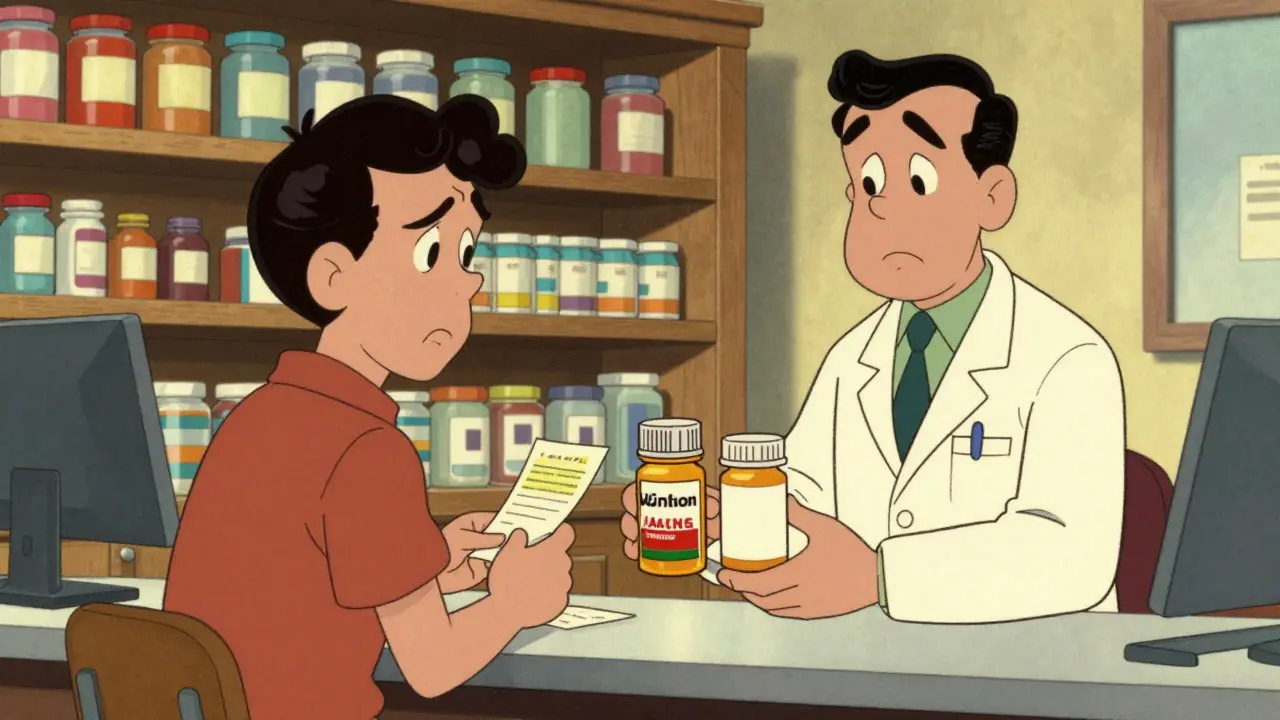
Walk into any pharmacy in the U.S., and you will likely walk out with a bottle that looks completely different from what your doctor described. You might have been told to take a white oval pill, but the pharmacist hands you a blue capsule. It has a different name on the label. It costs a fraction of the price. Is it the same medicine? For decades, this question has caused anxiety for patients who wonder if they are getting a "cheap" version of their treatment. The short answer is yes, it is the same active medicine, but understanding why requires looking closely at how prescription labels are structured and how the regulatory framework ensures drug safety and efficacy.
The confusion usually starts at the counter. When you pick up your medication, the label contains two names. One is bold and large; the other is small and tucked away. These represent the brand name and the generic name. Knowing which is which, and why both appear, helps you understand exactly what you are putting into your body and where your money is going.
The Two Names on Every Bottle
Every pharmaceutical product has an identity crisis by design. There is the chemical name, which is often a mouthful like atorvastatin is a statin medication used to lower cholesterol levels. This is the generic name. It identifies the active ingredient-the part of the pill that actually treats your condition. Then there is the brand name, like Lipitor. This is a trademark owned by the company that invented the drug first.
On your
, the generic name is required by federal law. According to the National Association of Boards of Pharmacy, 92% of prescription labels follow a standardized format where the generic name appears in smaller print below or beside the brand name. This dual naming exists because while the brand owner holds the trademark, the public needs to know the actual chemical substance being administered. If you switch manufacturers, the brand name might change, but the generic name stays the same, ensuring continuity of care.
Label Element Description Regulatory Requirement Brand Name Proprietary trademark (e.g., Prilosec) Must be distinct and trademarked Generic Name Active ingredient (e.g., omeprazole) Mandatory on all FDA-approved drugs Dosage Form Tablet, capsule, liquid Must match reference drug Strength Amount of active ingredient (mg) Identical to brand name
Why Generics Look Different But Work the Same
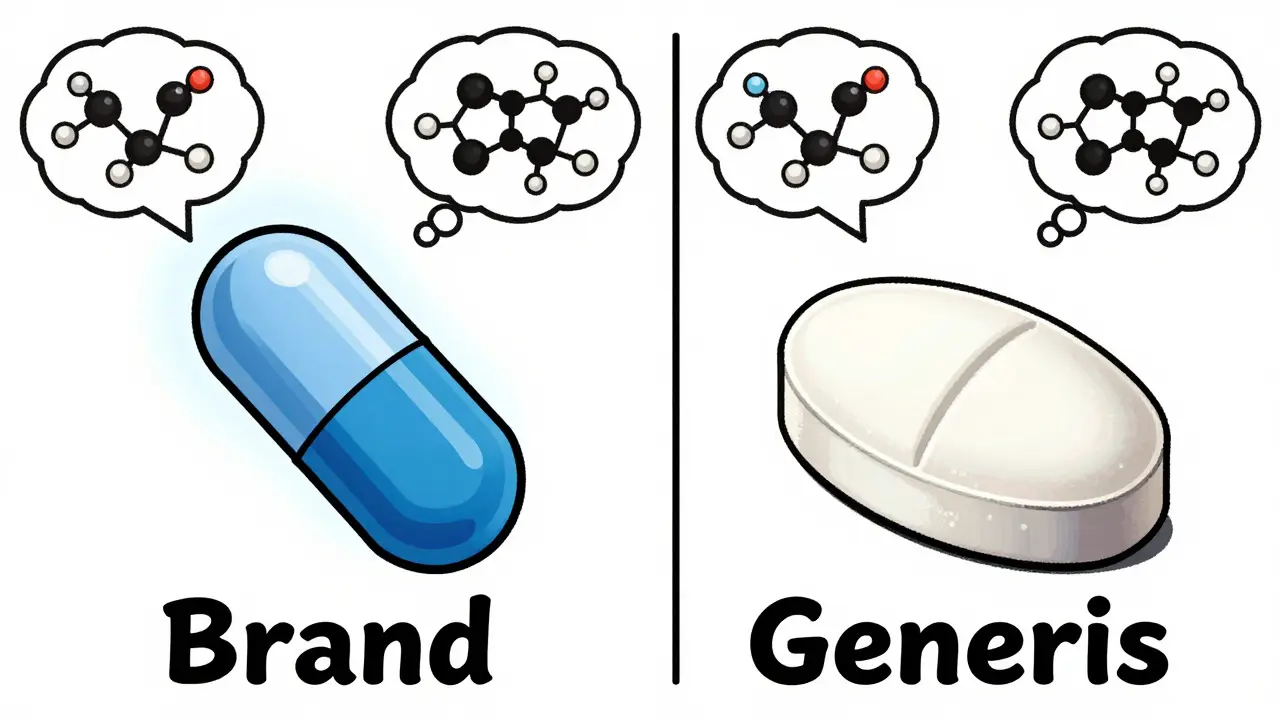
You might notice that your generic metformin looks nothing like the original Glucophage. The color is different. The shape is different. Even the markings stamped on the surface are unique. This is not a sign of inferior quality; it is a legal requirement. Trademark laws prevent generic manufacturers from copying the exact look of the brand-name drug to avoid consumer confusion about ownership. As Cedars-Sinai pharmacist Tattika Soreta noted in 2019, these physical differences do not affect therapeutic outcomes.
What matters inside the pill is the active ingredient. The U.S. Food and Drug Administration (FDA) established strict bioequivalence standards requiring generics to perform identically to brand-name drugs in the human body. Under the Hatch-Waxman Act of 1984, generic makers do not need to repeat expensive clinical trials. Instead, they must prove bioequivalence is the measure of rate and extent of absorption showing no significant difference between generic and brand drugs. Specifically, the 90% confidence interval for the ratio of population geometric means for AUC (area under the curve) and Cmax (maximum concentration) must fall within 80-125%. In plain English, this means the generic enters your bloodstream at nearly the same speed and amount as the brand. Any variance is clinically insignificant for most patients.
The Real Cost Difference: R&D vs. Replication
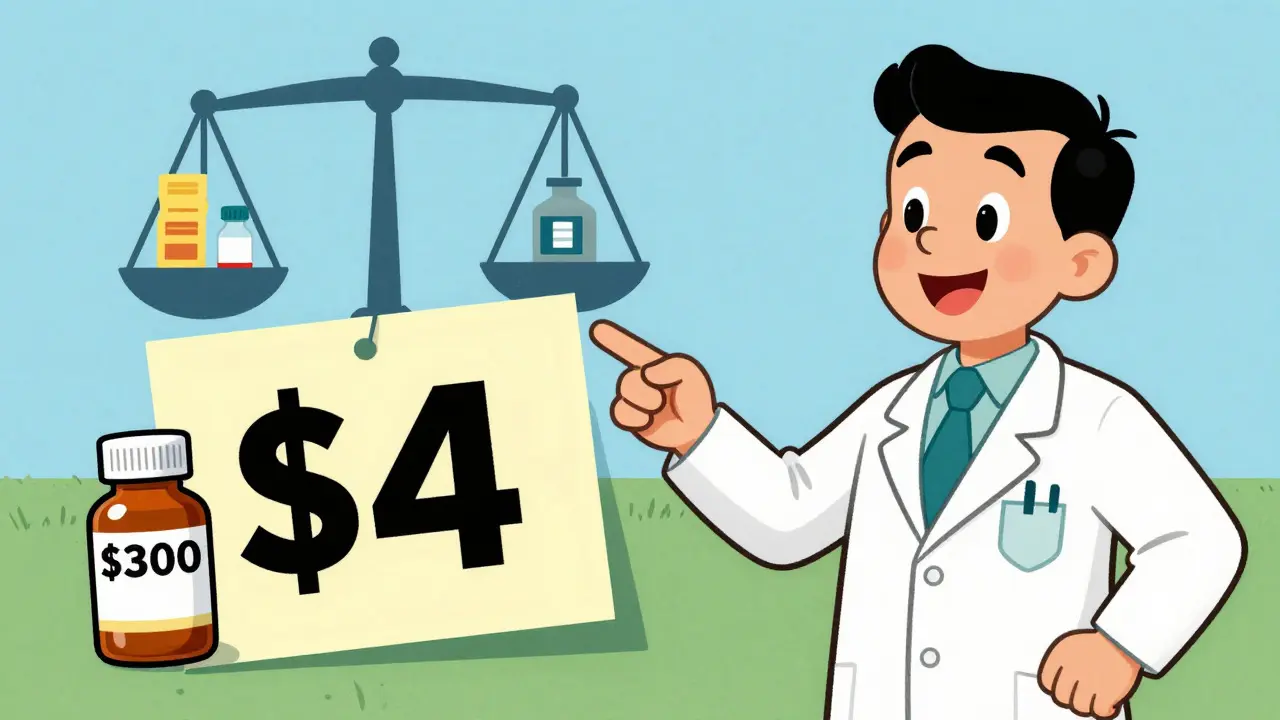
If the medicine works the same, why does one cost $300 and the other $4? The price gap comes down to innovation versus replication. When a company develops a new drug, they spend billions on research and development. A 2016 analysis by the Tufts Center for the Study of Drug Development estimated the average cost to bring one new approved drug to market is $2.6 billion. They get a patent monopoly to recoup those costs.
Once that patent expires, generic companies step in. They don’t pay for the initial discovery or the Phase III clinical trials. They only pay for manufacturing and proving bioequivalence. This allows them to sell the drug at a fraction of the price. GoodRx reported in 2022 that generic drugs saved the U.S. healthcare system $1.67 trillion between 2007 and 2016. Today, nine out of ten prescriptions filled in the U.S. are for generic drugs, according to University Hospitals' 2022 analysis. The average savings for a patient switching from brand to generic is 80-85 percent. This isn't just good for your wallet; it keeps the healthcare system solvent.
When Brand Names Might Still Be Necessary
For the vast majority of medications, generics are perfectly safe and effective. However, there is a small exception known as Narrow Therapeutic Index (NTI) drugs are medications where small changes in blood concentration can lead to serious side effects or lack of efficacy. Examples include warfarin (a blood thinner), levothyroxine (for thyroid issues), and certain anti-seizure medications. With these drugs, even the tiny variations allowed in bioequivalence testing can matter. Some doctors prefer to keep patients on the brand name or a specific generic manufacturer to maintain consistent blood levels.
If you are taking an NTI drug, talk to your pharmacist. They can check if your insurance covers the brand name or if a specific generic supplier is preferred. For less than 1% of all medications, the brand name remains medically necessary despite the higher cost. For the other 99%, the generic is the smart choice.
Decoding Your Prescription Instructions
Your doctor’s handwriting or electronic order dictates whether you get the brand or the generic. Most states allow pharmacists to automatically substitute a generic for a brand-name drug unless the prescriber writes "dispense as written" (DAW) or "do not substitute." This is a common practice because insurance plans heavily incentivize generic use. If you are prescribed Lipitor, your insurance formulary likely requires you to take atorvastatin unless there is a documented medical reason otherwise.
If you receive a generic and feel it doesn't work as well, don't assume the drug is fake. Sometimes, inactive ingredients-fillers, dyes, or binders-can affect how your stomach tolerates the pill. One person might get heartburn from a specific generic filler, while another feels fine. Reddit discussions in the r/pharmacy subreddit frequently highlight these experiences. The solution isn't always to go back to the expensive brand. Ask your pharmacist if another generic manufacturer uses different inactive ingredients. Often, a simple switch to a different generic brand resolves the issue without breaking the bank.
Quality Control and Safety Concerns
Safety is paramount. The FDA maintains rigorous oversight of generic drug manufacturing. However, scrutiny has intensified in recent years. Following warnings about potential impurities in certain generic blood pressure medications in 2018, the FDA issued recalls affecting over 3 million bottles. This led to tighter enforcement under the Generic Drug User Fee Amendments (GDUFA III). The goal is to accelerate approvals while ensuring quality. Despite supply chain vulnerabilities-with 80% of active pharmaceutical ingredients manufactured in China and India-the FDA maintains that generic drugs are safe, effective, and of high quality. Regular inspections and testing ensure that the pills on your shelf meet the same strict standards as the brand-name versions.
Are generic drugs really as effective as brand-name drugs?
Yes. The FDA requires generic drugs to demonstrate bioequivalence, meaning they deliver the same amount of active ingredient into your bloodstream in the same amount of time as the brand-name drug. Clinical studies consistently show identical therapeutic effects for the vast majority of medications.
Why do my generic pills look different from the brand name?
Trademark laws prevent generic manufacturers from copying the exact color, shape, and size of the brand-name drug to avoid consumer confusion about ownership. These physical differences do not impact the drug's effectiveness or safety.
Can I ask my doctor to prescribe the brand name instead?
You can request the brand name, but your insurance may require you to pay the full cost difference. Doctors can write "dispense as written" on the prescription, but this is usually reserved for Narrow Therapeutic Index drugs or cases where a patient has a documented reaction to generic fillers.
What are Narrow Therapeutic Index (NTI) drugs?
NTI drugs are medications where very small changes in blood concentration can cause serious side effects or reduce efficacy. Examples include warfarin and levothyroxine. For these drugs, some doctors prefer sticking to one specific manufacturer, whether brand or generic, to ensure consistency.
Why are generic drugs so much cheaper?
Generic manufacturers do not bear the billions of dollars in research and development costs associated with creating a new drug. They only pay for manufacturing and proving bioequivalence, allowing them to offer the same active ingredient at 80-85% less than the brand-name price.
Emily Schor
July 29, 2026 AT 18:25Thanks for breaking this down, it's really helpful to see the actual numbers on savings. I've always been a bit wary of switching manufacturers but the bioequivalence stats make sense.
Samuel Friday
July 31, 2026 AT 09:09Oh look, another article pretending that 'bioequivalence' means 'identical outcome.' How quaint. The average person reading this has no idea that fillers can cause allergic reactions or alter absorption rates in ways that statistical averages conveniently ignore. You are being fed a lie by big pharma and their generic accomplices to save a few bucks while your health deteriorates slowly. It is truly pathetic how easily you are manipulated by marketing dressed up as science. :P
Arun Krishnan
August 1, 2026 AT 19:16Hey Samuel, don't be so harsh. Most people just want to save money and stay healthy. The FDA does check these things pretty well. It is good to know the basics though.
Samuel Friday
August 1, 2026 AT 22:09Spare me your naive optimism, Arun. The FDA is underfunded and overwhelmed. They approve drugs based on paperwork, not rigorous long-term safety studies for every single generic batch. You are lucky if you get the same manufacturer twice. Try explaining that to someone whose thyroid levels are swinging wildly because they switched from one generic levothyroxine to another without realizing it was a different company. Good luck with that. :)
anna arifiana
August 2, 2026 AT 05:21I have to say, I find the whole premise of trusting large pharmaceutical corporations, whether brand name or generic, to be somewhat... questionable. I mean, really? We are supposed to believe that the exact same chemical compound, processed in facilities that might be halfway across the world, will interact with our unique biological systems in precisely the same manner? It seems like a massive leap of faith, doesn't it? And yet, here we are, swallowing little colored pills every day, hoping for the best. It is almost absurd when you think about it. I suppose we have no other choice, but that does not mean we should stop questioning the narrative. The lack of transparency regarding inactive ingredients is particularly troubling, isn't it? One wonders what else they are hiding behind those vague labels. It is enough to make anyone suspicious, really. And why do we accept this level of uncertainty? Why do we not demand better standards? It is a mystery to me, honestly. Perhaps we are just too tired to fight back. Or perhaps we are simply complicit in our own deception. Who knows? But I digress. The point remains: trust is a fragile thing, especially when it comes to our health.
Kyle Bonnette-Lykens
August 4, 2026 AT 04:46nah generics are fine. i take them all the time. saves cash. who cares about the filler if it works?
Bobby Christiansen
August 5, 2026 AT 20:09Ugh, everyone here is so boringly practical. It is not just about saving money, it is about principle! Big Pharma wants to keep us sick and dependent on their expensive brands. By taking generics, we are essentially funding the very system that exploits us. We need to boycott everything and go natural! Herbs work better anyway. This article is propaganda designed to keep you docile and compliant. Wake up sheeple! :)
Jasmine Agito
August 6, 2026 AT 16:35Bobby, maybe tone it down a bit. While natural remedies have their place, many chronic conditions require precise medication management that herbs cannot provide. The key is informed choice. If you have issues with a specific generic, talk to your pharmacist about trying a different manufacturer rather than assuming the whole system is corrupt. Communication is key here.
Tony Malvagna
August 8, 2026 AT 14:37hey guys, just wanted to chime in. life is short right? why stress over the pill color? as long as u feel good its good. dont let the corporate machine win by worrying too much. stay chill and save ur money for something fun like a beer or a hike. philosophy says embrace the chaos lol. typos r part of my charm btw sorry abt that. keep it real folks!