
Fall Prevention Strategies for Sedating Medications: A Practical Guide
 Jun, 22 2026
Fall Risk Medication Checker
Step 1: Select Your Medications
Check any medications you take regularlyBenzodiazepines
Diazepam, Lorazepam, AlprazolamUsed for anxiety or insomnia. Causes significant drowsiness and impaired coordination.
Opioids
Oxycodone, Hydrocodone, CodeinePain relievers causing sedation, dizziness, and cognitive fog.
Antidepressants
Tricyclics, SSRIs, MirtazapineSome types have sedative effects that elevate fall risk.
Muscle Relaxants
Baclofen, CyclobenzaprineNotorious for causing muscle weakness and dizziness.
Antipsychotics
Quetiapine, OlanzapineCan affect blood pressure regulation and balance.
Other Sleep Aids
Zolpidem, TrazodoneNon-benzodiazepine sleep medications with residual sedation.
Additional Factors
Your Assessment
Select your medications and click calculate to see your personalized risk profile and safety tips.
Imagine this: it’s 2 a.m., and you get up to use the bathroom. You feel groggy, your legs are shaky, and the room seems to tilt slightly. That split-second loss of balance could lead to a broken hip or worse. For millions of older adults, this isn’t just a scary scenario-it’s a daily reality driven by the very medicines prescribed to help them sleep, manage pain, or treat anxiety.
Falls are the leading cause of injury-related death among adults aged 65 and older in the United States. The Centers for Disease Control and Prevention (CDC) reports that 36 million falls occur annually among this demographic, resulting in 3 million emergency department visits and 32,000 deaths. While slippery floors and poor lighting play a role, one of the biggest hidden triggers is often sitting right on the nightstand: sedating medications. These drugs, while effective for their intended purposes, can significantly impair balance, reaction time, and cognitive awareness, turning a simple step into a dangerous stumble.
Identifying the Culprits: What Are Fall Risk Increasing Drugs?
Not all medications carry the same level of danger when it comes to falling. Healthcare professionals refer to specific classes of drugs as Fall Risk Increasing Drugs (FRIDs). Understanding which medications fall into this category is the first step in managing risk.
FRIDs encompass a wide range of commonly prescribed treatments:
- Benzodiazepines: Often prescribed for anxiety or insomnia, these drugs like diazepam or lorazepam slow down brain activity, causing drowsiness and impaired coordination.
- Opioids: Pain relievers such as oxycodone or hydrocodone can cause significant sedation, dizziness, and cognitive fog, especially at higher doses or when combined with other meds.
- Antidepressants: Certain antidepressants, particularly tricyclics and some SSRIs, have sedative effects that can elevate fall risk, especially when two or more are prescribed together.
- Muscle Relaxants: Drugs like baclofen are notorious for causing muscle weakness and dizziness, with studies showing they carry some of the highest documented fall risks in their class.
- Antipsychotics: Used for various mental health conditions, these can affect blood pressure regulation and balance.
The risk compounds with polypharmacy, defined as the use of three or more medications daily. Research indicates that fall risk increases proportionally with the number of medications an older adult takes. It’s not just about one drug; it’s about how these chemicals interact within the body to create a perfect storm of instability.
The STEADI-Rx Approach: A Proven Framework
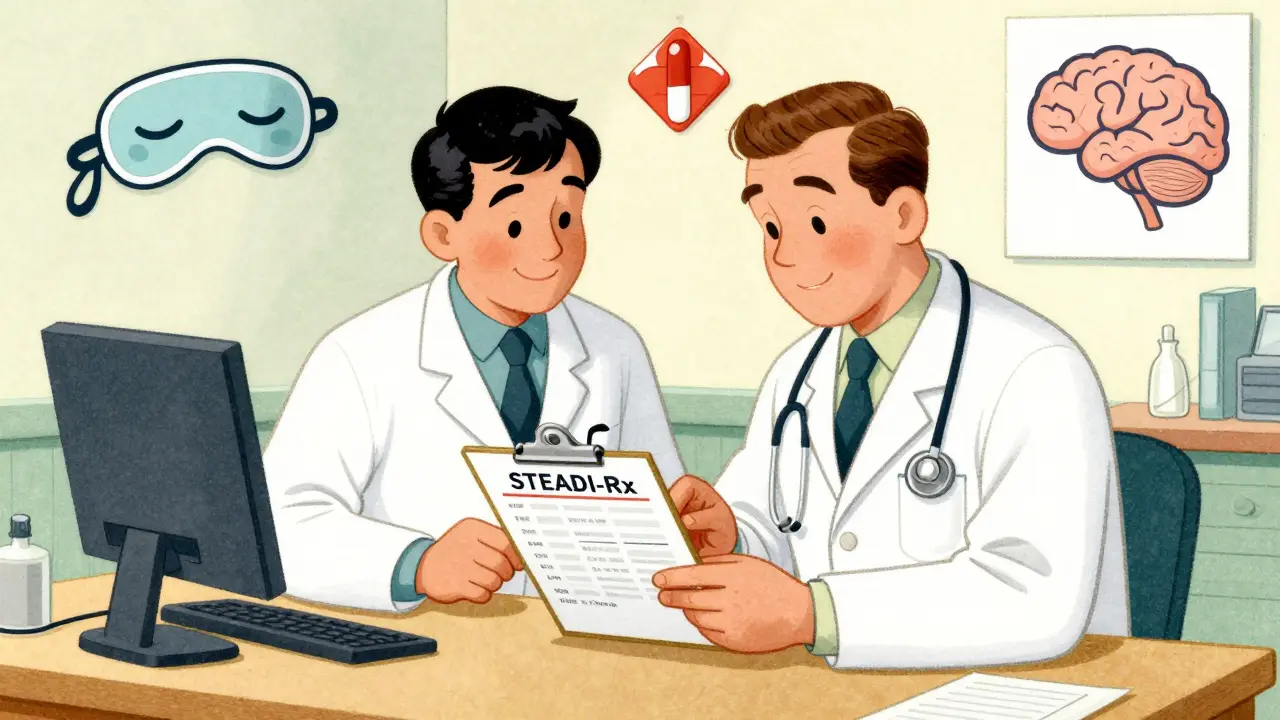
You might wonder, "How do we fix this without stopping necessary treatments?" The answer lies in structured intervention models like STEADI-Rx. Developed by the University of North Carolina through a CDC grant, this initiative focuses on pharmacist-prescriber collaboration to identify and mitigate medication-related fall risks.
The STEADI-Rx algorithm follows a clear, three-step process:
- Screen: Identify patients at risk using standardized tools. This isn’t just asking, "Do you fall?" It involves assessing gait, balance, and medication history.
- Assess: Dive deeper into modifiable risk factors. Pharmacists review every medication, noting name, strength, dose, frequency, and remaining refills. They look specifically for FRIDs and potential interactions.
- Intervene: Implement clinical strategies. This often means switching a high-risk medication to a safer alternative, adjusting dosages, or deprescribing entirely if possible.
In practice, this model has shown remarkable results. In the STEADI-Rx study, 75% of recommendations involved switching one medication to another potentially safer alternative. For example, instead of prescribing a benzodiazepine for insomnia, a provider might suggest cognitive behavioral therapy (CBT) or a non-sedating melatonin receptor agonist. One user on a geriatrics forum shared that after switching from diazepam to CBT, their nighttime falls dropped from 2-3 per month to zero over six months.
Beyond Pills: Multifactorial Interventions
While medication review is crucial, it works best when combined with other strategies. The U.S. Preventive Services Task Force (USPSTF) recommends exercise interventions with moderate certainty for preventing falls. But not just any exercise-specific types matter.
Cochrane reviews highlight that programs incorporating balance, strength, and gait training reduce the number of fallers by 15-29%. These sessions should last 30-90 minutes, occur one to three times weekly, and continue for at least 12 weeks. Think Tai Chi, physical therapy exercises, or specialized senior fitness classes. These activities strengthen the muscles needed to catch yourself if you stumble and improve proprioception-the body’s ability to sense its position in space.
Environmental modifications also play a vital role. Removing tripping hazards like loose rugs, ensuring adequate lighting in hallways and bathrooms, and installing grab bars can make a significant difference. When combined with medication management, these changes create a safety net that catches individuals before a minor slip becomes a major injury.
| Strategy | Impact on Falls | Key Considerations |
|---|---|---|
| Medication Review (STEADI-Rx) | High | Requires pharmacist-provider collaboration; focuses on removing FRIDs. |
| Exercise Programs | Moderate to High | Must include balance/strength training; consistency is key (min. 12 weeks). |
| Vitamin D Supplementation | Mixed | USPSTF recommends 800 IU/day; evidence varies, but safe for most. |
| Home Safety Modifications | Moderate | Low cost, immediate impact; remove rugs, add lights/grab bars. |
The Role of Vitamin D and Nutrition
Nutrition plays a supporting role in fall prevention. The American Geriatrics Society (AGS) recommends vitamin D supplementation of at least 1,000 IU per day for older persons to reduce fall risk. Vitamin D helps maintain bone density and muscle function, both critical for stability. However, evidence is mixed. While the USPSTF supports supplementation, some Cochrane reviews found no significant benefit in reducing falls alone. This suggests that vitamin D is a piece of the puzzle, not the whole solution. It works best when combined with exercise and medication management.
Protein intake is another often-overlooked factor. Sarcopenia, or age-related muscle loss, contributes significantly to falls. Ensuring adequate protein consumption helps preserve muscle mass, giving older adults the physical reserve needed to maintain balance.

Challenges in Implementation
Despite the clear benefits, implementing these strategies faces real-world hurdles. Deprescribing-reducing or stopping medications-is emotionally and physically challenging. A 2021 survey by the National Council on Aging found that 63% of older adults reported difficulty reducing sedating medications due to fear of withdrawal symptoms or symptom recurrence. Patients often believe their medications are essential, even if they’re causing harm.
Healthcare providers face time constraints. An American Society of Health-System Pharmacists (ASHP) survey revealed that while 82% of pharmacists believe medication reviews reduce fall risk, only 45% felt they had adequate time to conduct comprehensive assessments. Reimbursement models also lag behind, making it difficult to sustain dedicated medication therapy management services.
To overcome these barriers, experts recommend:
- Patient Education: Clearly explain the risks of FRIDs versus the benefits of alternatives. Use relatable examples, like the nighttime bathroom trip scenario.
- Gradual Tapering: Never stop sedating medications abruptly. Work with prescribers to slowly reduce doses, minimizing withdrawal effects.
- Technology Integration: Electronic health record alerts can flag high-risk medication combinations, prompting providers to review prescriptions proactively.
Future Directions: AI and Personalized Care
The landscape of fall prevention is evolving. Future developments include integrating artificial intelligence to identify high-risk medication combinations before they cause harm. AI algorithms can analyze vast datasets to predict individual fall risks based on medication profiles, medical history, and lifestyle factors. This allows for hyper-personalized interventions rather than one-size-fits-all approaches.
Additionally, there’s a push to expand pharmacist prescribing authority. Allowing pharmacists to directly adjust certain medications could streamline the STEADI-Rx process, reducing the delay between identification and intervention. As the population aged 65+ grows to an estimated 80.8 million in the U.S. by 2040, these innovations will be critical in maintaining independence and safety for older adults.
What are the most common sedating medications that increase fall risk?
The most common culprits include benzodiazepines (for anxiety/insomnia), opioids (for pain), certain antidepressants, muscle relaxants like baclofen, and antipsychotics. These drugs cause drowsiness, dizziness, and impaired balance, significantly increasing the likelihood of falls, especially in older adults.
Can I stop taking my sedating medication immediately to prevent falls?
No, never stop sedating medications abruptly. Doing so can cause severe withdrawal symptoms, rebound anxiety, or seizures. Always work with your healthcare provider to taper off medications gradually or switch to safer alternatives under medical supervision.
How does the STEADI-Rx program help prevent falls?
STEADI-Rx is a collaborative model where pharmacists screen for fall risk, assess medications for high-risk drugs (FRIDs), and intervene by recommending safer alternatives to prescribers. It bridges the gap between pharmacy care and medical treatment, focusing on deprescribing or substituting dangerous medications.
Is vitamin D supplementation effective for fall prevention?
Vitamin D supplementation (at least 1,000 IU/day recommended by AGS) supports bone health and muscle function, which can indirectly reduce fall risk. However, evidence is mixed regarding its standalone effectiveness. It works best when combined with exercise and medication management.
What type of exercise is best for preventing falls in older adults?
Exercises that focus on balance, strength, and gait training are most effective. Activities like Tai Chi, physical therapy routines, or senior-specific fitness classes lasting 30-90 minutes, 1-3 times a week for at least 12 weeks, have been shown to reduce falls by 15-29%.
Why is polypharmacy a risk factor for falls?
Polypharmacy refers to taking three or more medications daily. Each additional drug increases the complexity of side effects and potential interactions. Sedating medications combined with others can amplify drowsiness, dizziness, and cognitive impairment, creating a higher risk of losing balance.
How can family members help prevent falls related to medication?
Family members can assist by organizing medication lists, attending doctor appointments to discuss fall risks, helping with home safety modifications (like removing rugs), and encouraging adherence to exercise programs. They should also monitor for signs of drowsiness or confusion after new prescriptions.
Are there non-drug alternatives for insomnia or anxiety that don't cause falls?
Yes, Cognitive Behavioral Therapy (CBT) is highly effective for both insomnia and anxiety without the sedative side effects of medications. Other options include relaxation techniques, mindfulness meditation, and sleep hygiene improvements, all of which support better rest without compromising balance.