
Danshen and Heart Medications: Serious Interaction Risks You Need to Know
 Aug, 11 2026
Danshen Drug Interaction Checker
Select Your Medication
Choose the primary heart medication you are currently taking to see the specific interaction risk with Danshen.
Select a medication above to analyze the interaction risk with Danshen.
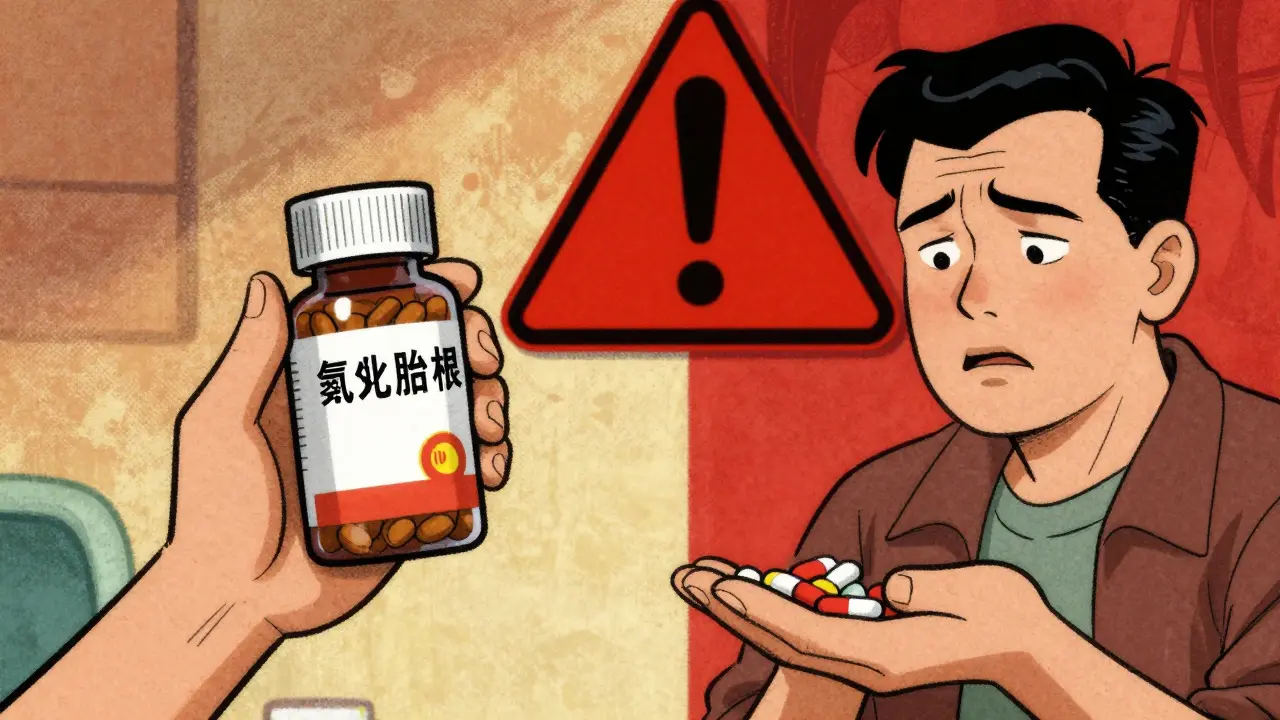
Imagine you’ve been carefully managing your heart health with prescription blood thinners. Your INR levels are stable, your doctor is happy, and you feel in control. Then, a friend recommends Danshen, also known as Chinese sage or red sage, for better circulation. It’s natural, traditional, and sounds harmless, right? Wrong.
Danshen (a root from the Salvia miltiorrhiza plant used in Traditional Chinese Medicine for cardiovascular support) is not just a gentle tea. It contains powerful active compounds like tanshinones and salvianolic acids that actively change how your blood clots. When you mix this herb with standard heart medications, especially anticoagulants like warfarin, the results can be dangerous-and sometimes life-threatening.
How Danshen Works in Your Body
To understand the risk, we first need to look at what Danshen actually does. For centuries, practitioners of Traditional Chinese Medicine (TCM) have used Danshen root to treat conditions like angina, stroke prevention, and myocardial infarction. Modern science confirms why it has such a reputation.
The root contains two main groups of active ingredients:
- Tanshinones (including tanshinone I and IIA): These compounds help dilate coronary arteries, increasing blood flow to the heart muscle. Studies show they can increase coronary blood flow by up to 28% in animal models.
- Salvianolic acids: These are potent antioxidants that inhibit platelet aggregation-the process where blood cells stick together to form clots.
In laboratory settings, salvianolic acid B has been shown to inhibit thrombin-induced platelet activation by nearly 70%. Tanshinone IIA blocks calcium channels, which helps lower blood pressure. While these effects sound beneficial, they mimic the action of pharmaceutical drugs. The problem arises when you add an herbal drug to a prescribed drug without adjusting the dosage.
The Warfarin Danger Zone
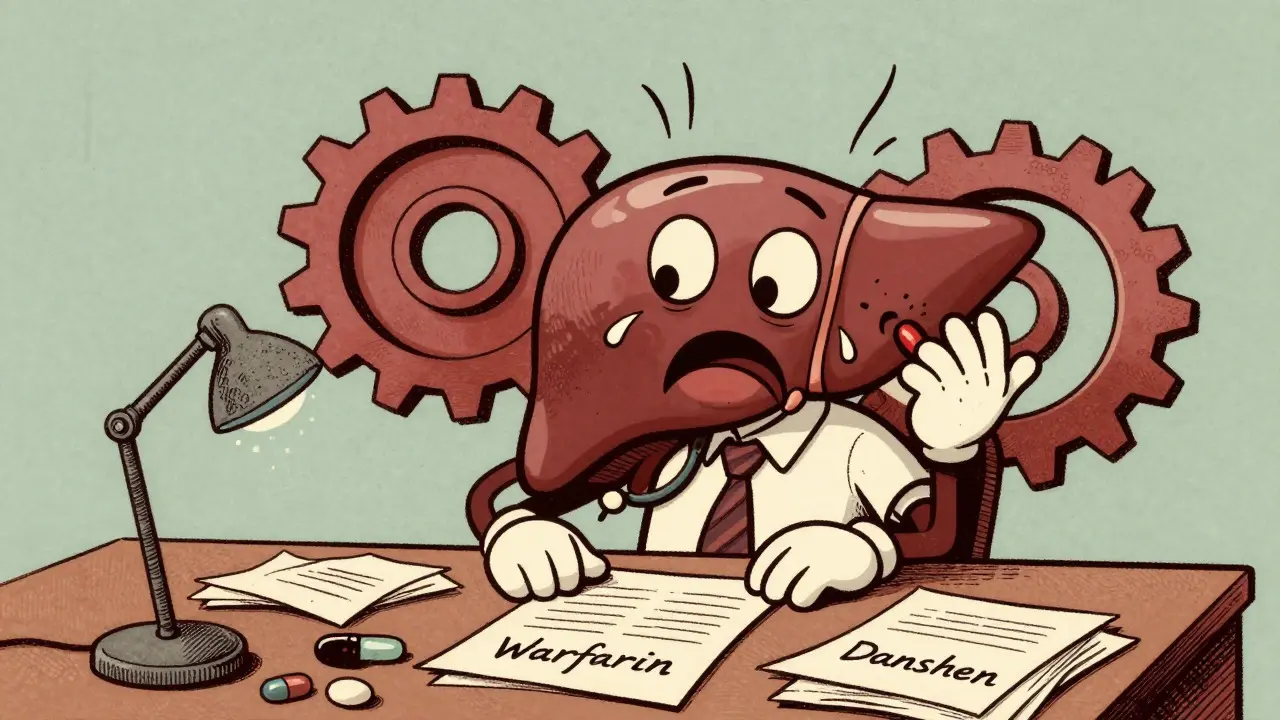
The most well-documented and severe interaction involves Warfarin, a widely used oral anticoagulant. Warfarin works by slowing down the production of clotting factors in your liver. Doctors monitor its effectiveness using a test called INR (International Normalized Ratio). A typical target range is between 2.0 and 3.0.
Danshen interferes with this balance in two major ways:
- Metabolic Inhibition: Danshen inhibits the enzyme CYP2C9, which is responsible for breaking down warfarin in the liver. Research published in the Journal of Ethnopharmacology showed Danshen inhibited this enzyme by over 73% at clinically relevant concentrations. This means warfarin stays in your body longer and stronger than intended.
- Additive Anticoagulant Effect: Since Danshen itself prevents platelets from clumping, adding it to warfarin creates a "double hit" on your blood’s ability to clot.
The result? Your INR spikes dangerously high. Case reports from the Cleveland Clinic document patients whose INR levels jumped from a safe 2.0 to over 5.5 or even 8.4 after taking Danshen. At these levels, the risk of spontaneous internal bleeding skyrockets. One patient developed a hemoglobin level of 7.6 g/dL-a sign of significant blood loss-after just two weeks of combining the two.
| Feature | Warfarin | Danshen |
|---|---|---|
| Primary Action | Inhibits vitamin K-dependent clotting factors | Inhibits platelet aggregation & vasodilation |
| Monitoring | Regular INR tests required | No standard monitoring available |
| Reversal Agent | Vitamin K, FFP, PCC | None specifically identified |
| Dosage Precision | Highly precise, individualized | Variable concentration in supplements |
Risks with Newer Blood Thinners
You might think switching to newer anticoagulants like Rivaroxaban (Xarelto) or Apixaban (Eliquis) solves the problem. Unfortunately, recent research suggests otherwise.
A 2022 study indexed in NIH databases found that Danshen tablets act as mixed inhibitors of the enzymes that metabolize rivaroxaban. Specifically, Danshen reduced the metabolic clearance of rivaroxaban, potentially leading to higher drug levels in the blood. While these newer drugs don’t require INR monitoring, the risk of "Clinically Relevant Non-Major bleeding" (CRNM) increases significantly when combined with Danshen. Patients have reported unexpected bruising, nosebleeds, and gastrointestinal bleeding when mixing these herbs with direct oral anticoagulants (DOACs).
The Hidden Problem: Lack of Standardization
Unlike pharmaceutical drugs, herbal supplements are not strictly regulated for potency in many countries, including the US. The Chinese Pharmacopoeia notes that commercial Danshen preparations can vary wildly in their active content:
- Tanshinone content ranges from 0.05% to 5.2%
- Salvianolic acid B ranges from 1.8% to 12.7%
This variability makes predicting interactions nearly impossible. One brand might give you a mild effect, while another could push your blood thinner levels into the danger zone. Furthermore, many patients do not disclose their use of herbal supplements to their doctors. A survey in JAMA Internal Medicine found that only 28% of patients taking herbal supplements informed their physicians. This silence leaves healthcare providers blind to potential dangers.

Other Heart Medication Interactions
Blood thinners aren’t the only concern. Danshen’s ability to lower blood pressure and slow heart rate can interfere with other cardiac drugs:
- Beta-blockers (e.g., metoprolol): Both Danshen and beta-blockers lower heart rate and blood pressure. Combining them may cause hypotension (dangerously low blood pressure) or bradycardia (abnormally slow heart rate), leading to dizziness or fainting.
- Calcium Channel Blockers (e.g., amlodipine): Since tanshinone IIA also blocks calcium channels, adding Danshen could amplify the drug’s effects, causing excessive vasodilation and swelling in the legs.
- Antiplatelet drugs (e.g., aspirin, clopidogrel): Similar to warfarin, adding Danshen to aspirin increases the risk of bleeding events, particularly in the stomach or brain.
What Should You Do?
If you are considering taking Danshen, or if you are already taking it, here are practical steps to stay safe:
- Talk to Your Doctor First: Never start Danshen without telling your cardiologist or primary care provider. Use the NCCIH’s Herbal Supplement Questionnaire if you’re unsure what to ask.
- Monitor Closer: If your doctor agrees to let you try Danshen while on warfarin, expect more frequent INR checks-possibly twice a week initially. Be prepared for dose adjustments of your medication.
- Watch for Bleeding Signs: Look out for unusual bruising, red/pink urine, brown/black stools, prolonged bleeding from cuts, or coughing up blood. Seek emergency care immediately if these occur.
- Consider Alternatives: If you want cardiovascular support, ask your doctor about safer alternatives that don’t interact with your meds, such as specific dietary changes or approved supplements like CoQ10 (which still requires caution but has fewer severe interactions).
The global market for Danshen is growing, projected to reach $1.84 billion by 2027. But popularity doesn’t equal safety. As Dr. Robert Lee from Johns Hopkins warned, without standardized formulations and clear guidelines, preventable adverse events will continue. Natural remedies are powerful tools, but they demand respect and knowledge.
Can I take Danshen with aspirin?
Taking Danshen with aspirin increases the risk of bleeding because both substances inhibit platelet function. While the interaction may not be as dramatic as with warfarin, it can lead to easier bruising and longer bleeding times. Consult your doctor before combining them.
How long does it take for Danshen to affect my blood thinners?
Effects can appear quickly. Case studies show INR levels spiking within days to two weeks of starting Danshen. Because metabolism varies by person, there is no fixed timeline, which is why close monitoring is essential.
Is Danshen safe for people with high blood pressure?
Danshen can lower blood pressure, which might seem helpful. However, if you are already taking antihypertensive medications, adding Danshen could drop your pressure too low, causing dizziness or falls. It should only be used under medical supervision.
Does Danshen interact with Eliquis (apixaban)?
Yes. Recent studies indicate Danshen can inhibit the enzymes that break down apixaban and rivaroxaban, potentially increasing drug levels in the blood and raising the risk of bleeding complications.
Are all Danshen products the same strength?
No. Commercial Danshen supplements vary significantly in the concentration of active compounds like tanshinones and salvianolic acids. This lack of standardization makes dosing unpredictable and interactions harder to manage.