
Antiretroviral Therapy and Common Medications: High-Risk Interactions
 Jul, 31 2026
ART Medication Interaction Checker
Select your current antiretroviral therapy class and the medication you are considering taking to see potential interaction risks.
Why Check?
Mixing ART with other drugs can affect how your liver processes them via the CYP3A4 enzyme system. This can lead to reduced effectiveness or toxic side effects.
Note: This tool is for educational purposes only. Always consult your healthcare provider before changing medications.
You might think that sticking to your HIV treatment plan is the hardest part of living with HIV. But for many people, especially those over 50, the real challenge isn't taking the pill-it's figuring out what else you can safely take alongside it. Whether it's a statin for cholesterol, an antidepressant for mood, or even a common herbal supplement, mixing these with Antiretroviral Therapy (ART) can turn a routine health check into a medical emergency.
This isn't just theoretical. About 40% to 60% of people living with HIV who are aged 50 or older take five or more medications daily. This practice, known as polypharmacy, drastically increases the risk of clinically significant drug-drug interactions (CSDIs). When these interactions happen, they don't just cause mild side effects; they can lead to treatment failure, organ damage, or even life-threatening complications like rhabdomyolysis or adrenal insufficiency.
The Hidden Mechanics: Why ART Clashes With Other Drugs
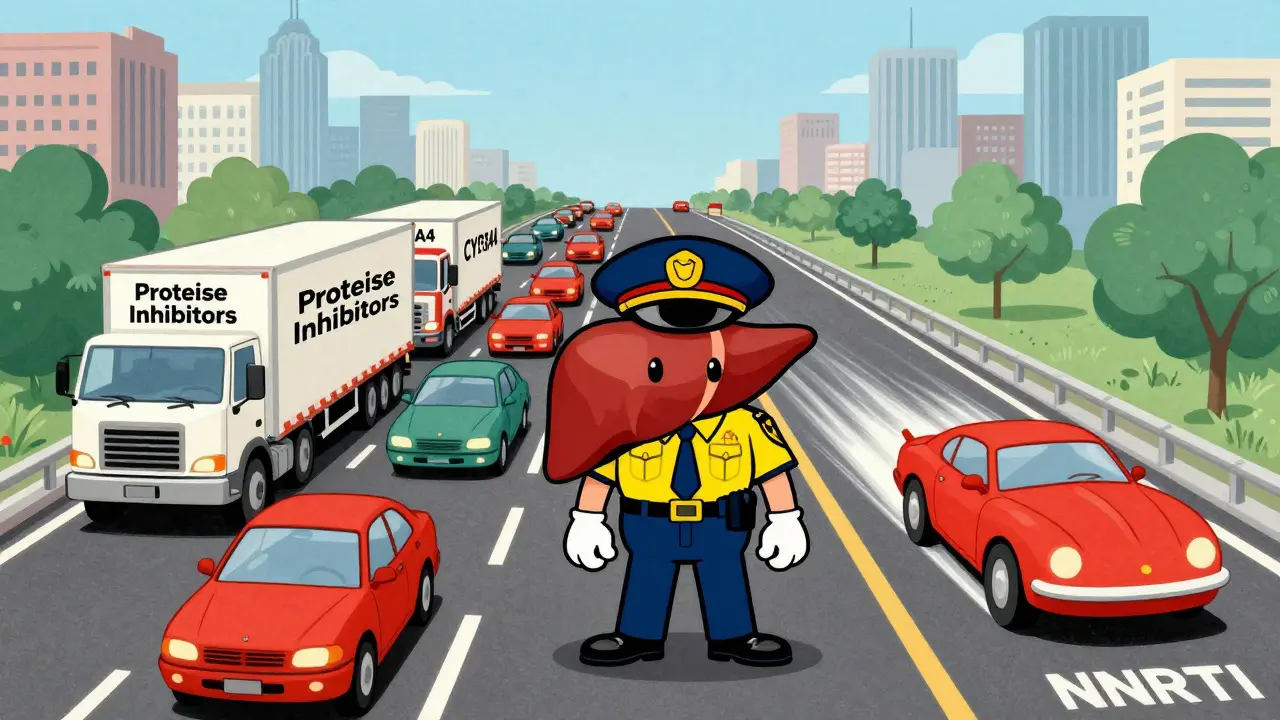
To understand why these interactions are so dangerous, we have to look at how your liver processes medication. Most drugs rely on specific enzymes, particularly the cytochrome P450 (CYP) 3A4 enzyme system, to break down and leave your body. Some antiretrovirals act like traffic cops, either blocking this highway completely or speeding up the traffic so much that other drugs don't get processed correctly.
Protease inhibitors (PIs), such as darunavir, are often paired with "boosters" like ritonavir or cobicistat. These boosters are potent inhibitors of CYP3A4. By blocking this enzyme, they keep the HIV medication levels high in your blood, which is good for fighting the virus but bad for any other drug trying to use that same exit route. Conversely, some non-nucleoside reverse transcriptase inhibitors (NNRTIs), like efavirenz, act as inducers. They speed up the enzyme, causing other medications to be flushed out of your system before they can work, sometimes reducing their effectiveness by up to 75%.
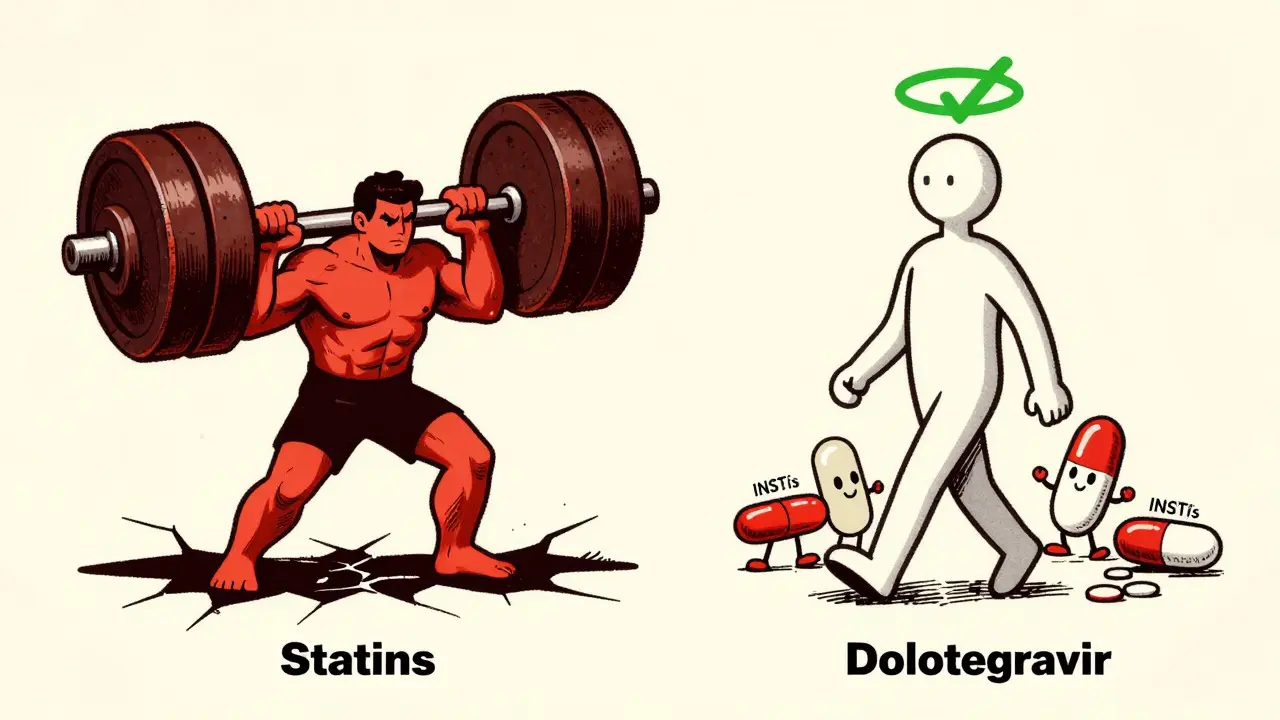
In contrast, newer classes like integrase strand transfer inhibitors (INSTIs), including dolutegravir and bictegravir, generally bypass this enzymatic chaos. They have minimal impact on CYP450 enzymes, making them significantly safer companions for other medications. For example, while ritonavir has over 200 documented major interactions, bictegravir has only about seven. This shift in metabolic pathways is why modern guidelines increasingly favor INSTI-based regimens for patients managing multiple health conditions.
The Highest Risk Offenders: Statins, Steroids, and SSRIs
Not all interactions are created equal. Some combinations are merely inconvenient, requiring dose adjustments, while others are absolutely contraindicated-meaning they should never be mixed. The most dangerous clashes typically involve cardiovascular drugs, mental health medications, and steroids.
Statins are perhaps the most critical concern. As people with HIV age, cardiovascular disease becomes a leading cause of mortality. However, combining boosted PIs with certain statins can be fatal. Specifically, simvastatin and lovastatin are banned when taken with ritonavir or cobicistat because the interaction can increase statin concentrations by 20- to 30-fold. This spike triggers rhabdomyolysis, a condition where muscle tissue breaks down rapidly, releasing toxins that can shut down your kidneys. If you need cholesterol management on a boosted regimen, pitavastatin or fluvastatin are considered the safest alternatives.
Mental health is another area where hidden dangers lurk. Many people with HIV manage anxiety or depression with selective serotonin reuptake inhibitors (SSRIs) like fluoxetine. When combined with ritonavir, the breakdown of the SSRI is blocked, leading to dangerously high levels of serotonin in the brain. This can trigger serotonin syndrome, a potentially fatal condition characterized by agitation, high fever, and rapid heart rate. Clinicians often have to cut the SSRI dose in half or switch the patient off the booster entirely to prevent this.
Steroids present a different kind of threat. Inhaled corticosteroids, commonly used for asthma or COPD, such as fluticasone, can cause severe adrenal insufficiency or Cushing's syndrome when mixed with boosted PIs. Because the steroid isn't broken down properly, it accumulates in the body, suppressing your natural hormone production. Studies show that nearly 17% of patients on these combinations develop adrenal issues requiring hospitalization. Switching to budesonide nasal spray or using non-steroidal inhalers is often recommended to mitigate this risk.
| Drug Class | Example Drugs | Interaction Mechanism | Risk Level | Key Concerns |
|---|---|---|---|---|
| Protease Inhibitors (Boosted) | Darunavir + Ritonavir | Potent CYP3A4 Inhibition | High | Rhabdomyolysis, Serotonin Syndrome, Adrenal Insufficiency |
| NNRTIs | Efavirenz | CYP3A4 Induction | Moderate | Reduced efficacy of contraceptives, warfarin, and immunosuppressants |
| INSTIs | Dolutegravir, Bictegravir | Minimal CYP Enzyme Impact | Low | Metformin reduction (Dolutegravir), Rifampin interactions |
The Long Shadow of Injectable Therapies
Newer long-acting injectable therapies offer convenience but introduce a unique temporal challenge. Drugs like cabotegravir and rilpivirine are administered intramuscularly every one to two months. While this removes the daily burden of pills, their pharmacokinetic profiles mean they stay in your system for weeks or even months after the last injection.
If you start a new medication that interacts with cabotegravir or rilpivirine, you can't simply stop the ART to resolve the conflict. The drug will remain active in your body due to its long half-life (40 days for cabotegravir, 55 days for rilpivirine). This means potential interactions can persist for up to 12 months after discontinuation. Clinicians must carefully screen for interacting drugs not just at the time of injection, but throughout the entire dosing interval. This requires a proactive approach to medication history, ensuring that any new prescriptions for conditions like tuberculosis (which uses rifampin) are weighed against the lingering presence of the injectable ART.
Herbal Supplements and Recreational Substances
We often forget to tell our doctors about over-the-counter remedies or recreational drugs, assuming they are harmless. This is a dangerous assumption when on ART. St. John's Wort, a popular herbal supplement for mild depression, is a powerful inducer of CYP3A4. Taking it with efavirenz can reduce the antiretroviral's concentration by 50% to 60%, effectively rendering the HIV treatment useless and allowing viral replication to rebound.
Recreational substances also pose risks. Ketamine, for instance, is metabolized by CYP3A4. When combined with ritonavir, the breakdown of ketamine is inhibited, leading to prolonged and intensified psychoactive effects, which can increase the risk of injury or overdose. Similarly, erectile dysfunction medications like sildenafil require strict dose limitations (25mg every 48 hours) when taken with boosted PIs to avoid severe hypotension. Avanafil is strictly contraindicated due to a 4- to 5-fold increase in concentration.
Strategies for Safe Management
Managing these complex interactions requires a systematic approach. First, maintain a comprehensive list of everything you ingest. This includes prescription meds, over-the-counter painkillers, vitamins, herbal supplements, and recreational substances. Bring this list to every medical appointment.
Second, utilize reliable resources. The University of Liverpool HIV Drug Interactions Checker is the gold standard for clinicians, offering evidence-based recommendations for thousands of drug pairs. It provides clear guidance on whether to avoid a combination, adjust doses, or monitor closely. Patients should ask their providers if a specific interaction has been checked against this database.
Third, consider switching to lower-risk regimens if appropriate. If you are on a boosted PI regimen and struggling with multiple comorbidities, discuss with your doctor whether an INSTI-based regimen like dolutegravir or bictegravir is suitable for you. These drugs have significantly fewer interactions, simplifying your overall healthcare management. However, remember that INSTIs are not interaction-proof; for example, dolutegravir reduces metformin levels by 33%, which may require diabetes medication adjustments.
Finally, be vigilant during transitions. When stopping a booster like ritonavir, the drugs that were previously suppressed will suddenly be metabolized normally. This can lead to subtherapeutic levels of medications like tacrolimus or warfarin. Dose adjustments are often needed immediately upon switching regimens to maintain therapeutic efficacy.
Frequently Asked Questions
What is the most dangerous drug interaction with HIV medication?
One of the most dangerous interactions is between boosted protease inhibitors (like ritonavir) and certain statins (simvastatin or lovastatin). This combination can increase statin levels by up to 30 times, leading to rhabdomyolysis, a condition where muscle tissue breaks down and can cause acute kidney failure. Another high-risk interaction involves ritonavir and inhaled corticosteroids like fluticasone, which can cause life-threatening adrenal insufficiency.
Can I take St. John's Wort while on ART?
Generally, no. St. John's Wort is a strong inducer of the CYP3A4 enzyme. It can significantly reduce the blood levels of many antiretrovirals, particularly NNRTIs like efavirenz and boosted PIs. This reduction can lead to virologic failure and the development of drug-resistant HIV strains. It is best to avoid this herbal supplement entirely unless explicitly approved by your HIV specialist.
Are Integrase Inhibitors (INSTIs) free from drug interactions?
They have far fewer interactions than older classes, but they are not completely free of them. For example, dolutegravir can reduce the effectiveness of metformin by about 33%, which may require adjusting diabetes medication. Additionally, INSTIs like bictegravir interact with rifampin, a tuberculosis medication, requiring dose adjustments. However, compared to boosted PIs, INSTIs are considered much safer for patients on multiple medications.
How does aging affect the risk of ART interactions?
As people with HIV live longer, they are more likely to develop age-related conditions like hypertension, diabetes, and high cholesterol. This leads to polypharmacy, where patients take five or more medications daily. Each additional medication increases the risk of a clinically significant drug-drug interaction by approximately 18%. Therefore, older adults with HIV require more rigorous medication reviews to prevent adverse events.
What should I do if I am prescribed a new medication while on ART?
Always inform any new prescribing doctor that you are on antiretroviral therapy. Provide them with the exact names and doses of your HIV medications. Ask them to check for interactions using a reliable resource like the University of Liverpool HIV Drug Interactions Checker. Do not assume that over-the-counter drugs or supplements are safe without verifying them with your pharmacist or HIV provider.