
Supportive Care in Cancer: How Growth Factors, Antiemetics, and Pain Relief Improve Outcomes
 Mar, 24 2026
When someone is fighting cancer, the goal isn’t just to kill the tumor-it’s to help them live as well as possible while doing it. That’s where supportive care comes in. It’s not a side note. It’s not optional. For many patients, supportive care is what makes the difference between finishing treatment and having to stop because the side effects were too much. Three of the most critical pieces of this puzzle are growth factors, antiemetics, and pain relief. Each one tackles a different, but equally devastating, side effect of cancer treatment. And when used right, they don’t just make life more comfortable-they can save lives.
Growth Factors: Keeping Your Immune System from Collapsing
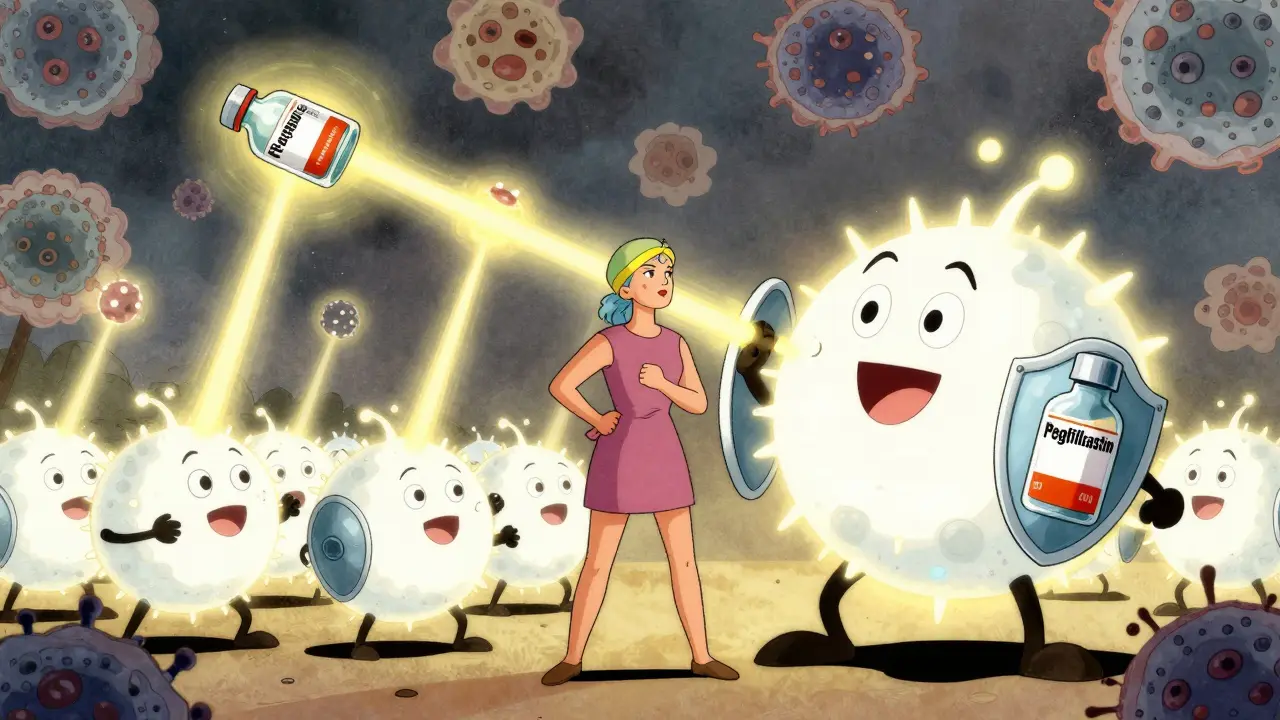
Chemotherapy doesn’t just attack cancer cells. It also wipes out white blood cells, especially neutrophils-the body’s first line of defense against infection. When those numbers drop too low, you’re at risk for febrile neutropenia: a dangerous fever caused by an infection your body can’t fight. This isn’t just uncomfortable. It can delay treatment, hospitalize you, or even kill you.
That’s where growth factors like filgrastim and pegfilgrastim come in. These aren’t magic bullets, but they’re close. They’re synthetic versions of proteins your body naturally makes to tell your bone marrow to produce more white blood cells. Pegfilgrastim, the long-acting version, is given as a single shot under the skin about 24 to 72 hours after chemo. It cuts the time your neutrophil count stays dangerously low by about 1.6 days. That might not sound like much, but in cancer care, every day counts. Studies show it reduces the chance of febrile neutropenia by nearly half in high-risk patients.
But it’s not perfect. About one in three people get bone pain from it-sometimes so bad they need extra painkillers. And while rare, there’s a risk of spleen rupture or lung problems. That’s why doctors don’t give it to everyone. If your chemo has less than a 10% chance of causing neutropenia, you probably won’t get it. But if you’re on a high-risk regimen like dose-dense AC-T for breast cancer, or if you’re older, diabetic, or have had prior infections, it’s standard. The key? Timing. Give it too soon after chemo, and you risk feeding cancer cells. Too late, and your immune system is already down.
Antiemetics: Taking Back Control of Nausea and Vomiting
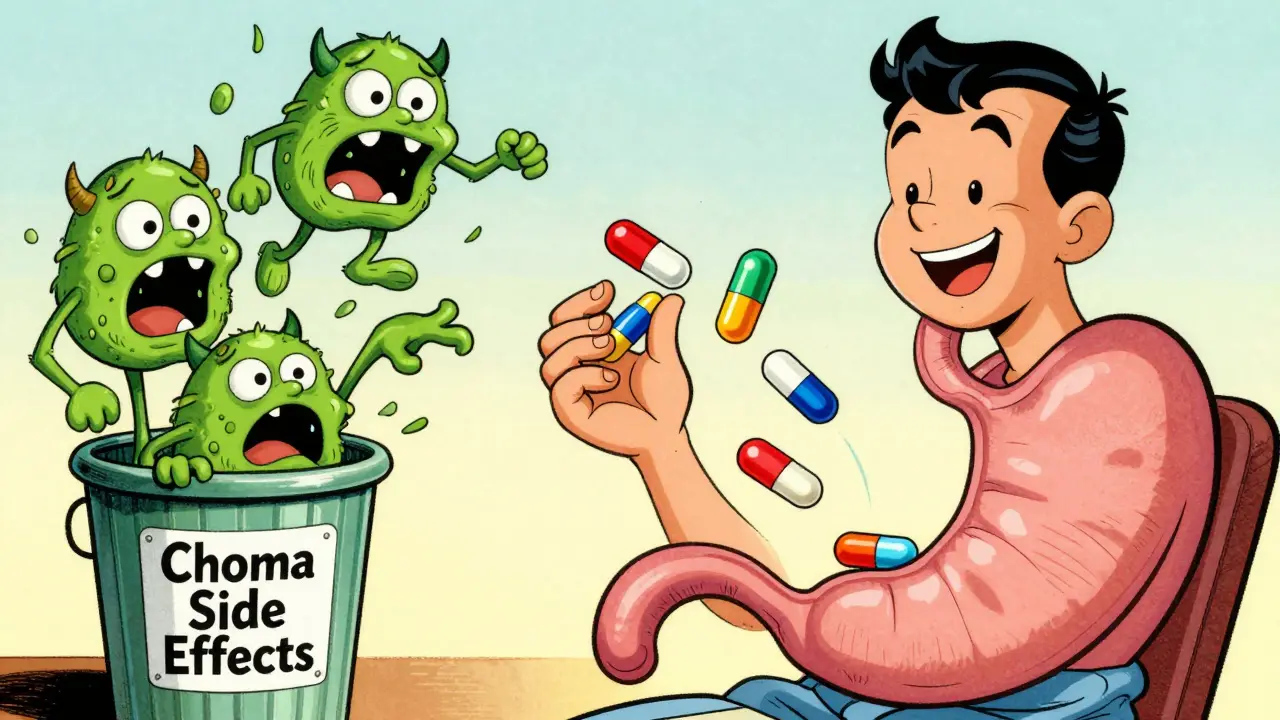
Think about the worst case of food poisoning you’ve ever had. Now imagine it lasting for days, not hours. That’s what chemotherapy-induced nausea and vomiting (CINV) can feel like. And it’s not just about feeling sick. It can lead to dehydration, weight loss, depression, and even refusing treatment.
Modern antiemetics have changed everything. Back in the 1990s, patients might get one drug-maybe ondansetron-and still throw up. Today, we use combinations based on how likely the chemo is to cause nausea. The NCCN classifies chemo into four risk levels: high, moderate, low, and minimal. For high-risk drugs like cisplatin, the gold standard is a three-drug combo: a 5-HT3 blocker (like palonosetron), an NK1 blocker (like aprepitant), and dexamethasone. Together, they give a complete response-no vomiting, no nausea-in 75% to 85% of patients. That’s a massive jump from the 30-40% we saw 20 years ago.
But even the best regimens aren’t foolproof. Delayed nausea, which hits 2-5 days after chemo, is harder to control. That’s why dexamethasone is tapered over several days. Newer options like netupitant/palonosetron (NEPA) combine two drugs in one pill and push response rates up another 10-15%. Still, cost is a barrier. A single cycle of aprepitant can run $150-$300. Many patients skip doses because they can’t afford it. And here’s the hard truth: a 2022 survey found only 58% of U.S. oncology practices consistently follow these guidelines. That means thousands of patients are getting outdated, less effective care.
Pain Relief: More Than Just Opioids
Pain is the most feared symptom in cancer. Not because it’s always severe-but because it’s often poorly managed. The WHO’s three-step ladder-start with acetaminophen, move to weak opioids, then strong opioids-is outdated. Today, we know cancer pain isn’t one thing. It’s a mix: bone pain, nerve pain, blocked organs, inflammation. Each needs a different approach.
For bone or tissue pain (nociceptive), opioids like morphine, oxycodone, or hydromorphone still work well. About 70-90% of patients get good relief. But here’s the catch: 90% of those on opioids get constipated. Half feel drowsy. A small number risk breathing problems. That’s why we don’t just hand out pills. We use the Edmonton Symptom Assessment System (ESAS) at every visit. We ask: On a scale of 0-10, how’s your pain? How’s your nausea? Your tiredness? We track it. We adjust.
For nerve pain (neuropathic)-common after chemo like paclitaxel or radiation-we use drugs like gabapentin or pregabalin. They don’t cure the pain, but they can cut it by 30-50% in half the patients who try them. Sometimes, we add antidepressants like duloxetine or even lidocaine patches. And yes, cannabis is now in the NCCN guidelines, though evidence is still limited. It helps about 25-30% of patients with nerve pain, but it’s not for everyone.
And opioids aren’t the endgame. About 20-30% of patients don’t respond well to one opioid. That’s when we rotate-switch to a different one. Maybe morphine isn’t working. Fentanyl might. Maybe methadone’s longer action helps. But it’s tricky. Methadone can mess with heart rhythms. Fentanyl patches can overdose if not dosed right. That’s why pain specialists train for 20-40 hours just to manage this right.
Real Stories, Real Impact
A woman in her late 50s with breast cancer told her oncologist she couldn’t do another cycle. She’d lost 15 pounds. She couldn’t eat. She was too nauseous. Her team switched her to the three-drug antiemetic combo. Within two cycles, she gained back 8 pounds. She finished all six cycles. She’s now in remission.
A man with lung cancer got pegfilgrastim after his first chemo cycle. His neutrophil count stayed stable. He didn’t get sick. He didn’t miss a single treatment. He completed his full course. His oncologist says that alone likely extended his survival by months.
And then there’s the man with bone metastases who couldn’t sleep because of pain. He tried morphine, but the constipation made him miserable. His team added gabapentin and a laxative regimen. He went from a pain score of 8/10 to 3/10. He started walking again. He went to his grandson’s graduation.
These aren’t rare cases. They’re the rule when supportive care is done right.

Cost, Access, and the Hidden Crisis
Here’s the uncomfortable truth: these life-changing drugs are expensive. Pegfilgrastim’s brand name costs $6,000-$7,000 per dose. The biosimilar? $3,500-$4,500. A full antiemetic combo? $150-$500 per cycle. Opioids are cheap, but add in gabapentin, laxatives, anti-nausea meds, and monitoring-and monthly costs can hit $500. A 2023 survey found 38% of cancer patients struggled to afford these medications. Some skip doses. Some ration. Some just stop.
And access isn’t equal. In U.S. academic centers, 85% follow NCCN guidelines. In community clinics? Only 55%. In low-income countries? As low as 30%. That’s not just unfair. It’s deadly. A patient in rural Kenya with cervical cancer and severe pain might get nothing. A patient in New York might get a multidisciplinary team, pain specialists, and financial aid.
But things are changing. Biosimilars are cutting growth factor costs. New antiemetics are being approved. AI tools are being tested to predict who’s at risk for neutropenia before it happens. The NCCN updated its pain guidelines in 2023 to include more non-opioid options. And more oncology teams are adding social workers and pharmacists to help patients navigate costs.
What You Need to Know
- Growth factors aren’t for everyone. Ask your doctor if your chemo has a risk of febrile neutropenia over 20%.
- Antiemetics work best when started before chemo. Don’t wait until you’re sick.
- Pain isn’t “just part of it.” If it’s not controlled, speak up. There are options beyond opioids.
- If cost is a problem, ask about patient assistance programs, biosimilars, or generic alternatives.
- Track your symptoms. Use tools like ESAS. Write down your pain level, nausea, fatigue. Bring it to every appointment.
Supportive care isn’t about being comfortable. It’s about being alive. It’s about finishing treatment. It’s about being there for your family. And it’s not a luxury. It’s a necessity.
Are growth factors always necessary during chemotherapy?
No. Growth factors like pegfilgrastim are only recommended when the risk of febrile neutropenia is 20% or higher. For low-risk chemo, they’re not needed and may even cause harm. Your doctor will assess your age, overall health, chemo type, and past history to decide if you benefit.
Why do antiemetics need to be taken before chemotherapy?
Nausea triggers start in the brain and gut before chemo even enters your bloodstream. Antiemetics work best when they’re already in your system. 5-HT3 blockers are given 30 minutes before chemo, NK1 blockers an hour before, and dexamethasone is often taken the night before and the morning of. Waiting until you feel sick means the drugs are too late to stop the worst of it.
Can you manage cancer pain without opioids?
Yes, for many types of pain. Nerve pain from chemo or radiation often responds well to gabapentin, pregabalin, or antidepressants like duloxetine. Bone pain can be helped with bisphosphonates or radiation. Inflammation can be reduced with steroids or NSAIDs. Opioids are still needed for moderate to severe pain, but they’re not the only tool-and shouldn’t be the first one used unless absolutely necessary.
What if I can’t afford my supportive care medications?
You’re not alone. Many drug manufacturers offer patient assistance programs. Biosimilars for growth factors can cut costs by 30%. Generic antiemetics like ondansetron are much cheaper than newer combos. Ask your oncology nurse or social worker-they’re trained to help navigate costs. Never stop a medication because of price. Talk to someone first.
How do I know if my pain is being managed well?
Good pain control means you can sleep, eat, move, and do daily activities without constant discomfort. If your pain score stays above 3/10 despite treatment, or if you’re having breakthrough pain more than twice a day, it’s not well managed. Ask for a referral to a pain specialist. You deserve better.
Sean Bechtelheimer
March 24, 2026 AT 12:40Namrata Goyal
March 25, 2026 AT 15:44Donna Fogelsong
March 27, 2026 AT 00:36Caroline Dennis
March 28, 2026 AT 17:50Marissa Staples
March 29, 2026 AT 08:08Blessing Ogboso
March 31, 2026 AT 05:44Brandon Shatley
March 31, 2026 AT 07:07Korn Deno
March 31, 2026 AT 07:20winnipeg whitegloves
April 1, 2026 AT 19:18rebecca klady
April 3, 2026 AT 18:55Rachele Tycksen
April 5, 2026 AT 14:30Jefferson Moratin
April 5, 2026 AT 23:26Grace Kusta Nasralla
April 7, 2026 AT 20:47