
Personal Health Records: Managing Medications Across Pharmacies
 May, 5 2026
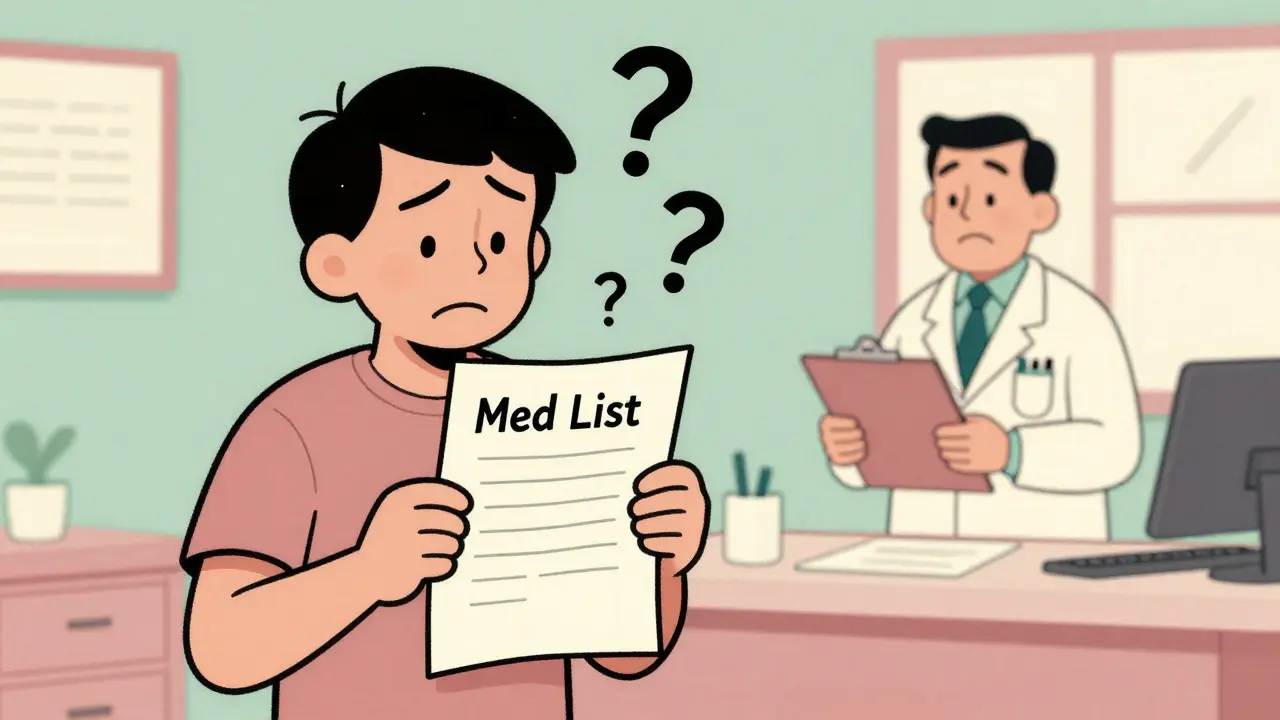
Imagine walking into a new doctor's office or a different pharmacy chain. You hand over your list of medications, hoping it's complete. But what if that list is missing the blood pressure pill you fill at a local independent shop? Or the herbal supplement you buy cash-only at the grocery store? This gap in information isn't just an inconvenience; it’s a safety risk. Personal health records are patient-controlled digital systems designed to consolidate prescription histories from multiple sources into one unified view. They are the bridge between fragmented care and comprehensive safety. The problem is real. According to data from the Agency for Healthcare Research and Quality, half of all medication errors happen during transitions of care-like moving from hospital to home or switching providers. These mistakes cost the U.S. healthcare system roughly $528 per patient every year. When you use a PHR effectively, you aren't just organizing paper; you are actively preventing adverse drug events that affect 20% of patients annually.
How Personal Health Records Work for Medications
A personal health record (PHR) is not the same as the electronic health record (EHR) your doctor keeps locked away. The Office of the National Coordinator for Health Information Technology defines a PHR specifically as a record controlled by *you*. It pulls data from multiple places: your doctor’s EHR, personal devices like smartwatches, and crucially, pharmacy networks.
The magic happens through interoperability standards. Most modern systems rely on FHIR (Fast Healthcare Interoperability Resources), a set of technical specifications that allow different software programs to talk to each other. By 2023, 86% of major U.S. health systems had implemented FHIR APIs. This means your pharmacy can send data to your PHR app without manual faxing or phone calls.
Medication data typically comes from three main sources:
- PBM Claims: Data from Pharmacy Benefit Managers covers about 92% of prescription fills linked to insurance.
- Direct Pharmacy Feeds: Real-time data from specific pharmacies, including cash purchases.
- Patient-Entered Info: What you type in yourself, such as over-the-counter drugs or supplements.
Systems like Surescripts play a huge role here. Their network handles 22 billion annual transactions. They use a Master Patient Index that matches your identity across disparate systems with 99.2% accuracy using twelve data points, including your name, date of birth, and address. This high level of precision ensures that when you log in, you’re seeing *your* history, not someone else’s.
Top Platforms for Tracking Your Meds
Not all PHRs are created equal. Some are built for consumers, while others are backend tools used by pharmacists. Here is how the major players compare in terms of medication coverage and usability.
| Platform | Primary User | Medication History Completeness | Key Limitation |
|---|---|---|---|
| Apple Health Records | Consumer (iPhone users) | 68% | Limited to participating health systems; no direct OTC tracking |
| Surescripts Medication History | Pharmacists & Providers | 92% | Not directly accessible to most patients as a standalone app |
| My Health Record (Australia) | National Population | High (varies by provider) | Requires active contribution from community pharmacists |
| Microsoft HealthVault | Historical Consumer | Discontinued | Served as early model but lacked sustained interoperability |
Apple Health Records, launched in January 2018, is great for accessibility. If you have an iPhone, you likely have access to it. However, a 2022 benchmark study in JAMIA found it captures only 68% of medication history compared to Surescripts' 92%. Why the gap? Apple relies on hospitals pushing data to you. It doesn’t always pull directly from every community pharmacy network unless that pharmacy is integrated with your specific hospital system.
In contrast, Surescripts operates behind the scenes. When a pharmacist logs you in, they can see a 12-month prescription history in seconds. This tool, piloted in 2014, outperforms manual reconciliation, which takes pharmacists an average of 12.4 minutes per patient. For you, the benefit is speed and accuracy during urgent visits.

The Hidden Gaps: OTCs and Supplements
Here is where things get tricky. While insurance-covered prescriptions are well-tracked, non-prescription items fall through the cracks. A 2021 study published in PMC found that only 37% of PHRs capture over-the-counter (OTC) medications accurately.
Why does this matter? If you take ibuprofen daily for arthritis, your doctor needs to know before prescribing blood thinners. Yet, many systems don't have a standardized way to code OTC products. Dr. Richard Wang of Duke University warned in a 2023 Health Affairs blog that "PHR medication data suffers from the garbage-in-garbage-out problem." His audit of 12,000 records showed that 61% of patient-entered medications contained dosage errors.
This creates a dangerous blind spot. Dr. Karen Bell of the National Academy of Medicine testified in May 2023 that current PHR systems capture only 63% of total medication use. For patients managing polypharmacy (multiple chronic conditions), those missing 37% can include critical interactions. To mitigate this, you must manually enter these items and double-check them. Don't assume the system knows everything.
Security and Privacy: Who Sees Your Data?
Sharing your full medication history raises valid privacy concerns. Fortunately, certified PHRs adhere to strict security protocols. Most employ AES-256 encryption and HIPAA-compliant storage. An audit by the Office of the National Coordinator in 2022 verified that 98% of certified PHRs meet NIST Cybersecurity Framework standards.
You also have control. In systems like Australia’s My Health Record, you can restrict access. However, be aware that 37% of patients limit sharing to certain providers, which can sometimes fragment the very continuity of care the system aims to protect. The balance lies in granting access to your immediate care team while blocking unnecessary third parties.
Real-World Impact on Safety and Time
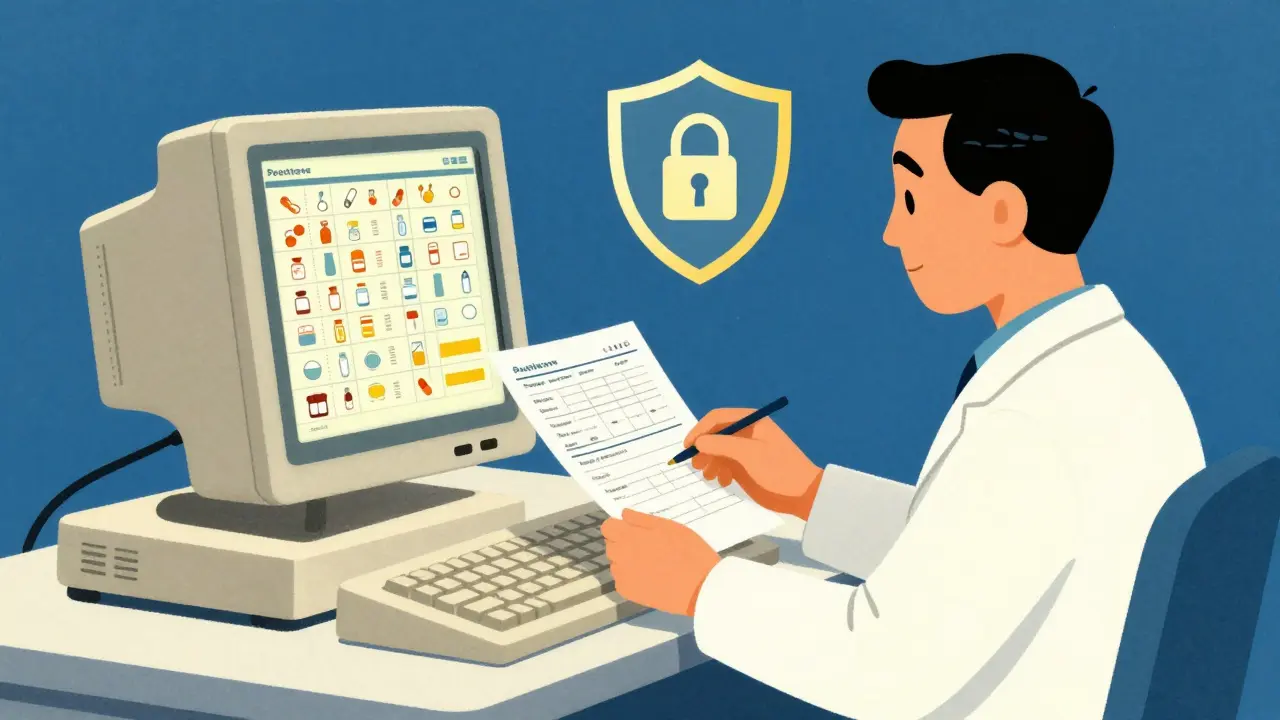
Does using a PHR actually make a difference? Yes. The American Society of Health-System Pharmacists (ASHP) reported in 2022 that pharmacists using EHR-integrated medication histories spend 35% less time on reconciliation. That saves them 7.2 hours weekly, time they redirect toward clinical interventions rather than paperwork.
For patients, the impact is even more tangible. A 2023 patient satisfaction survey at the University of Pittsburgh Medical Center found that 82% of chronic disease patients felt "more confident managing medications" with PHR access. Confidence leads to adherence, and adherence leads to better outcomes. Conversely, hospitals with comprehensive medication reconciliation see 18% lower readmission rates for heart failure patients, according to CMS data.
Future Trends: AI and Regulatory Push
The landscape is shifting rapidly due to regulations like the 21st Century Cures Act. Its 2021 information blocking provisions forced greater data sharing. Between 2021 and 2023, Surescripts reported a 63% increase in medication history queries from community pharmacies.
Looking ahead, the CMS Interoperability and Patient Access Rule, effective July 2024, requires PBMs to share 45-day medication histories with patient consent. This is projected to boost PHR completeness by 27%. Furthermore, AI is entering the mix. Google Health’s 2023 prototype achieved 92% accuracy in predicting medication discrepancies using machine learning on PHR data. While widespread adoption is still 3-5 years away, the trajectory points toward automated error detection that flags potential issues before you even pick up your prescription.
Is my personal health record secure?
Yes, certified PHRs use AES-256 encryption and comply with HIPAA regulations. A 2022 audit confirmed that 98% of these systems meet rigorous NIST cybersecurity standards. You also control who accesses your data through permission settings.
Do PHRs track over-the-counter medications?
Often, no. Only 37% of PHRs capture OTC medications accurately because there is no universal coding standard for non-prescription drugs. You should manually add these to your record and verify them regularly to avoid dangerous interactions.
What is the difference between a PHR and an EHR?
An EHR is controlled by your healthcare provider and stays within their system. A PHR is controlled by you, the patient. It aggregates data from multiple sources, including different doctors, pharmacies, and personal inputs, giving you a holistic view of your health.
Can I use Apple Health Records for all my pharmacy data?
Apple Health Records is excellent for accessing hospital data but may miss community pharmacy details. It captures about 68% of medication history compared to specialized networks like Surescripts, which capture 92%. Use it as a supplement, not a sole source, for comprehensive med lists.
How do PHRs reduce medication errors?
By providing a single, accurate list of all medications, PHRs prevent duplicate prescribing and missed interactions. Studies show they reduce reconciliation errors by 43% and help identify discrepancies during care transitions, where 50% of medication errors typically occur.