
Patent Litigation and Generic Entry: Why Disputes Delay Life-Saving Medications
 Mar, 23 2026
When a new brand-name drug hits the market, it’s often priced at tens of thousands of dollars per year. Patients, doctors, and insurers know that eventually, a cheaper generic version will come along. But in the U.S., that day rarely comes when it should. Instead, patent litigation is used as a tool to push back generic entry by years - sometimes more than a decade. This isn’t a glitch in the system. It’s the system working exactly as drug companies designed it.
How the Hatch-Waxman Act Was Supposed to Work
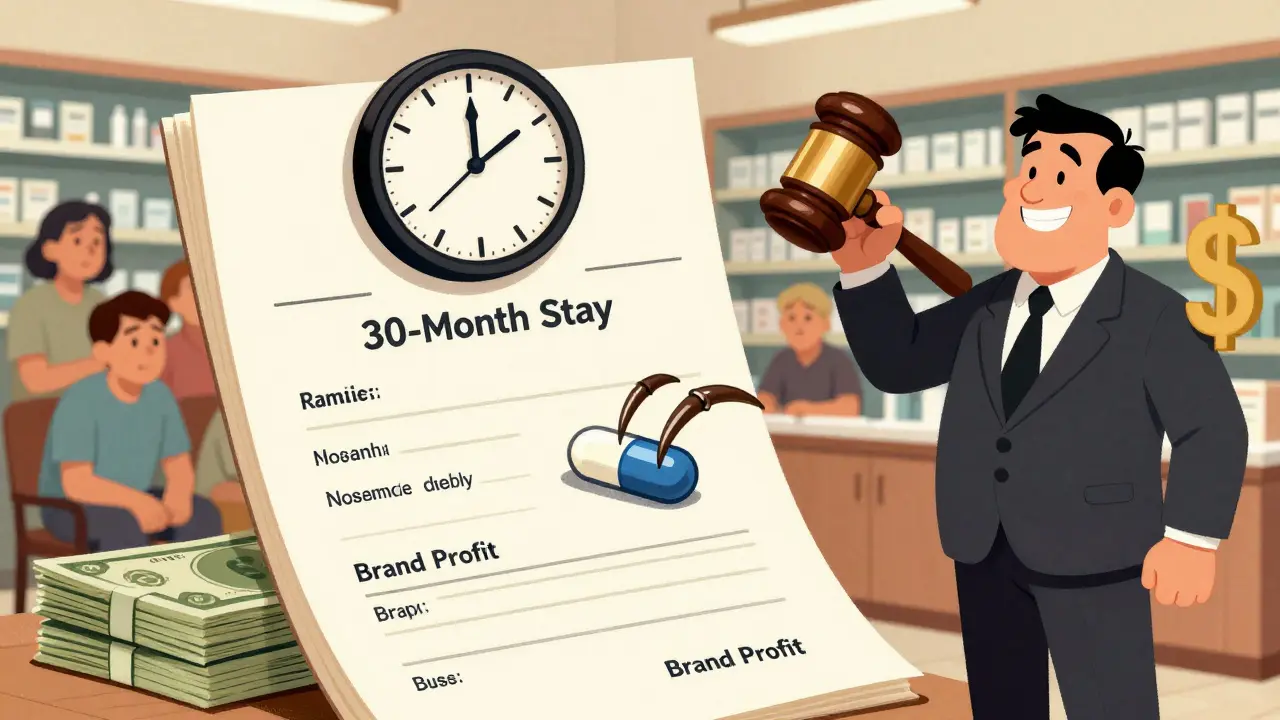
In 1984, Congress passed the Drug Price Competition and Patent Term Restoration Act, better known as the Hatch-Waxman Act. The goal was simple: encourage innovation by giving brand-name drugmakers a limited monopoly, while also speeding up access to affordable generics. The law created a pathway for generic manufacturers to file an Abbreviated New Drug Application (ANDA) without repeating costly clinical trials. All they had to do was prove their drug was bioequivalent to the brand. The key innovation was the Paragraph IV certification. If a generic company believed a patent on the brand drug was invalid or wouldn’t be infringed, they could challenge it. Once they did, the brand-name company had just 45 days to sue. If they did, the FDA was legally required to delay final approval of the generic for 30 months. That’s not a suggestion. It’s a mandatory pause. The idea was that this 30-month window would give courts time to decide if the patent was legitimate - and if so, the generic would wait. If not, the generic would launch immediately after. But reality turned this balance upside down.The 30-Month Stay: A Guaranteed Profit Shield
Today, nearly 60% of first-time generic applications trigger a Paragraph IV challenge. And in more than half of those cases, the brand-name company files suit. The 30-month stay isn’t just a delay - it’s a financial firewall. During those 30 months, the brand drug keeps selling at full price, often generating billions in revenue. Here’s the catch: the 30-month clock doesn’t even stop when the court case ends. A 2021 NIH study found that, on average, generic drugs didn’t launch until 3.2 years after the 30-month stay expired. That means patients were waiting nearly 7.7 years after the brand drug’s approval before a cheaper version became available - even though the patent should have expired by then. Why? Because the litigation process itself is designed to drag on. Legal battles over patents can take three to five years from filing to final appeal. And during that time, the brand company doesn’t have to prove their patent is valid - they just have to file. The burden of proof falls entirely on the generic manufacturer.Patent Thickets: The Hidden Wall
It’s not just one patent anymore. Brand-name companies now build patent thickets - dozens of overlapping patents covering everything from the active ingredient to the pill’s coating, the way it’s manufactured, even how it’s taken. A 2023 study found that 72% of patents used to block generics were filed after the FDA approved the original drug. These aren’t protecting innovation - they’re protecting profits. One drug might have 15 or 20 patents listed in the FDA’s Orange Book. Each one can trigger a new 30-month stay if challenged. Take Humira, the arthritis drug. Its original patent expired in 2016. But through a series of secondary patents, its exclusivity was extended for nearly a decade. When biosimilars finally entered the market in 2023, the brand still held 12 active patents. The result? A $1.2 billion extra cost to U.S. employers in just one year.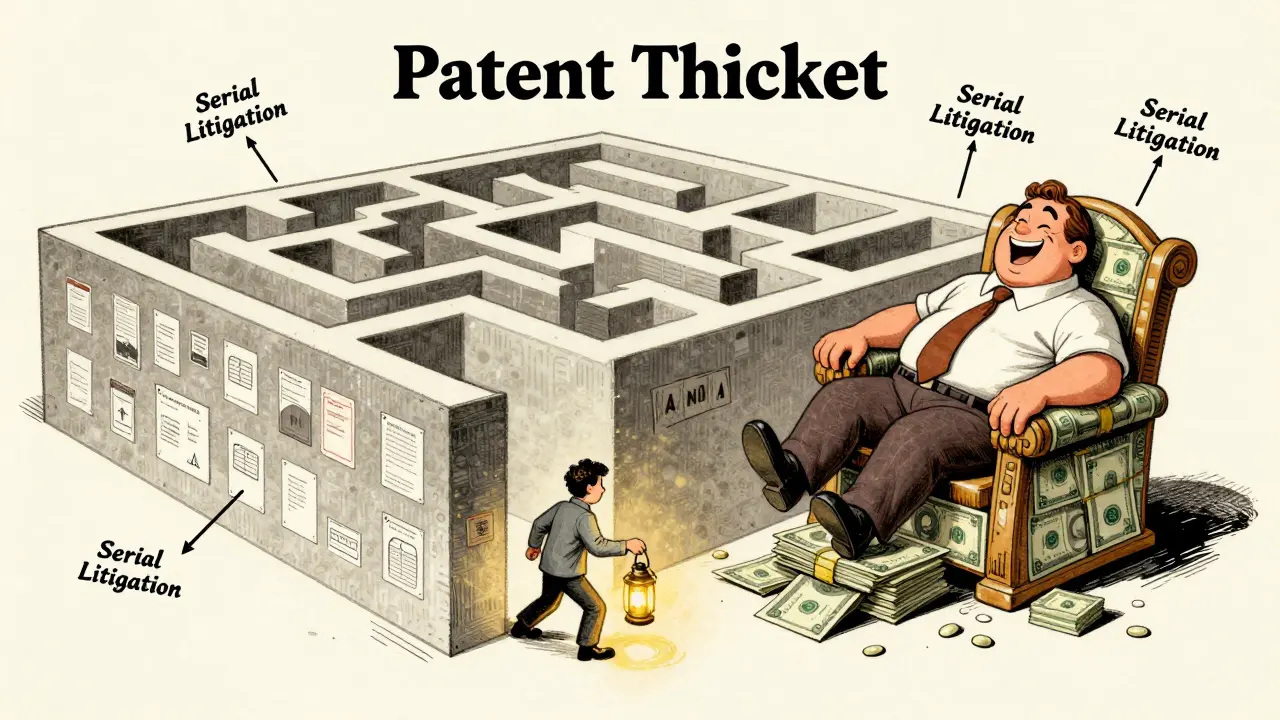
Pay-for-Delay: The Secret Deal
Sometimes, instead of fighting in court, brand-name companies strike a deal. They pay the generic manufacturer to stay away. These are called “pay-for-delay” agreements. The FTC estimates that between 2002 and 2010, these deals cost U.S. consumers over $3.5 billion annually. The logic is perverse: the brand pays the generic tens of millions of dollars - not to develop a better drug, but to delay launching a cheaper one. In 2013, the Supreme Court ruled these deals could be illegal under antitrust law. But they haven’t stopped. In 2023, the FTC challenged over 100 patent cases involving companies like AbbVie and AstraZeneca. These aren’t rare exceptions. They’re a recurring pattern.Who Pays the Price?
Patients don’t just wait longer for generics - they pay more while they wait. A primary care doctor in Chicago told STAT News about a patient who was rationing insulin because the generic version had been approved by the FDA - but blocked by litigation for 18 months. The patient was paying $1,200 a month. The generic? $120. But it wasn’t available. Employers, Medicaid, Medicare, and private insurers all foot the bill. Teva, one of the largest generic manufacturers, reported in 2023 that patent delays cost them $850 million in lost revenue. That’s not because they failed - it’s because they were legally blocked. Even when generics win in court, they still lose time. A study by the Generic Pharmaceutical Association found that 15% of patent listings in the Orange Book are inaccurate. That means generic companies are sometimes suing over patents that don’t even exist - wasting millions in legal fees.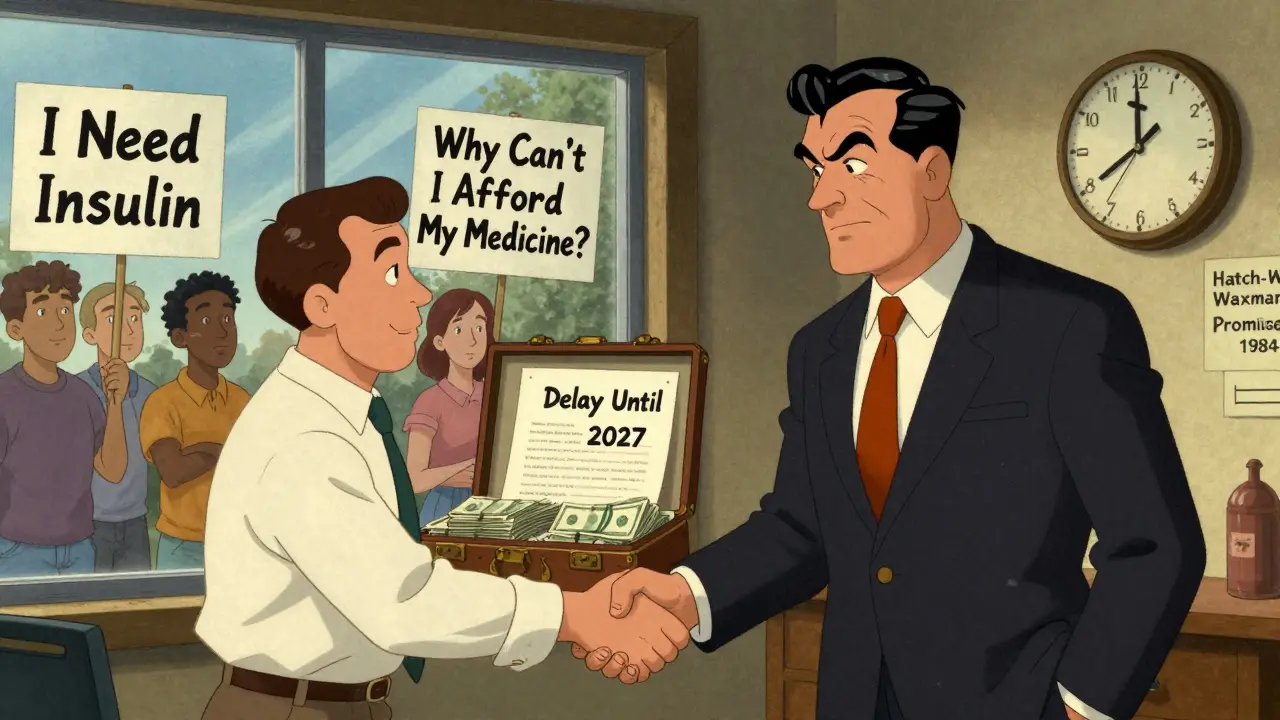
The Human Cost of Delay
The U.S. spends more on prescription drugs than any other country. And patent litigation is a big reason why. In 2008, the average price for a brand-name drug was $2,115 per year. By 2021, it was $180,007. The price of insulin, for example, tripled in a decade - even though the active ingredient hasn’t changed. Meanwhile, countries like Canada and the UK, which don’t allow the same patent abuse, see generics enter the market within months of patent expiry. The Association for Accessible Medicines (AAM) says patients are being denied choices - and savings. One Reddit user wrote: "My patient couldn’t afford the $1,200/month drug. The generic was approved. But litigation held it up for two years. She went without. She got sicker. That’s not innovation. That’s exploitation."What’s Being Done?
There are signs of change. The CREATES Act, passed in 2023, tries to stop brand companies from blocking generic companies from getting drug samples - a tactic used to delay approval. The FTC is filing more lawsuits. Congress is considering bills that would cap the number of patents that can be listed in the Orange Book and ban serial litigation. But the system is still rigged. Generic companies need teams of 50+ patent lawyers just to navigate the process. Defending a single case can cost $3 million to $10 million. Most small generic firms can’t afford to fight. Only the biggest players - Teva, Mylan, Sandoz - have the resources to go to war. And even then, they’re playing defense. They’re not trying to innovate. They’re trying to survive.What Comes Next?
The rise of biosimilars - generic versions of biologic drugs - adds another layer of complexity. These cases take 25% longer to resolve than traditional generic disputes. More patents. More delays. More cost. Without major reform, experts predict generic entry will still be delayed by an average of 3.2 years per drug. That means consumers will keep paying $15-20 billion extra each year. The original promise of the Hatch-Waxman Act was to bring down drug prices through competition. Today, that promise is broken. Patent litigation doesn’t protect innovation. It protects profits. And the people who pay the price aren’t shareholders - they’re patients.Why do generic drugs take so long to launch even after FDA approval?
FDA approval doesn’t mean the drug can be sold. If a brand-name company files a patent lawsuit after a generic manufacturer submits a Paragraph IV challenge, the law triggers a 30-month automatic stay. Even after that stay ends, litigation can continue for years. Many generics wait 3 to 5 years after FDA approval before launching, because courts are still deciding whether the patent is valid. In some cases, companies even wait longer to avoid the risk of paying damages if they lose.
What is a Paragraph IV certification?
A Paragraph IV certification is a legal statement a generic drugmaker submits to the FDA when filing an Abbreviated New Drug Application (ANDA). It says, "We believe your patent is either invalid or we won’t infringe it." This triggers the brand-name company’s right to sue. If they do, the FDA must delay final approval for 30 months - regardless of whether the patent is actually valid. It’s a legal trigger designed to pause competition.
Do generic companies ever win patent lawsuits?
Yes - and often. The Federal Trade Commission found that generics win in court in 73% of cases that go to a final decision. But winning doesn’t mean they get to launch right away. The legal process takes years. Even when a generic wins, the brand company can file another lawsuit over a different patent. This "serial litigation" tactic keeps generics out of the market for years, regardless of who wins each case.
What are pay-for-delay agreements?
Pay-for-delay agreements happen when a brand-name drugmaker pays a generic company to delay launching its cheaper version. The generic gets cash - sometimes tens of millions - and agrees not to compete for months or years. The brand keeps its monopoly. The FTC calls these anticompetitive and illegal under antitrust law. But they still happen. In 2023, the FTC challenged over 100 such cases.
Why can’t the FDA just ignore the lawsuits and let generics launch?
Because the law says they can’t. The Hatch-Waxman Act gives brand-name companies a legal right to trigger a 30-month stay by filing suit. The FDA has no authority to override that. Even if the patent seems weak or obvious, the agency must wait. This is a statutory requirement, not a regulatory choice. The FDA can approve a generic - but it can’t authorize its sale until the court system clears the way.
James Moreau
March 24, 2026 AT 01:53It’s wild how the system was designed to balance innovation and access, but got hijacked by legal loopholes. I’ve seen this firsthand-my mom couldn’t afford her insulin until a generic finally launched after 7 years. She was rationing doses. That’s not healthcare. That’s a death sentence wrapped in a patent.
And the worst part? The companies know this. They’re not stupid. They’re calculating. Every lawsuit, every pay-for-delay deal, every secondary patent is a dollar sign.
We keep talking about ‘innovation’ like it’s sacred, but when the innovation is in how to delay competition, not how to cure disease, we’ve lost our moral compass.
J. Murphy
March 24, 2026 AT 04:21patents r just a way for big pharma to keep prices high lol
rebecca klady
March 24, 2026 AT 23:58I work in a pharmacy and see this every day. Patients ask why their prescription isn’t covered, and we have to tell them it’s because of some legal delay. They don’t care about patents-they just want to live.
One guy came in crying because his asthma inhaler cost $900. The generic was approved. But the lawsuit was still dragging on. He said, ‘I’d rather use my inhaler than pay my rent.’ That’s not a policy issue. That’s a human tragedy.
Namrata Goyal
March 25, 2026 AT 16:23you think this is bad? in india we just skip all the patents and make generics anyway. the west is so obsessed with ‘intellectual property’ it forgets people are dying. if you can’t afford medicine, you’re not a customer-you’re a liability. maybe the real problem is capitalism itself, not just pharma.
also, who cares if they ‘innovate’ when they’re just tweaking pill coatings? that’s not science, that’s accounting.
Alex Arcilla
March 26, 2026 AT 19:24let me get this straight: we’ve got a system where the law forces the FDA to sit on its hands while companies fight over whether a pill’s color is patented.
and we wonder why drug prices are insane.
the real innovation here isn’t medicine-it’s legal engineering. these companies aren’t scientists. they’re lawyers with lab coats.
also, pay-for-delay? that’s like paying someone to not open a competing taco truck… while you’re the only one selling tacos.
the FTC should just shut this down. or better yet, let the FDA approve generics and let the courts handle damages later. stop letting lawsuits be a weapon.
also-why are we still using the 1984 law? it’s like driving a Model T in 2024 and blaming the road.
Brandon Shatley
March 27, 2026 AT 14:21it’s crazy how much this affects real people. i know someone who had to choose between buying her kid’s medicine or paying the electric bill. the generic was ready. the lawsuit wasn’t. she picked the electric bill.
no one talks about how this isn’t just about money-it’s about trust. if you believe the system works, but then your family suffers because of paperwork delays… you stop believing.
and honestly, i don’t blame people for getting angry. when the law protects profits over people, what’s left to believe in?
Blessing Ogboso
March 27, 2026 AT 22:50as someone from Nigeria, i’ve seen how drug access works in places without these legal gymnastics. in my home country, we import generics from India and Bangladesh without waiting for patent battles. we don’t have the luxury of waiting 7 years for a drug that should’ve been affordable in 6 months.
but here’s the thing: the same companies that block generics in the U.S. sell the exact same drugs in Africa at 1/10th the price. why? because they know people can’t afford to wait. they know we’ll take whatever we can get.
so why is it okay in Nigeria but not in Chicago? is it because Americans have insurance? or because Americans vote? or because Americans have lawyers?
the system isn’t broken. it’s designed this way. and the people who designed it are the ones who profit from it.
we need global solidarity on this. if we can get life-saving drugs to rural villages without lawsuits, why can’t we do it in the U.S.? because profit > compassion. and that’s the real patent we need to break.
Jefferson Moratin
March 29, 2026 AT 19:54the Hatch-Waxman Act was a noble compromise, but it assumed rational actors operating within a rule-of-law framework. what we have instead is a system of strategic delay, where litigation is weaponized not to resolve disputes, but to manufacture them. the 30-month stay is not a procedural safeguard-it is a structural incentive to prolong monopoly.
the deeper issue is epistemological: we have conflated legal validity with moral legitimacy. a patent may be legally enforceable, but that does not make it ethically defensible. when the law permits a company to extract billions from patients by exploiting procedural delays, we are no longer operating in a market-we are operating in a rent-seeking oligarchy.
the solution is not incremental reform. it is a reconceptualization of pharmaceutical innovation itself: not as a private property regime, but as a public good with regulated access. the state must reclaim its role as steward of health-not as a passive observer of corporate litigation.
Zola Parker
March 30, 2026 AT 18:52so basically, we pay billionaires to sit on their patents like they’re holding a gun to a baby’s head 😑
florence matthews
April 1, 2026 AT 18:13my grandma took insulin for 15 years. she never saw a generic. she passed last year. i still cry thinking about how scared she was of running out.
we talk about patents like they’re math. they’re not. they’re people. real people. scared people. people who choose between food and medicine.
if we can send a rover to mars, why can’t we fix this? 🙏
Kenneth Jones
April 2, 2026 AT 11:23stop pretending this is complicated. these companies are criminals. they’re not innovating-they’re extorting. sue them into bankruptcy. break up the patents. nationalize the damn supply chain. we’re not here to debate semantics. we’re here to save lives.
if you’re defending this system, you’re on the wrong side of history.