
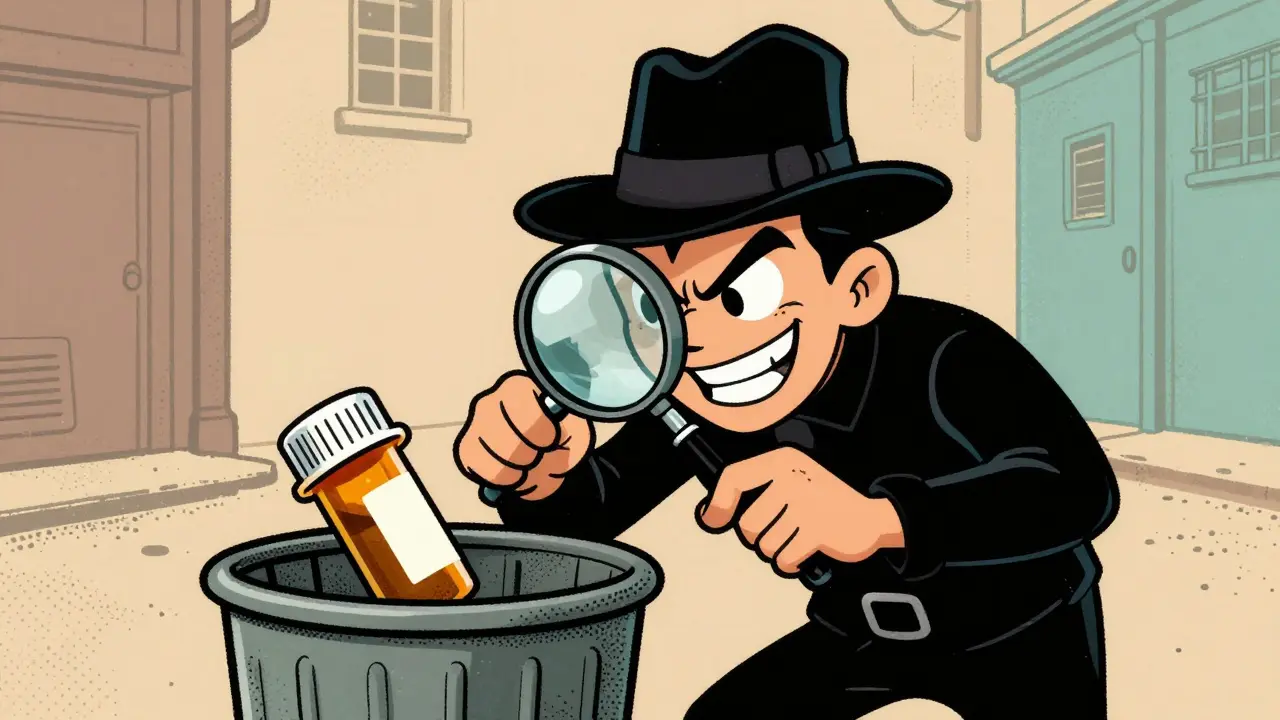
How to Remove Personal Information from Medication Bottles to Prevent Identity Theft
 Apr, 6 2026
| Method | Efficacy | Speed | Best For... |
|---|---|---|---|
| Chemical Solvent | Very High (98.7%) | ~32 Seconds | Reusing bottles / Clean removal |
| Black Marker | Medium (Low digital security) | ~47 Seconds | Quick disposal |
| Physical Shredding | Total (100%) | Varies | Complete destruction |
| Manual Peeling | Low (High residue) | ~98 Seconds | Not recommended |
Why simple peeling usually fails
Most people try to just peel the label off, but you'll quickly find that it doesn't work. About 85% of prescription bottles use polypropylene labels paired with waterproof acrylic adhesives. These aren't designed to come off easily. Research from Titan Labs shows that manual peeling fails in 92% of cases because it leaves behind a sticky residue that still contains your personal data. If the text is still visible in the glue, the information is still there for a thief to find.The most reliable way: Chemical Dissolution
If you want to keep the bottle for repurposing-maybe as a travel container or a sewing kit-you need a solvent. Cleanup Solvent-22, an acetone-based formula, is one of the most effective tools for this. It breaks the chemical bond of the acrylic adhesive in about 15 to 20 seconds. To do this right, saturate the label with the solvent, wait a few seconds, and the label should slide right off without leaving that annoying sticky film. Just a heads-up: these solvents can have a strong chemical smell, so make sure you're working in a well-ventilated room. While it costs around $15, it's a small price to pay to avoid the average identity theft loss of $1,347 per victim.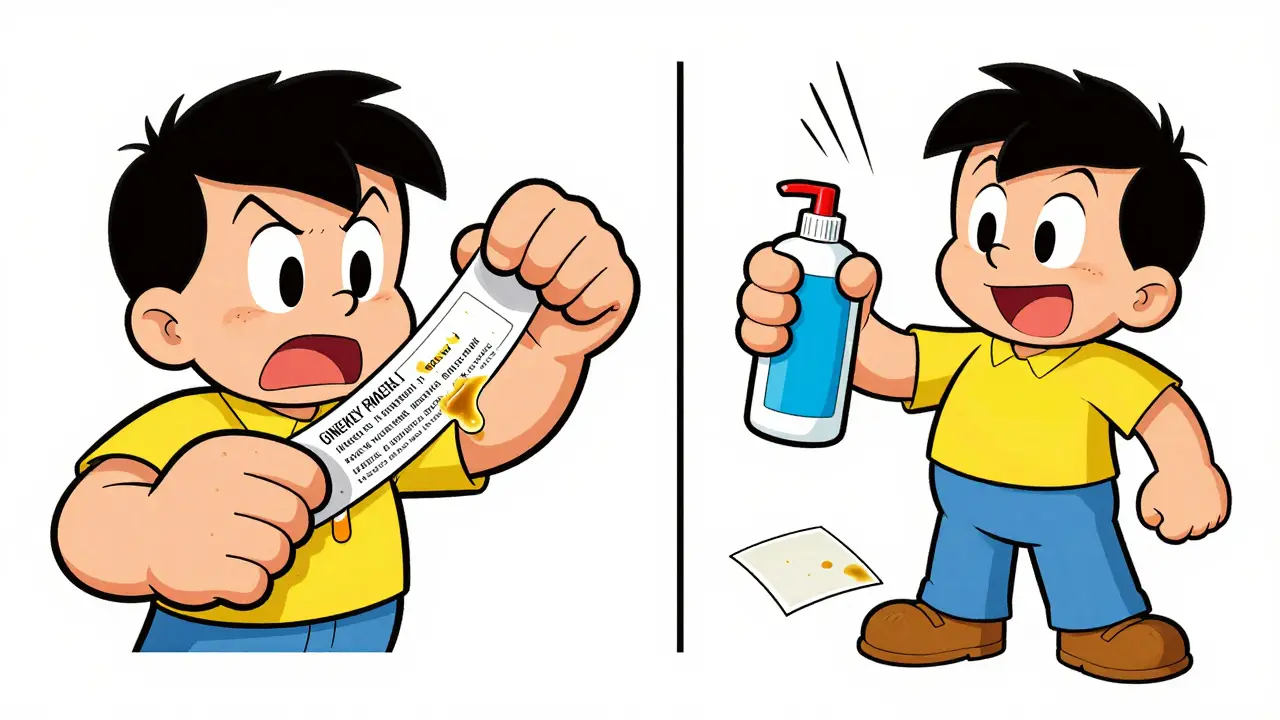
Fast but risky: Marker Obscuration
When you're in a rush to throw a bottle away, reaching for a permanent marker seems like the easiest path. Clinical pharmacist Melody Sun from CHOC suggests using a black permanent marker to cross out all information. For the best results, apply the ink in three thick, overlapping layers. However, be warned: this isn't foolproof. About 63% of markers fail to prevent "ghost imaging," where data can still be recovered using infrared light or smartphone photo enhancement apps. If you use this method, hold the bottle up to a strong light source afterward. If you can still see any text through the ink, you haven't fully disabled personal information on medication bottles and need to apply more ink or shred the label.The gold standard: Physical Destruction
If you have no intention of reusing the bottle, physical destruction is the only way to be 100% sure. Cross-cut shredders are the ideal tool here. By shredding the label into tiny confetti, you make forensic recovery nearly impossible. If you don't own a professional shredder, you can still follow a secure disposal protocol. First, mix your unused medication with something unappealing like coffee grounds or kitty litter in a sealed bag. Once the meds are gone, peel the label and shred it separately. This prevents cross-contamination and ensures your PII (Personally Identifiable Information) is gone before the bottle hits the landfill.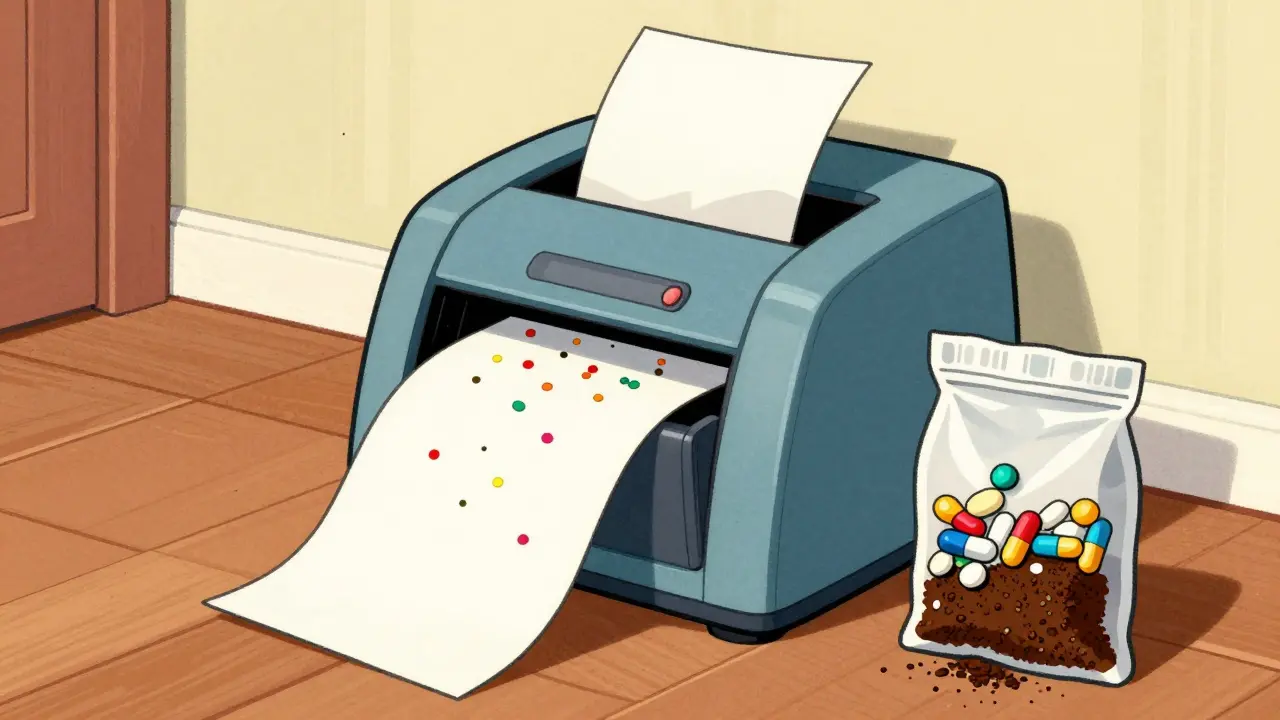
Practical tips for a secure home pharmacy
Protecting your data shouldn't be a monthly struggle. Here are a few rules of thumb to keep your household secure:- The 24-Hour Rule: Destroy your labels within 24 hours of finishing a medication. Waiting longer increases your risk of identity theft by 40%.
- Ventilation: Always use chemical removers near an open window or under a vent.
- Avoid Scraping: Don't use metal scrapers or knives to remove labels; you'll scratch the plastic, making the bottle useless for reuse.
- Use Pharmacy Kiosks: Many large chains like CVS and Walgreens now have in-pharmacy label-removal stations. If you're heading there for a refill, bring your empty bottles.
Can I just soak the bottles in vinegar to remove labels?
Unfortunately, no. Testing shows that vinegar soaks have a 78% failure rate because they cannot break down the acrylic adhesives used on most modern pharmacy labels.
Is it really possible for thieves to see through a black marker?
Yes. Many permanent markers are translucent under certain light spectrums. Some smartphone apps can enhance the contrast of a photo to reveal the "ghost image" of the text underneath the ink.
What is the safest way to dispose of the actual medicine?
The most recommended method is mixing the medicine with an undesirable substance like coffee grounds or kitty litter in a sealed bag, then throwing it in the trash. Better yet, use a DEA-sanctioned take-back program.
Why can't I just peel the label off by hand?
Most labels use a high-strength acrylic adhesive. When you peel them, the adhesive often splits, leaving a layer of glue on the bottle that still contains your name and prescription details.
Does the FDA provide guidelines for this?
While the FDA manages packaging standards, the FTC (Federal Trade Commission) explicitly states that patients must destroy prescription labels to prevent identity theft as part of general consumer protection.
Del Bourne
April 8, 2026 AT 07:37I've actually found that using a bit of rubbing alcohol or nail polish remover works wonders for those stubborn adhesive residues if you don't have the specific industrial solvent mentioned here. Just soak a cotton ball and let it sit on the glue for a minute before wiping it away!
Srikanth Makineni
April 9, 2026 AT 02:58just shred it
Danielle Kelley
April 9, 2026 AT 04:15You people are so naive! You think a little marker or a shredder is enough to stop the government and the big pharma data brokers from tracking your medical history? They already have your digital footprint from the pharmacy's own database. This is just a distraction to make you feel safe while they sell your genetic markers to the highest bidder. Total joke!
Toby Sirois
April 9, 2026 AT 06:59Honestly it's embarrassing that people even need a guide for this. Just use a shredder like a normal person. Why are we even talking about chemicals to reuse a plastic bottle that costs like two cents? Some of you are just lazy and want a shortcut to feel productive.
Brady Davis
April 9, 2026 AT 15:14Oh wow, a whole guide on how to throw away trash. Truly the pinnacle of internet content. I'm sure the identity thieves are trembling in their boots knowing I might use a cross-cut shredder for my blood pressure meds. Absolute drama.
Christopher Cooper
April 10, 2026 AT 16:48I really appreciate the emphasis on the light test! It's a fantastic way to verify the security of the marker method. I wonder if there are any specific types of permanent markers that are known to be more opaque than others, perhaps some industrial-grade paint markers?
Rauf Ronald
April 11, 2026 AT 15:15Adding to Christopher's point, oil-based paint markers are way better than standard permanent markers for this. They create a physical layer of paint that's much harder for infrared to penetrate. Also, don't forget that you can just use a heavy-duty soak in hot soapy water first to soften some labels before peeling!
Vivek Hattangadi
April 11, 2026 AT 17:53That's a great tip about the paint markers! I'm definitely going to try that out. It's so awesome to see everyone sharing their own tricks to keep things secure. We're all in this together to protect our privacy!
Dhriti Chhabra
April 13, 2026 AT 07:34I believe it is quite prudent to maintain such a disciplined approach toward one's personal data. It is most commendable that there are multiple options provided to suit different needs and preferences.
Timothy Burroughs
April 14, 2026 AT 10:39listen i dont care about the labels but the fact that you people are reusing plastic bottles in this day and age is just sad. get some glass jars like a real adult. america is falling apart when we have to write manuals on how to not get robbed by our own trash cans
shelley wales
April 14, 2026 AT 23:50It's okay to feel overwhelmed by all these steps. Just do what you can. Even just ripping the label into a few pieces is better than doing nothing at all. Be kind to yourselves while trying to stay safe.
Rupert McKelvie
April 15, 2026 AT 06:08This is a very helpful breakdown. I'm sure many people will find a method here that fits their lifestyle perfectly. It's great to have a simple way to prevent such a massive headache.
Alexander Idle
April 15, 2026 AT 21:27I am simply exhausted by the sheer audacity of the pharmacy industry for using adhesives that are practically industrial grade. One must wonder if they do this on purpose to keep us tethered to our medical records in the most literal sense possible. Truly an absolute tragedy of modern convenience that we must resort to chemical warfare against a piece of paper just to maintain a shred of dignity and privacy in our own homes.
charles mcbride
April 16, 2026 AT 02:05I've always used the shredder method and it's honestly the most peaceful way to handle things. It's just a quick habit to get into and it provides total peace of mind. Cheers for sharing this guide!