
How to Identify Class-Wide vs. Drug-Specific Safety Alerts: A Practical Guide
 May, 8 2026
Imagine you are reviewing a new prescription for a patient. You notice a bold warning on the label about heart risks. Do you stop prescribing that specific medication? Or do you worry about every other drug in that same family? This split-second decision can mean the difference between protecting a patient and depriving them of effective treatment. Understanding the difference between class-wide and drug-specific safety alerts is not just an academic exercise; it is a critical skill for anyone involved in healthcare.
The Core Distinction: Mechanism vs. Chemistry
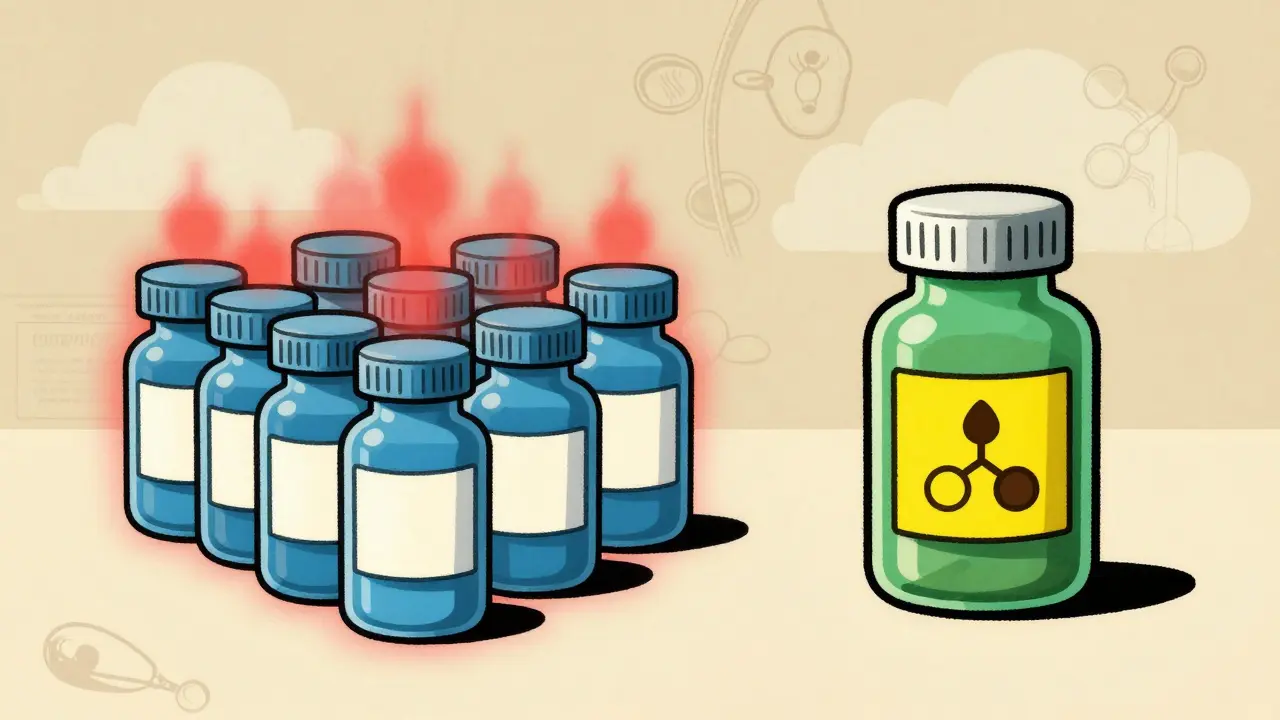
To identify the scope of a safety alert, you first need to understand why the risk exists. A class-wide warning usually stems from a shared pharmacological mechanism. If a group of drugs works by blocking a specific enzyme or receptor, they often share similar side effects. For example, all ACE inhibitors carry a risk of angioedema because they all affect the bradykinin pathway. This is a "class property."
In contrast, a drug-specific warning often arises from unique chemical properties or manufacturing issues. Think of cerivastatin, a statin withdrawn in 2001 due to severe muscle damage (rhabdomyolysis). While it belonged to the statin class, this intense signal was isolated to that specific agent. Other statins remained on the market because their chemical structures did not trigger the same reaction. Recognizing whether a risk is tied to the drug's job (mechanism) or its makeup (chemistry) is your first step.
Using Evidence Thresholds to Spot Patterns
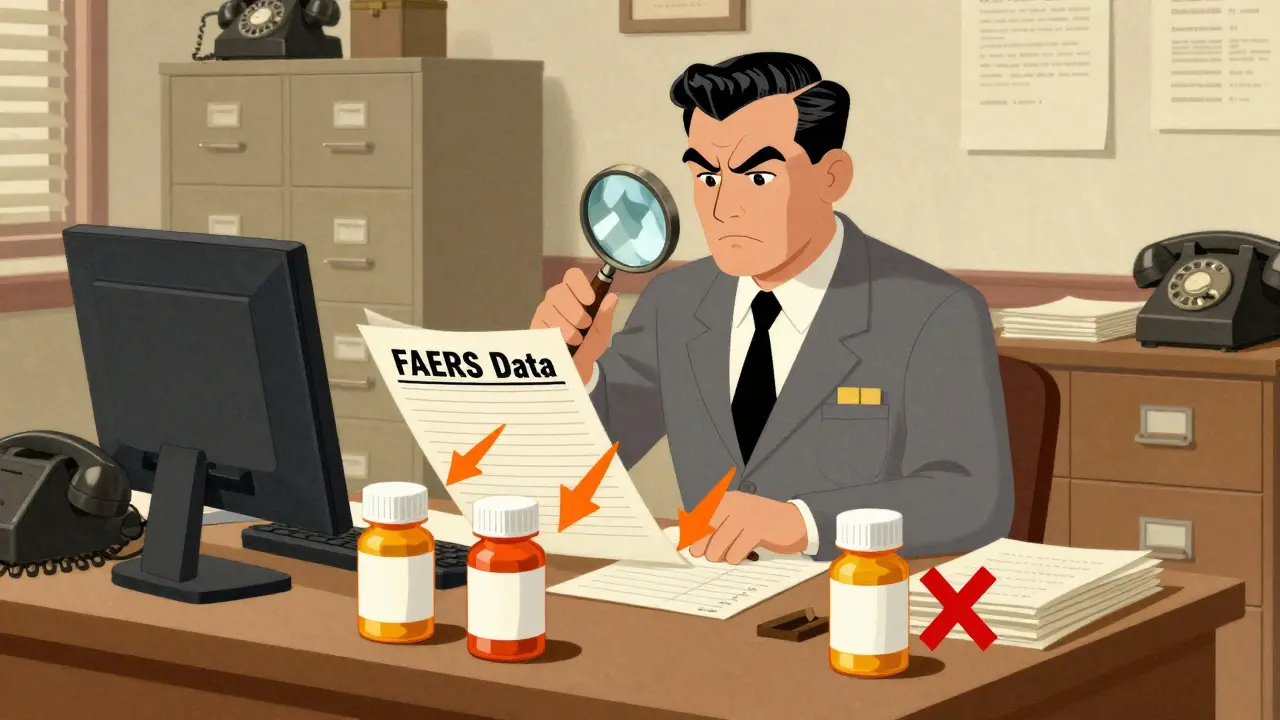
You cannot rely on gut feeling alone. Regulators like the U.S. Food and Drug Administration (FDA) use strict data thresholds to determine warning scope. They analyze reports from the FDA Adverse Event Reporting System (FAERS), which holds millions of adverse event reports. To classify a risk as class-wide, evidence must be consistent across multiple agents.
A common method involves calculating the Proportional Reporting Ratio (PRR). A PRR above 2.0 with a Chi-squared value greater than 4.0 suggests a strong signal. But here is the key: for a class-wide alert, this signal needs to appear in at least three different drugs within that therapeutic class. If the signal is intense but only appears in one drug, it is likely drug-specific. Always look for the breadth of the data, not just the strength of a single report.
| Feature | Class-Wide Alert | Drug-Specific Alert |
|---|---|---|
| Root Cause | Shared pharmacological mechanism | Unique chemical structure or impurity |
| Evidence Source | Multiple agents showing consistent signals | Isolated signal in a single agent |
| Regulatory Action | Updates entire class labeling (e.g., testosterone) | Withdrawal or specific label change (e.g., cerivastatin) |
| Clinical Impact | Broad prescribing changes; potential alert fatigue | Targeted substitution; preserves class utility |
| Market Effect | Reduces overall class utilization by 15-25% | Reduces specific product sales by 40-60% |
Decoding Regulatory Communications
When the FDA issues a Drug Safety Communication, the language often reveals the scope. Look for phrases like "all products containing" or "agents within the [Class Name] category." These are clear indicators of a class-wide concern. In 2014, the FDA issued a communication regarding stroke and heart attack risks with all testosterone products. The wording explicitly covered the entire class, prompting widespread caution.
Conversely, drug-specific alerts name the brand or generic directly without broader qualifiers. However, confusion is common. A 2022 survey found that 68% of physicians struggled to determine if a warning applied to the whole class or just one drug. To avoid this, check the National Library of Medicine's DailyMed database. It often color-codes or categorizes warnings by scope, helping you quickly see if the risk is isolated or systemic.
The Role of Pharmacokinetics in Risk Isolation
Even if two drugs belong to the same class, they may behave differently in the body. Pharmacokinetics-how the body absorbs, distributes, metabolizes, and excretes a drug-can isolate risk. For instance, some manufacturers successfully challenge class-wide warnings by proving that their specific drug has a metabolic pathway that avoids the toxic intermediate seen in competitors.
This was evident with COX-2 inhibitors. Valdecoxib (Bextra) was withdrawn in 2004 due to cardiovascular risks, but celecoxib (Celebrex) remained available. Why? Because detailed pharmacokinetic and clinical trial data showed that celecoxib had a different safety profile despite sharing the same therapeutic class. When evaluating an alert, ask yourself: does the evidence account for these metabolic differences? If not, the warning might be overly broad.
Practical Steps for Clinicians and Pharmacists
If you want to navigate these alerts confidently, follow a systematic approach. First, confirm the signal strength using quantitative metrics if data is available. Second, assess mechanistic plausibility. Does the biological explanation make sense for the whole class? Third, evaluate the distribution of evidence. Are there consistent signals in at least three agents?
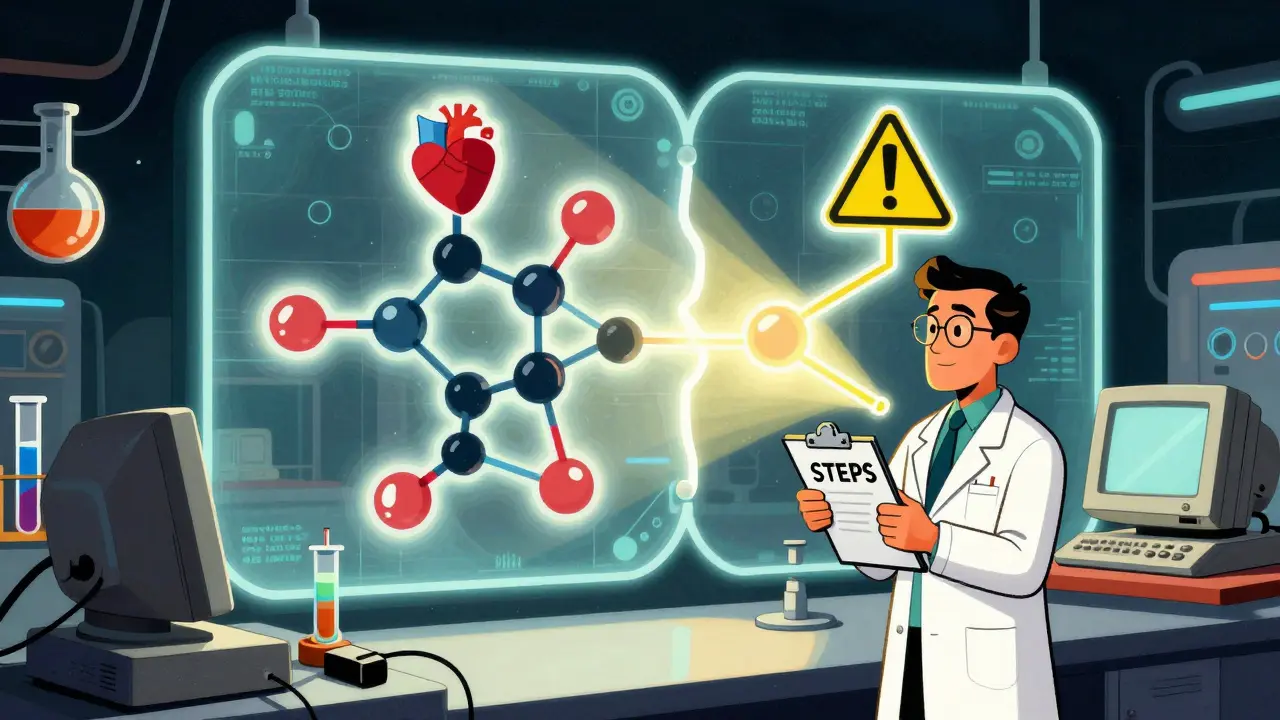
Fourth, consider pharmacokinetic differences. Finally, review real-world evidence. Tools like IBM Watson Health's Drug Safety Intelligence can help analyze large datasets to identify class signals with high accuracy. For everyday practice, remember the STEPS model: Safety, Tolerability, Effectiveness, Price, and Simplicity. Use this framework to decide if equally effective and safer alternatives exist outside the warned class.
- Check the Label: Look for explicit "Class Risk" designations introduced in recent FDA taxonomy updates.
- Consult Guidelines: Refer to specialty-specific guidelines, as cardiologists and psychiatrists interpret class warnings differently based on alternative availability.
- Monitor Updates: Safety scopes can change. A drug-specific warning today might become class-wide tomorrow as more data emerges, as seen with thiazolidinediones and cardiovascular risks.
Avoiding Common Pitfalls
One major mistake is confusing drug recall classes with therapeutic class warnings. A Class I recall means there is a serious health risk, but it applies to a specific batch or product, not the entire therapeutic category. Another pitfall is assuming that similar names mean similar risks. Just because antibiotics have "cef" in their name does not mean they all carry the same allergy risks. Only specific cephalosporins may have heightened sensitivities.
Also, beware of "alert fatigue." With class-wide warnings reducing clinician attention over time, you might miss subtle but critical drug-specific signals. Stay engaged with continuing medical education on risk evaluation and mitigation strategies (REMS). Training has been shown to improve appropriate warning interpretation by over 30%.
Future Trends in Precision Risk Communication
The landscape is shifting toward precision. The FDA’s 2023 pilot program uses artificial intelligence to predict class effects by analyzing molecular structures before signals even emerge. By 2027, expanded data networks like the Sentinel Initiative aim to reduce uncertainty in warning scope by up to 60%. This means future alerts will likely be more granular, distinguishing between sub-groups within a class rather than applying blanket warnings.
For now, however, the burden remains on you to critically evaluate the scope. As Dr. Robert Temple noted, poorly managed messages about risks can become risks themselves. By distinguishing between class-wide mechanisms and drug-specific quirks, you ensure that patients get the right protection without unnecessary restriction of care.
What is the difference between a class-wide and a drug-specific safety alert?
A class-wide alert applies to all medications in a therapeutic group due to a shared mechanism of action, such as ACE inhibitors and angioedema. A drug-specific alert targets a single medication due to unique chemical properties or isolated adverse events, like the withdrawal of cerivastatin while other statins remained safe.
How can I tell if an FDA warning applies to an entire drug class?
Look for language in the Drug Safety Communication that mentions "all products" or "agents within the class." Additionally, check if the evidence shows consistent signals across at least three different drugs in that category. Resources like DailyMed often categorize warnings by scope to help clarify this.
Why do some drugs in the same class have different safety profiles?
Differences arise from pharmacokinetics-how each drug is metabolized-and unique chemical structures. Even within the same class, variations in absorption or metabolic pathways can isolate risks to specific agents, allowing others to remain on the market safely.
What is the Proportional Reporting Ratio (PRR) in pharmacovigilance?
The PRR is a statistical metric used to detect safety signals. A PRR above 2.0 with a Chi-squared value greater than 4.0 indicates a strong association between a drug and an adverse event. For class-wide determination, this signal must appear consistently across multiple agents in the class.
How does alert fatigue affect clinical decision-making?
Alert fatigue occurs when clinicians are overwhelmed by excessive warnings, causing them to ignore critical alerts. Class-wide warnings contribute significantly to this issue, potentially leading to missed drug-specific risks or inappropriate avoidance of effective therapies.
Frances Kendall
May 9, 2026 AT 16:16The distinction between mechanism and chemistry is the linchpin of rational pharmacovigilance. We must not conflate a shared pathway with identical risk profiles, as this leads to therapeutic nihilism where effective treatments are abandoned due to unfounded generalizations. The STEPS model mentioned here is a robust framework for clinical decision-making, but it requires rigorous application rather than passive acceptance of regulatory broad-brush warnings. I have seen too many clinicians revert to older, less effective agents simply because they fear the new class, ignoring the nuanced data that isolates risk to specific molecular structures. This article correctly identifies that pharmacokinetic differences can indeed isolate risk, allowing for safer use within a class. It is imperative that we educate ourselves on these subtleties to prevent the unnecessary restriction of care.
Natali Brown
May 11, 2026 AT 03:11Oh my gosh, this is such a crucial topic that really needs more attention in our daily practice! :heart: I feel like so many of us just see a warning and immediately panic, thinking we need to stop everything related to that drug class without really digging into the why behind it. It is so important to remember that patients deserve access to the best possible treatments, and sometimes that means looking past the scary headline to understand the actual science involved. I always try to remind my colleagues that being proactive about understanding these distinctions helps us build better trust with our patients who are often confused by conflicting information online. Let's keep supporting each other in staying informed and confident in our prescribing decisions! :sparkles:
Brian LeClercq
May 11, 2026 AT 17:09This entire premise is fundamentally flawed and reeks of corporate propaganda designed to shield pharmaceutical manufacturers from liability while keeping their patent cliffs intact. You dare suggest that a warning about a class is merely an "academic exercise" when the reality is that these agencies are compromised by the very industries they regulate? The FDA is not an impartial arbiter of safety; it is a stamping ground for Big Pharma's latest cash cows. To claim that we can reliably distinguish between class-wide and drug-specific risks based on PRR values is laughable given the systemic bias in reporting systems like FAERS. The truth is that all drugs are toxic, and the only safe dose is zero, yet you push this narrative of "nuanced evaluation" to maintain the status quo of over-medication. Wake up and smell the rat poison.
swetha r
May 13, 2026 AT 12:54I have been saying this for years, but no one listens because they are all part of the grand conspiracy to control our minds through medication. The fact that they withdraw one drug and keep another in the same class is obvious proof that the "safety" issues are manufactured to create fear and then sell you the alternative. They want you to think it is about chemistry, but it is really about profit margins and controlling the population. Do you really believe that the FDA cares about your heart health? No, they care about the stock prices of the companies that lobby them. It is all a game, and we are the pawns. Stay vigilant, because they will change the rules again tomorrow.
Abhimanyu Pandey
May 14, 2026 AT 18:05You are completely missing the point.; The issue is not just about identifying the alerts; it is about the underlying corruption of the entire medical establishment.; They want you to believe that there is a logical way to parse these warnings; but in reality; every warning is a tool of social control.; Look at the history of statins; look at the history of SSRIs.; They are all connected.; The so-called "mechanism" is a lie told to keep you compliant.; You should be questioning why any of these drugs are allowed on the market at all.; The silence of the dissenting voices is deafening.;
Dat Alexander
May 16, 2026 AT 07:22i think people get too worked up about these technicalities sometimes its just about reading the label and trusting your gut if something feels off dont force it but also dont ignore good meds just because of a bad rap the line between class wide and specific is blurry anyway and maybe thats okay lets just focus on helping patients rather than fighting over stats
Kelsey Thomas
May 17, 2026 AT 22:29I totally agree with the need for nuance here! 🧠 It’s so easy to fall into the trap of alert fatigue, isn’t it? I’ve noticed that when I take a step back and look at the broader picture-like checking DailyMed or consulting specialty guidelines-it makes the decision-making process much less stressful. It’s like having a map instead of just guessing which way to go. 🗺️ I think sharing these resources with each other could really help reduce that anxiety around prescribing. What do you all think about using tools like IBM Watson Health’s Drug Safety Intelligence? Has anyone had experience with those platforms? 🤔💊
Derick Garcia
May 19, 2026 AT 03:12The moral decay of modern medicine is evident in this trivialization of serious safety concerns. To suggest that one might simply "substitute" a drug based on a superficial analysis of chemical structure is an affront to the Hippocratic Oath. We are duty-bound to ensure absolute safety, not to engage in this reckless calculus of risk versus convenience. The fact that physicians struggle to determine the scope of warnings is not a failure of communication, but a failure of character. They are too lazy to read the primary literature and too arrogant to admit their ignorance. This article promotes a dangerous complacency that will inevitably lead to harm. One must adhere to strict adherence to protocol, regardless of the perceived inefficiency.
Raymond Roberts
May 19, 2026 AT 08:03look i know this stuff is complex but honestly most of us just wing it until we get sued or someone gets hurt and then we pretend we knew all along the idea that we can predict class effects with AI is kinda funny cause even humans cant agree on what a side effect is half the time plus the spelling errors in some of these reports make it hard to tell if its a real signal or just a typo so yeah maybe we should just slow down and listen to the patients instead of relying on these fancy metrics that probably dont mean anything anyway