
Home Hemodialysis: Schedules, Training, and Outcomes Explained
 Mar, 20 2026
When you’re living with end-stage renal disease (ESRD), dialysis isn’t just a medical procedure-it’s a lifestyle. For many, the idea of spending hours three times a week in a clinic, tied to a machine and a rigid schedule, feels exhausting. That’s why more people are choosing home hemodialysis. It’s not for everyone, but for those who qualify, it offers freedom, better health, and more control over their days.
What Is Home Hemodialysis?
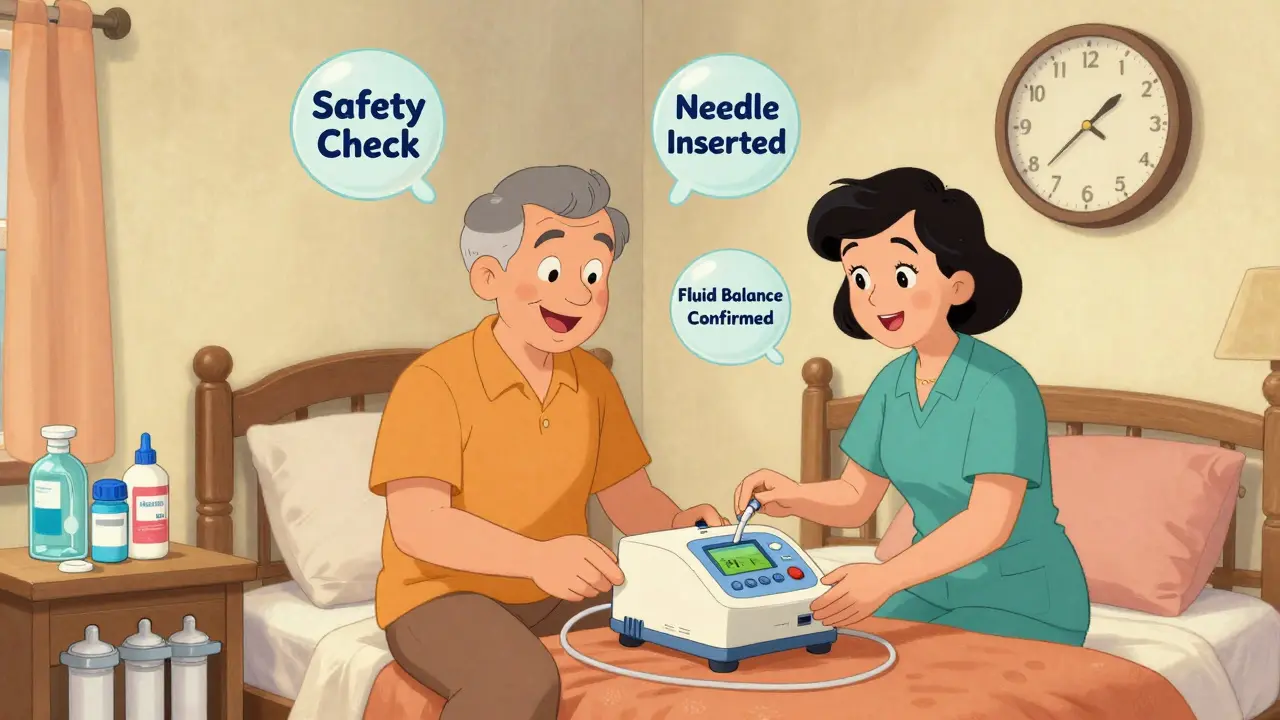
Home hemodialysis (HHD) is when you perform your dialysis treatments in your own home, using a specialized machine. Unlike in-center dialysis, where staff handle everything, HHD requires you-or a trained care partner-to manage the process. This includes setting up the machine, inserting needles into your vascular access, monitoring your treatment, and cleaning everything afterward. It sounds intimidating, but with proper training, most people learn to do it safely and confidently.
The machines used today are far more user-friendly than those from decades ago. Brands like NxStage and Fresenius offer compact systems that fit in a corner of a bedroom or living room. These devices include built-in safety checks, automated fluid balance, and alarms that alert you if something goes wrong. The water system is connected to your home plumbing through a reverse osmosis (RO) unit that filters out impurities, ensuring dialysate fluid meets strict medical standards.
Training: How Long Does It Take?
Training for home hemodialysis isn’t a one-size-fits-all process. It typically lasts between 3 and 12 weeks, depending on your health, learning pace, and whether you’re doing solo or paired treatment. Most programs require 20 to 30 supervised sessions before you’re cleared to dialyze independently. Some centers, like the University of Washington Medical Center, use virtual reality simulators to teach needle insertion, cutting training time to just 3-4 weeks with 92% competency rates.
Training covers more than just machine operation. You’ll learn:
- How to clean and disinfect your dialysis machine and workspace
- How to safely access your fistula or graft (including self-needling)
- How to calculate fluid removal based on weight gain and blood pressure
- How to recognize and respond to alarms (air in lines, low blood pressure, high pressure)
- How to store and order supplies (dialysate, needles, tubing, disinfectants)
- How to log each treatment and report issues to your care team
Medicare covers up to 25 training sessions for home hemodialysis-more than for peritoneal dialysis. But training isn’t just about time; it’s about mastery. You must pass written and hands-on tests under staff supervision. If you’re not ready, you won’t be sent home with the machine.
Who Needs a Care Partner?
Most home hemodialysis patients require a trained care partner. This isn’t optional-it’s a safety rule. The Maryland Department of Health and other major programs state clearly: “The patient cannot dialyze alone.” A care partner learns every skill you do: setting up, inserting needles, handling emergencies, and restarting the machine if it shuts down.
Why? Because dialysis can go wrong fast. A needle can come loose. Blood pressure can crash. The machine can alarm. You need someone who can act immediately. Care partners are often spouses, adult children, or close friends. They’re trained just as thoroughly as the patient.
This requirement is a major barrier. About 30% of people who want home dialysis don’t have a suitable partner. That’s why some newer systems are being designed for solo use. The NxStage System One, for example, has features that allow solo treatment-but only after additional training and approval from your care team. Even then, it’s not the norm. Most programs still require a partner.

Three Main Schedules: Which One Fits You?
Home hemodialysis isn’t just about location-it’s about frequency and duration. There are three common schedules, each with different benefits:
1. Conventional Home Hemodialysis
This looks like in-center dialysis but at home: three times a week, 3-4 hours per session. It’s the easiest to start with if you’re new to home dialysis. It doesn’t require drastic changes to your routine, and your body adjusts more gradually. But it doesn’t offer the same health benefits as more frequent treatments.
2. Short Daily Home Hemodialysis
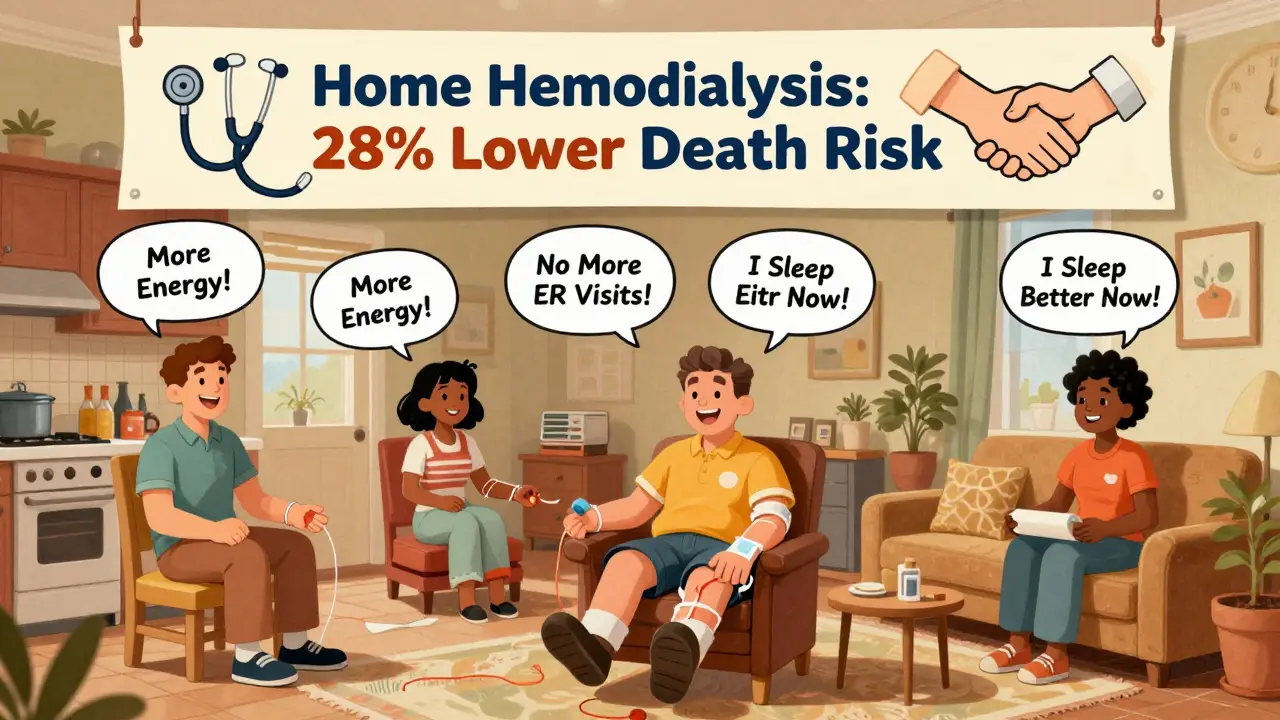
This is five to seven treatments per week, each lasting 2-3 hours. You might do them in the morning, after work, or even split into two shorter sessions in a day. Studies show this schedule improves blood pressure control, reduces left ventricular hypertrophy (a heart strain common in dialysis patients), and lowers the risk of death by 28% compared to in-center dialysis.
Patients on this schedule often report feeling more energetic, sleeping better, and needing fewer blood pressure medications. One study found patients reduced their phosphate binder use by 40% because their kidneys were being cleared more consistently.
3. Nocturnal Home Hemodialysis
This happens while you sleep-typically 3 to 7 nights a week, 6 to 10 hours per session. It’s gentle. Because the treatment is slow and long, your body doesn’t experience the big swings in fluid and electrolytes that cause cramps and nausea. It’s especially effective at removing phosphorus and middle molecules, which are hard to clear with short treatments.
One 2018 study found nocturnal HHD patients had 42% lower serum phosphate levels than those on conventional in-center dialysis. That means fewer phosphate binders, less bone disease, and less calcification in blood vessels. Many patients say they feel like they’re finally getting their life back.
Outcomes: Better Health, Better Life
The data doesn’t lie. Home hemodialysis patients live longer and feel better.
A 2019 review in the American Journal of Kidney Diseases found HHD patients scored 37% higher on quality-of-life measures than those on in-center dialysis. They reported better sleep, more energy, fewer dietary restrictions, and less anxiety about clinic visits.
According to the U.S. Renal Data System (USRDS), home hemodialysis patients had a 15-20% lower risk of death than matched in-center patients. But here’s the key: that advantage was strongest for those on short daily or nocturnal schedules. Conventional HHD had similar survival rates to in-center dialysis. The real benefit comes from frequency.
Patients on daily or nocturnal HHD also report fewer hospitalizations for heart problems and fluid overload. One patient from Ohio shared: “I used to have to go to the ER every other month for fluid overload. Since switching to nightly dialysis, I haven’t been back in two years.”
Space, Plumbing, and Power: What You Need at Home
Setting up for home dialysis isn’t as complicated as it sounds, but it does require some changes.
- Space: You need about 6 feet by 6 feet of clear floor space for the machine, supplies, and a chair. A spare bedroom or large closet works.
- Water: Your home water line must connect to a reverse osmosis system. This unit filters tap water to medical-grade purity. Monthly water and dialysate cultures are required to prevent infections.
- Drain: A dedicated floor drain or sink connection is needed to empty the used dialysate fluid.
- Electricity: A dedicated 120-volt, 20-amp circuit is required. No sharing with a refrigerator or microwave.
Portable systems like NxStage System One make travel easier. You can take them on planes with airline approval and use them in hotels. Standard machines? Not so much. You’ll need to plan dialysis at a clinic when you travel.
Barriers and Real Challenges
Despite the benefits, home hemodialysis isn’t widely available. Only 12% of U.S. dialysis centers offer training programs. Many nephrologists say they want to refer more patients to HHD-but lack the staff, time, or reimbursement to train them.
Medicare pays for training, but not enough to cover the full cost of the 25+ hours of staff time needed. A 2022 survey found 71% of nephrologists cite insufficient training capacity as the top barrier.
Then there’s the emotional side. Patients often feel overwhelmed. On forums like the American Association of Kidney Patients, 63% of users said they felt anxious about handling emergencies in the first few months. Machine alarms, supply shortages, and care partner stress are common complaints.
One Reddit user wrote: “I saved 12 hours a week not going to the clinic. But I lost sleep worrying about whether I did the needling right. My partner and I fought more than we ever did before.”
That’s why psychological readiness matters as much as technical skill. Dr. Steven Weisbord, a leading kidney expert, says: “The most critical factor for successful home hemodialysis isn’t technical skill but psychological readiness and social support structure.”
What’s Changing in 2026?
Things are moving. The FDA approved next-gen devices like the WavelinQ endoAVF system in 2022, making vascular access easier. Medicare is shifting reimbursement in 2025 to pay based on patient outcomes-not just treatment location. That means clinics will be incentivized to help patients succeed at home.
With new portable machines, better training tools, and growing evidence of survival benefits, home hemodialysis is no longer a niche option. It’s becoming a mainstream alternative. The goal of the Advancing American Kidney Health initiative-to have 80% of new ESRD patients start on home dialysis or transplant by 2025-won’t be met. But the trend is clear: more people are choosing home, and more providers are learning how to support them.
Is Home Hemodialysis Right for You?
Ask yourself:
- Do you have someone willing and able to train and help you?
- Can you handle the responsibility of a medical procedure in your home?
- Are you comfortable with machines, alarms, and routine maintenance?
- Do you want more control over your schedule and better long-term health?
If you answered yes to most of these, talk to your nephrologist. Ask if your center offers home training. Ask about the different schedules. Ask to speak with someone who’s already doing it. This isn’t about giving up on in-center dialysis-it’s about choosing a better way to live with it.
Can I do home hemodialysis alone?
Most programs require a trained care partner to be present during every treatment for safety reasons. Solo dialysis is possible with certain machines like the NxStage System One, but only after additional training and approval from your care team. It’s not the standard, and most centers still require a partner.
How long does home hemodialysis training take?
Training typically lasts between 3 and 12 weeks, with most patients completing it in 4 to 6 weeks. The length depends on your learning pace, whether you’re doing solo or paired treatment, and your center’s approach. Some use virtual reality simulators to shorten training to as little as 3 weeks.
Is home hemodialysis safer than in-center dialysis?
Studies show home hemodialysis patients have a 15-20% lower risk of death compared to those on in-center dialysis, especially when treatments are more frequent (daily or nocturnal). Better blood pressure control, fewer hospitalizations, and improved nutrition contribute to this advantage. However, safety depends on proper training and consistent care.
What are the main disadvantages of home hemodialysis?
The biggest challenges include the need for a care partner, the time and effort required for training, managing equipment and supplies, and the emotional stress of handling medical procedures at home. Machine alarms, supply shortages, and relationship strain with partners are common complaints.
Does Medicare cover home hemodialysis training?
Yes. Medicare covers up to 25 training sessions for home hemodialysis, which is more than the 15 sessions covered for peritoneal dialysis. This includes time with nurses, social workers, and dietitians. The training must be done through a CMS-certified home dialysis program.
Can I travel if I do home hemodialysis?
It depends on your machine. Standard home dialysis units are not portable and require you to arrange treatments at clinics when traveling. Portable systems like the NxStage System One can be taken on planes and used in hotels with proper planning. Always contact your dialysis center weeks ahead to coordinate care while traveling.
Chris Dwyer
March 21, 2026 AT 04:34Shaun Wakashige
March 21, 2026 AT 11:18Paul Cuccurullo
March 22, 2026 AT 17:53Solomon Kindie
March 22, 2026 AT 19:50Nicole James
March 23, 2026 AT 03:14Bryan Woody
March 23, 2026 AT 17:58shannon kozee
March 23, 2026 AT 20:36trudale hampton
March 25, 2026 AT 04:01Natali Shevchenko
March 25, 2026 AT 22:38Johny Prayogi
March 25, 2026 AT 22:47Thomas Jensen
March 26, 2026 AT 06:02