
Glaucoma Explained: Eye Pressure, Optic Nerve Damage, and Treatment Options
 May, 12 2026
The Silent Thief of Sight
You might not feel a thing. That is the scary part about glaucoma, a group of eye conditions that damage the optic nerve, usually due to abnormally high fluid pressure in the eye. It does not hurt. It does not cause blurry vision in the early stages. By the time you notice your peripheral vision disappearing, the damage is often permanent. Think of it like a slow leak in a tire; you keep driving until the blowout happens, but by then, the wheel is already ruined.
Glaucoma is the second leading cause of blindness worldwide. In 2020, roughly 76 million people lived with this condition, and experts expect that number to jump to nearly 112 million by 2040. The good news? If we catch it early, we can stop it from getting worse. The bad news? Most people do not know they have it until it is too late. Let’s break down what is actually happening inside your eye, why pressure matters, and how modern medicine fights back.
Why Eye Pressure Matters More Than You Think
To understand glaucoma, you need to understand intraocular pressure (IOP). Your eye is not an empty balloon; it is filled with a clear fluid called aqueous humor. This fluid flows in and out to keep your eye round and nourished. When the drainage system gets clogged or works poorly, fluid builds up. That buildup creates pressure.
Normal eye pressure typically ranges between 10 and 21 mmHg. Doctors measure this using a tool called Goldmann applanation tonometry, which is the clinical gold standard. But here is the twist: pressure is not static. It changes throughout the day. Studies show peaks often happen between 6 AM and 8 AM. So, a single measurement at 2 PM might miss the spike that is actually damaging your nerves.
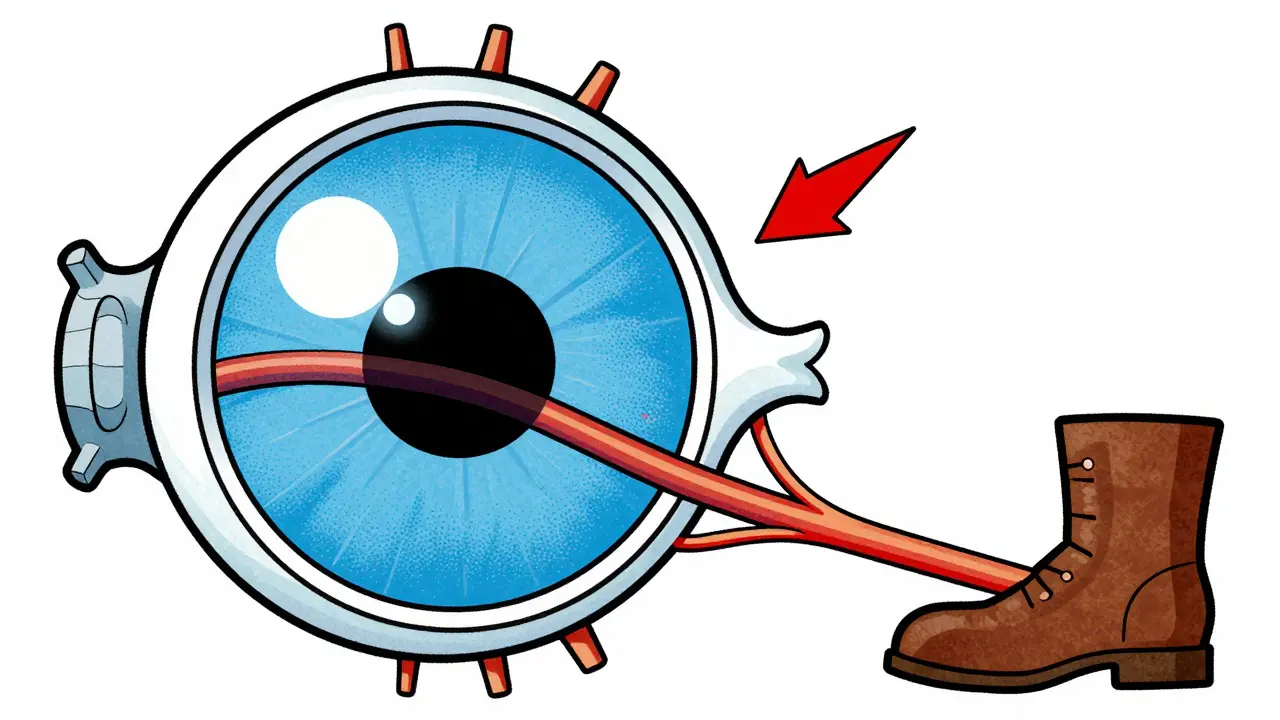
High pressure pushes against the back of your eye where the optic nerve exits. Imagine stepping on a garden hose with your foot. The water (nerve signals) cannot flow through easily. Over time, the walls of the hose weaken and collapse. In your eye, this "hose" is made of delicate nerve fibers called retinal ganglion cells (RGCs). When they die, they do not grow back. That is why preserving them is the entire goal of treatment.
The Optic Nerve: Where the Real Damage Happens
It is easy to think of the eye as just a camera lens, but the real magic happens at the back. The optic nerve head (ONH) is where millions of nerve fibers bundle together to send images to your brain. Inside this structure lies a mesh-like area called the lamina cribrosa, a sieve-like tissue that supports the optic nerve fibers as they exit the eye.
When eye pressure rises, it pushes the lamina cribrosa backward. Research shows that in glaucomatous eyes, this structure displaces 30-50% more than in healthy eyes. This mechanical strain tears and stresses the axons (the long tails of the nerve cells). Eventually, the cells die. This process is called optic neuropathy.
Here is where it gets tricky. Not everyone with high pressure gets glaucoma. Some people have very high pressure but strong optic nerves that resist the strain. These cases are called ocular hypertension. Conversely, some people have normal pressure but still lose their vision. This is known as normal-tension glaucoma, a form of glaucoma where optic nerve damage occurs despite eye pressure being within the normal range. Why? Because blood flow to the nerve might be poor, or the nerve itself might be genetically weaker. It reminds us that pressure is only one piece of the puzzle.
| Type | Eye Pressure Status | Primary Cause | Risk Profile |
|---|---|---|---|
| Primary Open-Angle Glaucoma (POAG) | Usually Elevated | Poor drainage of eye fluid | Most common type (90% of US cases) |
| Normal-Tension Glaucoma (NTG) | Normal (≤21 mmHg) | Poor blood flow or weak nerve | More common in Asian populations |
| Angle-Closure Glaucoma | Suddenly High | Physical blockage of drainage angle | Medical emergency; common in Asia |
How Doctors Catch Glaucoma Early
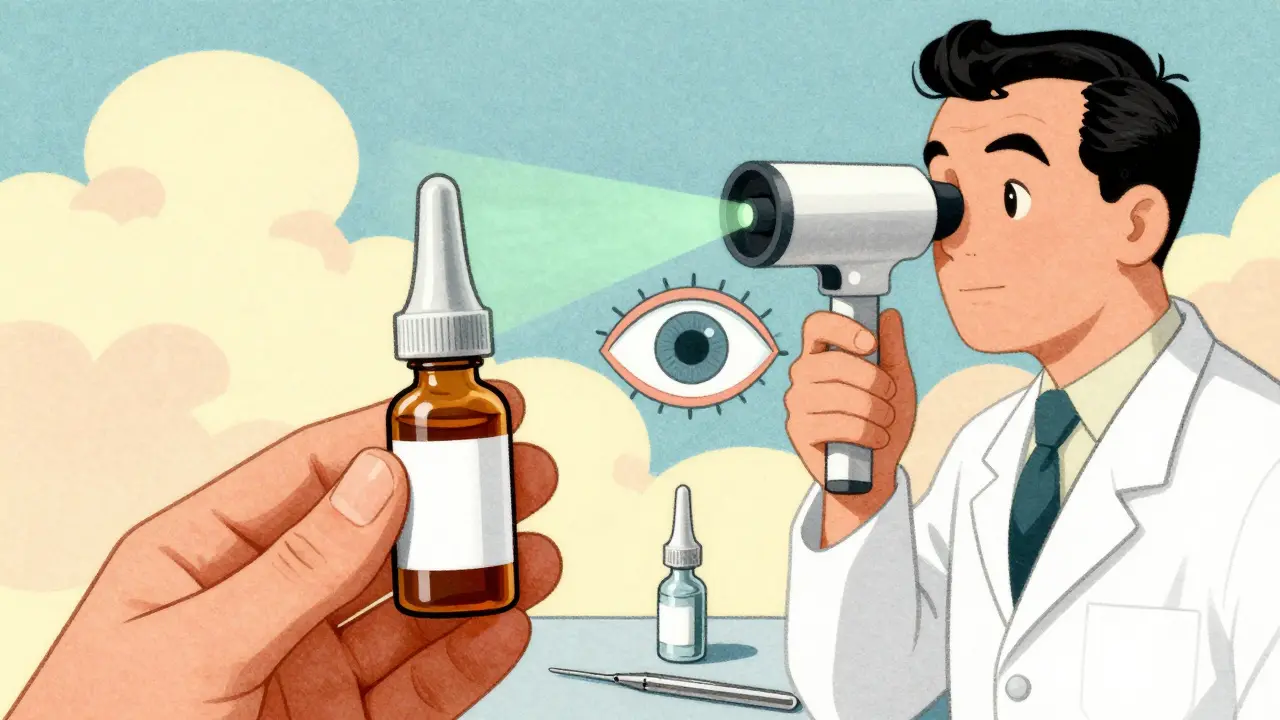
You cannot rely on symptoms. You need technology. Modern ophthalmology uses three main tools to spot glaucoma before you lose sight:
- Optical Coherence Tomography (OCT): This is like an ultrasound for your retina. It takes cross-section images of the optic nerve. An OCT scan can detect thinning of the retinal nerve fiber layer as small as 5-10 microns. That is thinner than a human hair. If your doctor sees thinning here, they act immediately.
- Visual Field Testing (Perimetry): You stare at a dot in the center of a bowl-shaped screen and press a button when you see flashes of light around you. This maps your blind spots. A machine called Humphrey perimetry can detect sensitivity losses as small as 1 decibel (dB). It tells us if you are losing side vision.
- Fundus Photography: A special camera takes pictures of the back of your eye. Doctors look at the optic disc to see if the "cup" (the hollow center) is getting larger. A larger cup means more nerve tissue has been lost.
If you are over 40, have a family history of glaucoma, or wear thick glasses for nearsightedness, you should get these tests every year. Early detection is the single most effective way to prevent blindness.
Treatment Options: From Drops to Surgery
Once glaucoma is diagnosed, the goal is simple: lower the pressure to save the remaining nerves. There is no cure to restore dead nerves, so prevention of further loss is key. Here is how doctors approach it.
1. Eye Drops (First Line Defense)
Most patients start with prescription eye drops. The most common type is prostaglandin analogs, such as latanoprost. These drops work by increasing the outflow of fluid from the eye. They reduce IOP by 25-33% and are taken once a day. However, they are not perfect. About 20-30% of users experience side effects like eyelash growth, redness, or darkening of the iris. Also, adherence is a huge problem. Studies show that 50% of patients stop taking their drops within a year because they forget or dislike the sensation.
2. Laser Therapy
Laser trabeculoplasty is a non-invasive option. The doctor shines a laser into the drainage channel of the eye to stimulate better fluid flow. It achieves a 20-30% pressure drop in 75% of patients initially. The downside? It is not permanent. Efficacy tends to decrease by about 10% each year, so you may need repeat treatments or eventually switch to surgery.
3. Surgical Intervention
If drops and lasers fail, surgery becomes necessary. Traditional trabeculectomy involves creating a new drainage hole. It has a success rate of 85-90% in the first year but drops to 65-70% after five years. It carries risks like infection or low pressure.
Newer minimally invasive glaucoma surgeries (MIGS), like the iStent, are gaining popularity. These tiny implants are placed during cataract surgery. They offer a 20-25% pressure reduction with fewer complications. Success rates hover around 70-80% at two years. For many patients, this is the sweet spot between effectiveness and safety.
The Future: Beyond Just Lowering Pressure
For decades, lowering pressure was the only game in town. But science is changing. Researchers now know that even with low pressure, some nerves continue to die. This has led to a new focus on neuroprotection-protecting the nerve cells themselves.
One promising molecule is oncomodulin, a natural growth factor found in the brain. Animal studies show it can stimulate injured nerve fibers to regenerate by up to 40%. Another drug, brimonidine, has shown neuroprotective effects independent of its pressure-lowering ability, slowing progression by 30% in normal-tension glaucoma patients. Clinical trials are also testing ciliary neurotrophic factor (CNTF) implants, which aim to preserve visual fields better than standard care.
We are also seeing AI step in. Artificial intelligence algorithms can now analyze OCT scans with 94.2% sensitivity for early glaucoma detection, often spotting patterns humans miss. Home monitoring devices, like smart contact lenses, allow patients to track their pressure continuously, giving doctors a full picture rather than a snapshot.
Your Action Plan
Glaucoma is manageable, but it requires partnership between you and your eye doctor. Do not ignore annual exams. If you are prescribed drops, take them exactly as directed-even if you feel fine. Set a reminder on your phone. Use a mirror to ensure the drop goes in. If side effects bother you, tell your doctor; there are alternatives.
Remember, the eye pressure target is individualized. For mild glaucoma, reducing pressure by 20-25% might be enough. For severe cases, doctors may aim for a 30-50% reduction, pushing pressure down to 12-15 mmHg. Trust the data, trust the scans, and stay vigilant. Your sight is worth the effort.
Can glaucoma be cured completely?
No, glaucoma cannot be cured. Once optic nerve fibers die, they do not regenerate. However, the progression can be stopped or significantly slowed with proper treatment, including eye drops, laser therapy, or surgery. Early detection is critical to preserving existing vision.
What is considered normal eye pressure?
Normal intraocular pressure (IOP) typically ranges from 10 to 21 mmHg. However, "normal" varies by individual. Some people develop damage at pressures within this range (normal-tension glaucoma), while others tolerate higher pressures without issues. Your doctor will determine your specific target pressure based on your optic nerve health.
Does glaucoma always cause pain?
In most cases, particularly primary open-angle glaucoma, there is no pain. Vision loss happens gradually and silently. Pain is usually associated with acute angle-closure glaucoma, a medical emergency characterized by sudden, severe eye pain, headache, nausea, and blurred vision. Immediate medical attention is required for this type.
How often should I see an eye doctor if I have glaucoma?
The American Academy of Ophthalmology recommends IOP measurements every 3-6 months, visual field testing annually, and OCT imaging every 6-12 months for established glaucoma. Frequency may increase if your condition is unstable or if you are starting new treatments. Regular monitoring ensures your treatment plan remains effective.
Are there lifestyle changes that help manage glaucoma?
While lifestyle changes do not replace medication, they can support eye health. Regular aerobic exercise may help lower eye pressure slightly. Avoid positions that compress the chest or neck, such as certain yoga poses or heavy weightlifting, as these can temporarily spike IOP. Protect your eyes from UV radiation with sunglasses and maintain a healthy diet rich in antioxidants.
Raymond Roberts
May 12, 2026 AT 21:46hey guys just read this whole thing and man it is scary how we ignore our eyes until its too late i mean my uncle had glaucoma and he didnt even know it was happening until he started bumping into furniture which is super sad because if he had just gone to the doctor earlier he could have kept his sight but instead now he cant drive anymore and relies on others for everything which makes him feel really helpless and dependent so please dont be like my uncle go get your eyes checked regularly especially if you are over 40 or have family history because prevention is way better than cure and also the part about the pressure changing during the day was something i never knew before i always thought it was static but yeah that explains why some people miss the diagnosis at a single visit so maybe doctors should do multiple checks or use those home devices mentioned in the article to get a better picture of what is actually going on with your eye health throughout the entire day not just one snapshot
Nisha Koshti
May 13, 2026 AT 09:36:) well this is just another way to sell more eye drops!!! they want you to believe you need surgery but really it is all about money!!! the big pharma companies are lying to you about the side effects!!! they say it is safe but it is not!!! trust me i know things!!! :)
Claire A
May 15, 2026 AT 04:32Wow, this is such a helpful breakdown! It’s great to see the stats on early detection. I’m definitely scheduling an appointment.
andrew iregbayen
May 15, 2026 AT 09:04Hey everyone, thanks for sharing these insights. I’ve been reading up on MIGS procedures lately and it’s fascinating how much less invasive they are compared to traditional trabeculectomy. Does anyone here have experience with the iStent? Curious if the pressure reduction holds up long-term for most people or if it’s mostly short term relief?
Laura ciotoli
May 17, 2026 AT 06:52You are misinformed. The iStent is clinically proven to provide sustained pressure reduction in a majority of patients when combined with cataract surgery. Do not rely on anecdotal evidence from forums. Consult a peer-reviewed study on minimally invasive glaucoma surgery outcomes. Your question is based on a false premise that these devices are ineffective. They are not. Stop spreading doubt.
Amelia Vaughan
May 17, 2026 AT 22:45This post is useless. You should just eat kale and stop taking drugs. Real Americans take care of themselves without expensive tests. Weakness is the problem here.
Jannet Suen
May 18, 2026 AT 02:39Sarah, please don't give medical advice based on diet alone 😅 Glaucoma is a structural issue with the optic nerve and fluid drainage. While a healthy diet supports overall health, it cannot lower intraocular pressure enough to prevent blindness in someone with established glaucoma. Let's keep the conversation respectful and factual, okay? We all want to help, but misinformation can be dangerous. :)
Sarah O'Donnell
May 18, 2026 AT 23:47I am so tired of people ignoring their health 🙄 It is literally disrespectful to yourself and your family to not get checked. The optic nerve does not grow back. End of story. If you lose your sight, don't come crying to me. I told you to listen to the science. 😡📉
Kevin S
May 20, 2026 AT 02:44Great info here! 👍 Don't forget to set reminders for your drops. Consistency is key! 💪