
Essential Guide to Communicating with Doctors About Senior Medications
 Mar, 31 2026
Picture this scenario: A senior adult sits in a clinic chair surrounded by prescription bottles, feeling overwhelmed by a doctor's rapid-fire instructions. By the time they get home, the details blur. They forget a dosage, mix up a supplement, or miss a warning about side effects. Tragically, this gap in conversation contributes significantly to why so many older adults end up in the hospital unnecessarily. In fact, studies show that medication-related issues drive nearly half of all emergency visits for seniors. The good news? You can change this outcome simply by mastering the art of communication with your healthcare team.
Effective dialogue isn't just polite; it's a safety protocol. We aren't just talking about nodding along during a check-up. We are discussing the active, structured exchange of information that keeps senior medications working as intended. Whether you are managing your own health or supporting a loved one, understanding the mechanics of these conversations is vital. Let's break down exactly how to prepare, engage, and follow through with medical professionals to ensure every dose counts.
Understanding the Risks of Poor Communication
Before packing our bags for the next appointment, we need to understand the stakes. When communication breaks down between patients and doctors, the result is often something called "polypharmacy." This is a fancy term for taking too many medications at once, often without realizing they clash. It's not just about the number of pills; it's about how they interact.
The numbers paint a stark picture. Approximately 15% of people over 65 take five different medications daily. With that many compounds moving through a system that is naturally slowing down, the margin for error shrinks. Adverse Drug Events (ADEs)-harmful reactions or unintended outcomes from meds-are responsible for roughly 20% of hospital admissions in this age group. That means one in five trips to the ER could have been prevented with better information sharing.
It's also worth noting that aging changes how bodies process chemicals. Kidneys slow down; liver function shifts. A drug that worked perfectly ten years ago might now linger too long in the system. Without specifically asking a provider, "Does this still fit my current physiology?", risks pile up. Recognizing that communication gaps directly lead to physical harm motivates us to treat every appointment as a strategic safety review rather than just a routine formality.
Gathering Your Toolkit Before the Appointment
Walking into a doctor's office unprepared is like arriving at a meeting without notes-you'll likely leave things unsaid. The most powerful tool you possess is a comprehensive written record. Do not rely on memory alone; it is notoriously unreliable under stress or fatigue. Instead, bring a dedicated binder or folder containing specific documents.
- Medication List: Create a master sheet. Include every pill, liquid, patch, and inhaler. For each item, write the name, dosage, frequency, and exactly why you are taking it. If you have stopped a medication recently, note that too.
- Actual Bottles: Bring the physical containers. Why? Studies show discrepancies in medical records exist in 25% of cases. A bottle proves what you are actually swallowing versus what the computer says you are.
- Symptom Log: Keep a diary of symptoms between visits. Note when you feel dizzy, tired, or confused relative to taking a specific dose.
This preparation phase is critical because it shifts the dynamic. It signals to the provider that you are an engaged partner in your care. It also reduces the cognitive load on both sides. The doctor doesn't have to ask "What else are you taking?" because the paper shows them immediately. This allows more time to discuss solutions rather than gathering basic data.
Navigating the Conversation During the Visit
Once you are seated in the exam room, the environment can become crowded with distractions. To get the most out of this time, you need to control the agenda. Start by reviewing your symptom log and medication list immediately. Don't wait until the last five minutes. Ask the four non-negotiable questions that experts recommend for every visit.
First, ask: "How does this medication specifically help manage my condition?" You want a clear link between the pill and the goal. Second, "What are the potential side effects I should watch for?" Distinguish between minor annoyances and signs that require immediate help. Third, "Are there interactions with other drugs or foods I eat?" This catches hidden conflicts. Finally, "What happens if I miss a dose?" Knowing the recovery plan prevents panic if a mistake occurs.
To ensure you truly understood the advice, use the "teach-back" method. After the doctor explains a new regimen, turn to them and say, "I want to make sure I got this right. Could you tell me what I just heard?" Then, explain it back to them in plain language. This isn't about tricking the doctor; it's about verifying clarity. Research indicates that using this technique improves adherence rates significantly. If there is a misunderstanding, it gets caught right there in the room, not at home when you try to swallow a complicated schedule.

The Vital Role of Caregivers and Advocates
Seniors shouldn't always have to do this work alone. Often, vision issues, hearing loss, or cognitive decline can make processing medical information difficult. Bringing a companion-a family member, friend, or paid caregiver-is highly recommended. This person acts as a second set of ears and a safety net.
However, simply having a companion sit quietly isn't enough. They need an explicit role. Tell the healthcare provider, "This person is here to help me remember and manage my care." An advocate can take detailed notes while the patient focuses on listening. They can also speak up if the conversation moves too fast. Statistics suggest that seniors with engaged advocates experience fewer adverse drug events.
Caregivers also bridge the gap between appointments. They monitor daily adherence and notice subtle changes the provider won't see. If a senior starts acting differently two days after a refill, the caregiver knows to call the office immediately. Establishing clear channels of communication with the medical team ensures that problems are reported promptly. It transforms care from episodic visits into continuous monitoring.
Leveraging Technology and Tools for Management
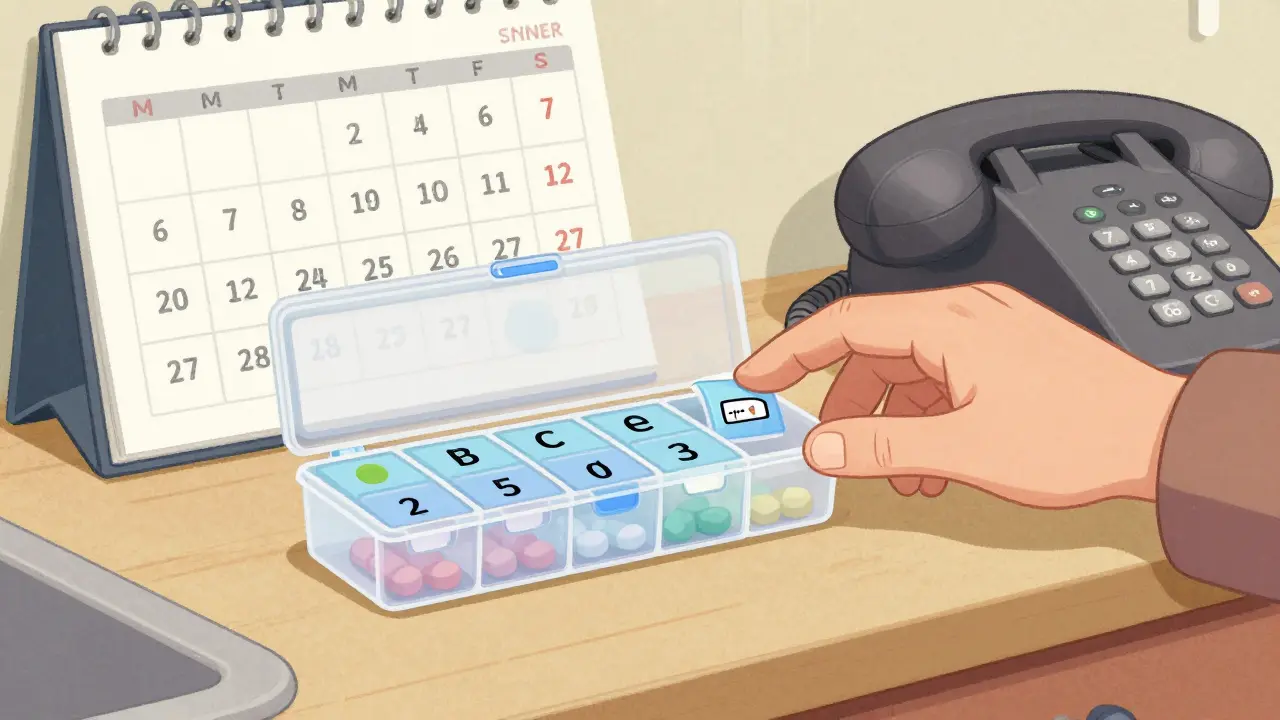
Beyond pen and paper, modern technology offers sophisticated ways to organize complex regimens. Manual pillboxes are still a classic choice, separating medications by day and time to reduce confusion. However, digital tools are rapidly evolving to offer more support. Electronic dispensers are available that lock until the scheduled time, releasing only the required dose.
Smartphone applications have also matured significantly. There are now FDA-cleared apps designed specifically for geriatric users, featuring larger fonts, voice reminders, and refill alerts. These apps can track adherence and share reports with family members or doctors. Using these devices creates a data trail that proves consistency or highlights where breakdowns happen.
Synchronization programs offered by pharmacies are another excellent resource. This involves coordinating all refills so they happen on the same day of the month. This simplifies travel logistics and makes reviewing inventory easier. Over half of independent pharmacies now offer this service, recognizing that reduced friction leads to better compliance. Integrating these tools makes the mental burden of managing Medication Schedules lighter.
Conducting Regular Safety Audits
Your medication regimen should never be considered static. As conditions change, some drugs become less necessary or more dangerous. Medical guidelines suggest an annual medication review, sometimes called a "brown bag session," where you review everything you take at least once a year.
There are established criteria for identifying risky drugs in older adults, such as the Beers Criteria developed by geriatric specialists. This list identifies specific classes of medications that are potentially inappropriate for seniors due to safety concerns. For example, certain sleep aids or bladder control drugs can increase fall risk or cause confusion. Bringing up the Beers Criteria by name with a provider shows you have done your homework. It encourages them to double-check if a newer, safer alternative exists.
Audit goals include deprescribing-safely stopping medications that are no longer needed. Sometimes, we add a new drug to fix a side effect of an old drug, creating a vicious cycle. Regular reviews cut through this clutter, aiming for the simplest effective regimen possible.
Ensuring Continuity After the Visit
The conversation ends at the door, but the action plan continues at home. Write down any new instructions immediately while fresh. Confirm the purpose and dose again. Call the pharmacy to clarify if anything remains vague. Set up your alarms or fill your organizer before leaving the house.
Establish a follow-up timeline. When will you expect improvement? When should you report side effects? Schedule the next review in advance. Effective healthcare management relies on consistency. By treating the conversation as part of a loop-not a one-off event-you maintain a higher standard of safety and therapeutic success.
Frequently Asked Questions
How often should I review my medications with a doctor?
You should aim for a comprehensive review at least once a year. If you start a new medication or experience new symptoms, request an earlier review to assess compatibility.
What questions are most important to ask?
Prioritize asking about the benefit of the drug, potential side effects, interactions with other meds, and instructions for missed doses.
Can I bring someone else to my appointment?
Yes, it is highly encouraged. A companion can take notes, listen for details you might miss, and provide emotional support during the discussion.
What is the Beers Criteria?
The Beers Criteria is a list maintained by geriatric experts identifying medications that may be unsafe or unnecessary for older adults due to high risks of side effects.
How can I prove what medications I take?
Bring all actual medication containers in a bag to your appointment. Physical evidence is the most accurate way to verify the regimen and catch listing errors.
sophia alex
April 1, 2026 AT 23:54America is the best but our elderly care system is falling apart compared to other nations that actually respect their seniors. 🇺🇰 You cannot just hand a prescription to an old person and expect them to survive the week with zero confusion. We need better standards for our medical professionals instead of letting them rush through visits like assembly line workers. It makes me angry when I see families struggle because of these communication gaps that could be easily fixed with respect. We deserve dignity in healthcare!
Mark Zhang
April 3, 2026 AT 05:33This guide really highlights how vital preparation is for keeping loved ones safe.
Divine Manna
April 4, 2026 AT 08:51Healthcare is fundamentally a transaction of trust between two parties who possess asymmetric information. The physician holds technical knowledge while the patient holds contextual knowledge regarding their own body history. When this exchange fails the consequences become disproportionately severe for vulnerable demographics. Polypharmacy is merely a symptom of a larger systemic failure to prioritize human connection over volume metrics. We must analyze the structure of the appointment itself as a primary barrier to effective care delivery. Time constraints imposed by insurance companies dictate the pace of interaction rather than clinical necessity. A written record serves as an external hard drive for memory which is increasingly necessary in modern society. Without documentation the human mind remains subject to decay under the stress of illness and anxiety. The teach-back method functions as a validation protocol ensuring cognitive alignment between provider and receiver. Ignoring this step invites preventable harm into the domestic environment where monitoring is less rigorous. Caregivers act as proxies when cognitive decline renders direct communication unreliable or impossible. Technology offers tools yet it cannot replace the fundamental need for empathy during high-stakes discussions. Synchronization of refills represents logistical optimization which reduces the friction of adherence maintenance. Regular audits of medication lists allow for deprescribing interventions that modernize the regimen according to current needs. Ultimately safety requires treating every interaction as a critical node in a continuous loop of management.
simran kaur
April 4, 2026 AT 11:57Most people don't realize that the doctors often benefit financially from prescribing more pills rather than fewer. It is a quiet business model that nobody talks about publicly because of the fear involved.
Hope Azzaratta-Rubyhawk
April 6, 2026 AT 03:48The pharmaceutical industry does profit from sales however individual practitioners strive to improve quality of life outcomes. We must focus on constructive engagement rather than cynicism to solve these issues.
Jenna Carpenter
April 6, 2026 AT 18:12You peopl dont read labels close enough and then blame the doctore for errors. Most of this problem comes from the patient side being lazy about tracking their own intake.
Rachelle Z
April 7, 2026 AT 12:45Weeeell!! It is so important that we talk about this stuff!!! 😼😼 Doctors can be so mean sometimes if you do not bring your notes!!! But also big pharma loves giving us too much medicine!!!
Ace Kalagui
April 8, 2026 AT 02:35In my community back home we always gathered everyone together to discuss health matters as a family unit which builds a strong foundation for understanding complex instructions later down the road. It takes patience and time but the reward is a grandmother who knows exactly what she is taking without fear or confusion in her daily life routine. Everyone has different ways of learning and some need visual aids while others need verbal confirmation repeated three times before feeling secure about the dosage schedule.
Branden Prunica
April 8, 2026 AT 07:44I cried reading this because my uncle ended up in the ER last month after mixing his heart meds wrong due to confusing bottle labels everywhere. It is a nightmare scenario for anyone watching their parent suffer.
Brian Shiroma
April 9, 2026 AT 09:27All this philosophical jargon ignores the reality that doctors hate waiting five minutes for patients to read lists. They are already running late schedules.