
Australia's Generic Market: PBS Overview, Impact, and Patient Costs
 May, 4 2026
Imagine needing a life-saving medication but having to choose between buying it or paying your rent. For millions of Australians, this isn't a hypothetical scenario-it’s a daily reality shaped by the Pharmaceutical Benefits Scheme (PBS). Established in 1948, the PBS is more than just a government program; it is the backbone of Australia’s healthcare system, subsidizing roughly 90% of prescription medicine costs for eligible patients. But how does it actually work, and what does it mean for the booming generic drug market that now dominates pharmacy shelves?
The PBS operates on a simple yet powerful principle: universal access. Whether you are a full-time worker, a retiree on a pension, or a visitor from New Zealand, the scheme ensures you aren’t priced out of essential care. As of 2025, over 5,400 medicines are listed on the PBS, covering approximately 87% of all prescriptions dispensed in the country. The government negotiates prices directly with manufacturers through the Pharmaceutical Benefits Pricing Authority, keeping total expenditure at around $13.5 billion annually-about 1.1% of Australia’s GDP. This massive financial commitment allows patients to pay only a small co-payment, shielding them from the sticker shock seen in unregulated markets like the United States.
How the PBS Decides What Gets Subsidized
Not every pill makes the cut. The gateway to the PBS is the Pharmaceutical Benefits Advisory Committee (PBAC), an independent expert body established under the National Health Act 1953. The PBAC doesn’t just look at whether a drug works; they scrutinize its value. They evaluate clinical effectiveness, budget impact, and cost-effectiveness using a benchmark known as the cost-per-quality-adjusted life year (QALY).
While there is no hard cap, the PBAC generally uses AU$50,000 per QALY as a threshold for determining if a medicine offers good value for money. However, this isn’t a rigid rule. In exceptional cases, particularly for rare diseases managed under the Highly Specialised Drugs Program (HSDP), treatments costing over AU$150,000 per QALY have been approved. This flexibility has sparked debate. Professor Andrew Wilson from the University of Sydney argues that the PBS remains one of the world’s most successful schemes, saving households billions. Conversely, critics like Dr. John Skerritt warn that uncapped expenditure combined with an aging population could push PBS costs to 2.6% of GDP by 2045, creating unsustainable fiscal pressure.
The Engine Behind the Generics Boom
If the PBAC is the gatekeeper, the Reference Pricing System is the engine driving down costs. Introduced in 2007, this system groups therapeutically similar medicines into "price disclosure groups." Here’s the kicker: the government subsidy is based on the lowest-priced medicine in that group. If a brand-name drug costs $100 and a generic alternative costs $20, the patient pays the same co-payment, but the generic manufacturer captures the bulk of the savings. This creates a fierce incentive for pharmacists and patients to switch to generics.
The results speak for themselves. In 2024, the Australian generic pharmaceutical market reached AU$6.2 billion, representing 46% of total PBS expenditure. By volume, generic penetration sits at an impressive 84%, well above the OECD average of 78%. Top manufacturers like Symbion, Sigma, Mylan, Aspen, and Hospira control nearly 70% of this market. The price drops are dramatic: within 12 months of multiple generic entries, prices fall by an average of 62%. Cardiovascular drugs see the steepest declines at 74%, followed by central nervous system medications at 68%.
| Patient Category | Standard Co-Payment (2025) | New Co-Payment (Jan 2026) | Safety Net Threshold (Annual) |
|---|---|---|---|
| Concession Card Holders | $7.70 | $7.70 (Indexed) | $66.20 (Per script) |
| General Patients | $31.60 | $25.00 | $1,571.70 |
However, the transition to generics isn't always smooth. The Productivity Commission noted in 2024 that generic substitution often lags behind patent expiry by an average of 217 days. Furthermore, while generics dominate traditional pills, they struggle in complex areas. Biologic therapies, for instance, have seen only 63% generic adoption due to stricter substitution regulations and higher development costs.
The Human Cost: Who Pays the Price?
Behind the statistics are real people making difficult choices. Despite the subsidies, out-of-pocket costs still bite. For general patients, the standard co-payment was $31.60 in 2025. If you take five different medications, that’s $158 a month just in co-pays. According to the Australian Bureau of Statistics, 12.3% of general patients skip doses or don’t fill prescriptions because of cost. This number drops to 4.7% for concession card holders, highlighting a stark socioeconomic disparity.
One Reddit user, 'MedicareWarrior', shared their struggle as a self-funded retiree without concession status, noting they had to choose between groceries and meds. On the other side, the PBS safety net provides relief. Once a general patient spends $1,571.70 in a calendar year, their co-payments drop significantly. Concession holders benefit even more, accessing 60-day prescriptions for the price of one co-payment ($7.70), effectively getting a 50% discount compared to two monthly scripts.
To ease this burden, the government passed the National Health Amendment (Cheaper Medicines) Bill in May 2025. Effective January 1, 2026, the general patient co-payment will drop to $25.00. While this increases government spending by nearly $689 million over four years, it saves patients an estimated $784.6 million, a move designed to improve medication adherence among low-income households.
Navigating the Bureaucracy: Delays and Access
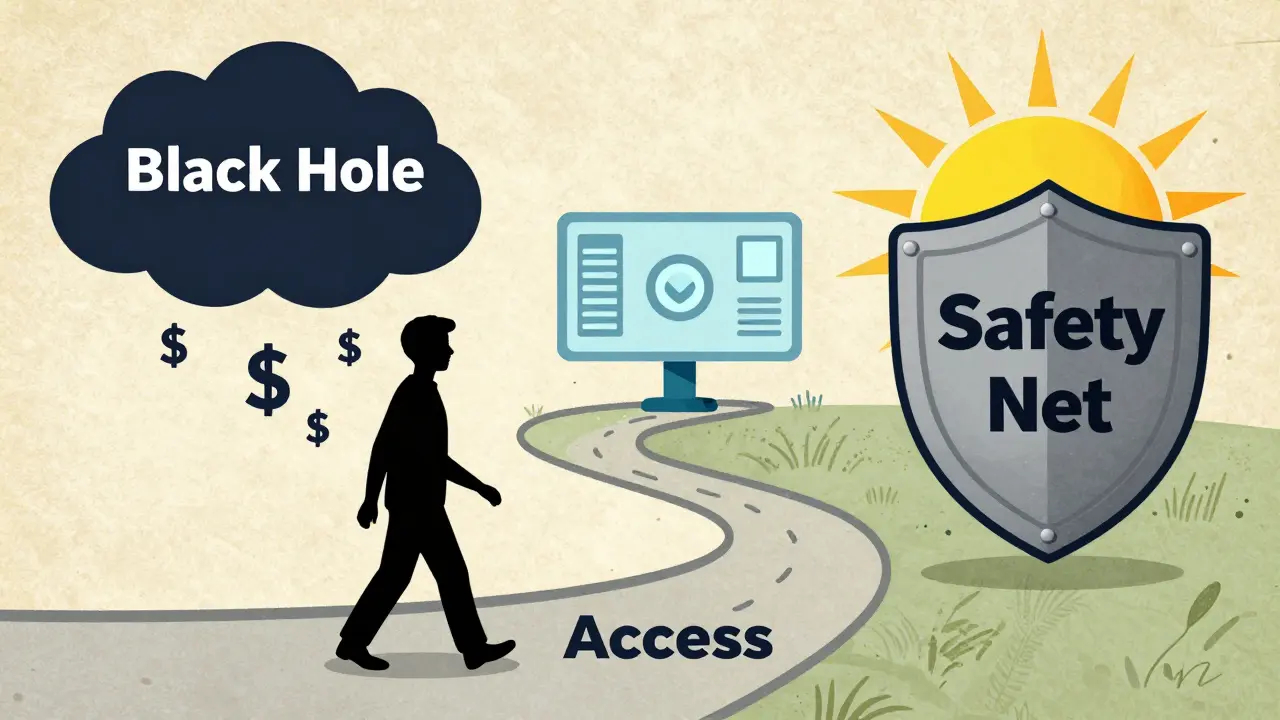
Efficiency is where the PBS faces its toughest criticism. The median time from a drug’s global launch to its PBS listing is 587 days. Compare that to Germany’s 320 days or Canada’s 410 days, and the delay becomes glaring. This gap creates a notorious "PBS black hole," where patients must pay full price for newly approved medicines until they are subsidized. A 2025 University of Melbourne study found this waiting period costs patients an average of $1,850 out-of-pocket.
For prescribers, the administrative load is heavy. Forty-three percent of GPs report significant burdens dealing with authority-required listings, which make up 28% of all PBS medicines. These require prior approval from Medicare Australia, taking an average of 1.8 business days for electronic requests but over a week for paper submissions. Pharmacists handle an average of 17.3 PBS-related transactions daily, with many reporting that authority scripts disrupt workflow significantly.
Yet, despite these hurdles, satisfaction remains relatively high. An 89% of respondents in the Services Australia 2024 survey rated ease of access as "good" or "excellent." The digital shift is helping too, with the PBS App downloaded 1.2 million times and online tools processing 2.1 million authority requests monthly.
Future Outlook: Digitization and Reform
The PBS is evolving. Budget 2025-26 allocated $1.2 billion for new listings, including Talazoparib for prostate cancer and Relugolix for endometriosis, expanding access to 150,000 Australians. Looking ahead, KPMG predicts PBS expenditure will grow at 5.2% annually through 2030, reaching $18.7 billion by 2029-30. This growth is driven by high-cost biologics and expanded indications for existing drugs.
To manage this, the Department of Health’s 2025-2030 Strategic Plan focuses on digitization. Initiatives include real-time prescription monitoring and AI-driven utilization reviews to curb the $1.2 billion in annual inappropriate spending identified by the Auditor-General. Additionally, reforms to the Highly Specialised Drugs Program will relax criteria for rare disease medicines in November 2025, aiming to close the access gap for orphan drugs.
Who is eligible for the Pharmaceutical Benefits Scheme?
Eligibility extends to all Australian residents holding a current Medicare card. It also covers overseas visitors from 11 countries with Reciprocal Health Care Agreements, including New Zealand, the UK, Ireland, Sweden, the Netherlands, Finland, Italy, Malta, Norway, Slovenia, and Belgium.
What is the difference between concession and general PBS co-payments?
As of July 2024, concession card holders pay $7.70 per prescription, while general patients pay $31.60. From January 1, 2026, the general co-payment will reduce to $25.00. Concession holders can also get 60-day scripts for the price of one co-payment, offering significant savings.
Why do generic drugs cost less on the PBS?
The Reference Pricing System groups similar medicines together and bases the subsidy on the cheapest option. This incentivizes manufacturers to lower prices and encourages pharmacists to substitute expensive brand-name drugs with cheaper generics, driving competition and reducing overall costs.
What is the "PBS black hole"?
The "PBS black hole" refers to the period between when a medicine is approved by the Therapeutic Goods Administration (TGA) and when it is listed on the PBS. During this time, patients must pay the full unsubsidized price, which can average $1,850 out-of-pocket before government support kicks in.
How does the PBAC determine if a drug is cost-effective?
The PBAC uses a cost-per-QALY (Quality-Adjusted Life Year) analysis. While there is no strict cutoff, they generally use AU$50,000 per QALY as a benchmark. Treatments exceeding this may still be approved in exceptional circumstances, such as for rare diseases under the Highly Specialised Drugs Program.