
Understanding Medication Use During Pregnancy: Safety Alerts Explained
 Dec, 15 2025
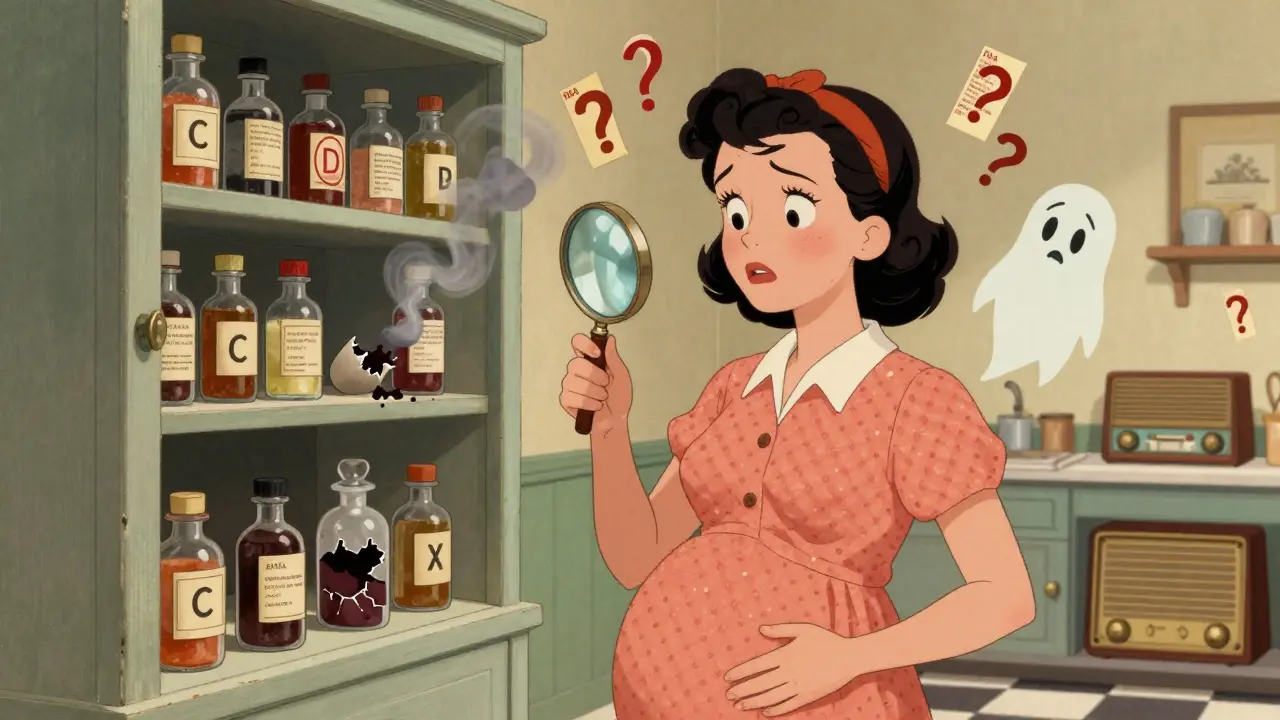
When you’re pregnant, every pill, supplement, or over-the-counter remedy feels like a gamble. You want to feel better, but you’re terrified of hurting your baby. This isn’t just anxiety-it’s a real, systemic problem. Nearly 90% of pregnant women take at least one medication during pregnancy, and half take four or more. Yet, for most of those drugs, we simply don’t have clear, reliable data on whether they’re safe.
Why We Don’t Know Much About Medications in Pregnancy
For decades, pregnant women were left out of clinical trials. The fear of causing harm led to exclusion, not protection. The result? Only 5% to 10% of FDA-approved drugs between 2003 and 2012 had enough human data to even begin assessing risk during pregnancy. That’s not a gap-it’s a chasm. The old system made things worse. From 1979 to 2015, the FDA used letters: A, B, C, D, X. It sounded simple, but it confused everyone. A “C” didn’t mean “moderate risk.” It meant “animal studies showed harm, but human data was lacking.” Many women stopped essential medications because they thought “C” meant dangerous. Studies show that confusion led to an 18% rise in unnecessary medication discontinuation. In 2015, the FDA scrapped the letter system. In its place came the Pregnancy and Lactation Labeling Rule (PLLR). Now, drug labels must include detailed narrative sections: what we know about pregnancy, breastfeeding, and fertility. But here’s the catch: many labels still say “insufficient data.” That’s not helpful. It’s a cop-out.How Safety Alerts Actually Work
Safety alerts aren’t just warnings. They’re responses to real signals. The FDA and EMA track reports from doctors, patients, and pharmacies. When a pattern emerges-like a cluster of birth defects linked to a specific drug-a safety alert is issued. Take valproate, used for epilepsy and bipolar disorder. Before the alert, the risk of neural tube defects was around 0.1%. After exposure, it jumped to 1-2%. That’s a 10- to 20-fold increase. In 2022, the FDA issued a Class I alert-the most serious-for valproate, urging doctors to avoid it in pregnancy unless absolutely necessary. Other high-risk drugs include isotretinoin (Accutane), which causes severe birth defects in 20-35% of exposed pregnancies, and thalidomide or lenalidomide, which can cause limb malformations. These drugs now come with strict pregnancy prevention programs: mandatory contraception, regular pregnancy tests, and signed consent forms. But here’s the problem: these alerts rely on data that’s often years late. Pregnancy exposure registries collect information from women who take certain drugs while pregnant. The FDA has 38 active registries. But they capture less than 1% of all pregnancy medication exposures. Dr. Christina Chambers’ research at UC San Diego found that safety alerts are delayed by an average of 7.2 years because the data comes in too slowly.U.S. vs. Europe: Different Rules, Same Gaps
The U.S. and Europe handle this differently, but neither has solved the core issue. The FDA’s PLLR requires detailed labeling, but only 32% of those labels include actual numbers-like “risk of heart defect: 1 in 100.” Most just say “possible risk.” That’s not guidance. It’s guesswork. The EMA takes a more active approach. For high-risk drugs like lenalidomide, they require mandatory contraception for six months after stopping treatment. They also demand that drug companies monitor pregnancy exposure in real time. But a 2022 European audit found that 41% of companies didn’t even meet the minimum requirements. Both systems are better than the old letter system, but both still rely on passive reporting. If a woman doesn’t tell her doctor she took a drug, or if her pharmacy doesn’t report it, the system doesn’t see it.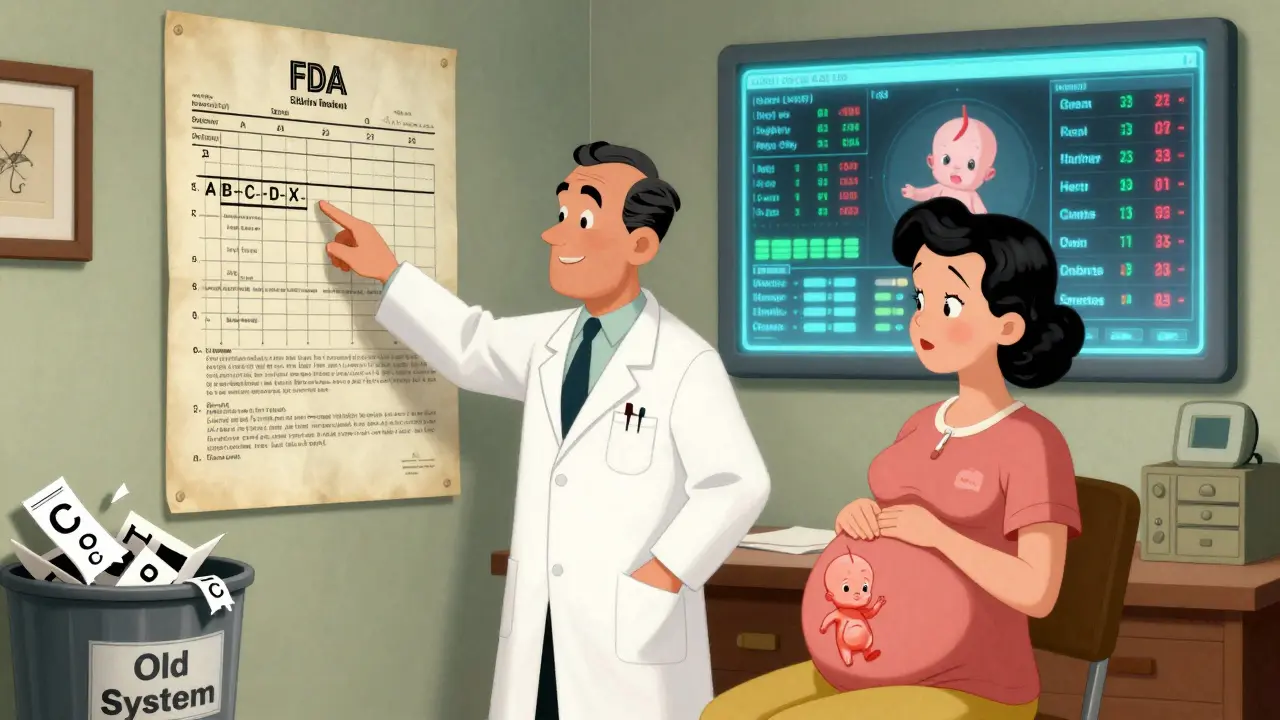
What You Can Do Right Now
You don’t have to wait for perfect data. Here’s what works:- Get a medication review at your first prenatal visit. ACOG recommends listing every pill, supplement, and herb-even CBD gummies or herbal teas. This takes about 22 minutes, but it cuts inappropriate discontinuation by 45%.
- Don’t stop essential meds without talking to your doctor. Untreated depression, asthma, high blood pressure, or seizures can be more dangerous to you and your baby than the medication. A 2021 survey found that 29% of women with chronic conditions stopped their meds when pregnant-and 63% of those cases were later advised to restart them.
- Use trusted sources. The FDA’s “Medicine and Pregnancy” page and Mass General’s Pregnancy Medication Safety Hotline have received 4.3/5 ratings from users. Avoid random Reddit threads or unverified apps.
- Take folic acid. 800 mcg daily, starting before conception and continuing through week 12, reduces neural tube defects by up to 70%. This is one of the few clear, evidence-based wins in pregnancy medication safety.
The Human Cost of Uncertainty
On Reddit’s r/Bump community, 68% of pregnancy medication posts in 2022 were about fear and confusion. One woman wrote: “My doctor told me to stop my antidepressant immediately. Now I’m in crisis. Why isn’t there clearer guidance?” She wasn’t alone. Drugs.com saw 1.8 million pregnancy medication queries in 2022. In 42% of negative reviews, users complained about “contradictory information.” One woman stopped her blood pressure medication because a blog said it was risky. She ended up in the hospital with preeclampsia. The truth? Most medications used in pregnancy are not proven dangerous-they’re just not proven safe. That’s not the same thing.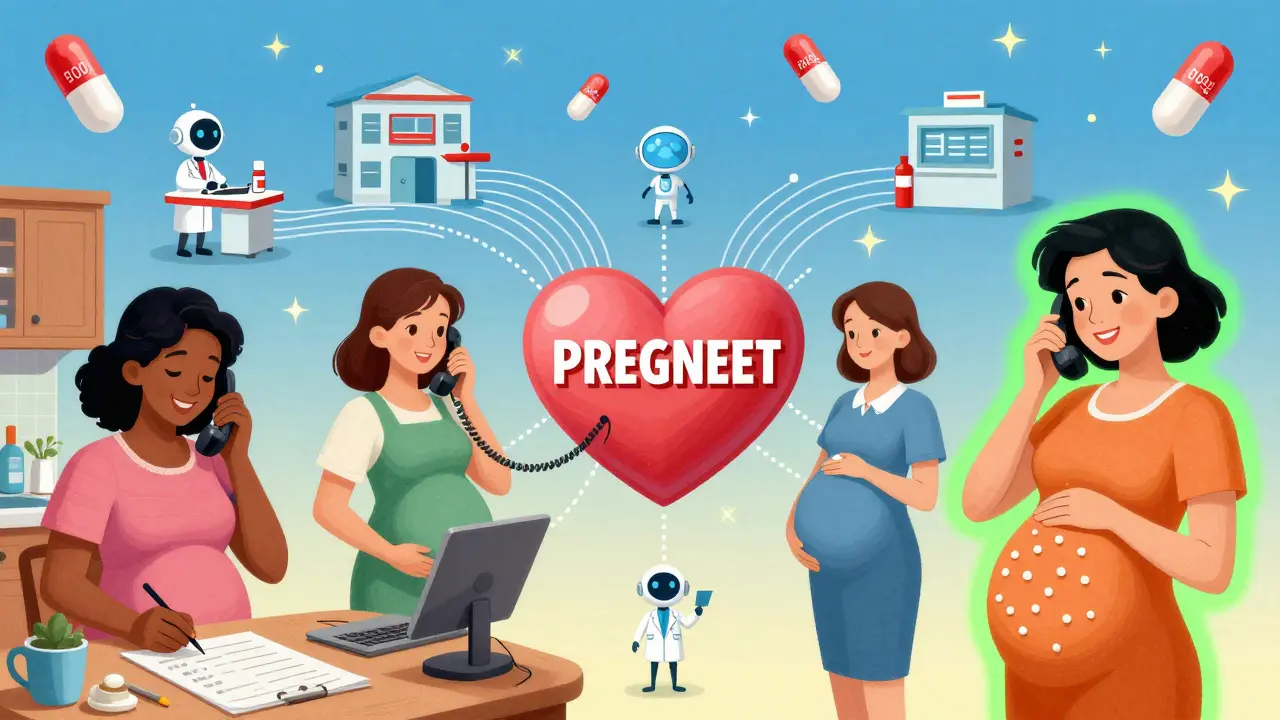
What’s Changing-and What’s Still Broken
There’s hope. The NIH launched PREGNET in January 2024: a $25 million project connecting 45 medical centers to track 100,000 pregnancies in real time. IBM Watson Health predicts AI will predict medication risks with 70% accuracy by 2027 by analyzing millions of de-identified records. But money is tight. The March of Dimes estimates a $312 million annual funding gap through 2030. Without investment, these systems will stall. Right now, only 22% of drug companies maintain the pregnancy registries they’re required to run. Meanwhile, 70% of obstetricians say they frequently encounter medications with no reliable safety data. That’s not a failure of patients. It’s a failure of infrastructure.Bottom Line: Be Informed, Not Afraid
You don’t need to be a scientist to make smart choices. You need to know:- Some medications are dangerous-like isotretinoin, valproate, and thalidomide. Avoid them unless there’s no alternative.
- Many medications are safe-or safer than the illness they treat. Depression, asthma, thyroid disorders, and diabetes all carry risks if left unmanaged.
- There is no universal “safe” list. What’s right for one person may not be right for another.
- Always talk to your provider before stopping or starting anything-even something you think is harmless.
Are all prescription drugs dangerous during pregnancy?
No. Many prescription drugs are safe and even necessary during pregnancy. Conditions like high blood pressure, thyroid disorders, depression, and asthma can be more harmful to you and your baby if left untreated. The key is working with your doctor to choose medications with the best safety profile for your situation.
What should I do if I took a medication before knowing I was pregnant?
Don’t panic. Most medications don’t cause harm during the first few weeks of pregnancy, before major organs form. Contact your provider right away-they’ll assess the drug, timing, and dosage. In many cases, no action is needed. Avoid self-diagnosing based on internet searches.
Can I trust online pregnancy medication safety tools?
Some are reliable, many aren’t. Stick to sources backed by medical institutions: the FDA’s Medicine and Pregnancy page, Mass General’s Pregnancy Medication Safety Hotline, or the Organization of Teratology Information Specialists (OTIS). Avoid blogs, social media threads, or apps without clear medical oversight.
Why do different doctors give me different advice about the same medication?
Because the data is incomplete. Many drugs have limited or conflicting studies. One doctor may err on the side of caution; another may prioritize managing your health condition. Ask for the reasoning behind their advice. If you’re unsure, seek a second opinion from a maternal-fetal medicine specialist.
Is it safe to take vitamins and supplements during pregnancy?
Prenatal vitamins with folic acid (800 mcg), iron, and DHA are recommended. But not all supplements are safe. Some herbal products, high-dose vitamin A, or unregulated weight-loss supplements can be harmful. Always tell your provider what you’re taking-even if you think it’s “natural.”
What’s the biggest mistake women make with medications during pregnancy?
Stopping necessary medications out of fear. A 2021 survey found that 29% of women with chronic illnesses stopped their meds when pregnant-and many later needed to restart them. The risk of uncontrolled illness often outweighs the uncertain risk of the medication. Always consult your provider before making changes.
Next Steps: What to Do Today
- Make a list of every medication, supplement, and herb you’re taking-prescription, over-the-counter, and herbal.
- Call your OB-GYN or midwife and ask for a medication review at your next visit.
- If you’re unsure about a drug, visit the FDA’s Medicine and Pregnancy page or call Mass General’s Pregnancy Medication Safety Hotline.
- Start taking 800 mcg of folic acid daily if you aren’t already.
- Don’t rely on Google. Use trusted medical resources.
Anu radha
December 17, 2025 AT 06:53I just found out I'm pregnant and I was about to keep taking my ibuprofen for back pain. Now I'm scared to take anything. Thanks for explaining that some meds are safer than we think. I'll talk to my doctor tomorrow.
Salome Perez
December 17, 2025 AT 11:39As someone who’s navigated two high-risk pregnancies in the U.S. healthcare system, I can tell you this article doesn’t just inform-it emancipates. The shift from those archaic A-B-C-D-X labels to narrative-based labeling was a quiet revolution, though still imperfect. What’s truly radical? That we’re even talking about this. Women deserve more than guesswork; they deserve granular, compassionate data. And yes-folic acid isn’t just a suggestion, it’s a lifeline. 800 mcg, every day, like clockwork. Your baby’s neural tube doesn’t care about your hustle-it only cares that you showed up.
Kent Peterson
December 18, 2025 AT 13:46Josh Potter
December 19, 2025 AT 03:14Evelyn Vélez Mejía
December 19, 2025 AT 09:24The systemic neglect of maternal pharmacological safety is not an oversight-it is an epistemological violence. By excluding pregnant women from clinical trials under the guise of protection, we have constructed a paradigm of ignorance that relegates maternal autonomy to the realm of guesswork. The PLLR was a linguistic gesture, not a structural reform. When labels say ‘insufficient data,’ they are not conveying uncertainty-they are absolving institutions of moral responsibility. The real tragedy is not the absence of evidence, but the refusal to generate it. We must demand active surveillance, not passive reporting. We must fund registries with the same urgency we fund missile defense systems. Because the cost of inaction is not statistical-it is human.
Victoria Rogers
December 20, 2025 AT 06:08Jane Wei
December 20, 2025 AT 07:27Nishant Desae
December 21, 2025 AT 21:57Hey everyone, I'm from India and I’ve seen both sides-traditional healers giving herbal mixtures and doctors in Mumbai telling me to stop everything. The truth? Most of us just want to do right by our babies. I took my blood pressure meds through both pregnancies, even though my aunt said it was 'bad for the child.' I called the OTIS hotline-they walked me through every pill, even the Ayurvedic ones. That’s what you need: a real person on the other end, not a website. And yes, folic acid? Yes. Start before you even know you're pregnant. My second baby’s ultrasound showed perfect spine development, and I credit that to 800 mcg daily. Don’t let fear silence you. Talk. Ask. Write down your questions. You’re not alone. We’re all figuring this out together, one pill at a time.