
Switching from Warfarin to a DOAC: What You Need to Know About Side Effects and Safety
 Jan, 17 2026
Warfarin to DOAC Timing Calculator
Switching from Warfarin to DOAC
This tool helps determine the safe timing for switching from warfarin to a direct oral anticoagulant (DOAC) based on your INR value. Follow the correct timing to avoid dangerous bleeding or clotting risks.
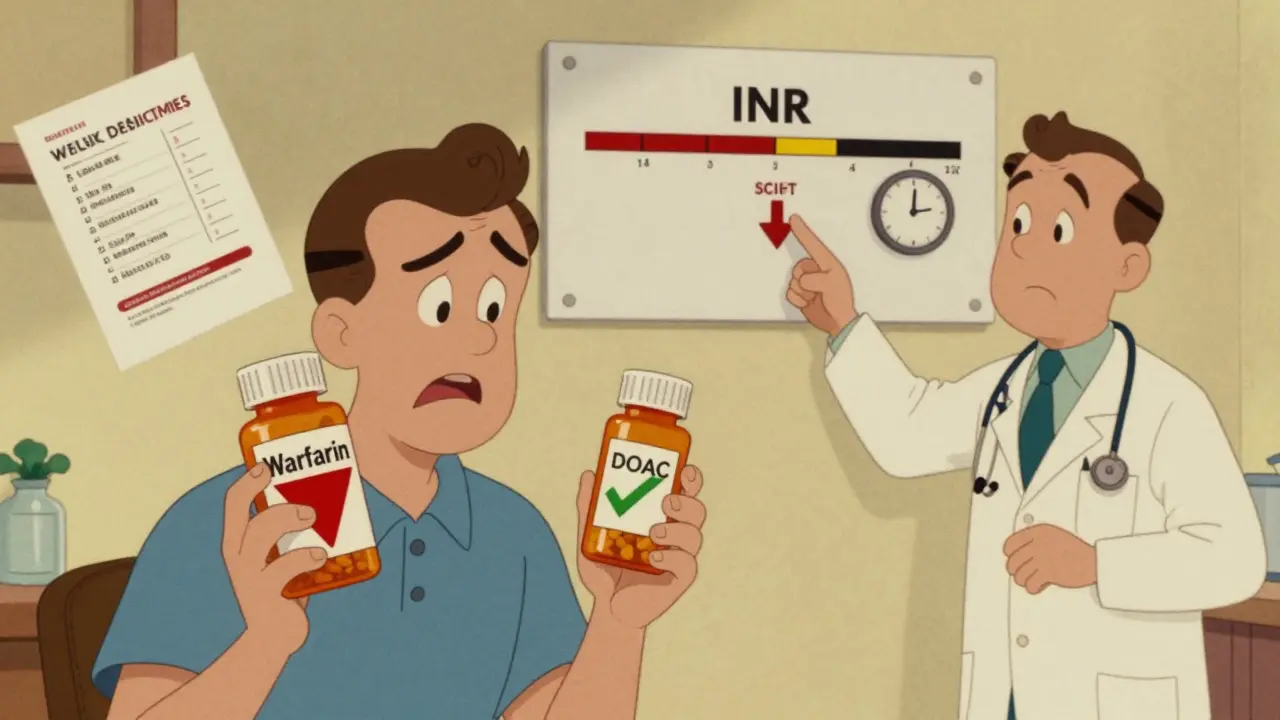
Switching from warfarin to a direct oral anticoagulant (DOAC) isn’t just a change in pill color-it’s a shift in how your body manages blood clotting. For many people, this switch means fewer blood tests, less dietary worry, and more predictable results. But if done wrong, it can be dangerous. Too early, and you risk a stroke. Too late, and you might bleed. This isn’t something to guess at. It’s a precise medical transition that demands timing, knowledge, and attention to detail.
Why Switch at All?
Warfarin has been the go-to blood thinner for over 70 years. But it’s finicky. You need regular INR blood tests-sometimes every week-to make sure your dose is right. Too high, and you bleed. Too low, and you clot. You also have to watch what you eat. Leafy greens, cranberry juice, even certain antibiotics can throw your levels off. It’s exhausting. DOACs-like apixaban, rivaroxaban, dabigatran, and edoxaban-don’t need that. They work consistently. No weekly blood draws. Fewer food interactions. Less guesswork. For most people with non-valvular atrial fibrillation or deep vein thrombosis, switching to a DOAC improves quality of life. Studies show they’re just as good at preventing strokes and, in many cases, safer. The RE-LY trial found DOACs cut the risk of brain bleeds by nearly a third compared to warfarin.When You Shouldn’t Switch
Not everyone can switch. There are hard limits. If you have a mechanical heart valve, you stay on warfarin. DOACs don’t work well enough here. The risk of valve clotting is too high. If your kidneys are severely damaged-creatinine clearance below 15-30 mL/min depending on the drug-you may not be a candidate either. DOACs are cleared through the kidneys. If they’re not working, the drug builds up. That raises bleeding risk. Pregnancy and breastfeeding? Avoid DOACs. They cross the placenta and enter breast milk. Warfarin is still the standard in those cases, though it requires close monitoring. People with advanced liver disease (Child-Pugh Class C) also shouldn’t switch. The liver helps break down these drugs. If it’s failing, you can’t predict how the DOAC will behave.The Critical Timing Rule: INR Matters
This is where most mistakes happen. You can’t just stop warfarin one day and start a DOAC the next. The timing depends on your INR level. Here’s what the guidelines say:- If your INR is ≤2.0: Start the DOAC right away.
- If your INR is 2.0-2.5: Start the DOAC the same day or wait until the next day.
- If your INR is 2.5-3.0: Wait 1-3 days. Recheck your INR.
- If your INR is ≥3.0: Hold off. Recheck in 3-5 days.
Side Effects You Might Not Expect
DOACs are generally safer than warfarin, but they’re not side effect-free. Gastrointestinal bleeding is more common with DOACs than with warfarin-especially with dabigatran. If you notice black, tarry stools or vomit that looks like coffee grounds, get help immediately. Some people get stomach upset, nausea, or heartburn. That’s often temporary. Taking the pill with food can help. The biggest hidden risk? Missing a dose. Warfarin’s effect lingers for days. If you skip a dose, you’re still protected. DOACs clear from your system in 12-24 hours. Skip one, and your protection drops fast. That’s why consistency matters more than ever.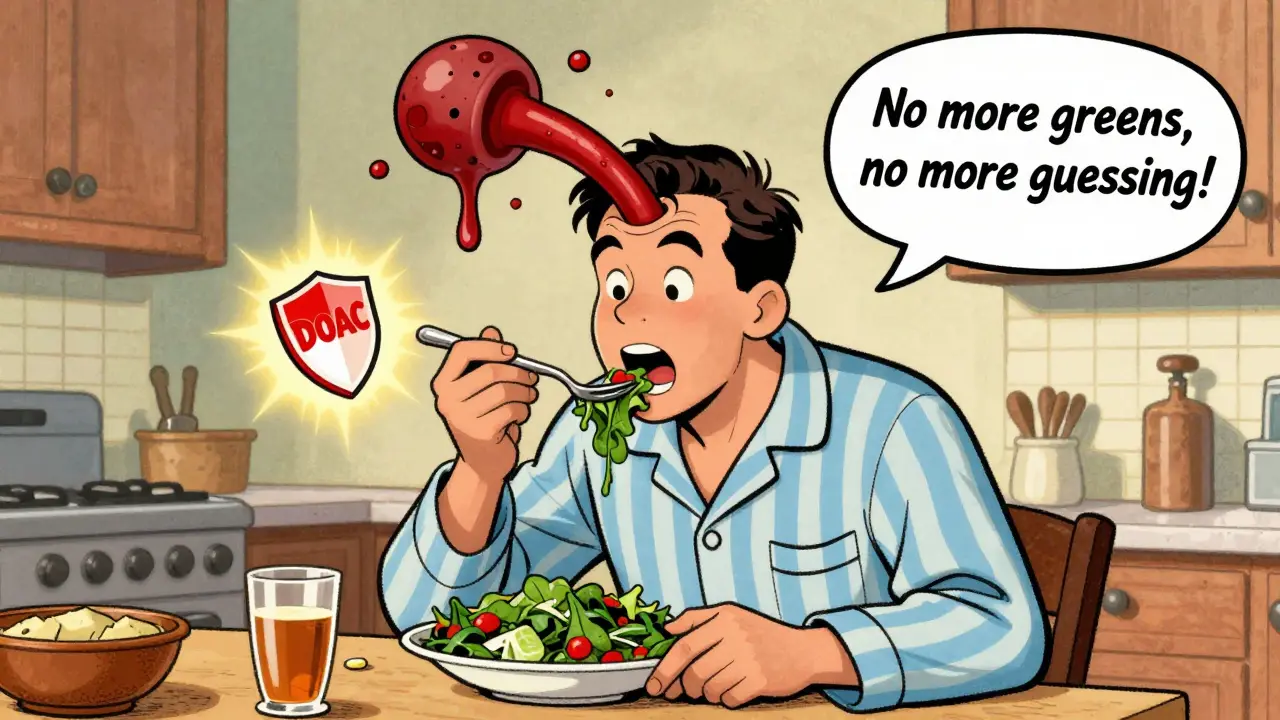
Special Cases: Age, Weight, and Kidneys
People over 80, or under 60 kg, were underrepresented in DOAC trials. That doesn’t mean they can’t use them-but it does mean extra caution. For older adults, especially those with mild kidney decline (CrCl 30-50 mL/min), lower doses are often used. Apixaban 2.5 mg twice daily is common in this group. Dabigatran 110 mg twice daily is another option. If you weigh over 150 kg, your doctor might still choose warfarin. DOACs haven’t been tested enough in very heavy people. There’s no clear data on whether standard doses work. Renal monitoring is still needed. You don’t need weekly INR tests, but you do need a kidney check every 6-12 months. If your kidney function drops, your DOAC dose may need adjusting-or you may need to switch back.Before Surgery or Dental Work
If you’re having a procedure, you can’t just stop your DOAC and hope for the best. Timing matters. For a low-risk procedure (like a tooth extraction) and normal kidney function (CrCl >90 mL/min), hold dabigatran for 24-36 hours. For high-risk surgery (like a hip replacement) and moderate kidney impairment (CrCl 45 mL/min), hold it for 96-108 hours. Your doctor should give you a clear plan. Never guess. If you’re unsure, call your anticoagulation clinic. Ask: “What’s my hold time?”What About Reversing the Drug?
If you bleed badly, can you reverse it? Yes-but only for some. Dabigatran has a specific antidote: idarucizumab. It works fast. For rivaroxaban, apixaban, and edoxaban, there’s andexanet alfa. But it’s expensive and not always available. For all DOACs, activated charcoal can help if you took the pill recently. And in emergencies, doctors use prothrombin complex concentrate (PCC) or fresh frozen plasma. But these aren’t as reliable as the specific antidotes. This is why knowing your drug matters. If you’re on dabigatran, your emergency room should know idarucizumab is an option. Carry your anticoagulant alert card.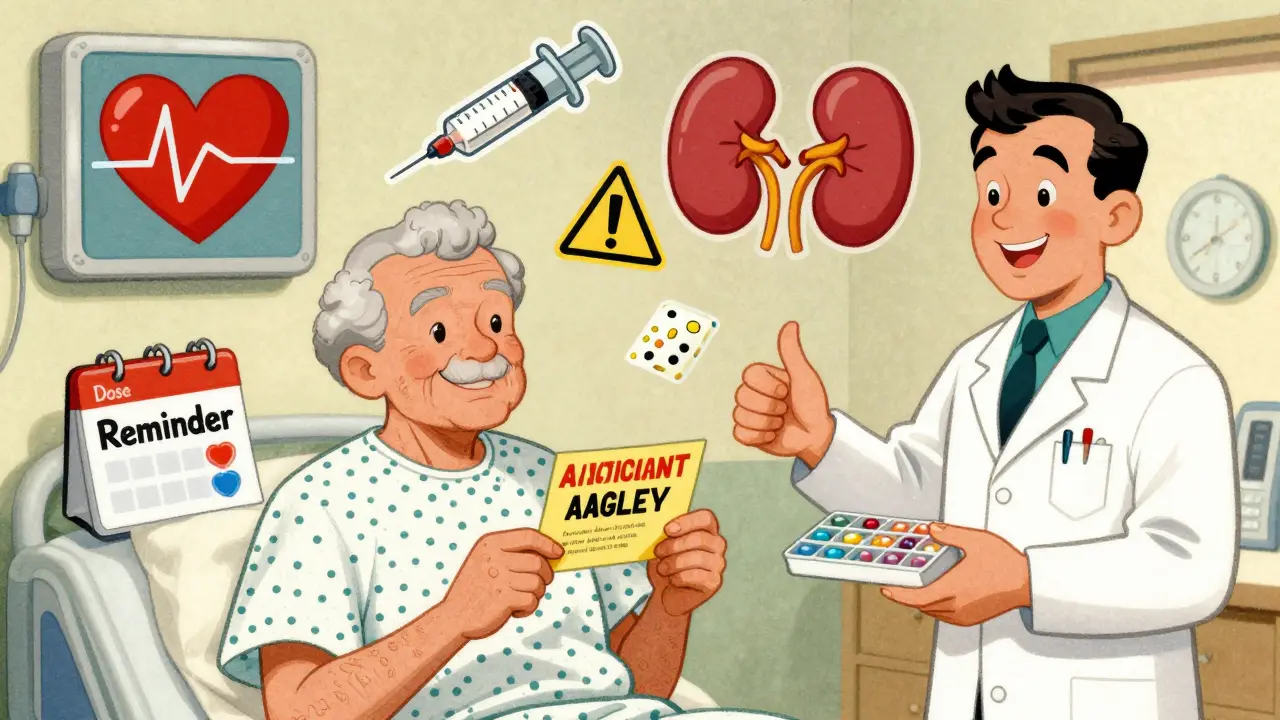
How to Make the Switch Safe
Follow this checklist:- Get your recent bloodwork: INR, kidney function, liver tests-all within the last 6 months.
- Calculate your creatinine clearance using the Cockcroft-Gault formula. Your doctor should do this.
- Check your INR on the day you plan to switch.
- Start the DOAC at the right time based on your INR level.
- Stop warfarin. Do not take it again.
- Get an anticoagulant alert card and patient info booklet.
- Set phone reminders for your DOAC. Take it at the same time every day.
- See your pharmacist. Ask about the New Medicine Service if available.
What to Watch for After the Switch
In the first few weeks, watch for:- Unusual bruising or bleeding gums
- Persistent headaches or dizziness
- Dark urine or stool
- Swelling or pain in limbs
Cost and Access
DOACs cost $500-$700 a month in the U.S. Warfarin is $10-$30. That’s a big difference. But if you factor in the cost of frequent blood tests, missed work, ER visits, and hospitalizations from clots or bleeds, DOACs often save money long-term. In countries with public healthcare, like New Zealand, DOACs are often subsidized. Check what your local pharmacy covers. Don’t assume you can’t afford it.Final Thought: It’s Not a One-Size-Fits-All
Switching from warfarin to a DOAC is one of the most impactful changes you can make to your anticoagulation care-if you’re a good candidate. It’s not about convenience alone. It’s about safety, predictability, and reducing long-term risks. But it’s also not a simple swap. It’s a medical procedure. Done right, it can keep you out of the hospital. Done wrong, it can land you there. Talk to your doctor. Ask questions. Get the numbers. Understand your INR. Know your kidney function. Follow the plan. Your life depends on it.Can I switch from warfarin to a DOAC if I have atrial fibrillation?
Yes-most people with non-valvular atrial fibrillation are good candidates for switching. DOACs are actually preferred over warfarin in this group because they’re just as effective at preventing strokes and carry a lower risk of brain bleeds. But you must have your INR checked before switching and follow the timing guidelines based on your result.
What happens if I miss a dose of my DOAC?
If you miss a dose, take it as soon as you remember-if it’s still the same day. If it’s almost time for your next dose, skip the missed one. Never double up. DOACs leave your system in 12-24 hours, so missing a dose leaves you unprotected. That’s why setting daily reminders is critical.
Do I still need blood tests after switching to a DOAC?
You won’t need INR tests anymore. But you still need kidney function checks every 6-12 months. DOACs are cleared by the kidneys, and if your kidney function declines, your dose may need adjusting. Some doctors also check liver function or blood counts once a year.
Can I take other medications while on a DOAC?
Many medications are safe, but some are risky. NSAIDs like ibuprofen or naproxen can increase bleeding risk. Certain antibiotics, antifungals, and seizure meds can interfere with DOAC levels. Always check with your pharmacist or doctor before starting any new drug-even over-the-counter ones.
Is dabigatran different from other DOACs?
Yes. Dabigatran is more sensitive to stomach acid and must be kept in its original bottle-it’s moisture-sensitive. Other DOACs can go in pill organizers. Dabigatran also has a specific reversal agent (idarucizumab), while the others rely on andexanet alfa. It’s also more likely to cause stomach upset, so take it with food.
Can I switch back to warfarin if I have side effects?
Yes, but it’s not simple. Switching back requires careful planning. You can’t just stop the DOAC and restart warfarin. You’ll need to overlap them with a short-acting anticoagulant like heparin until warfarin reaches a therapeutic level. This is complex and should only be done under specialist supervision.
What should I carry with me in case of an emergency?
Always carry your anticoagulant alert card. It tells emergency staff what you’re taking and when you last took it. Also keep a list of your medications and dosages. If you’re on dabigatran, make sure they know idarucizumab is available. This can save your life.
Jake Moore
January 18, 2026 AT 15:48Just switched from warfarin to apixaban last month. No more weekly finger pricks? Yes please. I used to dread my INR visits-now I just take my pill with breakfast and forget about it. The only hiccup? My pharmacist had to explain that I can’t stash my pills in a pill organizer because moisture ruins them. Learned the hard way.
Joni O
January 19, 2026 AT 03:00i switched too and honestly? life changed. i used to avoid salads and cranberry juice like they were poison. now i eat kale smoothies like a boss. just set phone alerts for my meds and i’m golden. ps: don’t skip doses. i did once and felt like a ghost. 😅
Stacey Marsengill
January 20, 2026 AT 19:02Oh great, another ‘DOACs are magic’ propaganda piece. You people ignore the fact that these drugs are designed to keep you dependent on expensive pharma. Warfarin’s been around since WWII-do you really think Big Pharma would let it die without a fight? Wake up.
Robert Davis
January 22, 2026 AT 14:09Stacey is right. DOACs are a money grab. I’ve been on warfarin for 12 years. I know my body. I know my INR. I know when to eat spinach. Why should I pay $600 a month for a pill that can’t even be reversed reliably? And don’t get me started on the ‘no blood tests’ lie-your kidneys still need monitoring. They just don’t tell you that upfront.
Selina Warren
January 23, 2026 AT 12:51Ugh, I’m so tired of people treating DOACs like they’re some kind of miracle cure. I had a friend bleed out in the ER because they skipped a dose and the hospital didn’t have andexanet alfa on hand. They waited 4 hours. FOUR HOURS. Warfarin would’ve still been in their system. This isn’t convenience-it’s a gamble with your life. If you’re young and healthy, sure. But if you’re over 70? Stick with what works. Don’t be a lab rat.
Eric Gebeke
January 24, 2026 AT 09:59Let’s be real-DOACs are just a way for doctors to avoid responsibility. You think they want to spend 20 minutes explaining INR ranges? No. They want you to pop a pill and leave. And when you bleed? ‘Oh, we didn’t know your kidney function dropped.’ Blame the patient. Classic. I’ve seen it too many times.
Ryan Otto
January 24, 2026 AT 17:53While the article presents a superficially rational case for DOACs, it fails to address the systemic erosion of clinical autonomy in anticoagulation management. The reliance on algorithmic dosing protocols, devoid of individualized pharmacokinetic assessment, reflects a broader trend of medical dehumanization. The absence of long-term, real-world data beyond five years remains conspicuously unaddressed. One must question whether the industry’s marketing apparatus has supplanted evidence-based medicine.
Max Sinclair
January 26, 2026 AT 10:24Wendy’s comment made me smile. I’m on rivaroxaban and I used to forget to take it until I started putting the bottle next to my toothbrush. Now I brush and take it together-no more missed doses. Also, my doctor gave me a free alert card. I keep it in my wallet next to my insurance card. Small things, but they help. Thanks for the reminder, everyone.
Emma #########
January 27, 2026 AT 04:49I switched last year and honestly? I cried the first time I didn’t have to go to the clinic. It felt like being freed from a chain. I still get nervous about bleeding, but knowing I have a reversal agent if I need it? That’s peace of mind. My mom’s on warfarin and she hates it. I wish she could switch-but her kidneys aren’t good enough. So I just tell her I’m lucky.
Andrew McLarren
January 27, 2026 AT 10:20It is imperative to underscore the necessity of individualized patient assessment prior to transition from warfarin to a direct oral anticoagulant. The parameters outlined in the article-namely renal function, hepatic integrity, and INR thresholds-are not merely guidelines but critical determinants of clinical safety. Deviation from these parameters constitutes a deviation from the standard of care, and may result in catastrophic outcomes. I urge all clinicians to exercise due diligence.
Praseetha Pn
January 28, 2026 AT 05:10DOACs are just the first step. Wait until you see them implanting microchips in your pills to track compliance. They’re already testing it. You think they don’t want to know when you skip a dose? They’re building a database of your body’s weaknesses. And don’t even get me started on the ‘kidney checks’-they’re just using your data to upsell you to expensive dialysis later. I’ve seen the patents. They’re not helping you. They’re harvesting you.
Nishant Sonuley
January 29, 2026 AT 11:48Look, I get it. Warfarin is a pain. But let’s not pretend DOACs are some utopian solution. I’ve had patients on apixaban who couldn’t afford the refill, so they’d skip doses and then show up in the ER with a stroke. Meanwhile, warfarin? Cheap. Accessible. You can get it at Walmart for $4. The real issue isn’t the drug-it’s the system that makes people choose between food and their blood thinner. So yeah, DOACs are nice… if you’re not broke.
Wendy Claughton
January 30, 2026 AT 13:27I love how this thread turned into a war between ‘pharma shills’ and ‘warfarin purists.’ 😅 I’m just a person who didn’t want to live like a lab rat. I take my pill. I eat what I want. I don’t bleed. I don’t clot. My doctor checked my kidneys twice. That’s it. I’m not a guinea pig-I’m a human being who just wants to live. Can we all just… breathe? 🤍
Andrew Short
January 31, 2026 AT 14:34Wow. So you’re telling me that after 70 years of warfarin being the gold standard, we’re suddenly going to trust a drug that can’t even be reliably reversed in 80% of hospitals? And you call that progress? This isn’t medicine. It’s a corporate experiment with human lives as the test subjects. And you’re all just nodding along like sheep.
christian Espinola
January 31, 2026 AT 16:18My dad died from a GI bleed on rivaroxaban. They said ‘it was just a side effect.’ No one asked if he’d missed a dose. No one checked his liver. No one even asked if he was taking ibuprofen for his arthritis. I’ve seen the chart. They didn’t even document his last dose. This isn’t medicine. It’s negligence dressed up as innovation.