
Preterm Infants and Medication Side Effects: What NICU Teams Need to Know Today
 Jan, 29 2026
Caffeine Citrate Dosing Calculator for Preterm Infants
Caffeine citrate is commonly used to treat apnea of prematurity in preterm infants. However, dosing must be carefully adjusted based on gestational age and birth weight to avoid side effects.
When a baby is born too early, every decision matters - especially when it comes to medications. Preterm infants, born before 37 weeks, don’t just need special care; they need medications tailored to their tiny, still-developing bodies. But here’s the hard truth: many of the drugs given in the NICU weren’t designed for them. And the side effects? They can last far beyond the hospital stay.
Why Preterm Infants Are So Different
A preterm baby’s liver, kidneys, and brain aren’t just smaller versions of an adult’s. They’re unfinished. At 26 weeks, a baby’s liver can only process about 30% of the drugs an adult’s liver can. Their kidneys can’t filter waste efficiently. Their blood-brain barrier is leaky, meaning drugs that should stay out of the brain can slip in - and that’s when things go wrong.These aren’t theoretical concerns. A 2021 study in JAMA Network Open found that every single extremely preterm infant (born before 28 weeks) received at least one pain or sedation medication during their NICU stay. Nearly half got opioids. Nearly a third got benzodiazepines. These drugs calm the body - but they also slow brain development. And we’re giving them to babies whose brains are forming connections faster than at any other time in life.
The Hidden Dangers of Common NICU Drugs
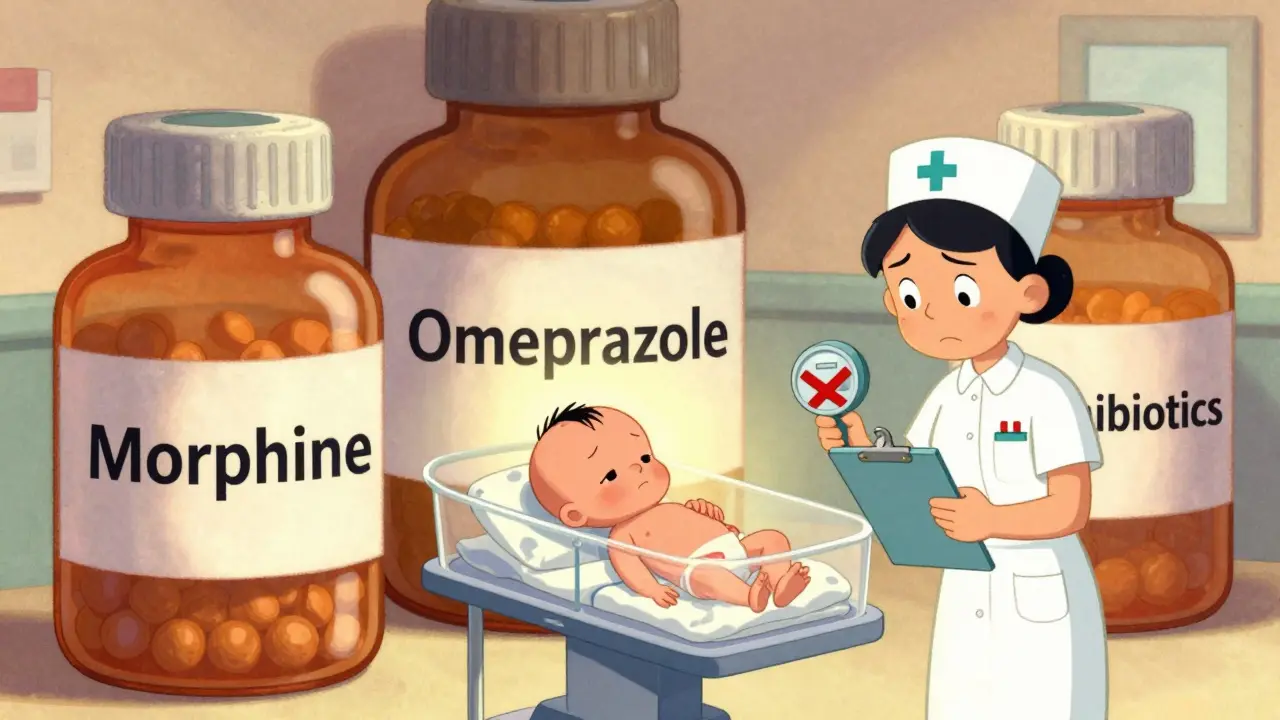
Some medications are used so often, we forget they’re risky. Let’s look at the top offenders.Anti-reflux drugs - like omeprazole and lansoprazole - are given to over 40% of preterm infants. The idea? Reduce spitting up. But multiple studies now show these drugs don’t help with reflux symptoms in preemies. Instead, they raise the risk of necrotizing enterocolitis (NEC) by 67%, late-onset sepsis by 89%, and bone fractures by over two times. The American Academy of Pediatrics updated its guidelines in January 2024 to say: don’t use these routinely.
Antibiotics are another big one. About 50% of preterm infants get antibiotics in the first days of life - often because doctors are afraid to miss an infection. But research from Washington University shows these babies end up with gut microbiomes full of harmful bacteria and missing 32% of the good ones. These imbalances don’t fix themselves. They persist for years. One parent on Reddit shared that her son, given 28 days of antibiotics for suspected sepsis (which was never confirmed), had five ear infections and two more rounds of antibiotics by age two.
Caffeine citrate, used to treat apnea of prematurity, is one of the few medications with solid evidence. But even here, side effects are real. Nearly 1 in 5 babies on caffeine develop a fast heartbeat. Over 7% can’t feed properly because it makes them too jittery. Dosing isn’t one-size-fits-all - it must be adjusted by gestational age and weight.
What Happens When Dosing Goes Wrong
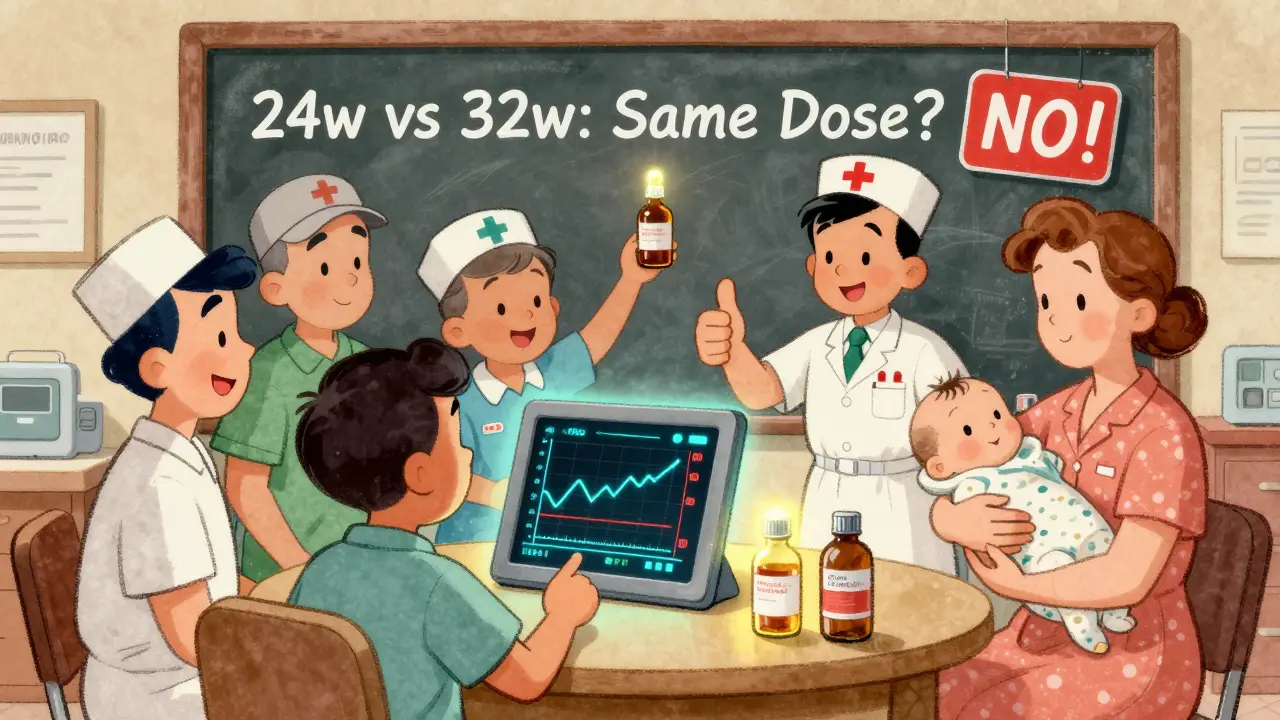
A baby weighing 800 grams needs a fraction of the dose of a 3,000-gram infant. But getting that right is harder than it sounds. NICU nurses report that 68% see at least one dosing error per month - and nearly a quarter of those cause harm. These aren’t just typos. They’re miscalculations based on outdated formulas or misread weight charts.Take morphine. A baby born at 24 weeks clears it 40% slower than one born at 32 weeks. Give the same dose? You risk respiratory arrest. That’s why 76% of NICUs now use gestational-age-specific protocols for key drugs like fentanyl and morphine. Still, only 37% of Level IV NICUs use pharmacokinetic modeling software like DoseMeRx - tools that adjust doses in real time based on the baby’s age, weight, and lab values. Those that do see a 59% drop in dosing errors.
The Microbiome Crisis
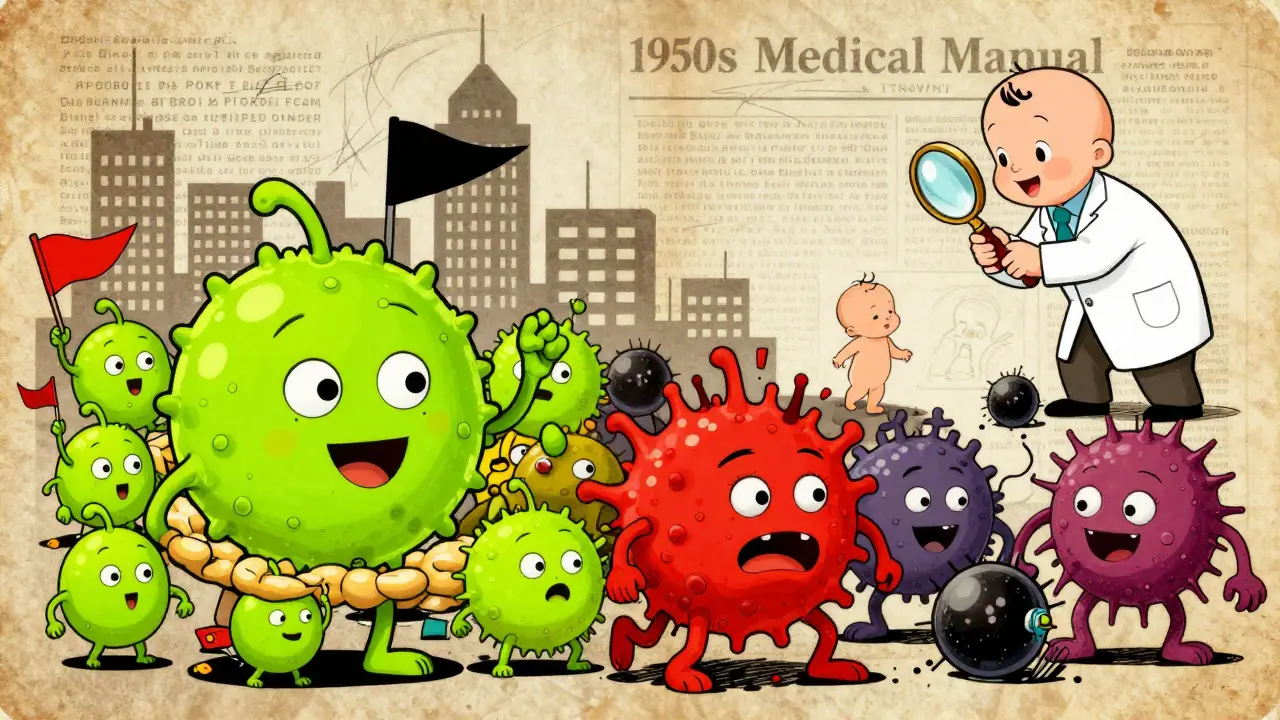
We used to think of antibiotics as harmless fixes. Now we know they’re rewriting a baby’s biology. Preterm infants exposed to antibiotics have gut flora that’s 47% more likely to carry dangerous bacteria like Enterobacteriaceae. Beneficial bacteria like Bifidobacterium - which help train the immune system - are slashed by a third. And the resistance genes? They’re 2.8 times more common.Dr. Gautam Dantas at Washington University says it plainly: “The makeup of your gut microbiome is pretty much set by age 3.” That means a course of antibiotics in the NICU could be shaping a child’s risk for asthma, allergies, obesity, and even autism for life. And we’re still giving them like they’re candy.
What’s Changing - and What’s Not
There’s progress. The FDA’s Best Pharmaceuticals for Children Act has led to 15 new pediatric labels since 2002. The Neonatal Research Network’s Pharmacology Core, launched in 2021, is working on models for 25 high-risk drugs by 2026. A new fentanyl formulation made just for preemies, NeoFen, is expected to be approved in mid-2025.But the gap is still huge. Of the 50 most common NICU drugs, only 12 have official neonatal dosing guidelines. And 92% of respiratory medications used in preemies are given off-label - meaning no safety data exists for their use in this population.
Even when guidelines exist, they’re not always followed. A 2023 review found that 41% of NICUs still use the same morphine dose for a 25-week and a 34-week infant - despite clear differences in how their bodies handle it.
What Can Be Done
Change isn’t impossible. NICUs that implemented structured weaning protocols for opioids and benzodiazepines cut medication exposure by nearly two weeks - without increasing pain. That’s huge. It means babies get less drug exposure, less brain disruption, and shorter hospital stays.Here’s what works:
- Use caffeine first for apnea - it’s safe and effective. Avoid sedatives unless absolutely necessary.
- Hold off on acid blockers unless there’s confirmed, severe reflux with documented damage - and even then, use the lowest dose for the shortest time.
- Only give antibiotics when infection is likely. Don’t give them “just in case.”
- Use weight-based dosing software - not paper charts. DoseMeRx and similar tools reduce errors by over half.
- Track every drug. Document why it was given, how long, and what side effects appeared.
Parents should ask: “Why is this drug needed? Is there evidence it helps preemies? What are the risks?” Too often, the answer is: “We’ve always done it.” That’s not good enough anymore.
The Bottom Line
Preterm infants aren’t small adults. They’re developing organisms with unique, fragile systems. Every medication they receive is a gamble - and right now, we’re playing with loaded dice. The science is clear: many common NICU drugs cause more harm than good. We have the tools to do better. We need the will.The future of neonatal care isn’t about giving more drugs. It’s about giving the right ones - at the right time, in the right dose - and knowing when not to give anything at all.
Are all medications given in the NICU unsafe for preterm infants?
No. Some medications, like caffeine citrate for apnea and surfactant for breathing, are lifesaving and well-studied in preterm infants. The problem isn’t medication itself - it’s the overuse of drugs with little benefit and known risks, like proton pump inhibitors and routine antibiotics. The key is using only what’s necessary, with careful monitoring.
Why aren’t more drugs approved for use in preterm babies?
Testing drugs on newborns is ethically and logistically difficult. Few pharmaceutical companies invest in neonatal trials because the market is small and regulations are complex. As a result, 65% of medications used in NICUs lack official labeling for infants. Regulatory efforts like the FDA’s Best Pharmaceuticals for Children Act are helping, but progress is slow.
Can antibiotic use in the NICU cause long-term health problems?
Yes. Studies show preterm infants exposed to antibiotics have altered gut microbiomes that persist for years. This increases the risk of asthma, allergies, obesity, and immune disorders later in life. One study found these babies had 47% more harmful bacteria and 32% fewer beneficial ones - even 18 months after leaving the NICU.
What’s the safest way to manage pain in preterm infants?
Non-drug methods come first: skin-to-skin contact, swaddling, sucrose drops, and minimizing handling. When drugs are needed, acetaminophen is preferred over opioids for mild to moderate pain. Opioids and benzodiazepines should be reserved for severe pain or procedures and tapered quickly. Protocols that reduce duration of opioid use by two weeks have been shown to be safe and effective.
How can parents advocate for safer medication use in the NICU?
Ask questions: Why is this drug needed? Is there evidence it works for preemies? Are there alternatives? Request a review of all medications daily. If a drug was started “just in case,” ask if it can be stopped. Keep a log of medications, doses, and side effects. Many NICUs now have pharmacists on staff - use them as a resource.
Amy Insalaco
January 31, 2026 AT 00:56The entire premise of this post is a classic case of medical hubris disguised as evidence-based practice. You cite JAMA and FDA guidelines like they're gospel, but have you ever considered that the reason we give these drugs is because we have no better tools? The microbiome narrative is trendy but reductive-correlation isn't causation, and you're ignoring the fact that sepsis kills preemies faster than any side effect. We're not giving antibiotics because we're lazy; we're giving them because the alternative is a 40% mortality rate. Your ‘right dose’ fantasy ignores that we’re flying blind with 92% off-label meds because the pharmaceutical industry won’t touch neonatal trials. So yes, the system is broken-but your solution is just more academic navel-gazing.
kate jones
January 31, 2026 AT 15:40Thank you for this meticulously referenced and clinically grounded analysis. The data on proton pump inhibitors and NEC risk is particularly compelling-recent meta-analyses from the Cochrane Neonatal Review Group corroborate the 67% increased risk, and the AAP’s 2024 update is long overdue. What’s often missed in these discussions is the pharmacokinetic variability: CYP450 enzyme expression in preterm infants reaches adult levels only after 36 weeks postmenstrual age, which means even ‘standard’ weight-based dosing can be dangerously inaccurate. The adoption of DoseMeRx and similar platforms must be institutionalized, not optional. Hospitals that treat preterm infants as ‘small adults’ are not just outdated-they’re endangering lives.
Rob Webber
February 2, 2026 AT 03:56This is why medicine is a joke. You’re telling us to stop giving antibiotics to babies who might die from sepsis? That’s not caution, that’s cowardice. You want to wait for a culture? By then, the baby’s dead. And now you’re blaming the doctors because you read a paper? Wake up. We’re not playing chess with lives-we’re fighting fires. If you think your ‘evidence’ is more important than a baby breathing, you’ve never held a 24-weeker in your hands. Stop lecturing. Start saving lives.
Niamh Trihy
February 3, 2026 AT 10:19Interesting that you mention caffeine citrate as the only well-studied option-have you considered the long-term neurodevelopmental outcomes of early caffeine exposure? A 2023 follow-up of the Caffeine for Apnea of Prematurity trial showed a 25% reduction in cerebral palsy but a 12% increase in anxiety-like behaviors at age 11. We’re trading one risk for another without a full picture. The real issue isn’t just drug use-it’s our inability to track outcomes beyond discharge. We need longitudinal registries, not just dosing protocols.
Yanaton Whittaker
February 4, 2026 AT 11:04Look, I’m all for science, but this is America. We don’t wait for perfect data when lives are on the line. If you’re too scared to give antibiotics to a preemie because some German study says it might cause allergies in 2035, then maybe you shouldn’t be in the NICU. We’re not in Europe. We save lives here. The fact that you’re even debating this shows how out of touch some of you are. Get real.
Kathleen Riley
February 5, 2026 AT 23:28It is not merely a matter of pharmacological administration; it is a profound ontological dilemma concerning the moral status of the neonatal subject in a technocratic medical regime. The infant, as a liminal entity-neither fully formed nor entirely contingent-occupies a space wherein the boundaries of therapeutic intervention are ethically indeterminate. To administer a substance whose pharmacokinetic profile is inadequately characterized is to engage in a form of epistemic violence, wherein the infant’s vulnerability is instrumentalized under the guise of beneficence. One must therefore interrogate not merely the dosage, but the very epistemological foundations upon which neonatal pharmacotherapy is predicated.
Beth Cooper
February 6, 2026 AT 10:09Okay but have you heard about the 2022 whistleblower report from Children’s Hospital of Philadelphia? They found that 7 out of 10 NICUs were using expired morphine because the hospital didn’t want to pay for new batches. And the FDA? They’ve been in bed with Big Pharma since 2010. The ‘new fentanyl formulation’? It’s just a rebrand of a drug that was pulled from Canada for causing 17 infant deaths in 2019. They’re not fixing the system-they’re just repackaging the poison. And don’t even get me started on the gut microbiome. The real cause of all these long-term issues? Vaccines. And the fact that they’re giving antibiotics to babies who’ve never even been exposed to natural birth. It’s all connected.
Gaurav Meena
February 7, 2026 AT 23:17As someone who’s worked in NICUs across India and the US, I’ve seen both extremes-overmedication and under-resourcing. But here’s the truth: in low-resource settings, we don’t have the luxury of debating PPIs or microbiomes. We’re grateful if we have a ventilator that works. That said, I agree with the core message-every drug should be questioned. We started a simple checklist in our unit: Why? Evidence? Duration? Alternatives? Side effects? Within 6 months, opioid use dropped 40%. No fancy software. Just discipline. You don’t need a PhD to do the right thing-just the will to pause before pressing ‘administer’.
Katie and Nathan Milburn
February 9, 2026 AT 08:20There’s a quiet revolution happening in a handful of Level IV NICUs. At Stanford, they’ve implemented ‘medication pauses’-24-hour holds on non-essential drugs unless re-approved by the neonatal pharmacist. No one’s died. In fact, length of stay dropped by 3.2 days. The real barrier isn’t science-it’s culture. We’ve normalized polypharmacy as ‘standard of care.’ But standard doesn’t mean safe. The data is there. The tools are there. We just need to stop being afraid to say, ‘We don’t need this.’
Beth Beltway
February 11, 2026 AT 03:36Let’s be honest: this is all performative outrage. You cite studies, but you’ve never scrubbed in for a 24-week code. You don’t know the terror of watching a baby’s O2 saturations drop while you wait for the pharmacy to deliver a vial of caffeine. The ‘right dose’ is a myth-every NICU operates on a patchwork of guidelines, intuition, and prayer. And now you want to eliminate antibiotics? Great. When the next septic preemie dies because you were too busy optimizing gut flora, I hope you’re the one explaining it to the parents. This isn’t activism. It’s arrogance dressed as ethics.
Natasha Plebani
February 12, 2026 AT 14:51The question isn’t whether we should use these drugs-it’s whether we’re using them as tools of control rather than care. We medicate preemies not just to treat, but to manage the chaos of the NICU environment: to quiet crying, to stabilize rhythms, to make the baby ‘easier’ for staff. The drugs are a bandage on a system that doesn’t know how to hold space for vulnerability. We’ve turned the neonatal unit into a factory-where infants are processed, not nurtured. The microbiome disruption, the neurodevelopmental delays, the antibiotic resistance-these aren’t side effects. They’re symptoms of a deeper failure: our refusal to accept that some things cannot be fixed with a syringe.
Lily Steele
February 12, 2026 AT 20:24Claire Wiltshire
February 14, 2026 AT 10:10The integration of pharmacokinetic modeling into clinical workflows represents not merely an improvement in dosing accuracy, but a paradigm shift toward precision neonatology. The use of DoseMeRx, for instance, enables real-time adjustment based on serum concentrations, gestational age, and renal maturation markers-factors that paper-based protocols cannot capture. This is not innovation; it is the ethical imperative of clinical responsibility. Institutions that continue to rely on static weight-based algorithms are not just behind-they are negligent. The time for incrementalism is over. We must demand computational pharmacology as standard of care.
Darren Gormley
February 14, 2026 AT 10:2092% off-label? That’s not a gap-that’s a crime. 🤬 And yet we still let hospitals bill insurance for these drugs like they’re FDA-approved. The system is rigged. Pharma doesn’t care about preemies because they don’t buy beer or cars. They’re just tiny, silent patients who can’t sue. So we keep giving them untested drugs, then pat ourselves on the back for ‘saving lives.’ Meanwhile, the kids grow up with asthma, IBD, and anxiety-and no one connects the dots. This isn’t medicine. It’s exploitation wrapped in white coats.