
Post-Traumatic Stress Disorder: Trauma Processing and Medication
 Feb, 7 2026
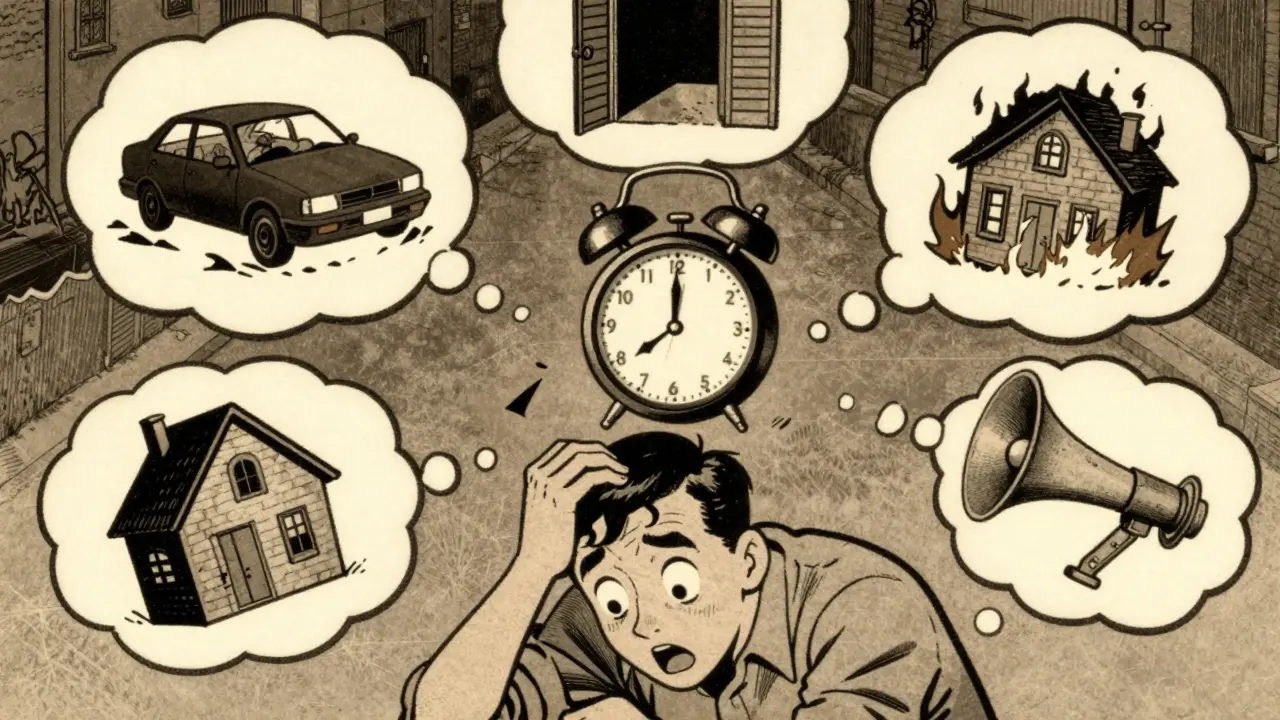
When someone survives a car crash, combat, assault, or other life-threatening event, their brain doesn’t always reset. For about 6.8% of U.S. adults, the trauma sticks. They don’t just remember it-they relive it. Flashbacks. Nightmares. Jumping at a car horn. Avoiding places, people, even thoughts that remind them of what happened. This isn’t just stress. It’s Post-Traumatic Stress Disorder, or PTSD. And it’s not something you can just ‘get over.’
What PTSD Really Feels Like
PTSD isn’t one symptom. It’s four clusters that work together like a broken alarm system. First, intrusion: memories that burst in uninvited-sudden images, sounds, or body sensations that make you feel like you’re back there. Then, avoidance: pulling away from anything that might trigger those memories-even conversations, TV shows, or crowds. Third, negative changes in thinking and mood: feeling numb, guilty, detached, or like the world is dangerous and you’re alone in it. Finally, hyperarousal: constant tension. Sleeping poorly. Being on edge. Reacting too hard to loud noises. This isn’t anxiety. It’s your nervous system stuck in fight-or-flight mode, long after the danger passed.These symptoms have to last more than a month and mess up your job, relationships, or daily life to count as PTSD. And they’re not rare. About 3.6% of U.S. adults have PTSD right now. Veterans, first responders, survivors of abuse-they’re the most visible, but PTSD shows up in all kinds of people: after a house fire, a sudden death, even witnessing violence.
The Two Main Paths: Therapy and Medication
There are two big tools for treating PTSD: trauma-focused therapy and medication. Neither fixes everything alone. But together, they can change lives.Therapy doesn’t just talk about the trauma-it rewires how your brain holds it. Two approaches have the strongest evidence: Cognitive Processing Therapy (CPT) and Prolonged Exposure (PE). CPT helps you challenge the thoughts that got stuck after the trauma-like ‘It was my fault’ or ‘The world is completely unsafe.’ PE gently guides you to face memories and situations you’ve been avoiding, so your brain learns they’re not dangerous anymore. Studies show 60-70% of people who finish these therapies reach remission. That means their symptoms drop so low they no longer meet the PTSD diagnosis. And the benefits last. Unlike pills, therapy doesn’t need to be taken forever.
But therapy takes time. You need 8-12 weekly sessions. Some people can’t wait that long. Others are too overwhelmed to even show up. That’s where medication steps in.
What Medications Actually Do for PTSD
Only two drugs are officially FDA-approved for PTSD: sertraline (Zoloft) and paroxetine (Paxil). Both are SSRIs-selective serotonin reuptake inhibitors. They don’t erase memories. They don’t make you forget. They help your brain regulate fear, mood, and stress signals. Think of them as a volume knob for your nervous system, turning down the noise so therapy can work better.How well do they work? In large studies, about 53% of people taking sertraline saw their PTSD symptoms drop by half or more. Paroxetine did slightly better at 60%. That’s better than placebo, but far from perfect. Only about 20-30% of people get complete relief from medication alone. And side effects? Real. Nausea, insomnia, weight gain, sexual problems-up to 42% of users on Reddit reported stopping SSRIs because of low libido or delayed orgasm.
Other drugs are used too-even if they’re not FDA-approved for PTSD. Venlafaxine (Effexor XR), an SNRI, works just as well as SSRIs in many studies. Mirtazapine and amitriptyline help with sleep and mood, but evidence is weaker. And then there’s prazosin, a blood pressure pill that’s become a quiet hero for trauma nightmares. Veterans using it report 50% fewer nightmares within four weeks. It’s cheap, simple, and targeted. No wonder it’s one of the most praised treatments in VA forums.
Atypical antipsychotics like risperidone and quetiapine are sometimes added for severe agitation or hallucinations, but they come with big risks-weight gain, diabetes, tremors. They’re not first-line. They’re for when everything else fails.
Therapy vs. Medication: Which Is Better?
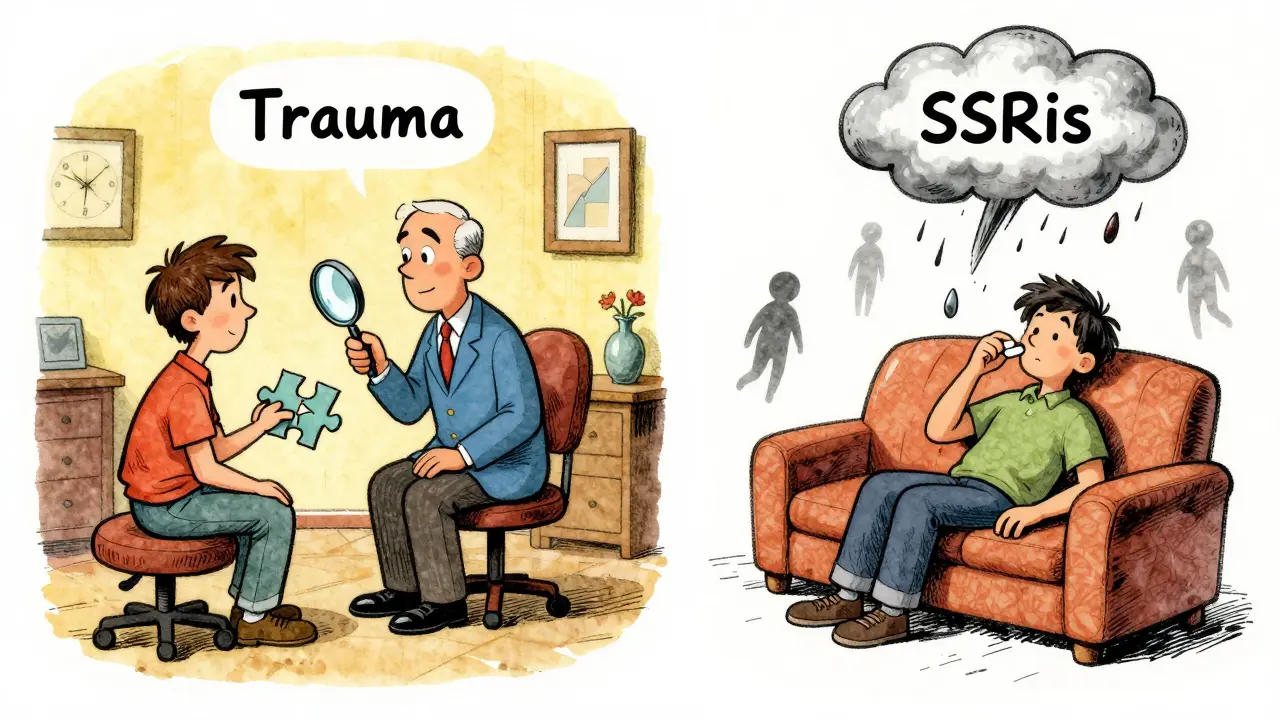
Here’s the hard truth: therapy beats medication in the long run. CPT and PE lead to higher remission rates. They change how you think. They rebuild your sense of safety. Medication just calms the storm so you can survive long enough to do the work.But timing matters. If someone is so hypervigilant they can’t sit still for therapy, or they’re having daily panic attacks, medication can be the bridge. A 2021 study found that combining sertraline with prolonged exposure led to a 72% response rate-higher than either alone. That’s powerful. Medication gets you to the door. Therapy walks you through it.
Cost is another factor. A single therapy session can cost $100-$200. Generic sertraline? $4-$10 a month. But here’s the catch: therapy ends. Medication often doesn’t. If you stop SSRIs too soon, 55% of people relapse within a year. So you might end up paying for both over time.
What Experts Argue About
There’s no single right answer. Experts disagree because PTSD isn’t one-size-fits-all.Dr. Matthew Friedman, former head of the VA’s National Center for PTSD, says: ‘Medications treat symptoms but don’t process trauma.’ He believes therapy should come first. If you numb your emotions with SSRIs, you might avoid the pain-but you also avoid healing.
But Dr. Charles Marmar sees it differently. He says for veterans with crushing hyperarousal-sleepless, shaking, terrified of their own thoughts-medication is essential. ‘You can’t do exposure therapy if you’re too overwhelmed to breathe,’ he says.
And then there’s Dr. Jonathan Shay, who warns SSRIs might blunt the emotional processing needed to heal. He’s seen patients who feel ‘empty’ on medication, disconnected from grief, anger, even joy. That’s not healing. That’s hiding.
Meanwhile, the UK’s NICE guidelines say: Only use medication if therapy isn’t possible. The U.S. VA now follows a stepped-care model-start with therapy, add meds only if needed. Private practices? They start with medication 65% of the time. Why? Shorter wait times. Easier to prescribe. Less training required.
What Works in Real Life
Real people don’t follow guidelines. They try things. Here’s what we hear:- A combat veteran on prazosin: ‘For the first time in 12 years, I slept through the night.’
- A survivor of sexual assault: ‘Three SSRIs didn’t touch my flashbacks. CPT did. But I needed six months of sertraline just to show up.’
- A 28-year-old who tried everything: ‘I’m treatment-resistant. Nothing worked. I’m still here. Still trying.’
One woman in a VA forum described her journey: ‘I tried paroxetine. Made me feel like a zombie. Stopped. Tried CPT. Felt like I was falling apart. Then we added prazosin. Nightmares dropped. I could sit through a movie. I could cry. I could talk about it. Now I’m 80% better.’
The Future Is Coming
PTSD treatment is changing fast. In 2023, the FDA accepted a new application for brexpiprazole-an antipsychotic that, when added to SSRIs, reduced symptoms by 35% more than placebo. It’s not a cure, but it’s a new tool.The biggest shift? MDMA-assisted therapy. After phase III trials showed 67% remission at 18 weeks, the FDA gave it Breakthrough Therapy status. It’s not available yet, but it’s coming. Imagine a therapy session where, under controlled conditions, MDMA reduces fear enough for someone to talk about their trauma without shutting down. It’s not magic. It’s science. And it could change everything.
Researchers are also looking at genetics. We now know 95 genetic variants affect how people respond to SSRIs. Soon, a blood test might tell you if sertraline is even worth trying for you.
What to Do If You or Someone You Love Has PTSD
If you’re starting out:- Find a trauma-informed therapist. Look for CPT or PE specialists. Ask if they’ve treated PTSD before. Don’t settle for someone who just says they do ‘talk therapy.’
- Don’t rush medication. If you’re overwhelmed, yes-talk to a doctor about SSRIs. But don’t expect them to fix everything. Use them as a tool, not a solution.
- Track your symptoms. Use a journal or app like PTSD Coach (offered by the VA). Note sleep, nightmares, triggers, mood. This helps you and your provider see patterns.
- Give it time. Therapy takes months. Medication takes 6-8 weeks to show effect. Don’t quit too soon.
- Don’t stop meds abruptly. Taper slowly with your doctor. Relapse is common, and it’s not your fault.
And if you’re a provider? Learn the guidelines. Ask about trauma history before prescribing. Know that 78% of primary care doctors feel unprepared to treat PTSD. You’re not alone. But you can get better.
It’s Not a Life Sentence
PTSD doesn’t define you. It’s an injury-not a personality. You can heal. Not because you’re ‘strong.’ But because science has tools. Therapy can rewire fear. Medication can calm the storm. New treatments are coming. And you don’t have to do it alone.Some people recover fully. Others learn to live with quiet symptoms. Either way-there’s hope. And it’s not just a word. It’s in the data. In the studies. In the veterans who sleep through the night. In the survivors who finally speak their truth.
Can PTSD be cured with medication alone?
No. Medications like sertraline and paroxetine can reduce symptoms-by about 50-60% on average-but they don’t address the root trauma. Only trauma-focused therapies like CPT and PE help the brain reprocess and integrate the memory. Medication helps you tolerate therapy, but it doesn’t replace it. Studies show remission rates of 60-70% with therapy alone, compared to 20-30% with medication alone.
Why are only two drugs FDA-approved for PTSD?
The FDA requires strong evidence from large, randomized trials to approve a drug for a specific condition. Sertraline and paroxetine met that bar in the late 1990s and early 2000s. Other drugs like venlafaxine, mirtazapine, and prazosin show good results in studies, but they weren’t tested in the exact way the FDA requires for PTSD approval. That doesn’t mean they don’t work-it just means they’re used ‘off-label.’ Many clinicians use them because the evidence is solid, even if the approval isn’t official.
Do SSRIs make PTSD worse for some people?
Yes. Some people report emotional blunting-feeling numb, detached, or unable to cry or feel joy. Others experience increased anxiety or insomnia at first. In rare cases, SSRIs can trigger hypomania or worsen trauma-related flashbacks. These side effects are more common in the first 2-4 weeks. If they persist, talk to your doctor. It doesn’t mean you’re ‘broken’-it might mean this medication isn’t right for your brain chemistry.
How long should someone stay on PTSD medication?
The National Institute of Mental Health recommends continuing SSRIs for at least 12 months after symptoms improve. Stopping too soon leads to a 55% relapse rate within a year. Some people stay on them longer, especially if they have other conditions like depression or anxiety. But if therapy has worked and symptoms are gone, many can taper off safely under medical supervision. The goal isn’t lifelong use-it’s to stabilize you long enough to heal.
Is prazosin safe for long-term use?
Yes. Prazosin is a well-studied, low-risk medication originally used for high blood pressure. For PTSD nightmares, it’s taken at night in low doses (1-15 mg). Side effects are mild: dizziness, dry mouth, or low blood pressure-especially when standing up. It’s not addictive. No major organ damage has been linked to long-term use. Veterans using it for over a decade report sustained benefits. It’s one of the safest, most targeted options we have for trauma-related sleep disruption.
Can I do therapy and take medication at the same time?
Absolutely-and it’s often the most effective approach. A 2021 JAMA Psychiatry study found that combining sertraline with prolonged exposure led to a 72% response rate, higher than either treatment alone. Medication can reduce the intensity of symptoms enough to make therapy possible. Therapy helps you process what medication alone can’t. Together, they work like a team: meds stabilize, therapy heals.
What’s the biggest mistake people make when treating PTSD?
Quitting too soon. Many stop therapy after 3-4 sessions because it’s hard. Many stop medication after 4 weeks because side effects feel worse than the trauma. But PTSD recovery isn’t linear. The hardest weeks are often the most important. Give it time. Stick with it. Healing isn’t fast-but it’s possible.
Joshua Smith
February 8, 2026 AT 01:00Really appreciate this breakdown. I’ve been on sertraline for a year now and honestly didn’t realize how much it was just helping me *survive* so I could eventually get into therapy. The part about meds being a bridge, not the destination, hit home.
Jonah Mann
February 9, 2026 AT 21:01prazosin is a godsend… seriously. I was having 3-4 nightmares a night, barely slept for 5 years. Started at 1mg, went to 3mg… now I’m sleeping 7 hours straight. No joke. My wife said I started smiling again. It’s not a cure, but it’s the first thing that gave me back my nights.
Tricia O'Sullivan
February 11, 2026 AT 19:13While I acknowledge the efficacy of pharmacological interventions, I must emphasize that trauma-informed psychotherapy remains the most empirically supported modality for long-term recovery. The neurobiological reintegration facilitated by CPT and PE cannot be replicated by pharmacological suppression of symptoms.
Marie Fontaine
February 12, 2026 AT 17:24Tatiana Barbosa
February 14, 2026 AT 04:50Real talk: if you're in hyperarousal mode, therapy feels impossible. SSRIs don't fix trauma, but they lower the volume enough that your nervous system stops screaming 24/7. That’s the window. That’s when you can start processing. Don’t shame people for needing meds first. It’s not weakness-it’s strategy.
And prazosin? That’s the unsung MVP. No one talks about it enough. Nightmares are the silent killer of recovery. This drug doesn’t just help sleep-it gives you back your mind.
Ken Cooper
February 14, 2026 AT 06:39Y’all need to stop acting like meds are the enemy. I was suicidal before I started sertraline. Didn’t feel anything-not even grief. Took 3 months. Then I started PE. I didn’t ‘get better’ until I had both. Therapy without meds? I couldn’t even sit in the office without shaking. Meds without therapy? I was numb, not healed. It’s not either/or. It’s both. And if you’re judging someone for needing help to get to therapy? That’s the real problem.
MANI V
February 15, 2026 AT 16:46People are too eager to medicate instead of facing their trauma. Why not just pray? Or exercise? Or stop being so sensitive? PTSD is a choice to remain stuck. You don’t need drugs-you need discipline. My cousin was in Vietnam, didn’t take anything, and now he runs marathons. You’re just giving in to weakness.
Susan Kwan
February 16, 2026 AT 10:29Oh wow, another post that treats PTSD like a tech manual. Let me guess-next you’ll be telling us to ‘update our emotional firmware’? I’ve been through this. The ‘stepped care model’? Sounds great on paper. In real life? Your therapist is booked for 6 months. Your PCP prescribes Zoloft because they don’t know CPT from CBT. And then you’re told you’re ‘resistant’ when you’re just… exhausted. The system’s broken. Not you.