
Photosensitivity from Medications: Sun Safety and Skin Protection Guide
 Dec, 22 2025
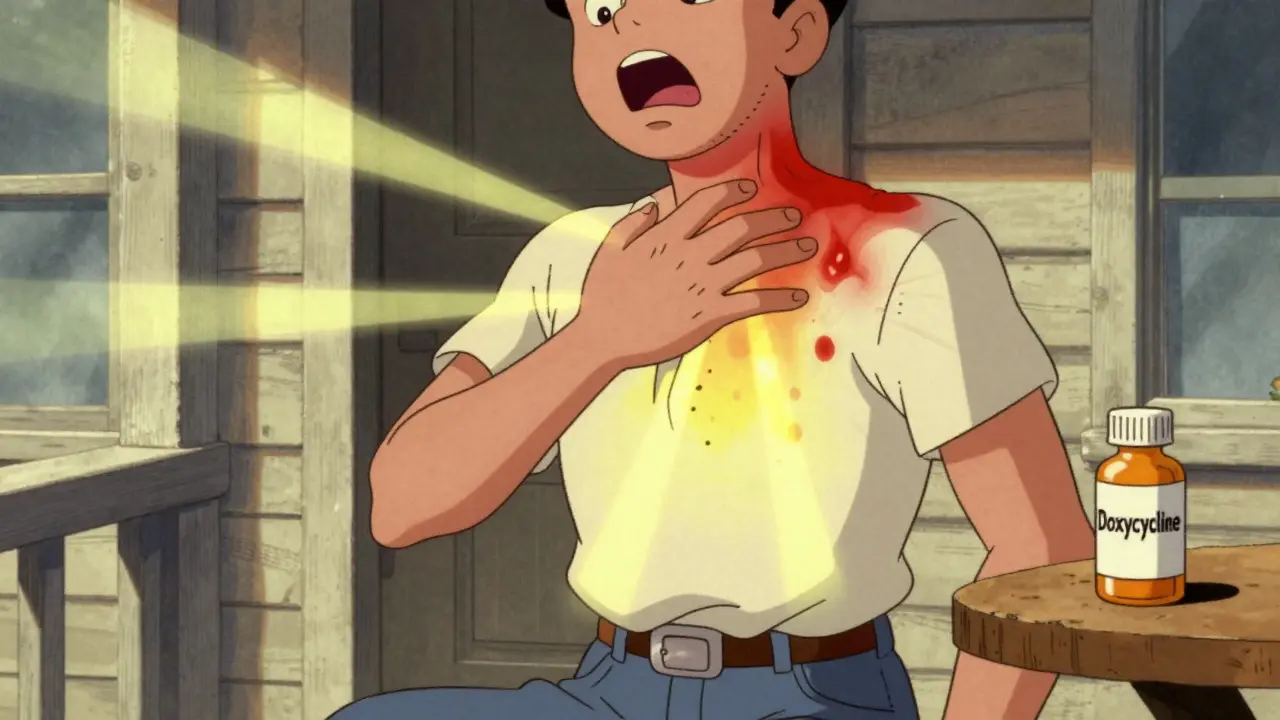
More than 1,000 common medications can make your skin dangerously sensitive to the sun - and most people have no idea. You take your antibiotic, your blood pressure pill, or your acne treatment like normal. You step outside for a walk, run errands, or sit on your porch. Then, within hours, your skin turns bright red, burns like it’s been dipped in hot oil, or breaks out in itchy blisters. It’s not a bad sunburn. It’s not bad luck. It’s photosensitivity - a side effect you weren’t warned about.
What Exactly Is Medication-Induced Photosensitivity?
Photosensitivity happens when a drug in your body reacts with ultraviolet (UV) light, especially UVA rays (320-400 nm), which penetrate deeper than UVB. This isn’t just getting a tan too fast. It’s a chemical reaction that damages your skin cells. There are two main types: phototoxic and photoallergic.Phototoxic reactions make up 95% of cases. They happen fast - within 30 minutes to two hours of sun exposure. Think of it like your skin being burned from the inside out. The drug absorbs UV energy, creates harmful free radicals, and those tear through skin tissue. You’ll see redness, swelling, blistering - exactly like a bad sunburn, but worse and often in patterns that match where your clothes were stretched tight over your skin.
Photoallergic reactions are rarer - only 5% - but sneakier. They’re an immune response. The UV light changes the drug into something your body sees as foreign. Your immune system attacks it, and 24 to 72 hours later, you get an itchy, eczema-like rash that can spread beyond sun-exposed areas. This one can stick around for weeks, even after you stop the medication.
Which Medications Cause the Most Problems?
You might be surprised. It’s not just the obvious ones. Here’s what actually causes the bulk of reactions:- Tetracyclines - Doxycycline, used for acne and infections, causes reactions in 10-20% of users. Many people start it and get burned on their neck or shoulders during a short walk.
- NSAIDs - Ketoprofen (in some gels and pills) and even ibuprofen can trigger reactions in 1-3% of users. Topical versions are especially risky because they sit right on the skin.
- Fluoroquinolones - Ciprofloxacin and levofloxacin, common antibiotics, cause phototoxic burns in 1-2% of users - but those burns can be severe.
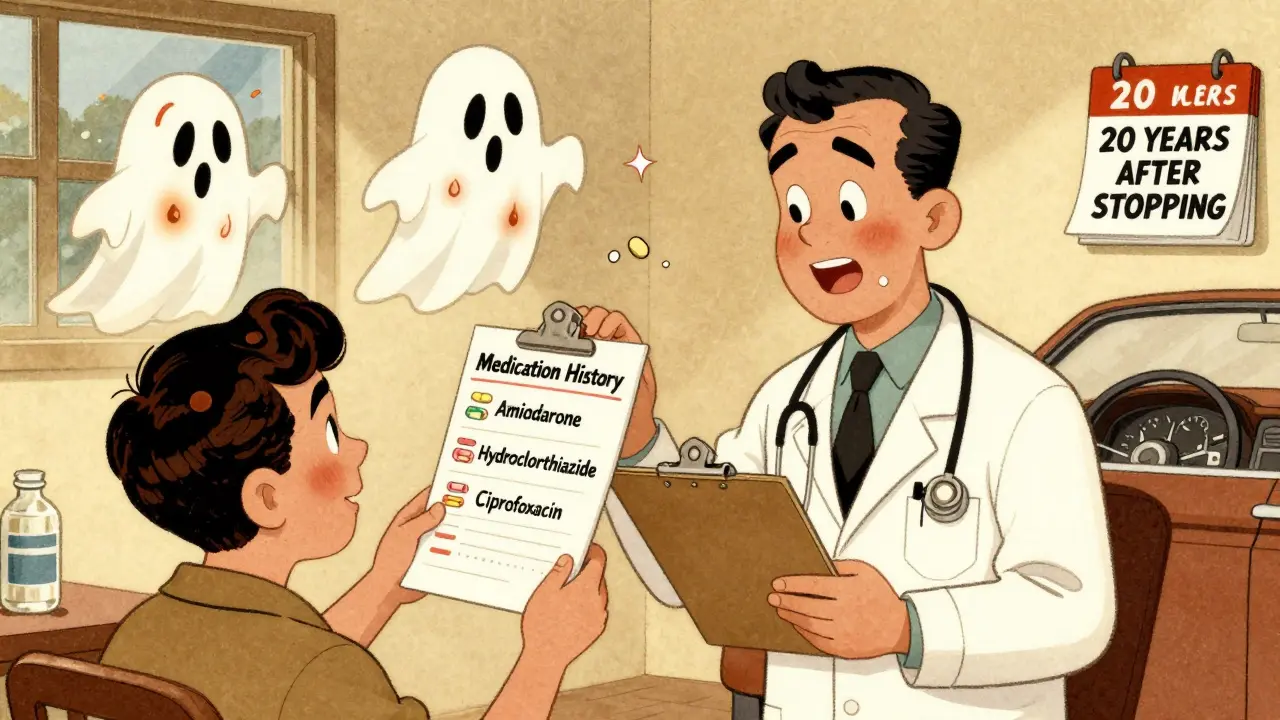
- Amiodarone - This heart medication causes photosensitivity in 25-75% of long-term users. The reaction can last up to 20 years after stopping it.
- Sulfonamides - Antibiotics like sulfamethoxazole, often used for UTIs, are common photoallergens.
- Diuretics - Hydrochlorothiazide, a top blood pressure drug, is linked to increased skin cancer risk in sun-exposed patients.
- Some antidepressants and antipsychotics - Especially phenothiazines and SSRIs like sertraline.
Antibiotics account for 40% of all cases. Cardiovascular drugs? 25%. NSAIDs? 15%. Women are twice as likely to get photoallergic reactions - likely because they use more topical medications and cosmetics that also contain photosensitizing ingredients.
Why Standard Sunscreen Often Fails
Most people think SPF 30 or 50 is enough. It’s not. Here’s why:SPF only measures UVB protection - the kind that causes sunburn. But phototoxic reactions are driven by UVA, which doesn’t burn but deeply damages DNA and triggers cell death. Many sunscreens labeled SPF 50+ still don’t block enough UVA. The FDA says only 35% of SPF 50+ products meet the UVA protection standard.
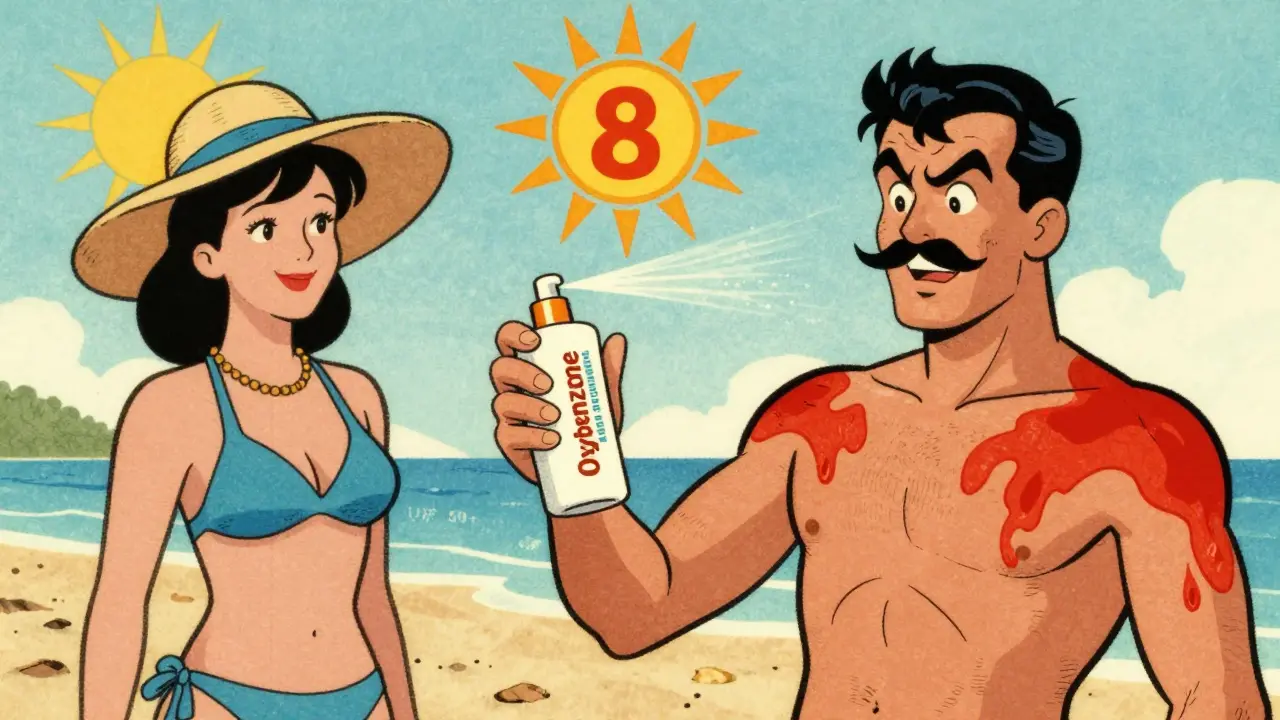
What works? Look for zinc oxide or titanium dioxide as the main active ingredients. These minerals physically block both UVA and UVB. Avoid chemical sunscreens with oxybenzone - it’s actually a common photoallergen itself.
And here’s the brutal truth: most people apply only 25-50% of the amount they need. For full-body coverage, you need about one ounce - enough to fill a shot glass. Reapply every two hours, even if you’re under an umbrella. Sweat, water, and rubbing your skin off your shirt all reduce protection.
Physical Barriers Work Better Than You Think
Sunscreen is only part of the solution. Clothing is your best defense.Regular cotton t-shirts offer UPF (Ultraviolet Protection Factor) of only 3-8. That means 20-30% of UV gets through. A white T-shirt worn wet? It drops to UPF 3 - barely better than nothing.
UPF 50+ clothing blocks 98% of UV radiation. Brands like Solbari, Coolibar, and UV Skinz make lightweight, breathable shirts, hats, and even gloves designed for people with photosensitivity. One user on MyHealthTeams reported a 90% drop in reactions after switching to UPF 50+ clothing.
Wear wide-brimmed hats, not baseball caps. UV rays bounce off sidewalks, water, and snow. Sunglasses with UV protection protect your eyelids and the delicate skin around your eyes - areas often ignored.
When to Avoid the Sun Altogether
It’s not just about avoiding midday sun. The UV index matters more than the temperature. A cool, cloudy day with a UV index of 5 is more dangerous than a hot, sunny day with a UV index of 3.Use apps like UVLens or the EPA’s SunWise app. They give real-time UV readings. If the index is 3 or higher, take full precautions. If it’s 8 or above, limit outdoor time - especially between 10 a.m. and 4 p.m.
Some medications make you sensitive even through windows. UVA penetrates glass. If you sit by a sunny window at home or in your car, you’re still exposed. That’s why people on amiodarone or tetracyclines sometimes get burns on their face while driving.
Why So Many People Are Misdiagnosed
Doctors miss this. A 2021 study found up to 70% of photosensitivity cases are wrongly labeled as “polymorphic light eruption” or “idiopathic sun sensitivity.”Why? Because most providers don’t ask about medications when someone comes in with a rash. They don’t check if the patient is on hydrochlorothiazide or doxycycline. They treat the rash like an allergy or eczema - and the patient keeps getting burned.
Photopatch testing can confirm photoallergy, but it’s only done in specialized dermatology clinics - and even then, it only catches 30-40% of cases. The real diagnostic tool? A detailed medication history. Write down everything you take - prescription, over-the-counter, supplements, topical creams. Bring it to your next appointment.
What You Can Do Right Now
If you’re on any of the high-risk medications listed above, here’s your action plan:- Check your meds. Look up your medications on the FDA’s Sun Safety Medication Database. It’s free, updated quarterly, and lists photosensitivity risks.
- Ask your doctor or pharmacist. Say: “Is this medication known to cause sun sensitivity? What should I do?”
- Buy zinc oxide sunscreen. Look for at least 15% zinc oxide. Apply 1 ounce every two hours.
- Invest in UPF 50+ clothing. Start with a hat and long-sleeve shirt. They’re worth it.
- Monitor the UV index daily. Make it part of your morning routine - like checking the weather.
- Don’t wait for a reaction. Start protection the day you begin the medication. Don’t assume you’ll be fine.
The Bigger Picture: Why This Matters Beyond Sunburns
This isn’t just about discomfort. Photosensitivity increases your risk of skin cancer. The Skin Cancer Foundation reports that people on long-term photosensitizing drugs have up to a 60% higher risk of developing non-melanoma skin cancers - like basal cell and squamous cell carcinoma.And it’s getting worse. As the population ages, more people are on multiple medications. Prescription use among adults over 65 has tripled since 1999. Climate change is raising UV levels by 0.5-1% each year. Without better awareness, experts predict 5 million more Americans will develop medication-related photosensitivity by 2030.
Some progress is being made. Kaiser Permanente added automated alerts in their electronic health records - and cut phototoxic reactions by 28% in a year. The FDA now requires warnings on over 200 high-risk drugs. But most primary care doctors still don’t screen for this.
You’re your own best protector. If you’re taking any medication and your skin burns easily, don’t brush it off. It’s not normal. It’s not just bad luck. It’s a known, preventable side effect - and you have the power to stop it.
Can I still go outside if I’m on a photosensitizing medication?
Yes - but you need to be smart. Avoid direct sun during peak UV hours (10 a.m. to 4 p.m.). Wear UPF 50+ clothing, a wide-brimmed hat, and UV-blocking sunglasses. Apply zinc oxide sunscreen every two hours. Check the UV index daily. You don’t have to stay indoors - but you must protect yourself like you’re in a high-risk zone.
Does sunscreen with chemical filters like oxybenzone make photosensitivity worse?
Yes. Oxybenzone is a common photoallergen. It can trigger rashes in people who are already sensitive. Even if you’re not allergic, chemical sunscreens often don’t block enough UVA. Stick with mineral sunscreens containing zinc oxide or titanium dioxide. They’re safer, more effective, and less likely to cause reactions.
How long does photosensitivity last after stopping the medication?
It varies. For most drugs, sensitivity fades within days to weeks after stopping. But for amiodarone, it can last up to 20 years. Hydrochlorothiazide and some tetracyclines can linger for months. Don’t assume you’re safe just because you stopped the pill. Keep protecting your skin for at least 3 months - and longer if you were on a high-risk drug.
Can I use tanning beds if I’m photosensitive?
Absolutely not. Tanning beds emit concentrated UVA radiation - the exact type that triggers phototoxic reactions. Using one while on a photosensitizing medication can cause severe burns, blistering, and long-term skin damage. It also increases your risk of skin cancer. Avoid all artificial UV sources.
Are natural remedies or supplements helpful for photosensitivity?
No. There’s no evidence that antioxidants like vitamin C, beta-carotene, or green tea extract prevent phototoxic reactions. While they may help with general skin health, they don’t block UV damage from medications. Relying on them instead of proven protection (sunscreen, clothing, shade) puts you at serious risk.
What should I do if I get a severe reaction?
Get out of the sun immediately. Cool the area with damp cloths - no ice. Avoid popping blisters. Use a fragrance-free moisturizer or hydrocortisone cream (1%) for itching. Call your doctor. If you have fever, chills, swelling, or pain, go to urgent care. Severe phototoxic reactions can lead to infection or scarring. Don’t wait.
Gray Dedoiko
December 22, 2025 AT 15:59I had no idea my doxycycline could do this. I got burned last summer on a walk and thought I just forgot sunscreen. Turns out I was taking it for acne and didn't connect the dots. Now I wear a hat and UPF shirt even for quick errands. Game changer.
Thanks for laying this out so clearly.
Aurora Daisy
December 23, 2025 AT 01:17Of course the NHS doesn't warn you about this. They'd rather you suffer quietly while they save a few quid on sunscreen. Americans get their heads handed to them by Big Pharma and still think it's normal. We Brits at least know how to suffer with dignity.
siddharth tiwari
December 23, 2025 AT 18:04they dont tell u this because the pharma co. owns the fda and the sun is a weapon. u think its coincidence that amiodarone causes burns but the same companies sell the sunscreen? its all connected. they want u sick so u keep buying meds and lotion. the government knows. they just dont care. check the code on ur pills. its not random.
u think ur safe with zinc oxide? think again. they put nano particles in it to make u absorb more radiation. its all a trap.
suhani mathur
December 24, 2025 AT 00:40Wow, someone actually did their homework. Finally. Most people think sunscreen is magic and forget that their blood pressure pill is basically a UV magnet.
Pro tip: if your pharmacist gives you a blank stare when you ask about photosensitivity, find a new pharmacist. Seriously. It's not hard to look up a drug's side effects. It's 2024, not 1999.
Diana Alime
December 25, 2025 AT 06:22so like... i take sertraline and hydrochlorothiazide and i got a rash on my neck last week and thought it was my new shirt??
wait. wait. wait. so i've been slowly cooking myself in the sun for 3 years??
oh my god. i need to go buy a hat. and maybe a tinfoil one for good measure.
Adarsh Dubey
December 26, 2025 AT 15:02This is one of the most thorough and well-researched posts I've seen on this topic. The breakdown between phototoxic and photoallergic reactions is especially helpful. I've seen patients with chronic rashes who were misdiagnosed for years. The key is awareness - both from patients and providers.
Also, the point about UVA penetrating glass is critical. I always tell people to check their car windows and home office setups. Many don't realize they're getting daily exposure without even stepping outside.
Bartholomew Henry Allen
December 27, 2025 AT 06:44Excessive reliance on sunscreen is a cultural failure. The human body evolved to tolerate sunlight. Modern medicine has created a population of fragile individuals who panic at UV exposure. Wear clothing. Seek shade. Stop treating your skin like a lab experiment. The pharmaceutical industry profits from fear not protection.
Stop buying into the sunscreen industrial complex.
bharath vinay
December 27, 2025 AT 20:48They say amiodarone lasts 20 years but what they dont say is that the sun is controlled by the military to target people on meds. The UVA waves are tuned to specific drug molecules. That's why only certain people burn. The rest are immune. They are testing population response. The FDA knows. The WHO knows. But they wont tell you because they are part of the program.
Check your medication batch numbers. Look for the 7-digit code. It matches your sunburn pattern. I did the math.
Chris Buchanan
December 28, 2025 AT 05:01Okay, let’s get real - if you’re on any of these meds and you’re still not wearing UPF 50+ clothing, you’re basically playing Russian roulette with your skin.
But here’s the good news: you can still live your life. Just upgrade your gear. A good hat and long sleeves cost less than one ER visit for a second-degree burn. And yeah, zinc oxide is the real MVP - no chemical nonsense, no surprises.
Start today. Your future self will high-five you.
Wilton Holliday
December 28, 2025 AT 09:16Just wanted to say - this post saved my skin. I was on doxycycline for acne and thought I was just "fair-skinned." Got a blistering rash on my shoulders after a 10-minute walk. Thought I was cursed.
Found out it was the med. Switched to zinc oxide sunscreen and UPF shirts. No more burns. No more panic.
You’re not broken. You’re just underinformed. Go get protected. You got this 💪☀️
Raja P
December 29, 2025 AT 07:42Appreciate the detailed breakdown. I’m on hydrochlorothiazide and had no idea it was linked to higher skin cancer risk. I always thought sunburns were just annoying - not a long-term threat.
Going to check my meds on the FDA database tonight. Also, UPF clothing sounds expensive but honestly, if it prevents even one biopsy, it’s worth it. Thanks for the practical advice - not just fear.