
Pharmaceutical Equivalence for Generics: What It Really Means When You Pick a Generic Drug
 Jan, 11 2026
When you pick up a prescription and see a generic version on the shelf, you might wonder: pharmaceutical equivalence sounds like a fancy term, but what does it actually mean for you? Is your generic pill really the same as the brand-name one? The answer isn’t just yes or no-it’s more precise than you think.
What pharmaceutical equivalence actually means
Pharmaceutical equivalence means two things: the generic drug and the brand-name drug have the exact same active ingredient, in the exact same amount, in the exact same form. That means if you’re taking a 50mg tablet of metformin, whether it’s branded or generic, the active chemical inside-metformin hydrochloride-is identical. Same dose. Same shape. Same way it’s meant to be taken: swallowed, injected, or applied topically. The U.S. Food and Drug Administration (FDA) requires this. It’s not a suggestion. It’s the first rule in the book for any generic drug to even be considered for approval. The FDA’s Orange Book, updated in April 2024, lays this out clearly: no exceptions. If the active ingredient isn’t the same, it doesn’t get approved. Period. But here’s what most people don’t realize: the rest of the pill can be different. The color? Can change. The shape? Can be different. The filler materials-like starch, lactose, or dye? Those can vary. These are called excipients. They don’t treat your condition. They just help the pill hold together, dissolve at the right time, or look different so it’s not a copy of the brand. That’s pharmaceutical equivalence in practice: same active ingredient, same strength, same form. Everything else? Up to the manufacturer.Why pharmaceutical equivalence isn’t enough on its own
You might think, if the active ingredient is identical, then the drug must work the same. But that’s not always true. Pharmaceutical equivalence is just step one. Step two is bioequivalence. That’s where the FDA checks if your body absorbs the drug the same way. For example, two 50mg tablets might have the same metformin, but if one dissolves too slowly in your stomach, your blood won’t get enough of it. Or if it dissolves too fast, you might get too much at once. The FDA requires generics to show bioequivalence by proving their drug delivers the active ingredient into your bloodstream at the same rate and amount as the brand. They measure this using two numbers: AUC (how much drug gets into your system over time) and Cmax (how high the peak concentration gets). The acceptable range? Between 80% and 125% of the brand’s numbers. That’s not a mistake. It’s intentional. Your body naturally varies from day to day-what you ate, how hydrated you are, your metabolism. The FDA allows for that normal variation. But here’s the catch: if you’re taking a drug with a narrow therapeutic index-like warfarin, lithium, or levothyroxine-those small differences matter more. A 10% drop in absorption might mean your blood doesn’t thin enough. A 10% rise could cause bleeding. That’s why these drugs get extra scrutiny, even if they’re labeled as pharmaceutical equivalents.Therapeutic equivalence: the real test
The FDA doesn’t stop at bioequivalence. They go one step further: therapeutic equivalence. This means the generic drug doesn’t just enter your blood the same way-it works the same way in your body. Same results. Same side effects. The Orange Book rates drugs with codes like AB, BX, or BZ. An AB rating means the generic is therapeutically equivalent to the brand. You can swap it with confidence. A BX rating means there’s a known issue-maybe the drug’s delivery system (like a patch or inhaler) makes bioequivalence hard to prove. Those aren’t recommended for automatic substitution. As of June 2024, over 12,800 generic drugs in the U.S. had an AB rating. That’s 83% of all approved generics. But nearly 2,500 didn’t. That’s not a small number. It’s a reminder: not all generics are created equal, even if they look the same.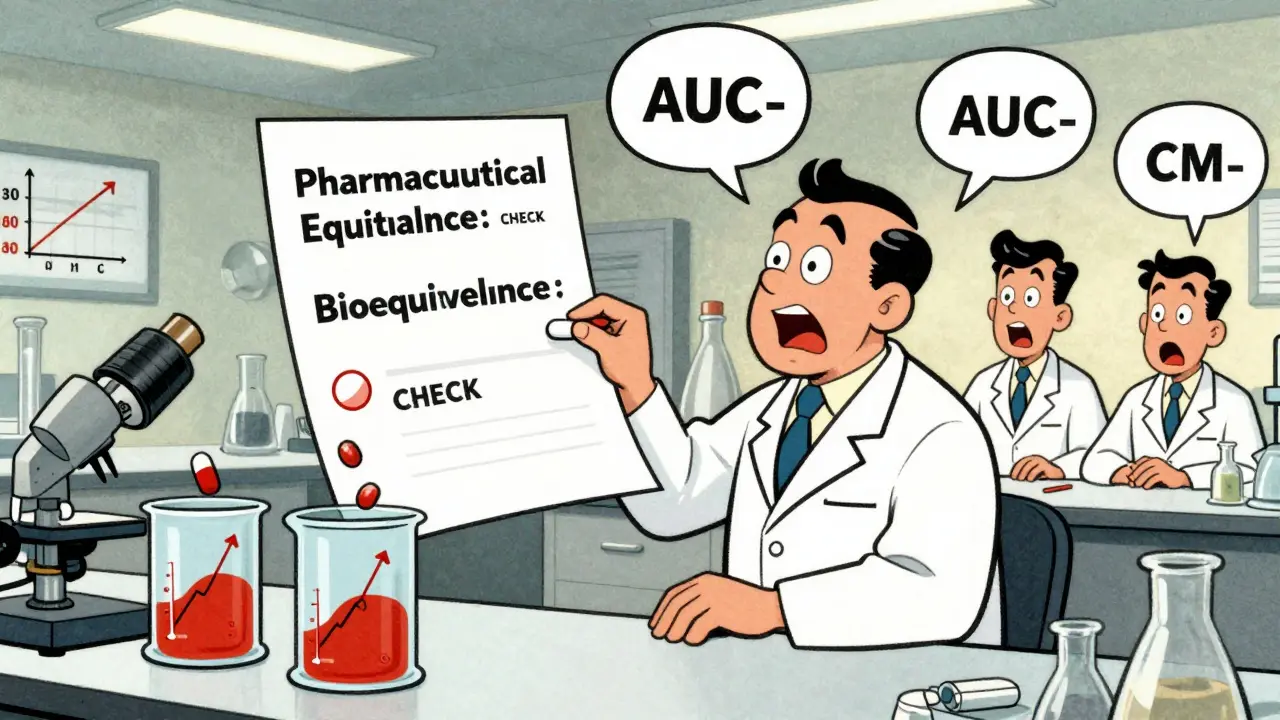
What this means for you as a patient
You might be told your prescription is being switched to a generic. That’s normal. In fact, 90% of prescriptions in the U.S. are filled with generics. They save the healthcare system over $1,000 per prescription on average. But here’s what you should know:- If you’ve never had side effects from the brand, switching to a generic with an AB rating is almost always safe.
- If you’ve had a bad reaction to a generic before-rash, nausea, dizziness-ask your pharmacist. It might be an excipient you’re sensitive to, like lactose or dye.
- If you’re on a narrow therapeutic index drug, don’t assume all AB-rated generics are interchangeable. Some manufacturers use different release technologies. Talk to your doctor before switching.
- Don’t confuse the 80-125% bioequivalence range with “80% of the active ingredient.” That’s a myth. The generic has the same amount of active ingredient. The range applies to how your body absorbs it.
What pharmacists and doctors need to know
Pharmacists are trained to check the Orange Book rating before substituting. In 68% of U.S. hospitals, a pharmacist must verify the AB rating before swapping a brand for a generic. That’s not bureaucracy-it’s safety. Doctors, too, need to understand the difference between pharmaceutical and therapeutic equivalence. A 2021 statement from the American College of Clinical Pharmacy says: “While pharmaceutical equivalence is scientifically sound, vigilance is needed with narrow therapeutic index drugs.” For example, glatiramer acetate-a drug for multiple sclerosis-has multiple AB-rated generics. But some patients report different side effects when switching between them. Why? The manufacturing process affects how the molecules clump together. That’s not captured in standard bioequivalence tests. The FDA is now studying this with new tools like Raman spectroscopy and X-ray diffraction, which can detect subtle differences in crystal structure.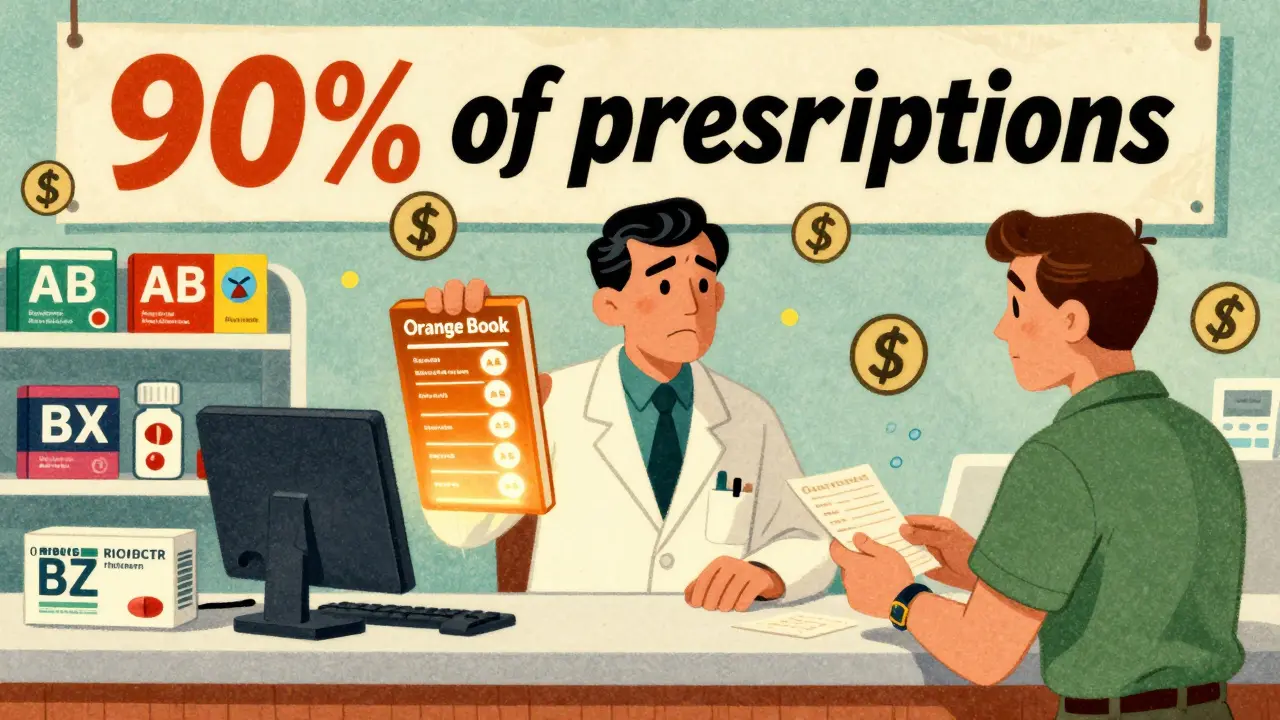
Jennifer Phelps
January 12, 2026 AT 13:32I always assumed generics were just cheap copies until I read this. Turns out the science behind them is way more rigorous than I thought. The FDA’s 80-125% absorption range makes sense when you think about how our bodies vary day to day. Still, it’s wild that something so critical is allowed to vary at all.
Also, I had no idea excipients could cause reactions. I’m lactose intolerant and never thought to ask if my pill had it. That’s a gap in patient education.
beth cordell
January 12, 2026 AT 21:14OMG this is so important 😭 I just switched to generic levothyroxine and felt like a zombie for two weeks. My doctor said ‘it’s the same!’ but clearly it’s not the same to my body. Thank you for explaining therapeutic vs pharmaceutical equivalence. I’m going to check the Orange Book now 🙏
Lauren Warner
January 13, 2026 AT 19:00Let’s be real. The FDA is a joke. They approve generics based on flawed bioequivalence models and then pretend everyone’s fine. I’ve seen people crash on generic warfarin because the dissolution profile was off by 12%. That’s within the ‘acceptable’ range? That’s not science-that’s corporate compromise wrapped in regulatory lipstick.
And don’t get me started on how they ignore excipient allergies. People die because some pill maker uses corn starch and no one tells them. This isn’t healthcare. It’s cost-cutting with a badge.
Craig Wright
January 14, 2026 AT 20:57While I appreciate the technical detail presented, I must point out that the American regulatory framework is uniquely permissive compared to European standards. In the UK and Germany, bioequivalence thresholds are far tighter, and excipient disclosures are mandated on the primary packaging. The notion that 80-125% is acceptable reflects a troubling prioritization of cost over clinical precision. This is not merely a scientific issue-it is a systemic failure of oversight.
Daniel Pate
January 15, 2026 AT 01:15It’s fascinating how we’ve reduced medicine to a math problem-same molecule, same absorption window, therefore same outcome. But the body isn’t a test tube. It’s a living, breathing system shaped by diet, stress, microbiome, even circadian rhythm. The FDA’s 80-125% range assumes uniformity where none exists.
What if the real issue isn’t the drug, but our expectation that biology should behave like a machine? Maybe we need to stop thinking of generics as ‘equivalent’ and start thinking of them as ‘context-dependent alternatives.’
And honestly, if a drug has a narrow therapeutic index, why are we even allowing automatic substitution? That’s not innovation. That’s negligence dressed up as efficiency.
Jose Mecanico
January 15, 2026 AT 10:42Good breakdown. I work in a pharmacy and we check the Orange Book every time. Most patients don’t realize that AB doesn’t mean ‘identical’-it just means ‘clinically interchangeable under normal conditions.’
Also, the new Raman spectroscopy stuff is cool. We’re finally getting tools to see what’s actually in the pill, not just what’s supposed to be there.
Alex Fortwengler
January 16, 2026 AT 14:54They’re lying to you. The FDA doesn’t test generics. They rely on the manufacturer’s data. And those companies? They use the cheapest filler they can find and then pray it doesn’t kill anyone. I’ve seen the reports. Some generics have 20% less active ingredient than claimed. They just use different batch numbers to hide it.
And don’t even get me started on the lobbyists. Big Pharma owns this whole system. Generics aren’t cheaper-they’re dangerous. You think your insulin is safe? Think again.
jordan shiyangeni
January 18, 2026 AT 08:05It is both appalling and profoundly irresponsible that the American public continues to be misled by the notion that pharmaceutical equivalence equates to therapeutic equivalence. The language itself is deliberately obfuscating: ‘same active ingredient’ sounds reassuring, but it ignores the entirety of pharmacokinetics, pharmacodynamics, and individual metabolic variance. One cannot reduce human physiology to a chemical formula and expect consistent outcomes. The FDA’s allowance of a 25% variance in bioavailability is not a scientific accommodation-it is a moral abdication. Patients are being treated as statistical noise rather than sentient beings with unique biological signatures. Furthermore, the lack of mandatory excipient labeling constitutes a violation of informed consent. If a pill contains gluten, soy, or lactose, the patient has a right to know-not because they are ‘special,’ but because they are human. This is not a matter of cost-it is a matter of dignity. And dignity, unlike profit margins, cannot be outsourced to a contract manufacturer in India.
Cecelia Alta
January 19, 2026 AT 12:14Okay but like… why do we even have to think about this? Why isn’t it just simple? I took a generic for my anxiety and felt like I was underwater for a week. My doctor said ‘it’s the same!’ and I was like ‘but I’m not the same person I was last month.’
Then I switched back to the brand and felt human again. Now I’m stuck paying $400 a month because the insurance won’t cover it unless I ‘try the generic first.’ Like, what kind of torture is this? I’m not a lab rat. I’m a person who just wants to not feel like she’s drowning in her own skin.
And don’t even get me started on the color changes. I had a blue pill for months and then it turned white. I thought I was going crazy. Turns out it was the same drug. But my brain? It didn’t believe it. Because my body knew something was off. And now I’m terrified to take anything that doesn’t come in the original packaging.
Someone needs to fix this. Like, yesterday.