
Patent Law and Generics: How Patents Protect Innovation in Pharmaceuticals
 Feb, 3 2026
How Patents Keep New Drugs Coming
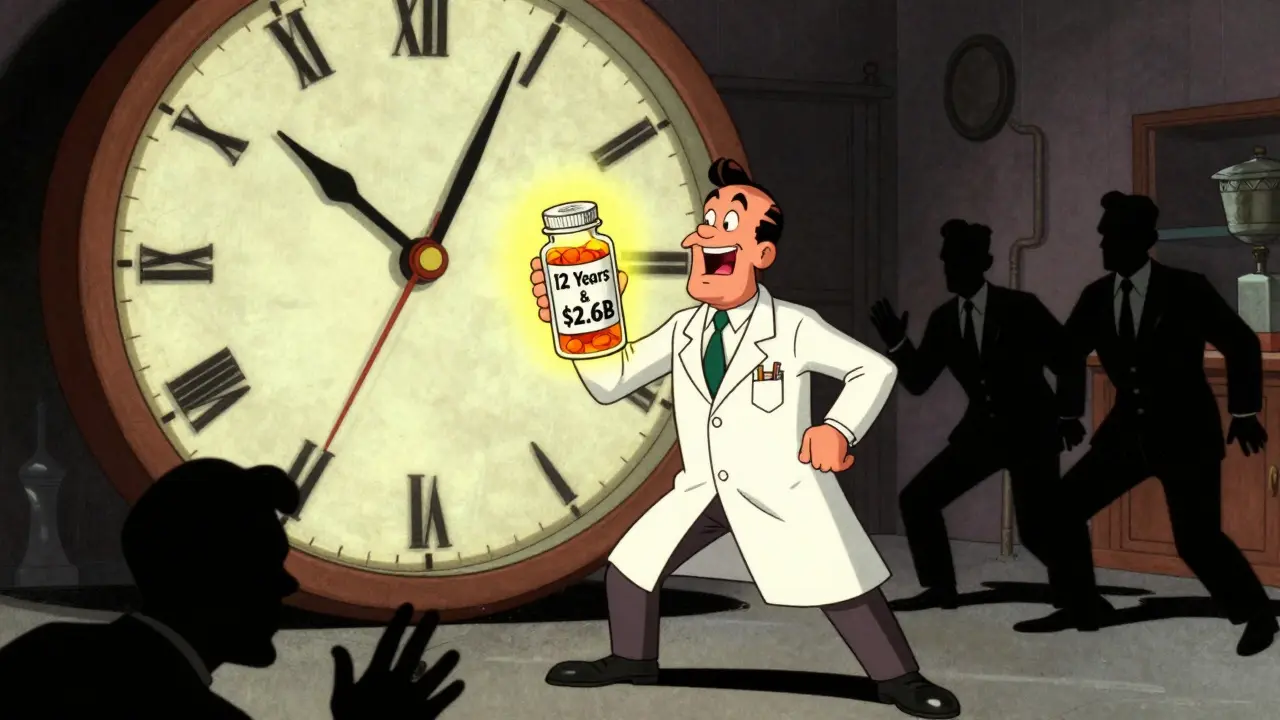
Imagine a company spends 12 years and $2.6 billion developing a new cancer drug. They test it on thousands of patients, file dozens of regulatory applications, and finally get approval. Just as they start to recoup their investment, another company copies the exact formula and sells it for 80% less. Without patents, that’s exactly what would happen. Patent law exists to prevent that scenario - not to block access, but to make innovation possible.
The 20-Year Clock Starts at Filing, Not Approval
Pharmaceutical patents last 20 years from the day they’re filed. But here’s the catch: drug development takes 10 to 15 years before the FDA even approves it. That means by the time a drug hits the market, only 5 to 8 years of patent protection remain. Without a fix, companies would never recover their costs. That’s why the Hatch-Waxman Act of 1984 was created. It gives innovators back some of that lost time. If a drug spends five years in FDA review, the patent term can be extended by up to five years - but never more than 14 years of market exclusivity after approval. This isn’t a loophole. It’s a calculated trade-off: you get a fair shot at profit, and in return, you agree to let generics in when your time is up.
How Generics Get Into the Market - Legally
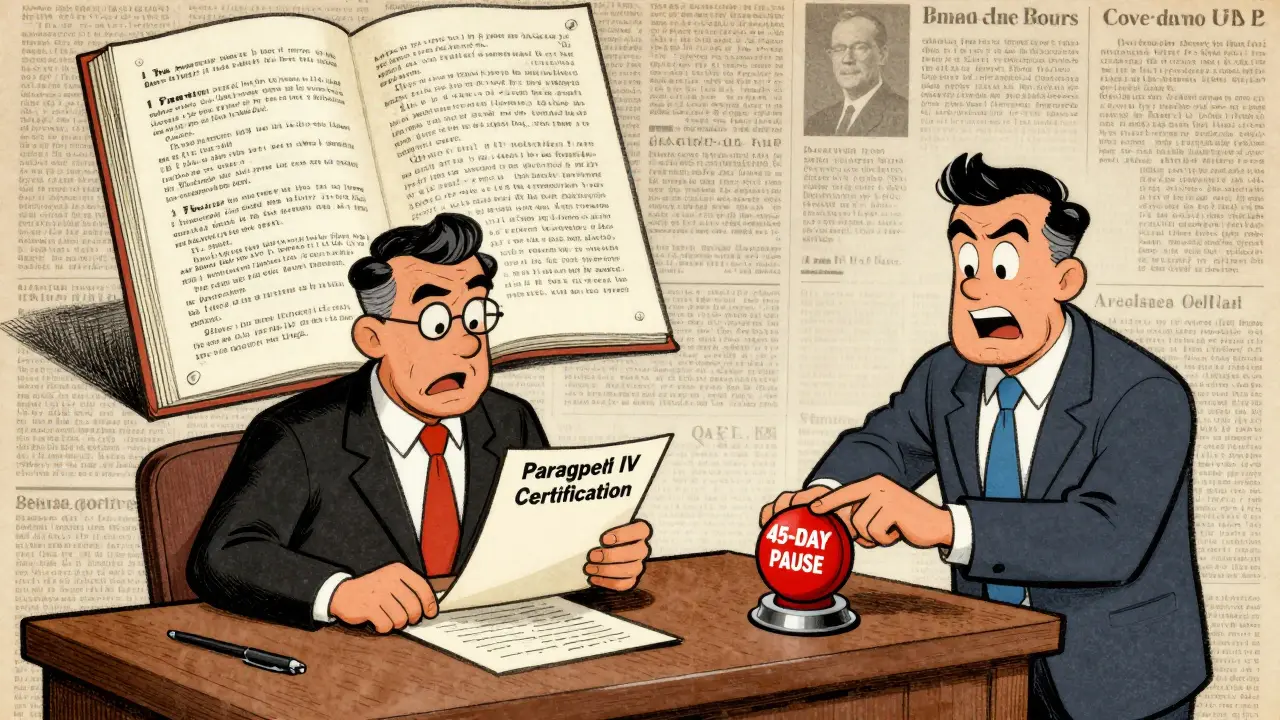
Generic manufacturers don’t wait for patents to expire. They start working on copies while the brand drug is still under protection. But they can’t sell them until the patent runs out - unless they challenge it. That’s where the Paragraph IV certification comes in. When a generic company files an application with the FDA, they must declare whether they believe the brand’s patents are invalid or won’t be infringed. If they say yes, the brand gets 45 days to sue. If they do, the FDA can’t approve the generic for up to 30 months - even if the patent is weak. This gives innovators a powerful tool: they can delay competition without proving their patent is strong. It’s a legal pause button.
The 180-Day Prize That Changes Everything
The first generic company to successfully challenge a patent gets a special reward: 180 days of exclusive market access. During that time, no other generic can enter. Why does this matter? Because in the U.S., pharmacists are required by law to substitute generic drugs when they’re available. That means if you’re the first to challenge, you get nearly all the sales during those six months. This incentive has driven hundreds of patent challenges. Companies like Teva and Mylan have built billion-dollar businesses on this system. The risk? A failed lawsuit could cost tens of millions. The reward? A single successful challenge can generate over $1 billion in revenue.
The Orange Book: The Hidden Map of Drug Patents
Every approved drug in the U.S. is listed in the FDA’s Orange Book. It’s not just a directory - it’s a battlefield map. Brand companies list every patent they think protects their drug: the active ingredient, the pill shape, the way it’s made, even how it dissolves in your stomach. Some drugs have dozens. Humira, for example, had 241 patents listed before its first biosimilar entered the market in 2023. Critics call this “patent thicketing” - burying competitors under a mountain of weak or overlapping patents. But from the brand’s view, it’s just smart defense. The Orange Book lets generics know exactly what they’re up against before they spend millions on development.
When Patents Expire, Prices Crash
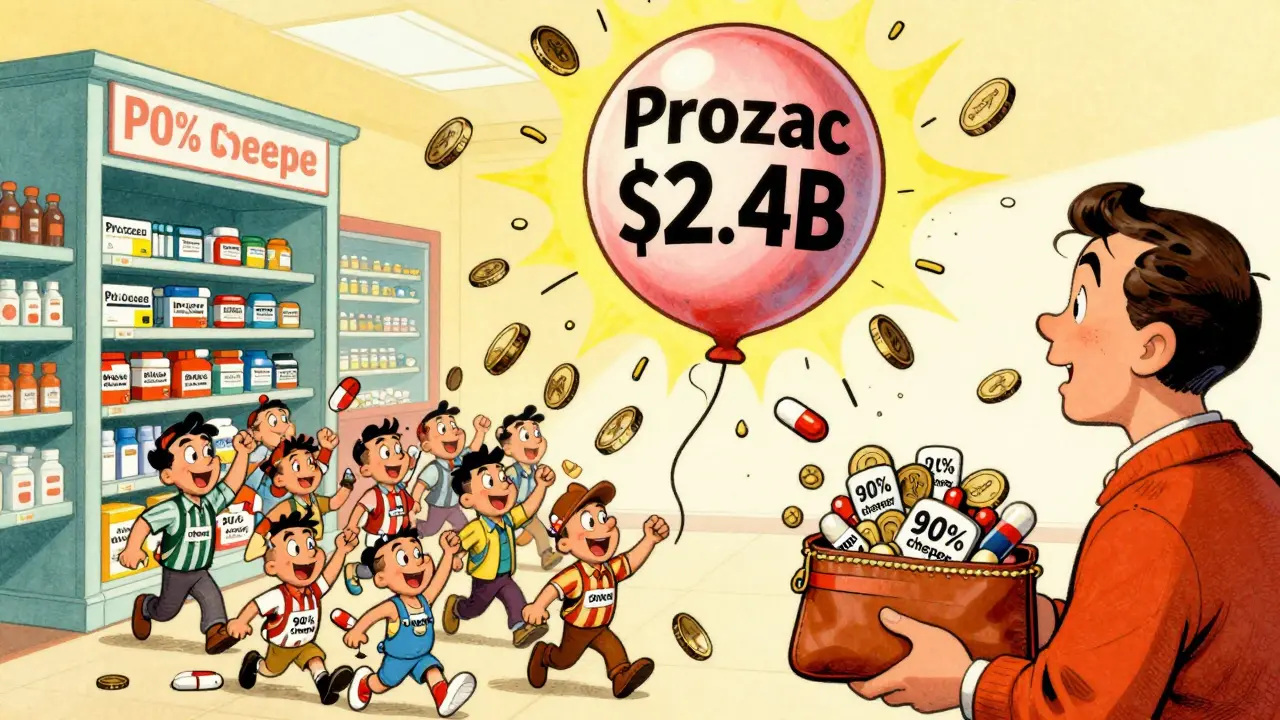
Once a patent expires and generics flood in, prices don’t just drop - they collapse. Within six months of generic entry, the branded drug typically loses 70% of its sales. By the time five generics are on the market, the price can fall by 90%. Eli Lilly’s Prozac saw $2.4 billion in annual U.S. sales vanish after its patent expired in 2001. The same thing happened with Lipitor, Plavix, and dozens more. But here’s the flip side: those same generics now make up 91% of all prescriptions in the U.S. - and cost only 24% of what branded drugs do. In 2022, generics saved Americans $373 billion. That’s not charity. That’s competition.
The Dark Side: Evergreening and Pay-for-Delay
Not all patent strategies are about innovation. Some are about delay. “Evergreening” means filing new patents on minor changes - a new dosage form, a slightly different coating, a new schedule for taking the pill - just before the original patent expires. These aren’t breakthroughs. They’re legal tweaks designed to reset the clock. The European Commission calls this an abuse of dominance. In the U.S., the FTC has fought against “pay-for-delay” deals, where brand companies pay generics to stay off the market. In one case, a brand paid a generic $100 million to delay entry for two years. The FTC estimates these deals cost consumers $3.5 billion a year. The CREATES Act of 2022 cracked down on one tactic: brands refusing to sell samples to generics so they can’t test their product. But pay-for-delay remains legal in many cases, and lawsuits keep dragging on.
Biologics Are the New Frontier
Biologic drugs - like Humira or Enbrel - are made from living cells, not chemicals. They’re harder to copy. The law created a separate path for biosimilars, but it’s messy. In 2017, a court decision in Amgen v. Sandoz threw out key parts of the “patent dance” - the agreed-upon process for exchanging patent information between brand and biosimilar makers. Now, companies can skip steps, delay disclosure, and drag out litigation. It’s created chaos. Biosimilars are still rare in the U.S., even though they’ve been common in Europe for years. The system isn’t broken - it’s just not working as intended.
Who Wins? Who Loses?
Brand companies argue they need strong patents to justify investing $83 billion a year in research. Without them, they say, no one would risk developing new cancer drugs, Alzheimer’s treatments, or rare disease therapies. They’re right - innovation doesn’t happen without profit. But generics counter that 97% of new generic applications still use the Paragraph IV route, proving the system still works. And the numbers speak for themselves: without generics, U.S. drug spending would be over $1 trillion instead of $621 billion in 2022. Patients win when prices drop. Taxpayers win. Insurers win. The real question isn’t whether patents protect innovation - it’s whether the system is being stretched too thin to protect profits instead.
The Future: More Litigation, More Pressure
Patent litigation in pharma is now a multi-billion-dollar industry. The average time from patent expiration to generic entry has jumped from 2.1 years in 2005 to 3.6 years in 2020. Courts are backlogged. The Patent Trial and Appeal Board is under legal attack. Congress keeps proposing new bills to curb delays - like the Preserve Access to Affordable Generics Act. But the core of Hatch-Waxman still stands. It’s not perfect. It’s not fair. But it’s the only system we have that lets new drugs get made - and then lets them become cheap.
Nancy Maneely
February 4, 2026 AT 17:24Brendan Ferguson
February 5, 2026 AT 07:32Phoebe Norman
February 5, 2026 AT 23:34jan civil
February 6, 2026 AT 15:55divya shetty
February 8, 2026 AT 09:24Johanna Pan
February 9, 2026 AT 09:53Jenna Elliott
February 11, 2026 AT 00:26Albert Lua
February 12, 2026 AT 15:17Elliot Alejo
February 13, 2026 AT 16:39