
Liver-Healthy Diet: Proven Nutrition Strategies for Fatty Liver and Hepatic Disease
 Jan, 10 2026
When your liver is struggling, food isn’t just fuel-it’s medicine. Many people think liver damage is only caused by alcohol, but today, non-alcoholic fatty liver disease (NAFLD) affects nearly 1 in 3 adults globally. The good news? You don’t need pills or surgery to turn things around. What you eat every day can shrink liver fat, lower inflammation, and even reverse early-stage damage. This isn’t a fad. It’s science-backed, real-world nutrition that works.
What a Liver-Healthy Diet Actually Looks Like
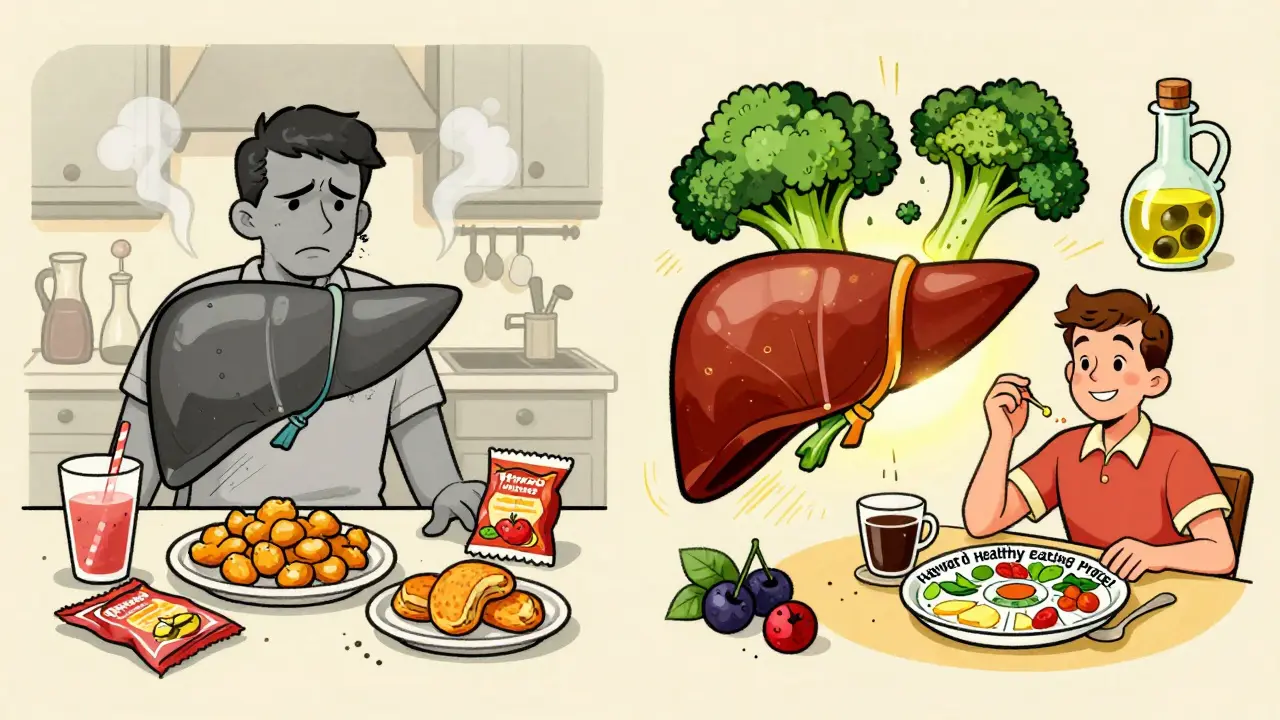
There’s no single “liver diet” you need to buy or follow blindly. Instead, the best approach is a simple, proven eating pattern: the Mediterranean diet. It’s not about cutting out entire food groups. It’s about shifting what’s on your plate. Think olive oil instead of butter, whole grains instead of white bread, and vegetables at every meal. Research from the American Association for the Study of Liver Diseases (AASLD) shows that people who follow this pattern reduce liver fat by 25-40% in just 6 to 12 months-even without losing weight. Liver enzymes like ALT, which spike when the liver is stressed, drop by 20-30%. That’s the same improvement you’d see with some medications, but without side effects. The structure is easy to remember, thanks to the Harvard Healthy Eating Plate. Half your plate should be colorful vegetables and fruits-aim for at least 3 servings of veggies and 2 of fruit daily. One-quarter should be lean protein like chicken, fish, beans, or tofu. The last quarter? Whole grains like brown rice, quinoa, or oats. Skip the refined carbs. They’re the hidden enemy.What to Eat for Liver Repair
Certain foods don’t just avoid harm-they actively help your liver heal. These aren’t magic superfoods. They’re everyday items with powerful science behind them.- Extra virgin olive oil: One tablespoon a day lowers liver fat and inflammation. It’s rich in monounsaturated fats, which reduce the bad cholesterol your liver makes.
- Walnuts: Just 30 grams (about a handful) daily cut LDL cholesterol by 15% in NAFLD patients. They’re packed with omega-3s and antioxidants.
- Cruciferous vegetables: Broccoli, Brussels sprouts, and kale contain indole-3-carbinol, a compound shown to reduce liver fat by 18% in six months.
- Blueberries and blackberries: These purple fruits are loaded with anthocyanins. Clinical trials show they cut liver inflammation by 25%.
- Fatty fish: Salmon, mackerel, and sardines provide EPA and DHA-omega-3s that directly reduce liver fat buildup.
- Coffee: Yes, coffee. Drinking 2-3 cups a day (black or with a splash of milk) lowers liver enzyme levels and reduces fibrosis risk. It’s one of the few beverages proven to help.
What to Cut Out-For Good
The biggest offenders aren’t always obvious. You don’t have to give up dessert entirely, but you do need to stop drinking your calories.- Sugary drinks: Soda, sweet tea, energy drinks, and even fruit juices spike blood sugar and flood your liver with fructose. One 12-ounce can adds 150-200 empty calories. That’s enough to trigger fat storage in the liver within days.
- Refined carbs: White bread, pastries, crackers, and pasta break down into sugar fast. They’re the main reason people with NAFLD gain belly fat-even if they don’t eat much fat.
- Trans fats: Found in fried foods, margarine, and packaged snacks. They increase inflammation and worsen insulin resistance. Check labels for “partially hydrogenated oils.” Avoid them completely.
- Excess sodium: More than 2,000 mg a day can cause fluid retention, especially if you have advanced liver disease. Skip the processed meats, canned soups, and salty snacks.
Why the Mediterranean Diet Beats Other Trends
You’ve probably heard of keto, low-fat diets, or juice cleanses. None of them work as well-or as safely-for your liver.- Keto diets: While they may help with weight loss, they often increase saturated fat intake, which can raise liver fat over time. Studies show they improve fibrosis scores less than the Mediterranean diet.
- Low-fat diets: These often replace fat with sugar and refined carbs. That’s a recipe for worse liver health.
- Juice cleanses and detox teas: The American Liver Foundation says there’s zero evidence they help. Your liver detoxes itself. You don’t need a $40 bottle of “liver cleanse” to do it.
Real People, Real Results
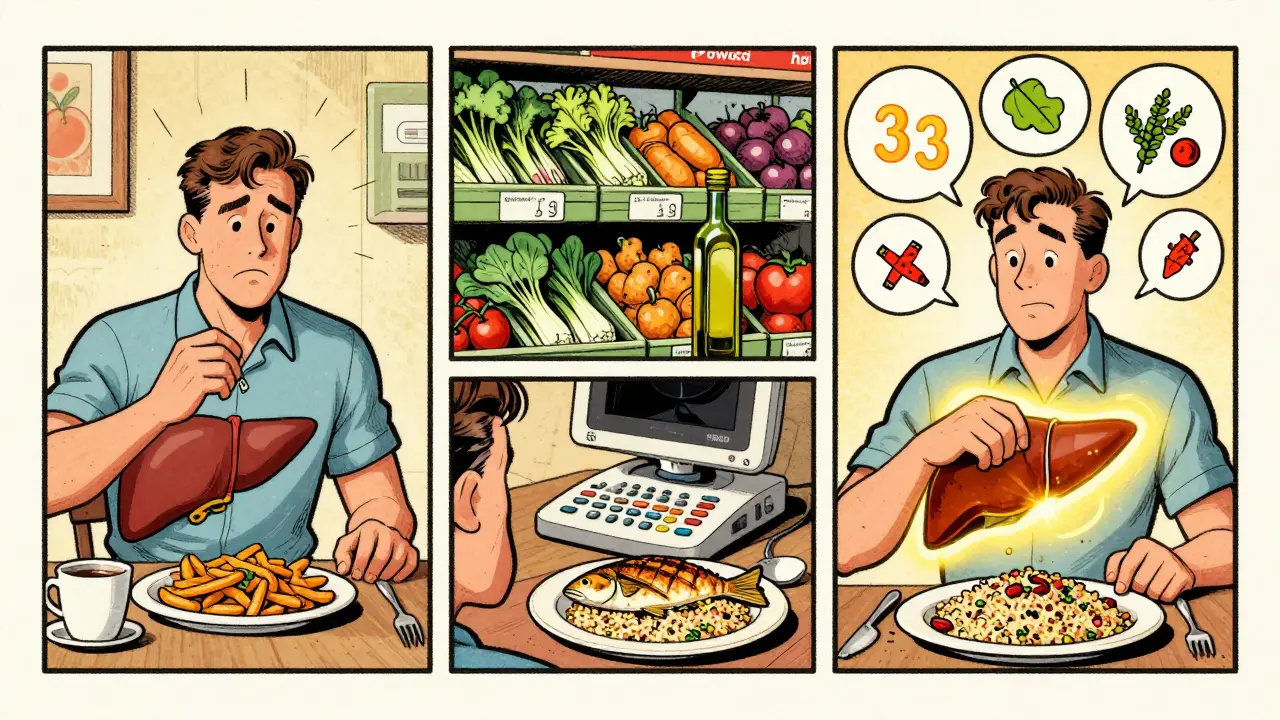
John, a 58-year-old from Ohio, had stage 2 liver fibrosis. His FibroScan score was 12.5 kPa-high enough to worry his doctor. He started eating Mediterranean-style: grilled fish, olive oil on salads, daily berries, and no soda. After nine months, his score dropped to 6.2 kPa. His ALT (a key liver enzyme) fell from 112 to 45 U/L. He didn’t take a single pill. On Reddit’s r/FattyLiver community, 68% of over 1,200 people reported better energy within three months of switching diets. But many struggled. One user said, “I couldn’t afford fresh produce every week.” Another said, “Cutting out sugar gave me migraines.” That’s why flexibility matters. You don’t have to be perfect. If you can’t eat 10 servings of veggies a day, start with three. If you love soda, swap it for sparkling water with lemon. If you’re on a tight budget, frozen vegetables are just as nutritious-and cheaper.How to Make It Stick
Changing how you eat is hard. Most people stick with it for three months, but only half make it past a year. Here’s what works:- Start small: Pick one change. Swap white rice for brown. Drink water instead of soda. Do that for a week, then add another.
- Batch cook: Cook a big pot of quinoa, roast a tray of veggies, and grill chicken on Sunday. You’ll have meals ready for the week.
- Use lemon, herbs, and spices: They add flavor without salt or sugar. Try garlic, turmeric, rosemary, or chili flakes.
- Read labels: Look for “added sugars” on nutrition facts. If sugar is in the top three ingredients, skip it.
- Get support: Talk to a dietitian. Many insurance plans, including UnitedHealthcare, now cover liver-specific nutrition counseling.
Alex Fortwengler
January 11, 2026 AT 23:22Oh wow, another 'Mediterranean diet is magic' article. Let me guess - next they’ll say drinking olive oil cures cancer. The liver doesn’t need 'food as medicine' - it needs you to stop eating processed garbage and quit lying to yourself. You think blueberries are gonna fix decades of soda and pizza? Wake up. The real problem is insulin resistance, not 'refined carbs.' And no, coffee isn’t a liver pill - it’s a stimulant that masks fatigue. You’re all drinking the Kool-Aid.
Bryan Wolfe
January 12, 2026 AT 00:12YES!! Jessica, you just said what I’ve been feeling but couldn’t put into words. I started with just one change-no more white bread-and now I’m eating salmon three times a week. My energy is up, my brain fog is gone, and my last blood test showed my ALT dropped from 89 to 52. It’s not a miracle. It’s just… common sense. And honestly? It tastes better. Who knew olive oil and garlic could make life delicious again? Keep going-you’re doing amazing.
Lawrence Jung
January 13, 2026 AT 06:00Katherine Carlock
January 13, 2026 AT 13:22I love how this post doesn’t shame people. I’m on food stamps and I thought I couldn’t afford to eat healthy-but frozen berries, canned tuna, and brown rice? All cheap. I started with one veggie at dinner and now I’m eating broccoli every night. My mom says I’m 'going full hippie' but I feel better than I have in 10 years. No pills. No magic. Just food. And yeah, coffee. Always coffee.
Daniel Pate
January 14, 2026 AT 14:12Let’s be brutally honest. The Mediterranean diet works because it’s low in fructose and high in fiber. That’s it. No mystical properties. No divine food. Just basic biochemistry. The fact that this needs to be explained like it’s revolutionary is the problem. We’ve known since the 1980s that refined carbs and sugar are the main drivers of fatty liver. The real scandal isn’t that people have NAFLD-it’s that the food industry spent billions making sure we didn’t know this. And now we’re treating it like a lifestyle trend instead of a public health emergency.
Amanda Eichstaedt
January 15, 2026 AT 20:27I’m Nigerian-American and my mom always said, 'Eat your bitter leaf soup-it cleans the blood.' I thought she was being old-school until I read this. Turns out, bitter leaf has compounds similar to cruciferous veggies. My grandma didn’t know about omega-3s, but she knew how to feed a liver. This isn’t just a Western thing. Every culture has liver-friendly food traditions. Maybe the answer isn’t a new diet-it’s remembering the old ones.
Jose Mecanico
January 17, 2026 AT 19:40I’ve been following this for 4 months. Started with cutting out soda. Then swapped white rice for quinoa. Then added walnuts to my oatmeal. Small stuff. My doctor was shocked at my last bloodwork. I didn’t lose weight. But my liver enzymes are normal. I’m not a hero. I just didn’t give up. If you’re reading this and feel overwhelmed-start with one thing. One. Then another. That’s all.
Faith Wright
January 18, 2026 AT 00:28Wow. Another 'eat more veggies' post. So cute. You all think this is about food. It’s not. It’s about control. You’re scared of your own bodies. So you blame sugar. You blame carbs. You blame the system. But the truth? You’re just lazy. You’d rather eat a $10 'liver cleanse' smoothie than get off the couch. And coffee? Really? That’s your 'medicine'? You’re not healing your liver. You’re medicating your guilt.
Rebekah Cobbson
January 19, 2026 AT 13:57Hey, I just wanted to say to the person who said they couldn’t afford fresh produce-you’re not alone. I buy frozen spinach, canned beans, and eggs. I roast a whole tray of carrots and sweet potatoes every Sunday. I use spices to make it taste good. It’s not glamorous. But it’s real. And it works. You don’t need organic kale. You need consistency. And you deserve to feel better. One meal at a time.
Audu ikhlas
January 21, 2026 AT 05:31