
Irritable Bowel Syndrome: Symptoms, Triggers, and Medication Options
 Jan, 3 2026
Irritable Bowel Syndrome isn’t a disease you can cure with a pill or surgery. It’s a long-term condition that changes how your gut works - without showing up on scans or blood tests. If you’ve had stomach pain that comes and goes, bloating after meals, or sudden bouts of diarrhea or constipation, you might be dealing with IBS. About 1 in 7 people worldwide have it, and women are diagnosed more often than men. Most people start noticing symptoms between their 20s and 30s, but it can hit at any age.
What Does IBS Actually Feel Like?
The core sign of IBS is recurring abdominal pain - not just a mild cramp, but something that sticks around for months, often flaring up after eating or before a bowel movement. The pain usually eases after you go to the bathroom. That’s one of the key clues doctors look for.
Along with pain, you might feel like your belly is swollen or tight, even if you haven’t eaten much. This bloating can be so bad it changes how your clothes fit. Bowel habits shift too. Some people have frequent loose stools - IBS-D (diarrhea-predominant). Others struggle to pass hard, pebble-like stools - IBS-C (constipation-predominant). Many jump between both, known as IBS-M (mixed type).
Other common signs include feeling like you haven’t fully emptied your bowels, seeing mucus in your stool, or having more gas than usual. It’s not just your gut, either. About 7 out of 10 people with IBS also deal with things like nausea, acid reflux, a lump-in-throat feeling, or even chest pain that feels like a heart issue but isn’t.
What Makes IBS Symptoms Worse?
IBS doesn’t have one single cause, but certain triggers make symptoms flare up for most people. Food is the biggest one. Around 70% of people with IBS notice their symptoms get worse after eating certain things. High-FODMAP foods are the usual suspects: onions, garlic, wheat, dairy, apples, beans, and artificial sweeteners like sorbitol. These ferment in the gut and cause gas, bloating, and pain.
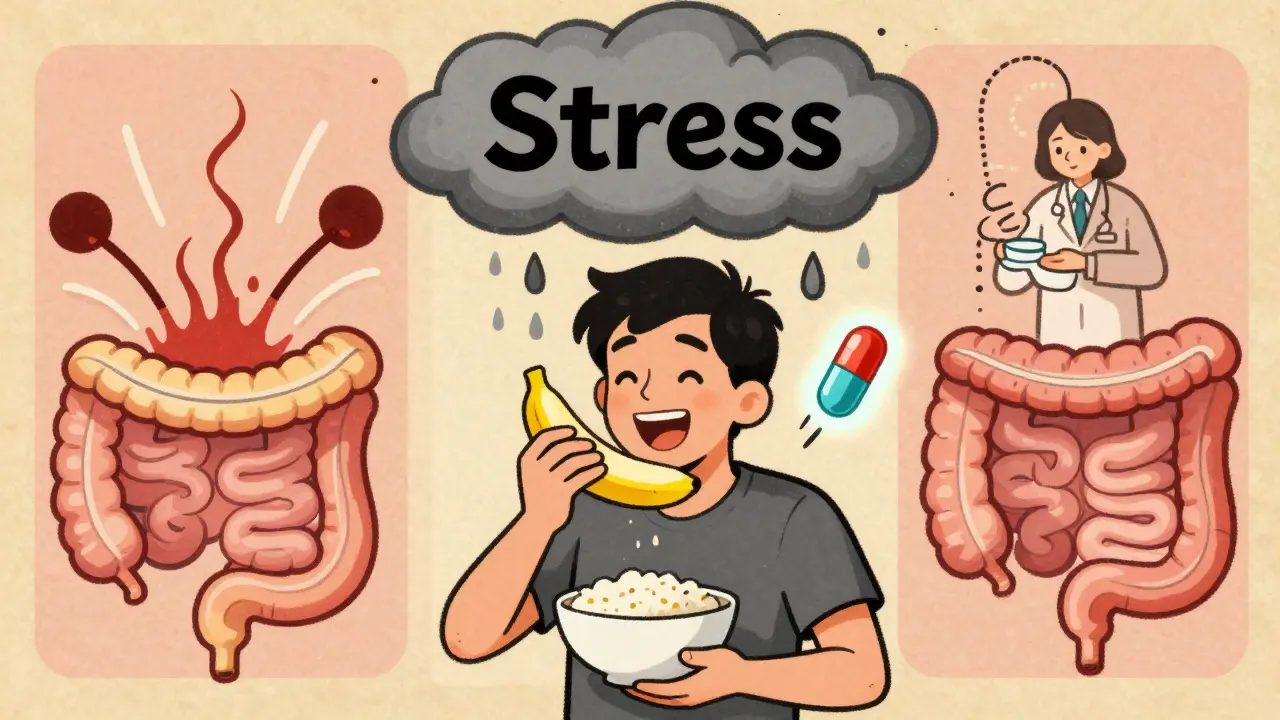
Stress doesn’t cause IBS, but it definitely fuels it. If you’ve ever had stomach knots before a big presentation or an exam, you know how the brain and gut talk to each other. For 60 to 80% of people with IBS, stress levels directly match symptom severity. Anxiety, burnout, or even a bad night’s sleep can turn a quiet day into a painful one.
Hormones play a role too - especially for women. About two-thirds of female IBS patients report worse symptoms right before or during their period. That’s likely tied to changes in estrogen and progesterone.
Antibiotics are another hidden trigger. About 1 in 4 people develop IBS symptoms after taking them. That’s because antibiotics wipe out good bacteria in the gut, throwing off the balance. Even a single course can set off a chain reaction.
How Is IBS Diagnosed?
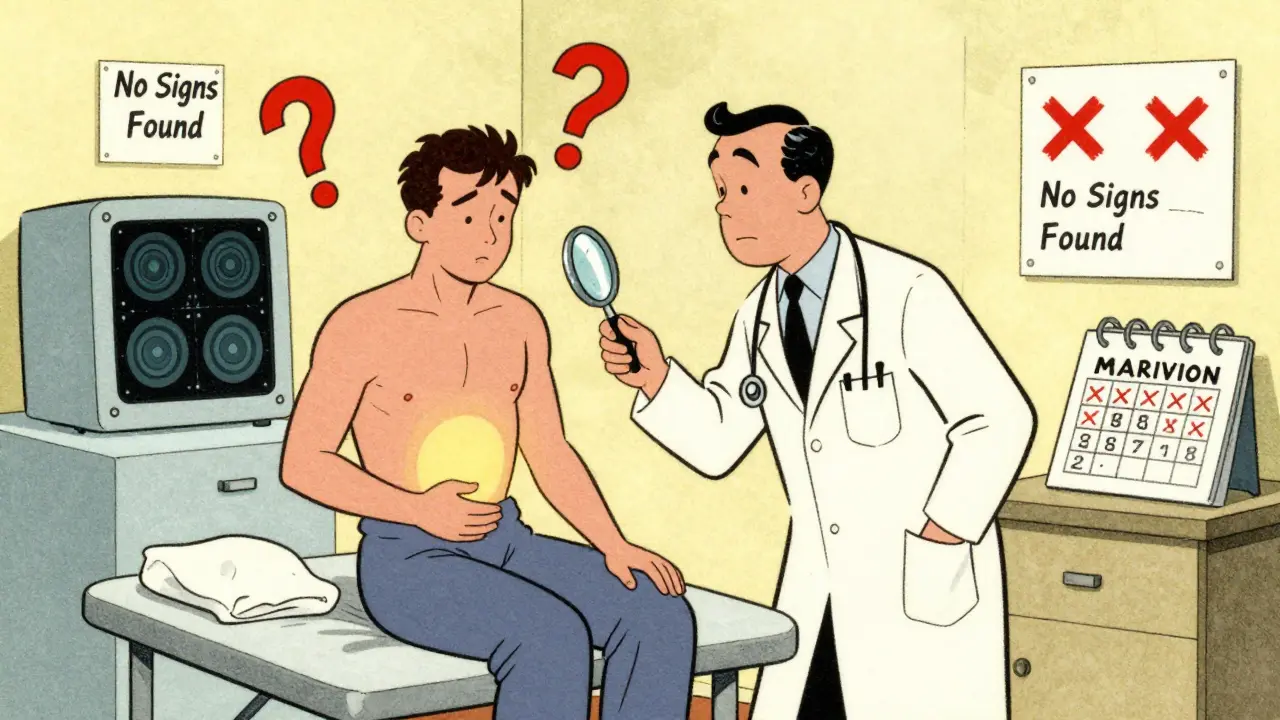
There’s no test for IBS. Doctors diagnose it by ruling out other conditions. That’s why it often takes years for people to get answers. The current standard is the Rome IV criteria: abdominal pain at least once a week for the last three months, plus two of these: pain linked to bowel movements, a change in how often you go, or a change in stool appearance.
Your doctor will ask about your symptoms, family history, and any red flags. If you’re over 45 and just started having symptoms, or if you’ve lost weight without trying, had blood in your stool, or have anemia, they’ll order tests. These might include a blood count, celiac disease screening, stool tests for inflammation, or a colonoscopy.
Most people don’t need a colonoscopy unless they’re older or have warning signs. But getting tested is important - because conditions like Crohn’s disease, celiac disease, or colon cancer can mimic IBS.
Medications for IBS: What Actually Works?
Medications don’t cure IBS, but they can help manage symptoms - and the right one depends on your subtype.
For IBS-D (diarrhea): Loperamide (Imodium) is an over-the-counter option that slows down bowel movements. It helps about 60% of people with diarrhea, but it doesn’t touch the pain or bloating. For more targeted relief, doctors may prescribe rifaximin (Xifaxan), an antibiotic that works in the gut without affecting the rest of the body. It helps about half of patients. Eluxadoline (Viberzi) is another option - it reduces both pain and diarrhea, but it’s not safe for people without a gallbladder or with liver issues.
For IBS-C (constipation): Linaclotide (Linzess) and plecanatide (Trulance) are newer drugs that increase fluid in the intestines, making stools softer and easier to pass. About 30-40% of people see at least three full bowel movements a week. Lubiprostone (Amitiza) works similarly and has been around longer. It’s effective for about a quarter of users.
For pain and cramping: Antispasmodics like dicyclomine (Bentyl) and hyoscine (Levsin) relax the gut muscles. They help about 55% of people with cramping. These are often taken before meals to prevent flare-ups.
For overall symptom control: Low-dose tricyclic antidepressants like amitriptyline (10-30 mg at night) are surprisingly effective. They don’t treat depression here - they calm the nerves between the gut and brain. About half of people report better pain, bloating, and bowel habits after a few weeks.
Non-Medication Approaches That Actually Help
Medications aren’t the only answer. In fact, many people find lasting relief without pills.
The low-FODMAP diet is the most studied dietary approach. Done right - with help from a registered dietitian - it improves symptoms in 50 to 75% of people. It’s not about cutting out forever. It’s a three-step process: eliminate high-FODMAP foods for 2-6 weeks, then slowly add them back one at a time to find your triggers, then personalize your diet long-term.
Stress management works just as well as some drugs. Gut-directed hypnotherapy and cognitive behavioral therapy (CBT) have been shown to reduce symptoms in 40-60% of people. These therapies help retrain how the brain responds to gut signals, breaking the pain-stress cycle.
Probiotics? Not all of them help. Only a few strains have solid evidence - like Bifidobacterium infantis 35624. It improved overall symptoms in about 35% of people in trials, compared to 25% on placebo. Most store-bought probiotics won’t make a difference.
What to Expect Over Time
IBS is chronic, but it’s not progressive. It won’t turn into cancer or cause permanent damage. Symptoms come and go. Some people have long stretches without issues. Others deal with daily discomfort.
Medications usually start working in 2-4 weeks. Antidepressants can take 4-8 weeks to show full effect. The low-FODMAP diet’s reintroduction phase takes 8-12 weeks. That’s why patience matters.
Studies show that combining diet, stress tools, and medication works best. People who use all three approaches see symptom improvement in 60-70% of cases within six months.
Real people report real struggles: 68% miss work or school because of symptoms. The average time from first symptom to diagnosis is over six years. Many give up on diets because they’re too restrictive. But those who stick with personalized changes - and find the right meds - often say their quality of life improves dramatically.
What’s Next for IBS Treatment?
Research is moving fast. Scientists are looking at the gut microbiome to find specific bacteria linked to IBS-D versus IBS-C. A new drug called ibodutant, which targets nerve signals in the gut, showed promising results in early trials. Fecal microbiota transplants (FMT) - basically, giving healthy gut bacteria from a donor - are being tested, with some studies showing remission in 35% of patients.
But for now, the best approach remains simple: understand your triggers, work with your doctor to match treatment to your subtype, and don’t give up on lifestyle changes. IBS is manageable. You don’t have to live in pain.
Can IBS go away on its own?
IBS doesn’t usually disappear completely, but symptoms can go into long-term remission. Many people find that with the right diet, stress management, and sometimes medication, their symptoms become mild or infrequent. It’s not cured, but it can be controlled well enough to live without daily disruption.
Is IBS the same as IBD?
No. IBS (Irritable Bowel Syndrome) is a functional disorder - meaning the gut doesn’t work right, but there’s no inflammation or damage. IBD (Inflammatory Bowel Disease), which includes Crohn’s disease and ulcerative colitis, involves chronic inflammation, ulcers, and tissue damage. IBD can be seen on scans and blood tests; IBS cannot. They’re very different, even though they share some symptoms.
Can stress cause IBS?
Stress doesn’t cause IBS, but it’s one of the biggest triggers. People with IBS have a more sensitive gut-brain connection. When stress hits, it sends signals that make the gut react more strongly - leading to pain, spasms, or changes in bowel habits. Managing stress doesn’t eliminate IBS, but it often reduces flare-ups significantly.
Are there foods that are safe for IBS?
Yes. Many people with IBS tolerate low-FODMAP foods like bananas, blueberries, carrots, cucumbers, rice, oats, lactose-free dairy, eggs, chicken, fish, and plain nuts. Gluten-free grains like quinoa and buckwheat are often well-tolerated too. The key is testing foods one at a time after an elimination phase to find what works for you.
Why do I feel bloated even when I haven’t eaten much?
Bloating in IBS isn’t always from gas buildup. It’s often due to gut hypersensitivity - your nerves are overly reactive to normal amounts of gas or stretching in the intestines. Even a small amount of gas can feel like intense swelling. This is why some people feel bloated after a light meal or even just drinking water.
Can I take probiotics for IBS?
Some probiotics help, but most don’t. Only specific strains have been proven effective - especially Bifidobacterium infantis 35624. Others, like those in generic yogurt or store-bought supplements, often have no impact. Look for products that list the exact strain and dose, and check if they’ve been tested in IBS trials.
How long does it take for IBS medication to work?
It varies. Loperamide works within hours. Linaclotide and rifaximin usually show results in 1-2 weeks. Antispasmodics can help within a few days. Antidepressants like amitriptyline take longer - 4 to 8 weeks - because they work on nerve signaling, not just bowel movement. Don’t stop too soon. Give each treatment time to work before switching.
Doreen Pachificus
January 4, 2026 AT 10:42Just wish more doctors would actually recommend it instead of just handing out Imodium.
Clint Moser
January 4, 2026 AT 10:51Ashley Viñas
January 5, 2026 AT 00:05If you’re going to diet, at least do it properly-with a registered dietitian. Not some Instagram guru who thinks ‘no carbs’ is the answer.
Vicki Yuan
January 6, 2026 AT 22:09Still, knowing my triggers now? Worth it. I can eat garlic again, just not every day.
Uzoamaka Nwankpa
January 7, 2026 AT 22:00Chris Cantey
January 8, 2026 AT 23:46IBS isn’t a disorder of the bowel-it’s a disorder of the self’s relationship to its own biology.
Dee Humprey
January 10, 2026 AT 03:08I was diagnosed at 22 and thought my life was over. Now I run marathons. It took time, trial, error, and a therapist who actually knew about gut-brain stuff. You got this.
John Wilmerding
January 10, 2026 AT 17:12Peyton Feuer
January 12, 2026 AT 01:18Siobhan Goggin
January 13, 2026 AT 08:08Vikram Sujay
January 15, 2026 AT 06:01Shanna Sung
January 15, 2026 AT 21:03Allen Ye
January 16, 2026 AT 19:07