
Impetigo and Cellulitis: How to Choose the Right Antibiotic for Skin Infections
 Feb, 27 2026
When a child comes home from school with a red, oozing sore around the nose, or an adult wakes up with a swollen, warm patch of skin on the leg, it’s easy to assume it’s just a rash or a bug bite. But these symptoms could be two of the most common bacterial skin infections out there: impetigo and cellulitis. Both are caused by bacteria, both spread easily, and both need the right antibiotic-or else they can get worse fast. The problem? They look different, act differently, and need completely different treatments. Getting it wrong can mean a longer infection, a trip to the hospital, or even a resistant superbug like MRSA.
What’s the Difference Between Impetigo and Cellulitis?
Impetigo is a surface-level infection. It doesn’t go deep. It’s the kind of thing you see on toddlers’ faces, especially around the nose and mouth. It starts as tiny red bumps that turn into blisters, then burst and leave behind a sticky, honey-colored crust. That’s the classic sign of nonbullous impetigo, which makes up about 70% of cases. The other type, bullous impetigo, forms larger fluid-filled blisters that break open and leave a ring-like border. It’s caused mostly by Staphylococcus aureus, sometimes by Streptococcus pyogenes. It’s highly contagious-spread by touching the sores, sharing towels, or even just hugging. That’s why schools call it “school sores.”
Cellulitis is a whole different beast. It burrows into the deeper layers of skin and fat. You don’t just see a crust-you see redness that spreads, skin that feels hot and tight, swelling that doesn’t go away, and pain when you press on it. Sometimes fluid leaks out. Unlike impetigo, cellulitis doesn’t have clear borders. It just keeps creeping. It’s usually caused by Streptococcus bacteria, though Staphylococcus can also be involved. It often starts after a cut, scrape, insect bite, or even a crack in the skin from eczema. People with diabetes, poor circulation, or weakened immune systems are at higher risk.
And then there’s erysipelas, which looks like a mix: bright red, sharply defined edges, often on the face or legs. It’s caused by Streptococcus and treated like cellulitis, but it’s more superficial. Confusing it with impetigo? That’s a common mistake-and it can delay the right treatment.
Why Antibiotic Choice Matters More Than You Think
You might think, “Just give an antibiotic and it’ll go away.” But that’s not how it works. The wrong antibiotic doesn’t just fail-it can make things worse. Overuse of broad-spectrum drugs has led to resistant strains like MRSA (methicillin-resistant Staphylococcus aureus). These bugs don’t respond to penicillin, amoxicillin, or even flucloxacillin. If you treat impetigo with the wrong drug, you might clear the surface but leave MRSA hiding underneath. Then it comes back, stronger.
Regional guidelines vary wildly. In the UK, flucloxacillin is the go-to for both impetigo and cellulitis. In France, amoxicillin is first-line for cellulitis, and pristinamycin is preferred for severe impetigo. Belgium doesn’t have national guidelines, so doctors pick based on experience. Why the difference? Because resistance patterns change by region. What works in London might fail in Marseille.
For impetigo, if it’s limited to one or two spots, topical mupirocin (Bactroban) works in 90% of cases. It’s applied three times a day for 7-10 days. But if it’s spread over a large area, or if the person has a fever or swollen lymph nodes, you need oral antibiotics. The most common choices are cephalexin, dicloxacillin, or clindamycin if MRSA is suspected.
For cellulitis, oral antibiotics are almost always needed. A 5-14 day course is standard. If the infection is mild and the patient is healthy, cephalexin or amoxicillin-clavulanate are common. But if the person is sick, has diabetes, or the infection is spreading fast, they need hospitalization and IV antibiotics like vancomycin or clindamycin. Culture and sensitivity tests are critical here-if you don’t test, you’re guessing.
When to Use Topical vs. Oral Antibiotics
Not every infection needs pills. For impetigo, topical treatment is often enough-but only if it’s truly limited. Here’s the rule: if the sores are in one area (say, one cheek), and there are fewer than five, use mupirocin. If the sores are on both cheeks, the arms, or the legs? Go oral.
For cellulitis, topical antibiotics do nothing. The infection is too deep. You need antibiotics that get into the bloodstream. That means pills or IVs. Even if the red area looks small, if it’s warm, painful, and spreading, it’s not just skin-deep.
And don’t forget: if you’ve had cellulitis before, especially more than once, you’re at higher risk of recurrence. Some people need long-term preventive antibiotics-usually low-dose penicillin or erythromycin-taken daily for months. This isn’t common, but it’s life-changing for those who need it.
Antibiotic Resistance Is Real-And Getting Worse
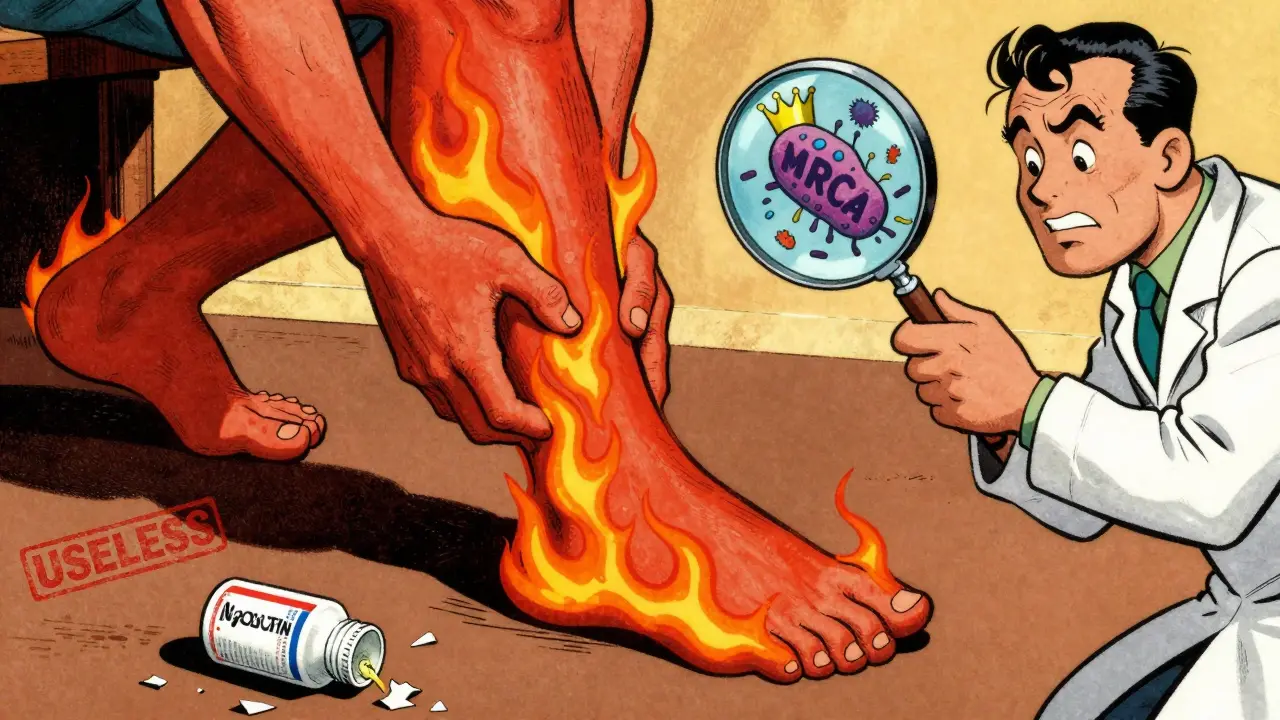
MRSA is no longer rare. In some clinics, up to 40% of skin infections are caused by MRSA. That means flucloxacillin, which was once a sure bet, now fails in nearly half the cases. The same goes for amoxicillin. In the U.S., studies show 20-30% of skin infection prescriptions are unnecessary or wrong because doctors don’t test first.
That’s why experts now say: don’t treat blindly. If the infection doesn’t improve in 48-72 hours, if it’s getting worse, or if the person has a fever, get a culture. Swab the wound. Take a blood sample. Find out what’s actually there. It takes a day or two, but it stops you from using the wrong drug. It also helps prevent the spread of resistant strains.
Clindamycin is often the go-to when MRSA is suspected. It’s not a first-line drug because it can cause serious gut problems, but it’s effective against MRSA and has good skin penetration. Vancomycin is used in hospitals for severe cases. Newer options like linezolid or tedizolid are emerging but are expensive and reserved for the toughest cases.
What Patients Say: Real Stories Behind the Diagnosis
Parents often describe impetigo as “the infection that won’t leave.” One mother in Ohio said her 4-year-old had impetigo three times in one year. Each time, the doctor prescribed amoxicillin. It helped for a few days, then came back. Only after a swab test did they find it was MRSA. Switching to clindamycin stopped the cycle.
Adults with cellulitis report being told “it’s just a bruise” or “allergies.” One man in Florida waited five days before going to the ER because he thought the redness on his calf was a bug bite. By then, the infection had spread to his lymph nodes. He spent a week in the hospital on IV antibiotics. “I didn’t know skin could do that,” he said.
And then there’s the stigma. Kids with impetigo are kept home from school. Families feel judged. But the truth? It’s not about hygiene. It’s about exposure. One child can bring it home from daycare and spread it to siblings, grandparents, even pets. That’s why hygiene matters-not to blame, but to break the chain.
Prevention: It’s Not Just About Antibiotics
Antibiotics treat the infection-but they don’t stop it from coming back. Prevention is half the battle.
- Wash cuts and scrapes with soap and water right away.
- Keep nails short to reduce scratching.
- Don’t share towels, clothing, or razors.
- Use moisturizer if you have eczema-dry, cracked skin is an open door for bacteria.
- If someone in the house has impetigo, wash bedding and clothes in hot water daily.
- For cellulitis, manage underlying conditions: control blood sugar if you’re diabetic, treat leg swelling, wear compression socks if you have poor circulation.
And if you’ve had cellulitis before? Talk to your doctor about preventive antibiotics. It’s not a cure, but it can cut recurrence by up to 70%.
When to See a Doctor-Right Now
You don’t need to wait for it to get bad. If you see any of these, call your doctor today:
- Redness that spreads fast (more than a finger-width in 24 hours)
- Fever, chills, or feeling unwell
- Pain that gets worse instead of better
- Sores that don’t crust over or keep oozing after 3 days
- Recurring infections in the same spot
And if you’ve tried an antibiotic for 48 hours and nothing’s changed? Go back. Something’s wrong. Maybe it’s not bacterial. Maybe it’s MRSA. Maybe it’s something else entirely.
Can impetigo turn into cellulitis?
Yes, but it’s rare. Impetigo stays on the surface. If a child scratches the sores and breaks the skin deeper, or if the infection spreads to surrounding tissue, it can develop into cellulitis. That’s why it’s important to treat impetigo early and keep nails trimmed. If redness spreads beyond the crusts, or if the area becomes hot and swollen, seek medical care immediately.
Is impetigo contagious after starting antibiotics?
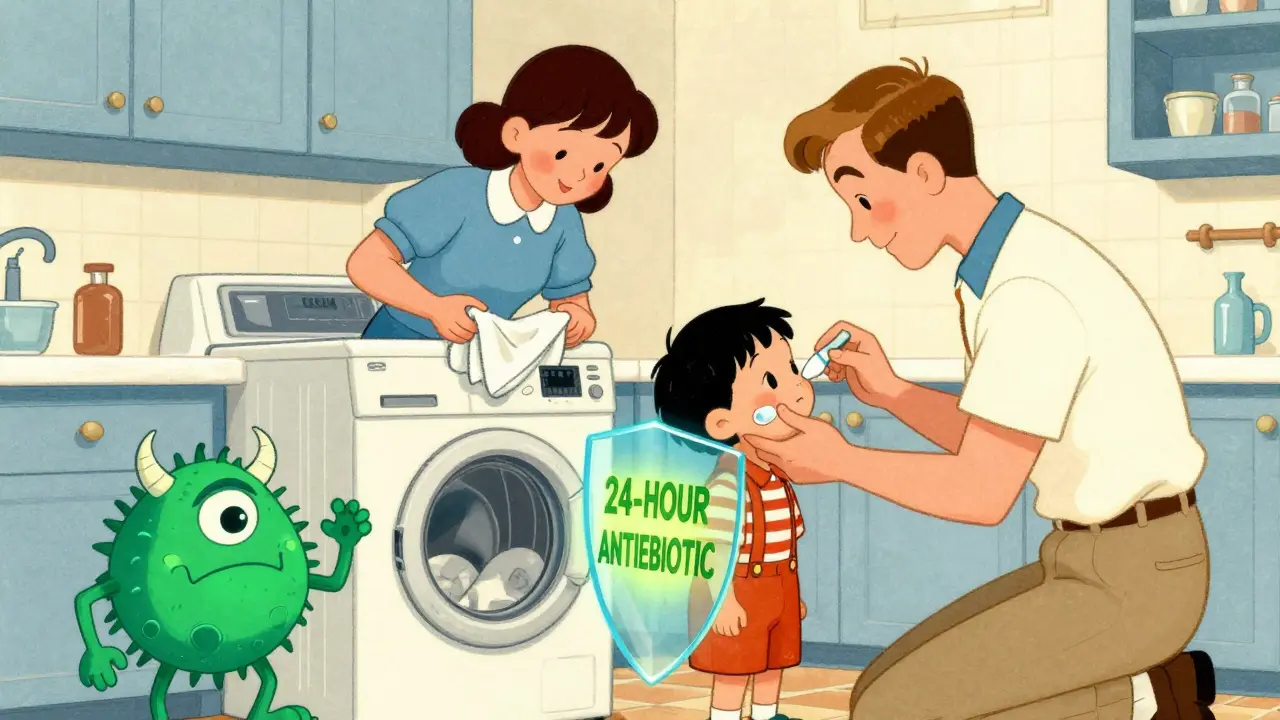
No-not after 24 hours of treatment. That’s why schools and daycares allow kids to return after one full day on antibiotics. The bacteria are no longer spreading. But if treatment is delayed, the infection can still be contagious for days. Always finish the full course-even if the sores look gone.
Can I treat cellulitis at home with over-the-counter cream?
No. Cellulitis is a deep infection that requires systemic antibiotics-pills or IVs. Topical creams like Neosporin or antibiotic ointments won’t reach the infected tissue. Delaying proper treatment can lead to sepsis, abscesses, or tissue death. If you suspect cellulitis, see a doctor immediately.
Why do some people get cellulitis repeatedly?
Recurrent cellulitis often links to underlying issues: lymphedema, venous insufficiency, diabetes, or obesity. Each infection damages the lymphatic system, making it harder to fight the next one. People with these conditions may need long-term preventive antibiotics, compression therapy, or even surgery to improve circulation. Regular skin checks and moisturizing are key.
Are there natural remedies for impetigo or cellulitis?
No reliable evidence supports natural remedies for either infection. Honey, tea tree oil, or garlic may have mild antibacterial properties, but they won’t penetrate deep enough or kill the bacteria that cause these infections. Relying on them delays real treatment and increases risk of complications. Always use prescribed antibiotics.
How long does it take for antibiotics to work?
For impetigo, crusts should start to dry up in 2-3 days. Redness fades over 5-7 days. For cellulitis, swelling and warmth should begin to improve in 48-72 hours. If there’s no change by day 3, or if symptoms worsen, contact your doctor. It may mean the antibiotic isn’t working-or the infection is more serious than thought.
What Comes Next?
The future of treatment is smarter, not stronger. Instead of guessing which antibiotic to use, doctors are moving toward rapid tests that identify bacteria and resistance markers in under 2 hours. That means less trial and error, fewer side effects, and less resistance. Some clinics are already using these tests for recurrent infections.
For now, the best advice is simple: don’t ignore a red, warm, spreading patch of skin. Don’t assume it’s just a rash. Get it checked. And if you’ve been prescribed antibiotics, finish the whole course-even if it looks better. One missed pill can leave the toughest bugs alive to fight another day.
Brandon Vasquez
February 28, 2026 AT 13:52Noah Cline
February 28, 2026 AT 14:25Lisa Fremder
March 1, 2026 AT 22:10Byron Duvall
March 3, 2026 AT 07:25Brandie Bradshaw
March 3, 2026 AT 15:34Martin Halpin
March 4, 2026 AT 05:18Sophia Rafiq
March 6, 2026 AT 03:38Charity Hanson
March 7, 2026 AT 16:45Justin Ransburg
March 8, 2026 AT 22:44Sumit Mohan Saxena
March 9, 2026 AT 17:35Vikas Meshram
March 9, 2026 AT 18:17Gigi Valdez
March 10, 2026 AT 00:11