
Hypothyroidism and Levothyroxine: What You Need to Know About Underactive Thyroid Treatment

Hypothyroidism and Levothyroxine: What You Need to Know About Underactive Thyroid Treatment Jan, 26 2026
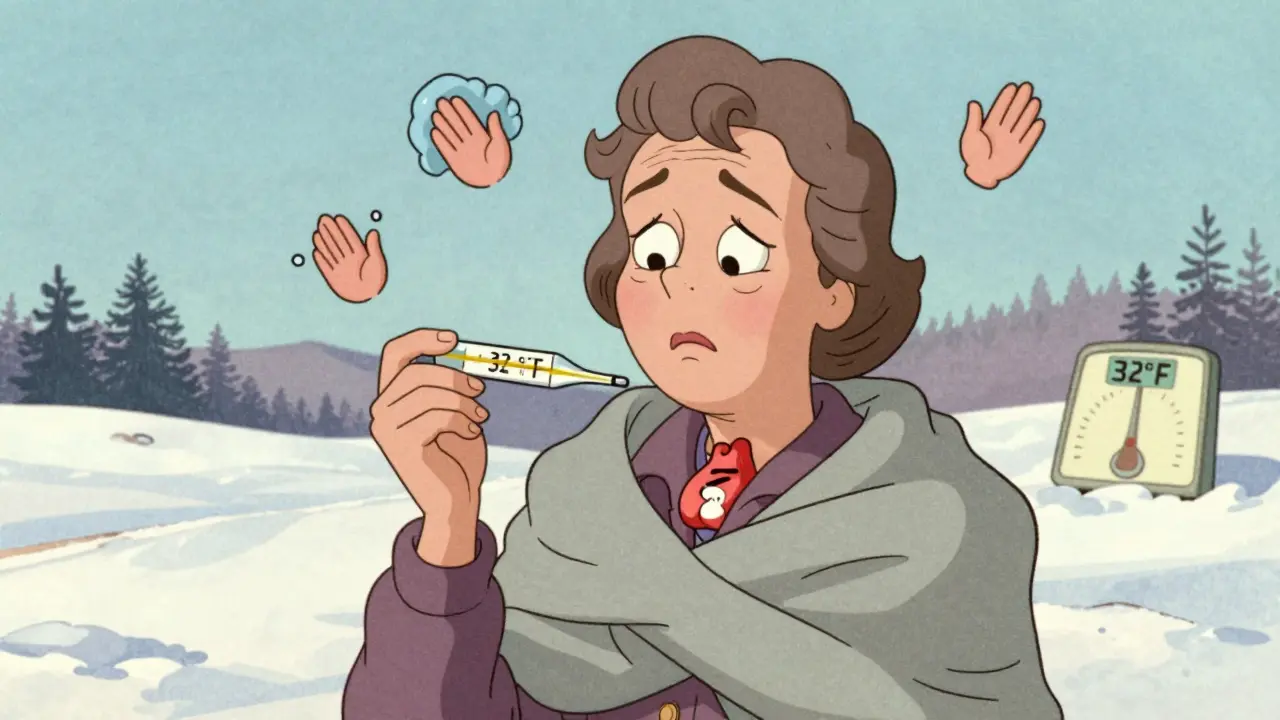
When your thyroid slows down, your whole body feels it. Fatigue that won’t lift, weight gain no matter how much you eat or exercise, cold hands even in summer-these aren’t just signs of aging. They could be symptoms of hypothyroidism, an underactive thyroid that’s not making enough hormones to keep your metabolism running right. It’s more common than you think: about 1 in 8 women over 60 have it, and millions of Americans go undiagnosed for years. The good news? It’s one of the easiest endocrine disorders to treat-with a simple daily pill called levothyroxine.

What Exactly Is Hypothyroidism?

Your thyroid is a small butterfly-shaped gland in your neck. It makes two main hormones: T4 (thyroxine) and T3 (triiodothyronine). These hormones tell your cells how fast to use energy. When your thyroid doesn’t make enough, everything slows down-your heart, your brain, your digestion, even your skin.

Most cases-95%-are called primary hypothyroidism. That means the problem starts in the thyroid itself. The other 5% are central hypothyroidism, where the pituitary gland in your brain fails to signal the thyroid to work. The most common cause? Hashimoto’s thyroiditis. It’s an autoimmune condition where your immune system attacks your thyroid like it’s a foreign invader. In the U.S., it’s behind 90% of all spontaneous hypothyroidism cases.

Other causes include thyroid surgery (if part or all of the gland is removed), radioactive iodine treatment (often used for hyperthyroidism), and radiation therapy for head or neck cancers. About 1 in 5 people who get radiation for cancer develop hypothyroidism within five years. Postpartum thyroiditis also affects 5-10% of women after giving birth, sometimes temporarily, sometimes permanently.

How Do You Know If You Have It?

Symptoms don’t show up all at once. They creep in slowly. Many people think they’re just getting older or stressed. But here’s what actually happens:

  • 95% feel constant fatigue-even after a full night’s sleep
  • 85% can’t stay warm, no matter how many layers they wear
  • 75% gain 5-10 pounds without changing diet or activity
  • 60% struggle with constipation
  • 50% notice dry skin, brittle nails, or thinning hair
  • 40% describe brain fog: trouble focusing, memory lapses
  • 30% feel depressed or emotionally flat
Physical signs your doctor might spot include puffy eyes, a hoarse voice, or slow reflexes. In severe cases, swelling in the front of the neck (goiter) appears. But here’s the catch: many people have subclinical hypothyroidism. That means their TSH (thyroid-stimulating hormone) is high-between 4.5 and 10 mIU/L-but their T4 levels are still normal. About 4-10% of adults fall into this group. Around 2-5% of them will develop full-blown hypothyroidism each year.

How Is It Diagnosed?

There’s no mystery here. Doctors use two blood tests:

  • TSH: Made by the pituitary gland. High TSH means your brain is screaming at your thyroid to work harder.
  • Free T4: The active hormone circulating in your blood. Low T4 confirms the thyroid isn’t responding.
The standard diagnosis for primary hypothyroidism is a TSH over 4.0 mIU/L with a free T4 below 0.8 ng/dL. If TSH is high but T4 is normal, it’s subclinical. For central hypothyroidism, TSH is low or normal while T4 is low-this is rarer and needs different testing.

Doctors also check for thyroid antibodies, especially anti-TPO. If they’re positive, it’s almost certainly Hashimoto’s. The test is 90% accurate for identifying autoimmune thyroid disease. Fourth-generation TSH assays are now the gold standard-98% accurate when paired with free T4.

Levothyroxine: The Standard Treatment

Levothyroxine is a synthetic version of T4. Your body converts it into T3 as needed. It’s not a cure, but it replaces what your thyroid can’t make. It’s taken once a day, orally, and works for nearly everyone.

Dosing isn’t one-size-fits-all. For adults under 50 with no heart problems, the starting dose is usually 1.6 mcg per kilogram of body weight. That’s about 100-150 mcg daily for most people. But for older adults or those with heart disease, doctors start low-25 to 50 mcg-and increase slowly, every 6 weeks, to avoid stressing the heart.

It takes time to work. You won’t feel better the next day. Most people notice improved energy in 2-3 weeks. Full symptom relief often takes 6-8 weeks. That’s why blood tests are done every 6-8 weeks during dose adjustments. Once your TSH is stable, you’ll need a check-up once a year.
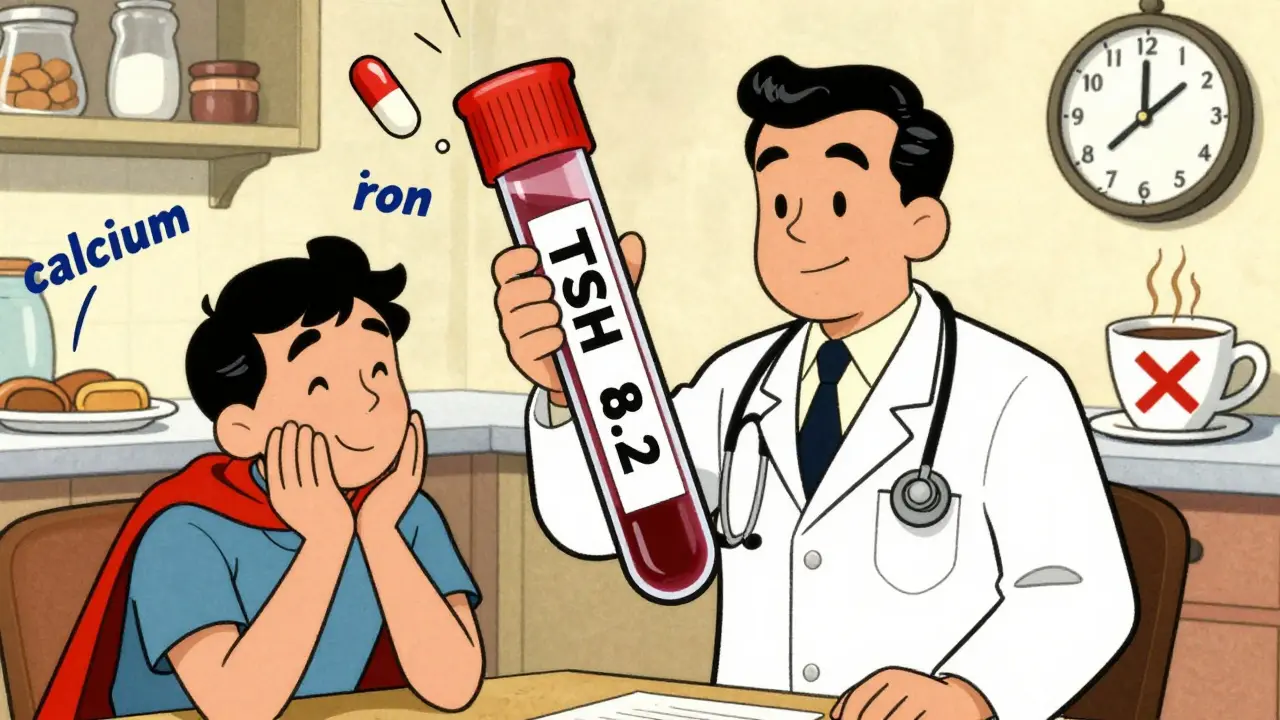
A doctor shows a high TSH blood test as a patient smiles, with a pill like a cape and coffee banned from the scene.

How to Take Levothyroxine Right

This pill is simple-but if you take it wrong, it won’t work. Here’s what matters:

  • Take it on an empty stomach-30 to 60 minutes before breakfast
  • Use only water-no coffee, juice, or milk
  • Avoid calcium, iron, or antacids for at least 4 hours after taking it
  • Don’t switch brands unless your doctor approves-different formulations absorb slightly differently
  • Store it properly-keep it dry and at room temperature. Humidity can degrade it by 15% per month
Coffee reduces absorption by 30%. Calcium supplements drop it by 35%. Even eating breakfast too soon can cut effectiveness by half. Many patients struggle with timing-especially those with busy schedules. That’s why some are now trying extended-release versions, which are still in trials but show promise for better consistency.

What If It’s Not Working?

About 20% of patients still feel tired or sluggish even when their TSH is “normal.” Why? Because TSH doesn’t tell the whole story. Some people don’t convert T4 to T3 efficiently. Others have lingering inflammation from Hashimoto’s. A few have other hormone imbalances-like low cortisol or vitamin D-that mask improvement.

Doctors don’t routinely test T3 levels because studies show adding liothyronine (synthetic T3) doesn’t help most people. In fact, 85% of clinical trials found no benefit over levothyroxine alone. The American Thyroid Association recommends against combination therapy unless there’s a rare genetic reason.

If you’re still symptomatic, your doctor might adjust your target TSH range. For example, some patients feel best with a TSH between 1.0 and 2.0, even if the “normal” range goes up to 4.5. Personalization matters.

What Happens If You Don’t Treat It?

Untreated hypothyroidism doesn’t just make you tired. It raises your risk for serious problems:

  • 25% develop high cholesterol-LDL over 160 mg/dL-raising heart disease risk by 30%
  • 15% get nerve damage (peripheral neuropathy), causing numbness or tingling
  • Women face 2-3 times higher risk of miscarriage and up to 30% infertility rates
  • Myxedema coma, a rare but life-threatening emergency, occurs in severe untreated cases and kills 20-50% of people who get it
Long-term, untreated hypothyroidism can shorten life expectancy by 5-10 years, mostly due to heart complications. But with treatment, life expectancy returns to normal.

Special Cases: Pregnancy, Elderly, and More

Pregnant women need more levothyroxine-25-50% higher doses-because the baby depends on the mother’s thyroid hormone in the first trimester. TSH targets drop to under 2.5 mIU/L in early pregnancy. Untreated hypothyroidism during pregnancy increases the risk of preterm birth and developmental delays in the child.

For people over 85, doctors aim for a higher TSH target-between 4 and 6 mIU/L. Why? Because pushing TSH too low can trigger atrial fibrillation or bone loss. The goal isn’t to hit a number-it’s to feel well without risking heart problems.
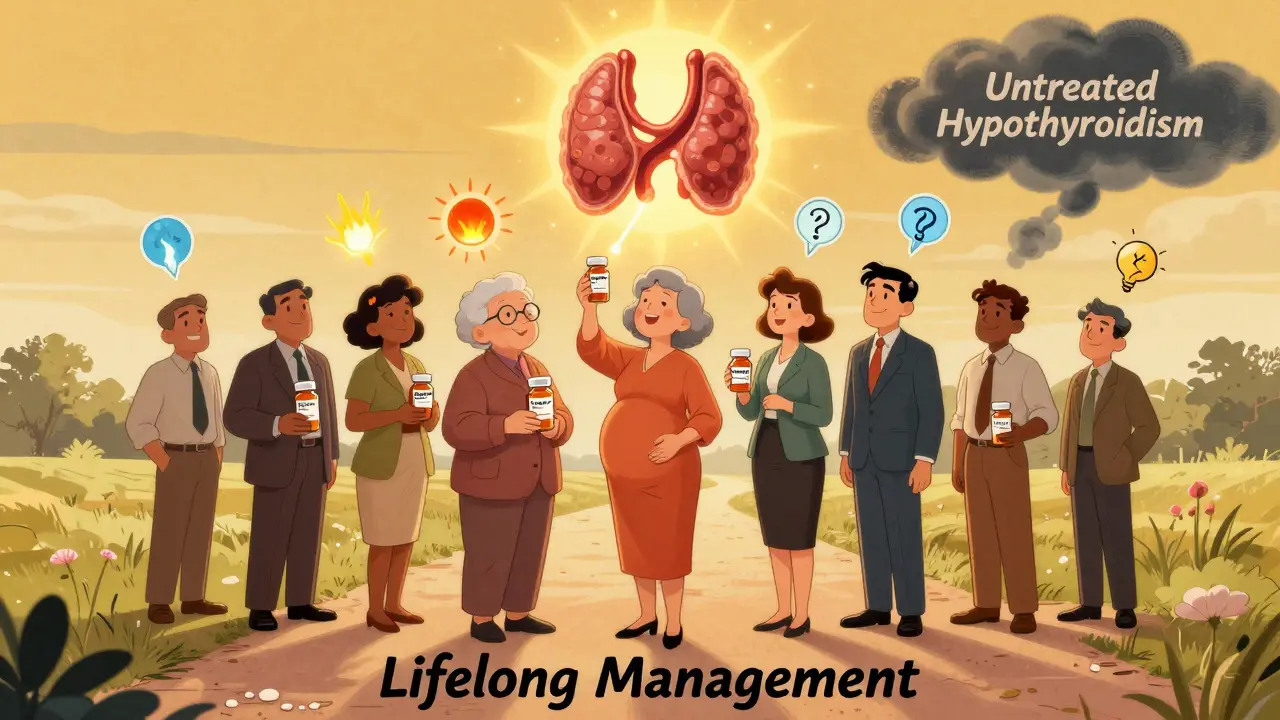
Diverse people take levothyroxine pills under a glowing thyroid sun, leaving behind a fading cloud of untreated illness.

Cost and Accessibility

Levothyroxine is cheap. Generic versions cost $4-$30 a month in the U.S. Brand-name Synthroid runs $30-$60. Insurance usually covers it. But if you’re paying out of pocket, make sure you’re getting the same generic brand each time. Switching between manufacturers can cause TSH swings.

What’s Next for Treatment?

Research is moving beyond TSH. Scientists are studying genetic markers to predict who’s likely to develop Hashimoto’s. Early trials show 12 gene variants can identify risk with 60% accuracy. Time-release levothyroxine formulations are in phase 3 trials-they could let people take the pill after breakfast, improving adherence. And TSH receptor antibody tests are becoming more sensitive, helping catch autoimmune thyroid disease earlier.

But for now, levothyroxine remains the standard. Over 98% of endocrinologists agree it will still be the first-line treatment in 2030. The key isn’t finding a new drug-it’s making sure people take the right dose, at the right time, and get monitored properly.

Real Patient Experiences

One woman in her 50s told her doctor she felt fine-until she realized she hadn’t gone for a walk in six months. Her TSH was 8.2. After starting levothyroxine, she walked 5 miles the next month. Another man in his 70s had heart palpitations after his dose was pushed too high. His TSH dropped to 0.08. His doctor lowered it back to 1.8, and his energy returned without the racing heart.

Most people-85%-see major symptom improvement within 3-6 months. Ninety percent report better energy when TSH is in range. But 30% struggle with timing their pill around work or meals. That’s why patient education matters. Support groups like the Thyroid Patient Advocate Foundation and the American Thyroid Association offer free guides, meal planners, and medication trackers.

Final Thoughts

Hypothyroidism isn’t something you “get over.” It’s a lifelong condition-but one you can manage perfectly. You don’t need surgery. You don’t need expensive supplements. Just a daily pill, taken right, with regular blood tests. The biggest mistake? Thinking you’re fine because your TSH is “normal.” Feeling better is the real goal. If you’re still tired, cold, or foggy, talk to your doctor. Your thyroid isn’t broken-it’s just waiting for the right dose to wake up.

6 Comments

  • Image placeholder

    Marian Gilan

    January 26, 2026 AT 05:20
    so levothyroxine is just a government mind control pill disguised as medicine? lol i bet they dont tell you it's laced with fluoride and lithium to keep us docile. my cousin took it and started dreaming in binary. i'm not saying it's a conspiracy... but why does the FDA approve it if the thyroid is just a 'butterfly'? sounds like a fairy tale to me. 🤡
  • Image placeholder

    Conor Murphy

    January 27, 2026 AT 19:18
    i just want to say thank you for writing this. i was diagnosed last year and felt so alone. this broke down everything in a way that actually made sense. i didn't know coffee ruined absorption-i've been drinking it 10 mins after my pill for 6 months 😅. just started taking it 45 mins before breakfast and already feel less like a zombie. you're a legend 💙
  • Image placeholder

    Conor Flannelly

    January 27, 2026 AT 19:23
    there's something deeply poetic about the thyroid being a butterfly. fragile, transformative, easily disturbed by wind and chemicals. we treat it like a broken faucet-turn the dial, fix it-but it's not broken. it's whispering. maybe we're the ones who forgot how to listen. the real cure isn't levothyroxine-it's learning to live gently. still, i'm grateful for the pill. it lets me breathe long enough to learn how to listen. 🦋
  • Image placeholder

    Patrick Merrell

    January 28, 2026 AT 10:51
    if you're taking levothyroxine you're basically admitting you're too lazy to fix your 'lifestyle'. i've been keto for 3 years, no meds, no issues. your thyroid isn't 'underactive'-your life is. stop outsourcing your health to Big Pharma and get off the couch. also, stop using emojis. they're for toddlers. 🚫
  • Image placeholder

    Mohammed Rizvi

    January 30, 2026 AT 07:08
    bro i took levothyroxine for 8 months and still felt like a wet sock. turned out i was low on selenium and had a silent gut infection. nobody told me to check my micronutrients. now i eat brazil nuts like candy and my TSH is 1.2. stop treating symptoms like they're the enemy. the body's not a car. it's a goddamn ecosystem. 🤷‍♂️
  • Image placeholder

    Dan Nichols

    January 30, 2026 AT 09:22
    the article says TSH above 4.0 is hypothyroid but ignores that the normal range was lowered in 2002 by a committee with ties to pharma. the real cutoff should be 2.5. i know because i read the original papers. also the word 'subclinical' is a scam term invented to sell pills to healthy people. if you feel fine your thyroid is fine. stop medicalizing normal aging

Write a comment