
How to Subscribe to FDA Drug Safety Alerts and Updates
 Dec, 15 2025
Every year, the FDA issues hundreds of drug safety alerts - recalls, label changes, contamination warnings, and serious side effect notices. If you’re a patient taking medication, a pharmacist filling prescriptions, or a healthcare provider managing treatment plans, missing one of these alerts could mean risking harm. The good news? You can get them delivered straight to your inbox - for free. The bad news? Most people don’t know how, or worse, they don’t know these alerts even exist.
Why FDA Drug Safety Alerts Matter
In 2018, a contaminated batch of valsartan, a common blood pressure drug, reached patients across the U.S. The contamination caused a cancer risk. It took weeks for many doctors and pharmacies to find out. That’s not an anomaly. Since then, the FDA has built a system to prevent exactly that kind of delay. Today, the FDA’s drug safety alert system reaches over 2.7 million subscribers. These aren’t just bureaucratic notices. They’re life-saving updates. A hospital pharmacist in Ohio told the FDA’s survey team that a recent alert about a recalled insulin batch prevented her facility from dispensing dangerous medication. A patient with a peanut allergy used a custom keyword alert to avoid a contaminated over-the-counter supplement. These aren’t hypotheticals. They’re real outcomes. The system works because it’s tied directly to the FDA’s internal databases. When a manufacturer reports a problem, or when adverse event reports spike, the system flags it. If it meets safety thresholds, an alert goes out - often within hours.Three Ways to Get FDA Drug Safety Alerts
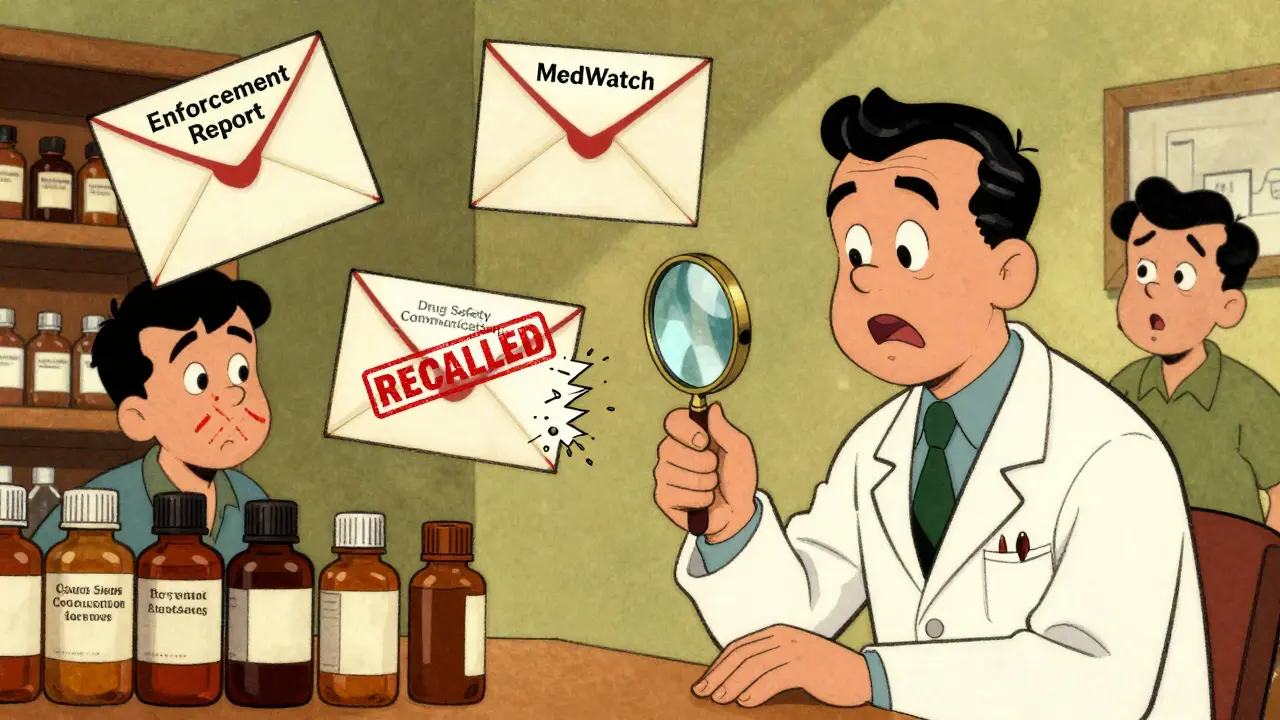
The FDA doesn’t have one single alert system. It has three separate ones, each with a different purpose. Confusing? Yes. But once you know the difference, it’s simple to use.- Enforcement Report Subscription Service - This is for recalls. If a drug is pulled from shelves because of contamination, mislabeling, or manufacturing flaws, this is where you’ll find it first. You can choose to get alerts for drugs, medical devices, food, or cosmetics. You can even set up to five custom keywords - like "insulin," "metformin," or "peanut" - to filter what you see. Delivery is daily or weekly. It’s the most targeted system.
- MedWatch Safety Alerts - This covers serious safety issues that may not lead to a recall. Think: new black box warnings, unexpected side effects, or drug interactions. You can subscribe by email (MedWatch E-list), follow @FDAMedWatch on Twitter (over 285,000 followers), or use an RSS feed. This is the go-to for clinicians who need to adjust treatment plans.
- Drug Safety Communications - This is the most clinically focused. It’s designed for healthcare providers and patients who want alerts about specific drug classes - like statins, SSRIs, or diabetes medications. You can sign up for alerts on a particular category, and you’ll get summaries of the FDA’s analysis, including what the data shows and what actions to take.
There’s no overlap. The Enforcement Report tells you what’s been pulled. MedWatch tells you what’s dangerous. Drug Safety Communications tells you why it’s dangerous and what to do about it.
How to Subscribe (Step-by-Step)
You don’t need an account. You don’t need to pay. You don’t even need to create a password. Just follow these links and enter your email.- For Enforcement Reports: Go to fda.gov/enforcement-report-subscription. Pick "Drugs" as your category. Add keywords if you want (e.g., "lisinopril," "warfarin"). Choose daily or weekly. Click submit.
- For MedWatch E-list: Visit fda.gov/medwatch-email-list. Fill out your name and email. You can opt into additional alerts for medical devices or cosmetics if needed. Click subscribe.
- For Drug Safety Communications: Head to fda.gov/drugs/drug-safety-and-availability/drug-safety-communications. Scroll down to "Sign up for email alerts." Pick your drug class or medical specialty. Confirm your email.
Each process takes under two minutes. And you’ll start receiving alerts within 24 hours.
What You Won’t Get - And What You Should Know
The FDA system is powerful, but it’s not perfect. Here’s what it doesn’t do:- No push notifications. You won’t get a text or app alert. If you’re not checking your email, you’ll miss it.
- No personalized risk scores. Unlike commercial services like First Databank, the FDA doesn’t tell you, "This drug is risky for your age group." You have to interpret the data yourself.
- No mobile app yet. The FDA plans to launch one in Q2 2025. Until then, you’re stuck with email.
- Only English for now. Spanish-language alerts are coming in Q3 2025, but right now, non-English speakers are left out.
Also, don’t confuse FDA alerts with pharmacy recall lists. Pharmacies often post their own recall notices, but they’re usually behind the FDA by days or weeks. Relying on your local pharmacy’s website alone is like waiting for the news to catch up to a breaking story.
Why Most People Don’t Subscribe - And Why They Should
A 2022 government report found only 38% of healthcare professionals knew about all three FDA alert systems. A Reddit thread from November 2023 had over 140 comments. Eighty-nine percent of respondents subscribed to at least one - but 63% said they were overwhelmed by too many alerts. That’s the catch. The system works best when you customize it. If you’re subscribed to every category and every keyword, you’ll drown in noise. But if you pick just two or three alerts that matter to you - your medication, your patient’s condition, your family’s allergy - you’ll get exactly what you need. A 2022 AMA survey found that physicians who regularly received FDA Drug Safety Communications were 72% more likely to change their prescribing habits than those who didn’t. That’s not a small number. That’s a life saved.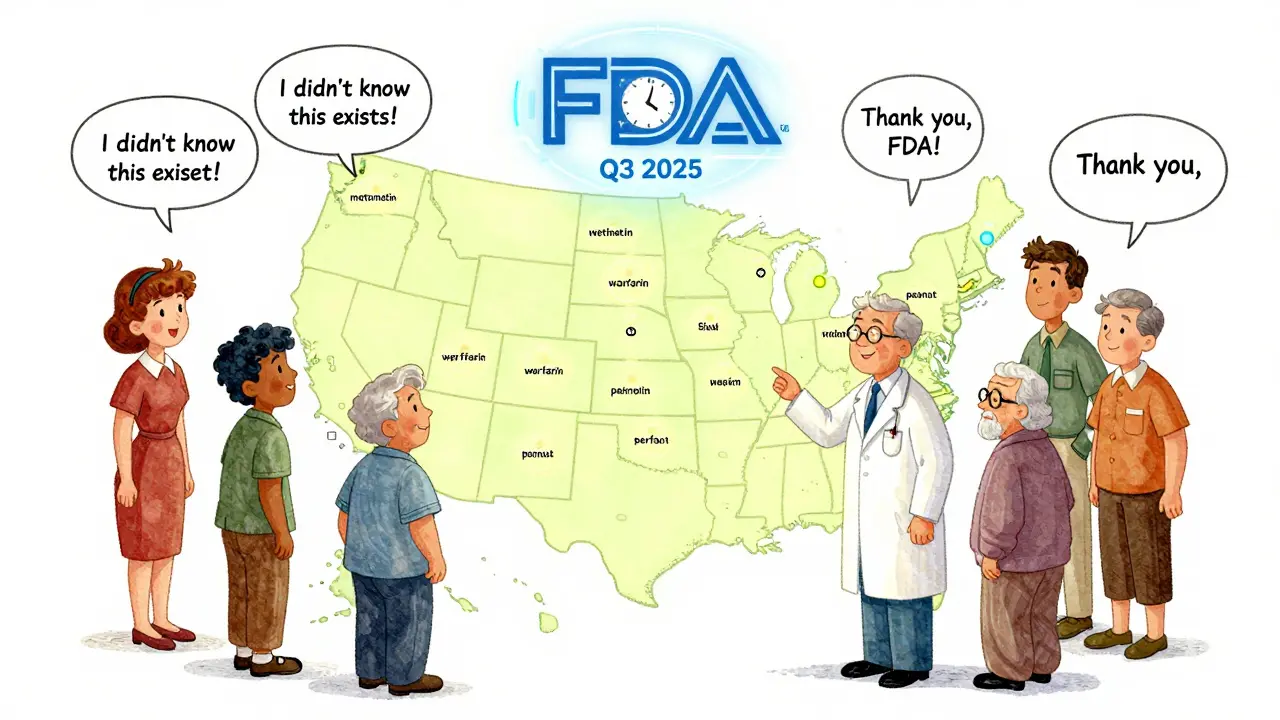
What’s Coming in 2025
The FDA isn’t standing still. In November 2023, they announced plans to merge the three alert systems into one unified platform. By Q3 2025, machine learning will prioritize alerts based on clinical urgency - so the most dangerous ones rise to the top. You’ll get fewer alerts, but the ones you do get will be more important. They’re also doubling the number of keywords you can use - from five to ten - and launching a mobile app. And by December 2025, Spanish-language alerts will go live, finally reaching millions of non-English speakers. This isn’t just tech upgrading. It’s public health evolving.Who Should Subscribe?
If you fall into any of these groups, you need these alerts:- Patients on chronic meds - If you take blood thinners, insulin, antidepressants, or seizure meds, you’re at higher risk for hidden dangers.
- Pharmacists and pharmacy technicians - You’re the last line of defense before a patient gets a dangerous drug. Alerts help you catch recalls before they hit the counter.
- Doctors and nurses - If you prescribe or administer drugs, you need to know when safety profiles change.
- Parents of children with allergies - Keyword alerts for "peanut," "shellfish," or "lactose" can prevent accidental exposure in OTC meds and supplements.
- Caregivers for elderly relatives - Seniors often take multiple medications. A single interaction or recall can be deadly.
You don’t have to be a professional to benefit. If you or someone you care about takes medication, you’re already part of this system. You just need to join it.
Final Tip: Don’t Just Subscribe - Check the Source
Once you get an alert, don’t assume it’s the full story. Go to the FDA’s official page for each alert. The email gives you a headline. The website gives you the data: how many cases, what symptoms, what alternatives exist. The FDA posts detailed summaries with links to clinical studies and manufacturer statements. And if you’re unsure what an alert means? Call your pharmacist. Or email the FDA’s help desk. Their average response time? Under two business days. They’re there to help.Drug safety isn’t something you wait for. It’s something you set up. In a world where medication errors cause hundreds of thousands of injuries every year, getting these alerts isn’t optional. It’s basic care.
Are FDA drug safety alerts free?
Yes. All FDA drug safety alert subscriptions - including Enforcement Reports, MedWatch E-list, and Drug Safety Communications - are completely free. You only need an email address. There are no hidden fees, no premium tiers, and no trials.
How often do FDA drug safety alerts come out?
There’s no fixed schedule. Alerts are sent as soon as the FDA confirms a safety issue. On average, the agency issues 1,200 to 1,500 alerts per year. That’s about 3 to 4 per week. Some weeks you might get none. Others, you might get three in one day. The Enforcement Report subscription lets you choose daily or weekly summaries to control volume.
What’s the difference between MedWatch and Drug Safety Communications?
MedWatch covers all serious safety issues - including recalls, side effects, and device problems. Drug Safety Communications focus only on medications and are written specifically for clinicians and patients. They include deeper analysis: what the data shows, how common the issue is, and what alternatives exist. MedWatch is broader. Drug Safety Communications are more clinical.
Can I get alerts in Spanish?
Not yet, but it’s coming. The FDA plans to launch Spanish-language versions of all three alert systems in Q3 2025. Until then, non-English speakers must rely on translated summaries or third-party tools. The agency acknowledges this gap and is working to fix it.
Do I need to subscribe to all three systems?
No. Most people only need one or two. If you’re a patient taking one or two medications, Drug Safety Communications is enough. If you’re a pharmacist, add Enforcement Reports to catch recalls. If you’re a clinician wanting broad updates, MedWatch is your best bet. Customize based on your role - don’t subscribe to everything.
What if I get too many alerts?
Use keywords. In the Enforcement Report system, you can set up to five custom keywords (like "metformin" or "peanut") so you only get alerts for what matters. You can also switch from daily to weekly summaries. The FDA is adding machine learning in 2025 to automatically filter out low-priority alerts, reducing alert fatigue.
Can I unsubscribe later?
Yes. Every alert email includes an unsubscribe link at the bottom. Click it, and you’ll be removed from that list immediately. You can always resubscribe later if your needs change.
Do these alerts cover over-the-counter (OTC) drugs?
Yes. The FDA’s system covers all regulated products: prescription drugs, OTC medications, biologics, and even dietary supplements. If it’s sold in the U.S. and regulated by the FDA, it’s included. That’s why keyword alerts for "peanut" or "aspirin" work - they catch OTC issues too.
James Rayner
December 15, 2025 AT 17:44It’s funny… I used to think these alerts were just bureaucratic noise. Then my mom got hit with a contaminated blood pressure med - and we had no idea until her pharmacist called. Now I’ve got all three subscriptions. It’s not about being paranoid. It’s about being prepared. 🤍
Kayleigh Campbell
December 16, 2025 AT 04:59So the FDA finally admits they’re not a 1998 dial-up website? Took ‘em long enough. 😏 At least they’re not charging for it. Unlike my cable bill. 🙃
Billy Poling
December 17, 2025 AT 16:10While I appreciate the logistical clarity provided in this exposition, I must emphasize the epistemological gap that persists between institutional transparency and public comprehension. The dissemination of safety data, however methodically structured, remains fundamentally inert without a cultural infrastructure that prioritizes health literacy as a civic duty - a condition which, in contemporary American society, is conspicuously absent. One might argue that the very existence of these subscription services reveals a systemic failure of preventative education, rather than a triumph of regulatory innovation.
Souhardya Paul
December 17, 2025 AT 22:54Great breakdown. I’m a pharmacy tech and I just signed up for Enforcement Reports + Drug Safety Comms. I used to miss half the recalls because I’d scroll past the email. Now I’ve got ‘lisinopril’ and ‘metformin’ as keywords - saved us from a bad batch last month. If you’re reading this and you’re not subscribed… just do it. Five minutes now saves a lot of panic later.
Ron Williams
December 18, 2025 AT 22:00As someone who’s worked in global health, I’m glad to see the FDA finally moving toward Spanish-language alerts. In my community, a lot of elderly folks rely on OTC meds and supplements - but they’re cut off from this info. This isn’t just convenience. It’s equity.
Cassandra Collins
December 20, 2025 AT 06:34Wait… so you’re telling me the government is giving out free info… but only if you check your email? What if they’re using this to track us? I heard the FDA is linked to the CDC and the WHO and they’re all part of the same shadow network. And what about those ‘keywords’? Are they listening to what you search for? I’m not signing up. I’m not falling for it.
Colleen Bigelow
December 21, 2025 AT 10:24Of course the FDA wants you to subscribe - so they can control what you think. They only alert on drugs that don’t compete with Big Pharma. The real dangerous stuff? The ones that make billions? They sit on those reports for years. This is just another way to make you feel safe while they let the real killers slip through. Wake up.
Andrew Sychev
December 23, 2025 AT 07:29YOU’RE ALL BEING MANIPULATED. The FDA doesn’t care about you. They care about stock prices. I’ve seen the leaked emails. The ‘alerts’ are delayed on purpose so Big Pharma can clear inventory. My cousin died from a recalled drug they hid for 11 months. And now you’re all clicking ‘subscribe’ like good little sheep? 🤡
Mike Smith
December 24, 2025 AT 20:04Thank you for this incredibly thorough and vital resource. I’ve shared this with every clinician on my team. The clarity of the three-tiered system is exactly what’s needed - not just in the U.S., but globally. Subscribing isn’t just responsible; it’s professional. You’re not just protecting yourself - you’re protecting the people who depend on you.
Kitty Price
December 24, 2025 AT 21:23Just subscribed to MedWatch and Enforcement Reports. Added ‘peanut’ and ‘insulin’ as keywords. 😌 I’m not a doctor, but my kid has allergies. This feels like the least I can do.
Josias Ariel Mahlangu
December 26, 2025 AT 12:57Why should I trust a government that lets pharmaceutical companies write their own safety guidelines? This system is a placebo. Real safety means banning dangerous drugs outright - not asking people to subscribe to their own endangerment.
Aditya Kumar
December 27, 2025 AT 06:50Too much reading. I’ll just ask my doctor.