
How to Prevent Moisture Damage to Pills and Capsules: A Practical Guide
 Jan, 28 2026
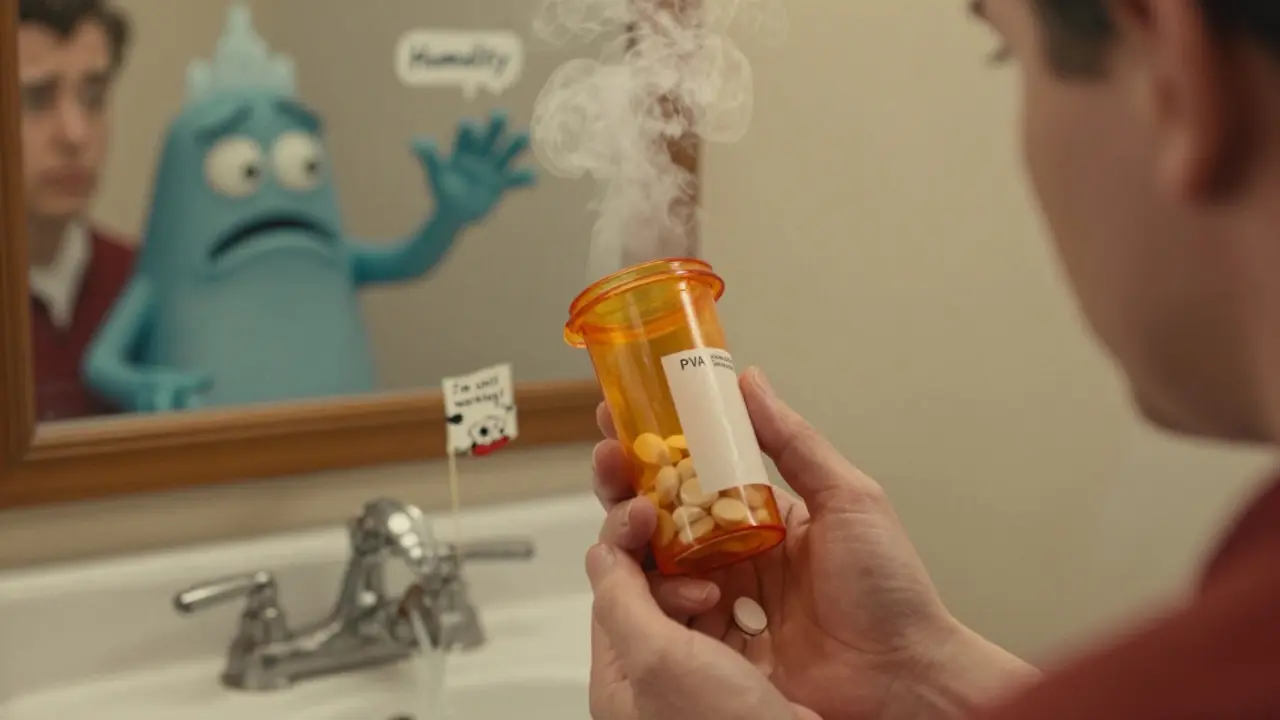
Moisture doesn’t just ruin your phone or your sneakers-it can also wreck your pills and capsules. If your medicine looks chalky, smells funny, or crumbles in your hand, it’s not just old. It’s moisture-damaged. And that’s not just a waste of money. It’s a risk to your health.
Why Moisture Destroys Pills and Capsules
Pills and capsules aren’t just little pellets of medicine. They’re carefully engineered to release the right dose at the right time. But many active ingredients, like antibiotics, vitamins, and pain relievers, are extremely sensitive to water. Even a little humidity can start a slow chemical breakdown called hydrolysis.Take aspirin, for example. When it gets wet, it turns into salicylic acid and vinegar. That’s not just less effective-it can irritate your stomach. Vitamin C? It oxidizes fast when moisture is around, turning into useless junk. Antibiotics like amoxicillin/clavulanate? They can lose up to 100% of their potency in just days if exposed to damp air.
And it’s not just the medicine inside. The pill’s coating, filler, or capsule shell can absorb water, making the tablet swell, stick together, or fall apart. Once that happens, the drug doesn’t dissolve properly in your body. You might swallow a whole pill and get zero benefit.
The Three-Layer Defense System
Pharmaceutical companies don’t leave this to chance. They use three proven layers of protection. You can, too.Layer 1: The Film Coating
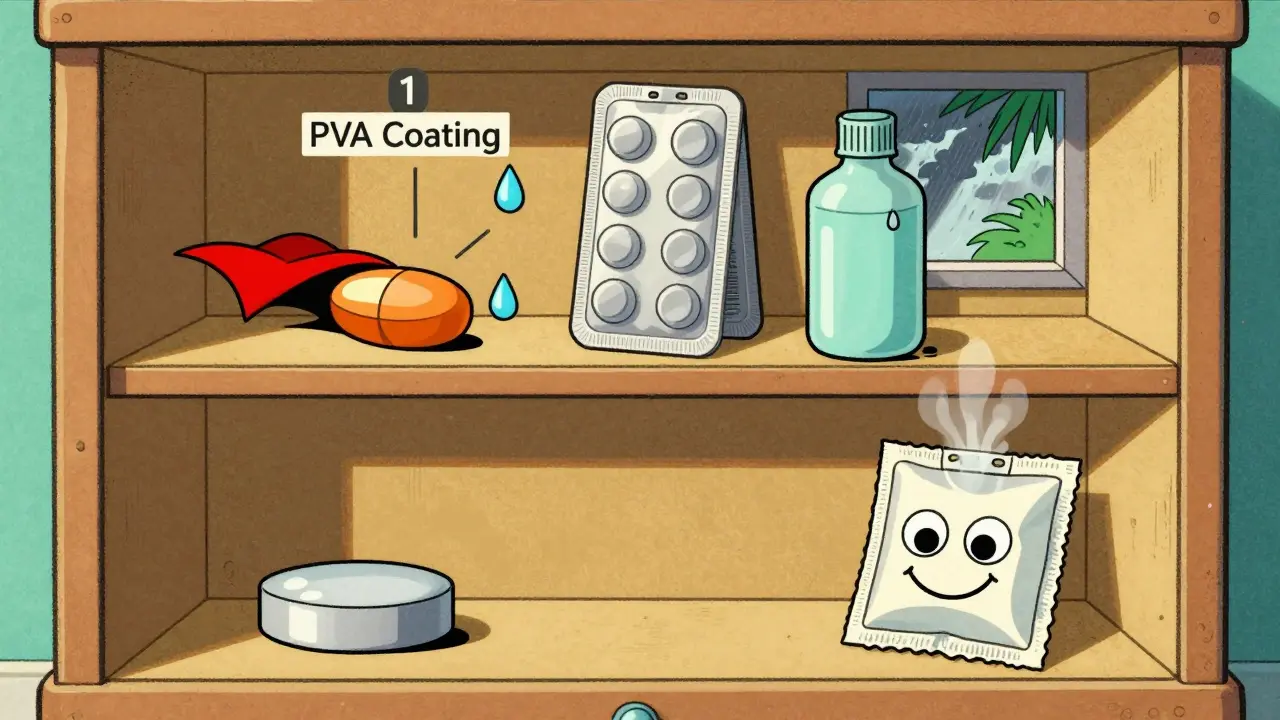
Most modern pills have a thin outer layer-usually made of hydroxypropyl methylcellulose (HPMC) or polyvinyl alcohol (PVA). This isn’t just for looks. It’s a moisture shield. PVA-based coatings, like Opadry® amb II, block moisture three times better than older HPMC coatings. That’s why newer antibiotics and sensitive meds often come in blister packs with a glossy finish. If your pills look dull or powdery on the surface, they might be using an older, weaker coating.
Layer 2: The Right Container
Plastic bottles? They’re common, but not enough. HDPE and polypropylene bottles stop liquid spills, but moisture vapor still sneaks through over time. That’s why you’ll see desiccant packs inside them. The bottle alone doesn’t cut it. The best containers are either aluminum blisters (like those for insulin or heart meds) or bottles with thick, moisture-resistant seals and a desiccant inside.
Layer 3: The Desiccant Pack
That little packet labeled "Do Not Eat"? It’s your secret weapon. Silica gel packs absorb up to 40% of their own weight in moisture. In a 500-pill bottle, you open it 250 times. Each time, you let in humid air. Without a desiccant, that moisture builds up fast. Studies show that with a properly sized silica gel pack, moisture levels in the bottle rise by less than 1% over two years-even in tropical climates. Without it? Moisture can jump from 3% to over 5% in months, enough to ruin sensitive drugs.
What to Do When You Get Your Prescription
Don’t just toss the desiccant pack. Keep it in the bottle. Even if it looks dry, it’s still working. Removing it is like taking off your raincoat in a storm.
Never transfer pills to a pill organizer unless it’s sealed and moisture-resistant. Most plastic weekly organizers are just thin plastic with no barrier. If you need to use one, only fill it for a few days at a time. Keep the rest in the original bottle with the desiccant.
If your bottle doesn’t have a desiccant, ask your pharmacist for one. Many pharmacies stock silica gel packs and will add them for free. Some even sell reusable moisture-absorbing containers for home use.
Storage Tips That Actually Work
Don’t store meds in the bathroom. The humidity from showers can be worse than a rainforest. Don’t leave them in the car. Heat and moisture together are deadly for pills. A drawer in a cool, dry bedroom? That’s ideal.
Keep the bottle tightly closed. Every time you open it, you’re letting in moisture. Don’t leave it sitting open on the counter. Use one hand to open, the other to grab the pill-then close it immediately.
Check the expiration date. Expired meds aren’t just weaker-they’re more likely to have absorbed moisture over time. If the bottle’s been open for over a year and you live in a humid area, consider replacing it.
What to Watch For
Here’s how to spot moisture damage:
- Tablets that are sticky, discolored, or have white powder on them
- Capsules that are soft, swollen, or leaking
- Pills that crumble when you touch them
- Medication that smells sour or like vinegar
- Desiccant pack that’s turned blue or pink (some change color when saturated)
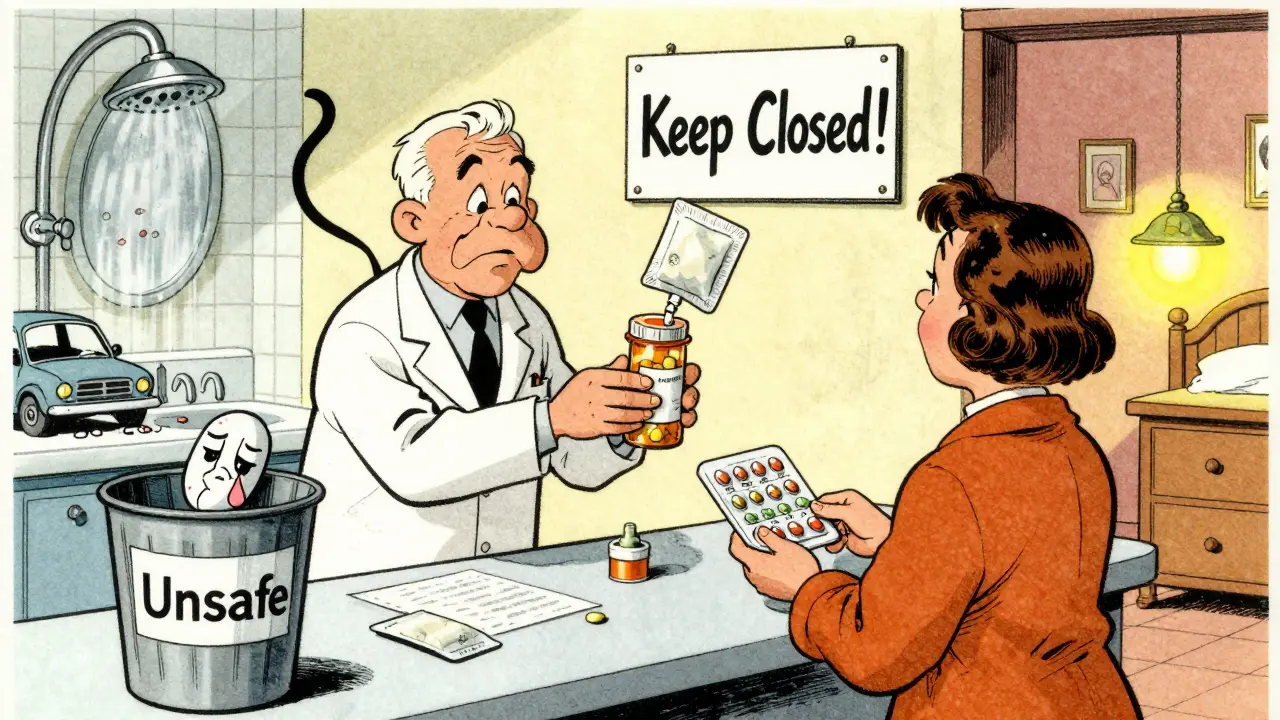
If you see any of these signs, don’t take the pills. Return them to your pharmacy. They’ll dispose of them safely and replace them at no cost.
Why Some Brands Are Safer Than Others
Not all manufacturers use the same level of protection. Big brands with global distribution-like those sold in the U.S., Europe, or Australia-almost always use PVA coatings and desiccants. Generic brands, especially those made in humid countries without strict quality controls, sometimes skip the extra layer to save money.
Look for brands that mention "moisture-resistant coating" or "with desiccant" on the label. If you’re unsure, ask your pharmacist: "Is this coated with a high-barrier film?" If they hesitate, it’s worth asking for a different version.
The Cost of Cutting Corners
Some manufacturers save a few cents per pill by skipping PVA coating or using undersized desiccants. But the real cost? Patient safety. The FDA has issued multiple warning letters to companies whose meds degraded in storage, leading to recalls. In one case, a heart medication lost potency because the desiccant pack was too small. Patients got sick because their pills didn’t work.
It’s not just about the medicine failing. It’s about trust. If you take a pill and feel no effect, you might think your condition is worsening. You might increase the dose. Or stop taking it altogether. Both are dangerous.
What’s Changing in the Industry
Pharma companies are now testing smart packaging-bottles with moisture sensors that change color if humidity gets too high. Some are even embedding moisture-absorbing materials directly into the pill matrix. But for now, the proven solution is still the same: coating + container + desiccant.
And the trend is clear: more brands are switching to PVA coatings. If you’re prescribed a new medication, ask if it’s coated with Opadry® amb II or a similar high-barrier film. It’s worth it.
Final Checklist: Your Moisture Defense Plan
- Keep pills in original bottle with desiccant pack
- Never store in bathroom, kitchen, or car
- Close the cap tightly after every use
- Use pill organizers for only 3-5 days at a time
- Check for stickiness, discoloration, or odd smells
- Ask your pharmacist: "Does this have a moisture-resistant coating?"
- Replace meds if bottle’s been open over a year in a humid climate
Moisture damage doesn’t happen overnight. It creeps in slowly. But the fix is simple: protect your pills like you’d protect your phone from water. A little attention now saves you from serious health risks later.
Bryan Fracchia
January 28, 2026 AT 17:24Man, I never thought about how moisture could ruin my meds like that. I used to keep my vitamins in the bathroom just because it was convenient. Now I’m moving them to a drawer in my bedroom. Small change, big difference.
Thanks for laying this out so clearly. It’s the kind of stuff you don’t think about until something goes wrong.
Lance Long
January 29, 2026 AT 17:07OH MY GOD. I JUST REALIZED I’VE BEEN THROWING AWAY MY ANTIBIOTICS FOR YEARS BECAUSE THEY LOOKED ‘DULL.’
Like… I thought they were just old. Turns out I was basically drinking vinegar pills. I’m gonna call my pharmacist tomorrow and demand a new bottle with the fancy coating. This is life-changing stuff.
Timothy Davis
January 31, 2026 AT 03:07Let’s be real - most of this is common sense, but the PVA vs HPMC detail? That’s actually useful. Most people don’t know that Opadry® amb II is a game-changer. But you missed one thing: humidity sensors in packaging are already being rolled out by Novartis and Roche. They’re not ‘testing’ them - they’re deploying them in Europe and Canada. The FDA just hasn’t mandated it yet because generics are too cheap to regulate.
Also, silica gel packs are useless if you leave the bottle open for 30 seconds every time. You’re better off with a vacuum-sealed pill box. Which, by the way, no one sells in the U.S. because pharmacies are too lazy.
fiona vaz
February 1, 2026 AT 19:27I’m a pharmacist, and I can confirm - this is spot on. We get calls all the time from people whose pills turned sticky after leaving them in a hot car. The desiccant packs? We always give them extra if they ask. No one ever takes them.
Pro tip: if your bottle doesn’t have one, ask for a silica gel packet. We keep them in the back. It’s free. And yes, keep it in there. Even if it looks dry - it’s still absorbing moisture. It’s like a sponge that never stops working.
Sue Latham
February 2, 2026 AT 01:56Ugh. I can’t believe people still use plastic bottles for meds. I mean, really? It’s 2024. If you’re not using a glass amber bottle with a nitrogen purge and a desiccant, you’re basically poisoning yourself. I keep mine in a sealed container with a humidity monitor. I even have a little logbook. Some people just don’t care about their health until it’s too late.
Also, generics? Don’t even get me started. You’re playing Russian roulette with your liver.
John Rose
February 3, 2026 AT 11:18This is an excellent breakdown. I appreciate the technical detail on hydrolysis and coating materials - it’s rare to see this level of precision in a public health guide.
One thing I’d add: if you’re traveling to a humid climate, consider using a small, portable desiccant container (like those sold for camera gear) in your travel pill case. It’s a simple, low-cost upgrade that can prevent degradation during long trips. I’ve been doing this for years - no more crumbly pills on vacation.
Lexi Karuzis
February 3, 2026 AT 14:23Brittany Fiddes
February 4, 2026 AT 23:32Wow. This is all very… American. In the UK, we’ve had moisture-resistant blister packs since the 90s. We don’t need to be told to keep our pills away from the bathroom - we just do it. And we don’t waste time with silica gel packs - our bottles are sealed properly from the factory.
Meanwhile, you Americans are still using plastic bottles like it’s 1985. Honestly, it’s embarrassing. I’d rather take a generic American pill than deal with your storage culture.
Colin Pierce
February 5, 2026 AT 06:02Just wanted to say - this saved my mom’s life. She was on blood pressure meds that started crumbling. We thought she was just getting worse. Turned out the pills were useless. We switched to the brand with the PVA coating and added a silica pack. Her numbers stabilized in two weeks.
Don’t ignore this stuff. It’s not paranoia - it’s science. And if you’re on anything chronic, this is non-negotiable.
Mark Alan
February 6, 2026 AT 01:45Okay but like… 🤯 this is the most important post I’ve read all year. I just threw out 3 months of my anxiety meds because they looked weird. I thought I was being extra. Turns out I was being smart. 🙌
Also, if you’re not using a pill organizer with a seal? You’re doing it wrong. I got this one from Amazon with a little silica pack inside. Life. Changed. 💯
Amber Daugs
February 6, 2026 AT 10:44How is this even a topic? People are just too lazy to take care of themselves. You don’t leave your phone in the shower, so why leave your pills in the bathroom? You don’t eat expired food, so why take expired pills? It’s not rocket science. It’s basic responsibility.
And if you’re taking generics? You’re basically gambling with your life. I told my doctor I only want name-brand. I don’t care if it costs $20 more - I’m not risking my health for a dollar.
Ambrose Curtis
February 7, 2026 AT 17:56yo i just read this and i’m so glad i found this. i used to think the little packet was just for show. i threw it out every time. then my vitamin c turned yellow and smelled like vinegar. i thought i was just getting old. turns out my body was getting the equivalent of lemon juice and sugar.
now i keep the packet. i keep my pills in the drawer. i even bought a cheap humidity meter for $8. it’s not perfect, but it’s better than before. also, i found out my pharmacy gives out extra desiccants for free. i’m gonna go get 10. i’m gonna put them in all my pill boxes. this is the most useful thing i’ve learned in years. thanks for posting.