
How to Manage Overdose Risk During Heatwaves and Illness
 Feb, 23 2026
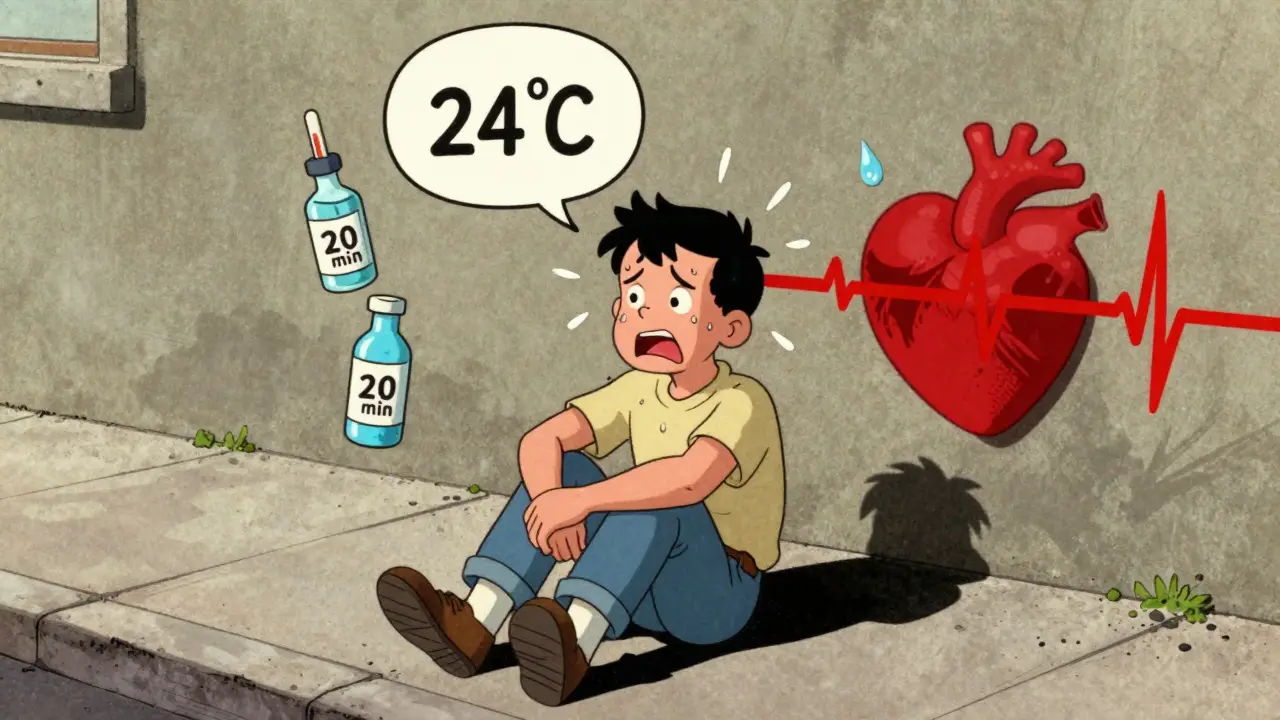
When the temperature climbs above 24°C (75.2°F), something dangerous happens to people who use drugs - their risk of overdose goes up. It’s not just about being hot. It’s about how heat changes your body, how drugs interact with that change, and how little support exists when you need it most. This isn’t theoretical. In New York City, during heat advisories, emergency calls for overdoses spike by 22%. In places like the Pacific Northwest, where summers used to be mild, overdose deaths during heat domes have jumped over three times above normal. And it’s happening everywhere - from urban centers to rural towns that never expected this kind of crisis.
Why Heat Makes Overdoses More Likely
Heat doesn’t just make you sweaty. It rewires your body’s chemistry. When you’re dehydrated - even just 2% of your body weight in fluid loss - drugs in your bloodstream become more concentrated. That means a dose you’ve used safely before can suddenly become too much. Studies show this can increase drug concentration by 15-20%. For stimulants like cocaine or meth, your heart is already working harder. Heat adds another 10-25 beats per minute to your resting heart rate. Add a stimulant on top? That’s a 30-50% extra strain. Your heart can’t keep up. That’s how overdoses happen - not always from too much drug, but from too much stress on your body.
For opioids, heat is just as deadly. Your body normally compensates for opioid-induced breathing slowdown by taking deeper breaths. But heat reduces that compensation by 12-18%. That thin safety margin? It disappears. And if you’re also taking medications for mental health - like antipsychotics or antidepressants - heat can make them less effective or more toxic. About 70% of antipsychotics and 45% of antidepressants behave differently in high heat, according to research from the Colorado School of Public Health. If you’re managing depression or psychosis on top of substance use, this doubles your risk.
Who’s Most at Risk
This isn’t a problem that affects everyone equally. People experiencing homelessness are especially vulnerable. In the U.S., nearly 38% of people without stable housing also have a substance use disorder. They can’t escape the heat. Shelters often turn people away if they’re using drugs. Air-conditioned spaces? Rare. Cooling centers? Most don’t even know they should be open to people who use drugs.
And it’s not just homelessness. People on fixed incomes, those without reliable transportation, or those who can’t afford water or electrolyte drinks are at higher risk. A 2023 CDC review found that only 28% of U.S. city heat emergency plans even mention people who use drugs. That means most public safety efforts - water distribution, cooling vans, check-in calls - don’t reach the people who need them most.
What You Can Do: Practical Harm Reduction Steps
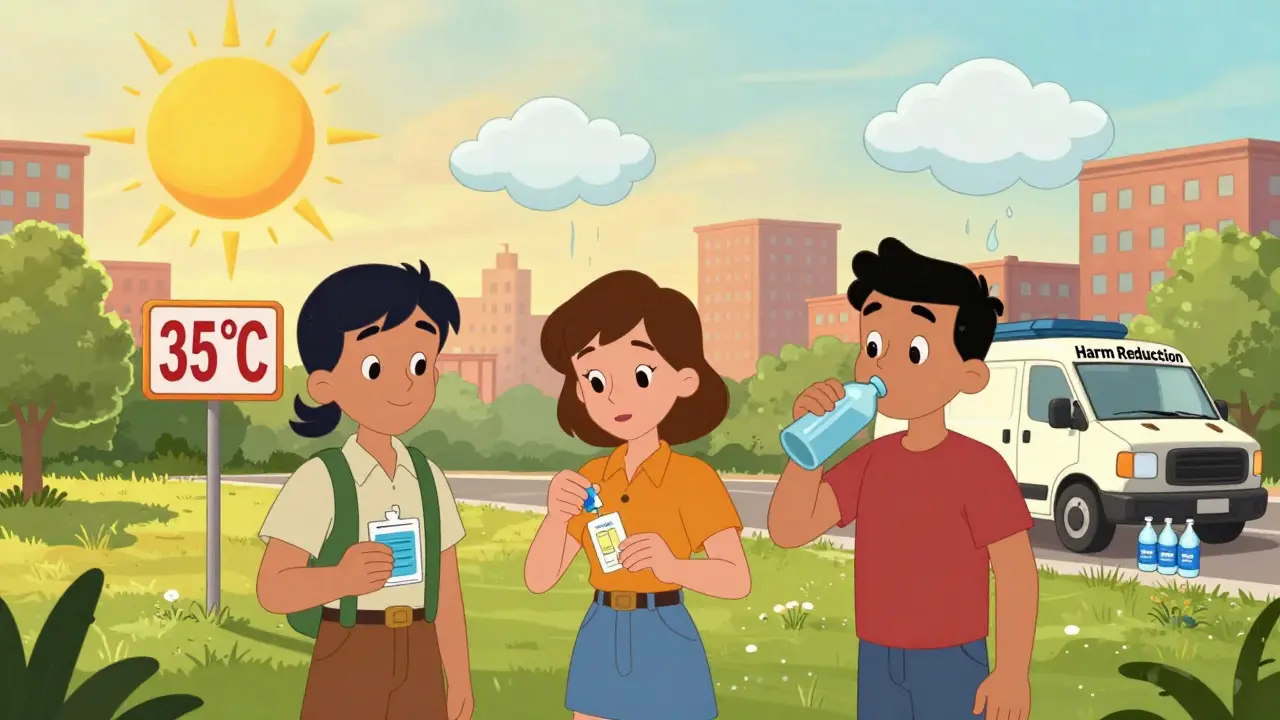
If you or someone you know uses drugs, here’s what actually works during a heatwave:
- Reduce your dose by 25-30% - Even if you’ve used the same amount for years, heat changes how your body processes drugs. Lowering your dose isn’t weakness - it’s survival.
- Drink water every 20 minutes - One cup (8 oz) of cool water (50-60°F) every 20 minutes. Not soda. Not energy drinks. Not alcohol. Water. This simple habit cut heat-related overdose calls by 17% in NYC outreach programs.
- Use electrolytes - Heat flushes out salts your body needs. Electrolyte packets (like those used for athletes) can help. Keep them in your bag. Ask harm reduction groups for them - they often give them out for free.
- Never use alone - If you’re using, have someone nearby who can call 911. If you’re worried about judgment, use a buddy system with someone who understands. Or use a drug checking service - many now offer remote support.
- Carry naloxone - It doesn’t reverse stimulant overdoses, but it can save a life if opioids are involved. Many community centers give it out for free. Learn how to use it. Practice with a training kit.
- Check your meds - If you take prescriptions for mental health, talk to your doctor before a heatwave. Some meds need dose adjustments in high heat. Don’t guess - ask.
What Communities Need to Do
Individual actions save lives, but systems need to change too. Cities that have succeeded - like Vancouver, Philadelphia, and Maricopa County - didn’t just hand out water. They built real partnerships.
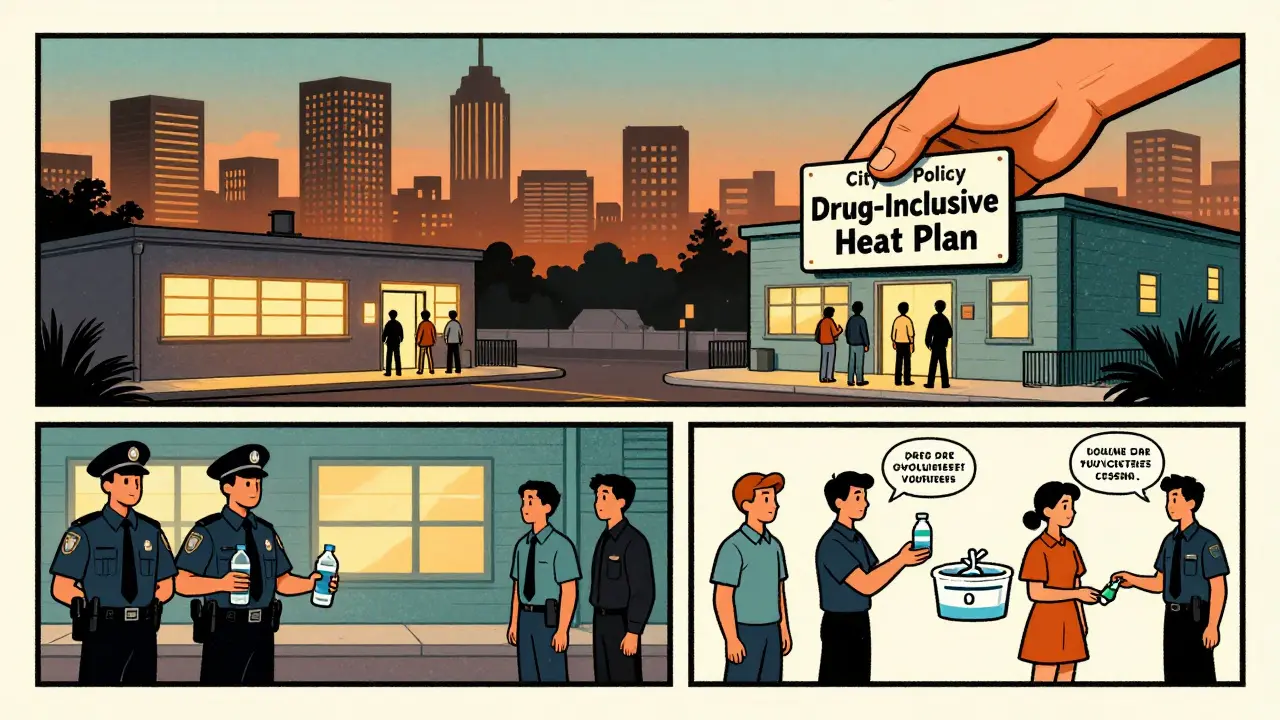
Vancouver opened seven air-conditioned respite centers next to supervised injection sites during the 2021 heat dome. They offered food, water, showers, and medical support. Overdose deaths dropped by 34%. Philadelphia distributes over 2,500 cooling kits every summer - with electrolytes, misting towels, and overdose reversal info. Maricopa County trained volunteers to do wellness checks - 12,000 in one summer, leading to 287 overdose interventions.
These programs work because they don’t punish people for using drugs. They meet them where they are. But only 12 of 50 U.S. states have officially included substance use in their heat emergency plans. That’s changing. In 2023, the U.S. government allocated $50 million to fix this. By December 2025, every state health department must have a plan that includes overdose risk during heatwaves.
What’s Coming: Climate Change and the Future
By 2050, climate models predict 20-30 more days each year will exceed the 24°C threshold where overdose risk spikes. That’s not a future problem - it’s already here. Cities that used to have cool summers are now facing heat domes. People who thought they were safe are now at risk.
New research is showing even more complex effects. Heat may be changing the gut microbiome by 15-20%, which could alter how drugs are absorbed. That’s still being studied, but it means today’s advice might need updating soon. The WHO now recommends that treatment centers adjust buprenorphine doses during heat events - because at 30°C+, its effectiveness drops by 23%.
This isn’t just about saving lives during a heatwave. It’s about fixing the systems that leave people behind. Cooling centers that won’t let people in because they’re using drugs. Police who take away water bottles. Doctors who don’t ask about heat exposure. These aren’t minor oversights - they’re deadly gaps.
Where to Find Help
You’re not alone. Harm reduction groups across the country offer free support:
- Need water, electrolytes, or a place to cool down? Call your local public health department or search for harm reduction organizations in your area.
- Need naloxone? Many pharmacies give it out without a prescription. Some even deliver.
- Need to talk about drug use without judgment? Text or call a peer support line - many are available 24/7.
If you’re a service provider - a nurse, a social worker, a volunteer - ask your agency to include heat risk in their protocols. Use the CHILL’D-Out screening tool. Talk to people about hydration. Don’t assume they know. Don’t assume they’re safe.
Can heat really cause an overdose even if I don’t use more drugs?
Yes. Heat doesn’t just make you feel worse - it changes how your body processes drugs. Dehydration concentrates drugs in your blood, your heart works harder, and your body’s natural safety mechanisms (like adjusting breathing after an opioid dose) weaken. You might use the same amount you always do, but your body can’t handle it anymore. That’s an overdose.
What if I’m on medication for mental health? Should I stop taking it during heat?
Never stop medication without talking to your provider. But do tell them about the heat. About 70% of antipsychotics and 45% of antidepressants become less effective or more toxic in high temperatures. Your doctor may adjust your dose, timing, or suggest extra hydration. Skipping doses can be just as dangerous as the heat.
Are cooling centers open to people who use drugs?
Some are, some aren’t. It depends on the city. In places like Vancouver and Philadelphia, they are. In others, people are turned away. Ask ahead. If a center refuses, contact your local harm reduction group - they often have backup locations or can advocate on your behalf.
I’m worried about being judged if I ask for help. What should I do?
Harm reduction organizations exist to help without judgment. They don’t care if you’re using drugs - they care if you’re alive. Call a peer support line. Visit a needle exchange. Ask for water or electrolytes. These services are designed for people exactly like you. You’re not a burden. You’re someone who deserves to survive.
Is it safe to use drugs in an air-conditioned space?
Air conditioning lowers your risk - but it doesn’t eliminate it. You still need to reduce your dose, stay hydrated, and avoid using alone. Even in cool spaces, dehydration and drug interactions can still lead to overdose. Use the same precautions: water every 20 minutes, carry naloxone, don’t use alone.
Ashley Johnson
February 23, 2026 AT 13:44They’re lying about the heat. It’s not the temperature-it’s the microchips in the water supply. They’re testing how fast people OD when their bodies are stressed. The CDC? Controlled. The $50 million? A cover-up to fund more surveillance. You think they care if you live? They want data. I’ve seen the signs. Watch your bottles. Check for glitter. It’s not electrolytes. It’s tracking powder. Stay off the grid.
Lillian Knezek
February 23, 2026 AT 23:15omg this is so real 😭 i just lost my cousin last summer... he was just trying to stay cool with a fan and a beer... i didn’t even know heat could do this. pls everyone drink water. and carry naloxone. i’m crying rn 💔
Maranda Najar
February 24, 2026 AT 22:25Oh. My. God. This is not just a public health crisis-it is a SINFUL COLLAPSE of societal compassion. The way we treat our most vulnerable-turning away the shivering, the sweating, the desperate souls who just want to survive another day-is a moral hemorrhage. I weep for the children who will inherit this world where hydration is a privilege and life-saving aid is conditional. We are not just failing them-we are erasing them. With every closed door, every cold room, every ignored plea-we are complicit in genocide dressed as policy.
Christopher Brown
February 25, 2026 AT 19:01Stop coddling addicts. If you can’t handle heat, don’t do drugs. No one owes you a cooling center. Take responsibility. Or don’t. But don’t tax me for your choices.
Sanjaykumar Rabari
February 26, 2026 AT 02:28Heat waves are fake. Climate change is a western lie to control poor countries. Why do they say overdose increases? Because they want to shut down our markets. They fear our strength. We have survived worse. Drink water? No. Drink chai. Strong tea. That is real medicine.
Kenzie Goode
February 26, 2026 AT 18:54This is one of the most important things I’ve read this year. I’m sharing it with everyone I know. We have to stop treating people like problems and start treating them like humans. If we can build shelters for pets during wildfires, why can’t we do the same for people? It’s not about politics. It’s about decency.
Khaya Street
February 27, 2026 AT 18:27Interesting read. I appreciate the data. But I must say-many of these recommendations feel like band-aids on a bullet wound. The real issue isn’t hydration or naloxone. It’s poverty. It’s housing. It’s the fact that we let people exist on the edges until they collapse. Fix the system, not the symptoms.
Christina VanOsdol
February 28, 2026 AT 06:46Okay. So. Let’s break this down. Heat → dehydration → 15-20% increased drug concentration? That’s not speculation-that’s peer-reviewed. And antipsychotics? 70% altered? That’s not anecdotal-that’s a CDC-backed study. And yet… we still have people saying "just don’t use"? Please. We’re not talking about partying. We’re talking about people with PTSD, trauma, chronic pain, mental illness-people who use to function. And now? The planet is making survival even harder. We need systemic change. Not pity. Not policing. Not "tough love." We need trained staff. We need air-conditioned spaces. We need funding. We need to stop pretending this is a moral failure. It’s a medical emergency. And we’re failing.
Alfred Noble
February 28, 2026 AT 13:08Good info. I’ve been doing peer support for 5 years. One thing I always say: "Don’t use alone." Sounds simple, but it saves lives. Also-electrolytes are a game changer. I keep a bag in my car with water, salt packets, and 2 naloxone kits. Free from the needle exchange. I give them out if I see someone sweating in the sun. No judgment. Just care. We’re all just trying to make it through the day.
Matthew Brooker
March 2, 2026 AT 09:08Let’s get real-this isn’t just about heat. It’s about who we choose to protect. Every time we build a cooling center but turn people away for using drugs, we say their life doesn’t matter. But it does. We can do better. We have to. Start with a bottle of water. Then a conversation. Then a policy change. One step at a time. You’re not alone. We’re in this together.
Emily Wolff
March 3, 2026 AT 09:42These "harm reduction" tactics are naive. You can’t fix systemic collapse with water bottles and peer support. This is just performative compassion. Real solutions require enforcement, not facilitation. If you’re using drugs, you’re making a choice. Don’t blame the heat. Blame yourself.