
How to Identify Look-Alike Names on Prescription Labels
 Jan, 15 2026
Every year, thousands of patients are harmed because two drugs sound or look too similar on a prescription label. One wrong letter, one misplaced capital, and a patient gets the wrong medicine-sometimes with life-threatening results. This isn’t rare. It’s a daily risk in hospitals, pharmacies, and clinics. The problem is called look-alike and sound-alike (LASA) drug names, and it’s one of the leading causes of preventable medication errors.
Why Do Look-Alike Names Matter?
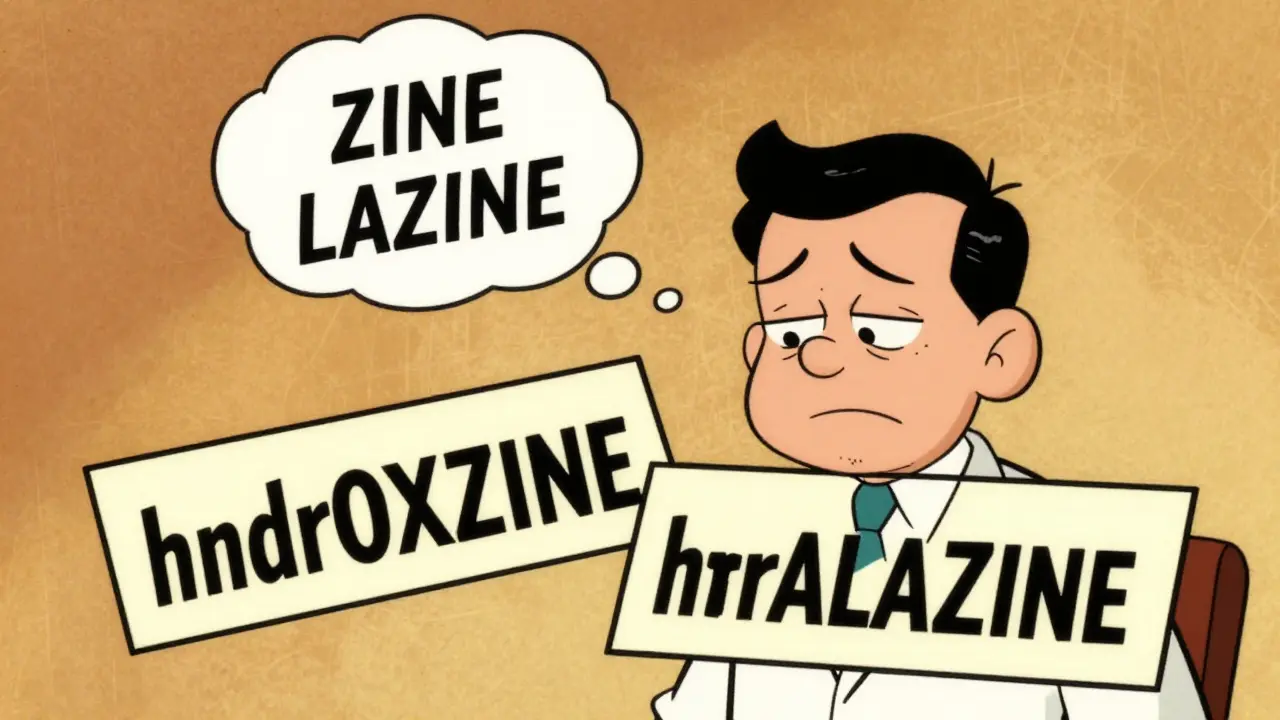
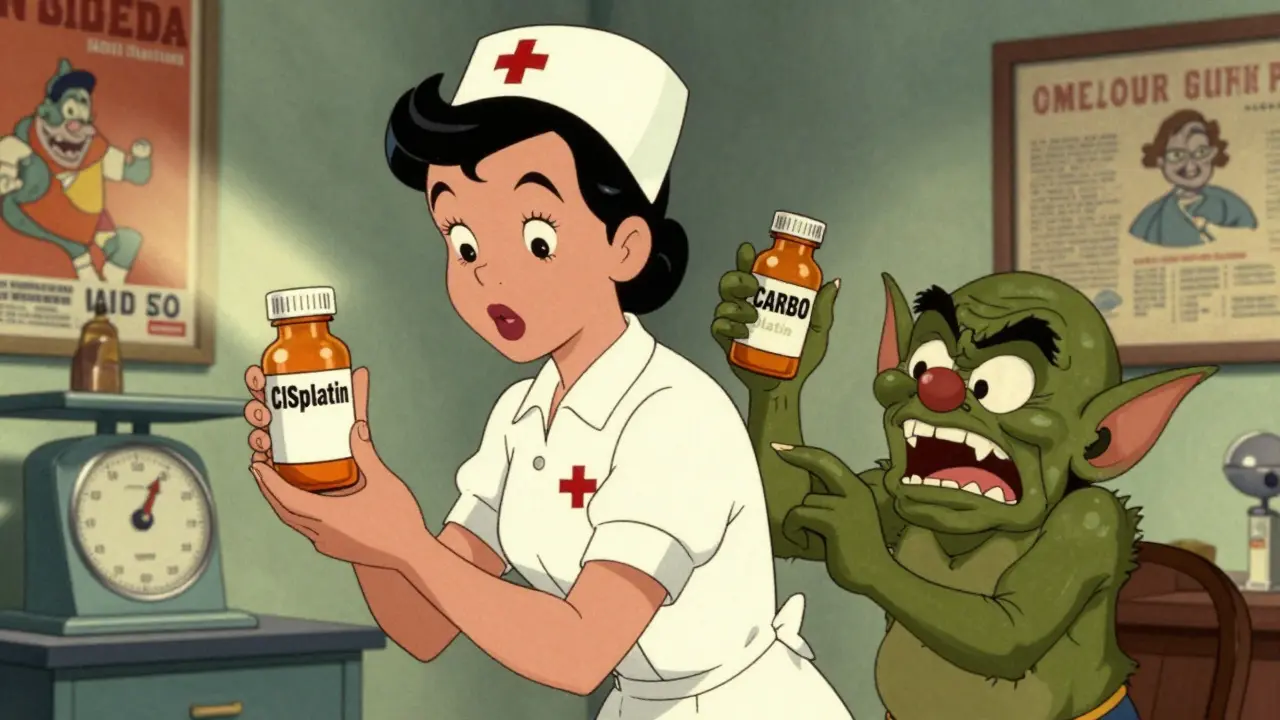
Think about it: Hydroxyzine and Hydralazine. One treats anxiety. The other lowers blood pressure. They share six of the first eight letters. If you’re rushing, tired, or distracted, it’s easy to grab the wrong one. The same goes for Doxepin and Dobutamine, or Cisplatin and Carboplatin. These aren’t typos. They’re official drug names approved by the FDA-and they’re dangerously close.The Institute for Safe Medication Practices (ISMP) says LASA errors make up about 25% of all reported medication mistakes. Over 3,000 pairs of drug names are flagged as high-risk. And here’s the scary part: 34% of these errors reach the patient. Seven percent cause real harm-falls, allergic reactions, organ damage, even death.
What Is Tall Man Lettering?
The most common fix? Tall man lettering (TML). It’s simple: capitalize the parts of the drug name that are different. So instead of hydroxyzine and hydralazine, you see hydrOXYZINE and hydrALAZINE. The uppercase letters jump out-making it harder to mix them up.The FDA started pushing TML in 2001 after a spike in confusion-related deaths. By 2023, they officially recommended TML for 35 high-risk drug pairs. These include:
- vinBLAStine vs. vinCRIStine
- CISplatin vs. CARBOplatin
- doXEPamine vs. doBUTamine
- INSULIN glargine vs. INSULIN detemir
- VALtrex vs. VALCYTE
Studies show TML cuts visual confusion by 32%. That’s huge. But it’s not perfect. If the font is too small, the label is faded, or the screen glitches, the uppercase letters disappear. And if you’re only looking at one name at a time, your brain fills in the gaps-making you think you saw the right one.
How to Spot Look-Alike Names in Practice
You don’t need fancy tech to catch these errors. Just follow a simple three-step check every time you handle a high-risk drug:- Read the full label-not just the first few letters. Say it out loud. Does it sound right for the patient’s condition?
- Double-check with another person-a pharmacist, nurse, or even a colleague. A second set of eyes catches what your brain skips over.
- Read it again before giving it to the patient. This isn’t bureaucracy. It’s your last line of defense.
A 2022 study found this routine cuts errors by 52%. That’s more than half the risk gone with three simple actions.
Technology Helps-But Only If It’s Set Up Right
Electronic health records (EHRs) and pharmacy systems can do a lot to prevent mistakes. But they’re only as good as their settings.Good systems:
- Use TML on every screen, label, and printout
- Block confusing drug names from appearing next to each other in dropdown menus
- Require at least five letters before showing search results
- Only trigger alerts for the highest-risk pairs (not every close match)
One hospital in California cut its LASA errors by 68% just by forcing users to type five letters before a drug list appeared. Before that, nurses were picking from lists of 20+ similar names. No wonder mistakes happened.
Barcode scanning is even better. When you scan the drug, the patient’s wristband, and the order, the system checks for matches. It prevents 86-89% of dispensing and administration errors. But it costs money-around $150,000 per hospital. Not every clinic can afford it.
What’s Missing? The Human Factor
Here’s the truth: even with TML, scanners, and alerts, errors still happen. Why? Because people are tired. Overworked. Distracted.A nurse on Reddit said: “The EHR shows hydroCODONE with tall man letters, but the MAR doesn’t. So I get confused switching between systems.” That’s a system failure. TML on one screen but not another? That’s worse than no TML at all.
Another study found 49% of LASA alerts are ignored. Why? Too many false alarms. If your computer beeps every time you type “morphine” or “insulin,” you stop listening. That’s alert fatigue-and it kills.
Experts agree: TML alone isn’t enough. You need a system. That means:
- Training staff on LASA risks every year
- Using purpose-of-treatment notes (“for neuropathic pain,” “for seizure prophylaxis”) on every prescription
- Keeping a printed list of high-risk pairs in every pharmacy and nursing station
Johns Hopkins Hospital reduced LASA errors by 67% by combining TML, mandatory purpose notes, and smart alerts. That’s not magic. That’s discipline.
Handwritten Prescriptions Are Still a Problem
Even in 2026, a lot of prescriptions are still written by hand. And handwriting? It’s a disaster for LASA names.One survey found 41% of LASA errors happened because a doctor scribbled “Hydralazine” and it looked like “Hydroxyzine.” Poor ink, shaky handwriting, abbreviations-any of those can turn a safe drug into a deadly one.
Electronic prescribing (e-prescribing) cuts this risk dramatically. But if your clinic still uses paper, make sure:
- Doctors write clearly and fully-no abbreviations like “Hyz” or “Hyd”
- Pharmacists call back to confirm anything that looks ambiguous
- Labels are printed in large, high-contrast fonts (12-point minimum, 4.5:1 contrast ratio)
What’s Changing in 2026?
The FDA just added 12 new drug pairs to its TML list in late 2023. By December 2024, all U.S. healthcare systems must use TML for all 35 high-risk pairs. The ISMP is pushing for full adoption by 2026.New tools are coming too:
- AI models like Google’s Med-PaLM 2 can now predict which new drug names might confuse clinicians-with 89% accuracy.
- Smartphone apps are being tested to scan pill bottles and flag look-alike pairs in real time.
- Prescription systems now include mandatory fields for “purpose of use,” so if someone picks the wrong drug, the system asks: “Is this for anxiety or high blood pressure?”
But none of this matters if the system isn’t consistent. TML on the computer? Check. TML on the label? Check. TML on the nurse’s chart? If it’s missing, the chain breaks.
What You Can Do Right Now
You don’t have to wait for new tech or hospital upgrades. Start today:- Always read the full name-not just the first few letters.
- Use tall man lettering in your head. When you see a drug name, mentally highlight the different letters.
- Ask: “Why is this drug being given?” If the reason doesn’t match, pause.
- Speak up. If you see a label that looks wrong, say something. Even if you’re not the pharmacist.
Medication safety isn’t about having the fanciest system. It’s about being present. Slowing down. Checking twice.
One pharmacist in Wisconsin said: “Since we started using TML on our insulin labels, we haven’t had a single mix-up between Humalog and Humulin in 18 months.” That’s not luck. That’s attention.
Don’t assume the system will catch it. Your eyes, your voice, your hesitation-that’s what stops the error.
Common LASA Pairs to Watch For
Here are the most dangerous look-alike pairs you should know by heart:| Drug Pair | Tall Man Lettering | Common Use |
|---|---|---|
| Hydroxyzine / Hydralazine | hydrOXYZINE / hydrALAZINE | Anxiety / High blood pressure |
| Doxepin / Dobutamine | doXEPamine / doBUTamine | Depression / Heart support |
| Cisplatin / Carboplatin | CISplatin / CARBOplatin | Chemotherapy |
| Insulin glargine / Insulin detemir | INSULIN glargine / INSULIN detemir | Long-acting diabetes |
| Valtrex / Valcyte | VALtrex / VALCYTE | Herpes / CMV infection |
| Clonidine / Clonazepam | CLONidine / CLONazepam | Blood pressure / Seizures |
| Levothyroxine / Liothyronine | LEVOthyroxine / LIOthyronine | Hypothyroidism |
What is tall man lettering and how does it help prevent medication errors?
Tall man lettering uses uppercase letters to highlight the parts of similar drug names that differ-for example, hydrOXYZINE vs. hydrALAZINE. This visual cue helps healthcare workers quickly spot the difference, reducing the chance of grabbing the wrong medication. Studies show it cuts visual confusion errors by about 32% when used consistently.
Are look-alike drug names only a problem in hospitals?
No. LASA errors happen everywhere prescriptions are handled: community pharmacies, nursing homes, clinics, and even at home when patients misread labels. Handwritten prescriptions, poor print quality, and rushed workflows make these errors more likely outside hospitals. The risk is highest with high-alert drugs like insulin, opioids, and chemotherapy agents.
Can barcode scanning prevent all look-alike errors?
Barcode scanning prevents up to 89% of dispensing and administration errors by matching the drug, patient, and order. But it doesn’t help if the wrong drug was selected in the first place, or if the barcode is missing, damaged, or scanned incorrectly. It’s a powerful tool, but not a replacement for human verification.
Why do some pharmacies still use handwritten labels?
Some small clinics, rural pharmacies, or emergency settings still rely on handwritten labels due to outdated equipment, budget limits, or lack of e-prescribing integration. But handwritten labels are a major risk for LASA errors. If you see one, always double-check the name and ask for clarification.
What should I do if I suspect a look-alike error has occurred?
Stop. Don’t give the medication. Verify the prescription with the prescriber. Check the patient’s chart for the intended drug and reason. Report the near-miss to your facility’s safety team-even if no harm occurred. Reporting helps improve systems and prevents future errors.
Is there a list of all look-alike drug pairs I can refer to?
Yes. The FDA and ISMP maintain updated lists of high-risk LASA pairs. The FDA’s official list includes 35 pairs as of 2024, with recommendations for tall man lettering. Most hospitals and pharmacies have this list posted in medication areas. You can also find it on the ISMP website or through your facility’s safety resources.
Final Thought: It’s Not About Technology-It’s About Awareness
You can have the smartest EHR, the clearest labels, and the best barcode system. But if the person handling the drug isn’t paying attention, the error still happens.Look-alike names won’t disappear. Drug companies still name drugs that sound alike-it’s hard to avoid. But we can stop the harm. By learning the high-risk pairs. By using tall man lettering in our minds. By asking, “Why is this drug here?” And by speaking up when something feels off.
Medication safety isn’t a system. It’s a habit. And every time you pause, check, and confirm-you’re saving a life.