
Heat Exposure Precautions with Diuretics and Anticholinergics: What You Need to Know
 Jan, 24 2026
Heat Risk Assessment Tool
Your Heat Risk Assessment
Enter your information to calculate your personalized heat exposure risk level.
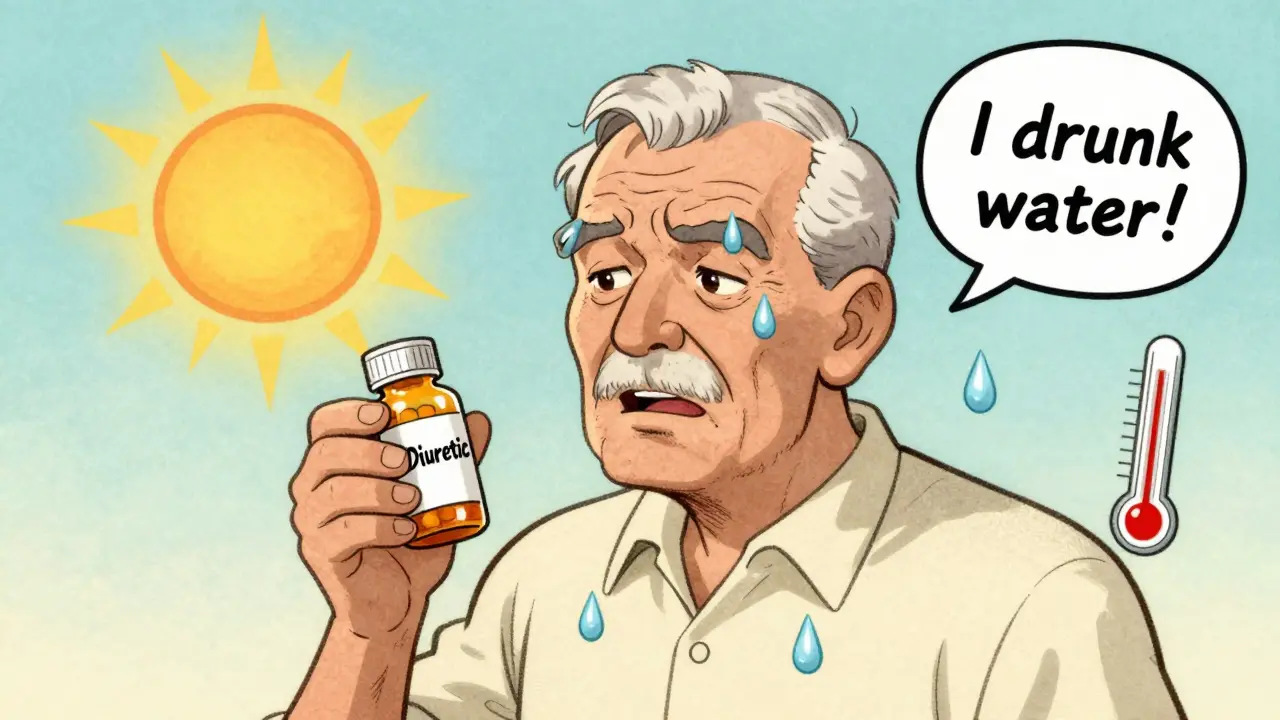
When the temperature rises, most people think about drinking more water, staying in the shade, or wearing light clothes. But for people taking diuretics or anticholinergics, heat isn’t just uncomfortable-it can be life-threatening. These medications, commonly prescribed for high blood pressure, heart failure, overactive bladder, and depression, interfere with your body’s ability to cool itself. And the risk isn’t just during heatwaves. Even mild summer days above 80°F (26.7°C) can trigger serious problems.
How Diuretics Put You at Risk in the Heat
Diuretics, often called water pills, help your body get rid of extra fluid. Common ones include furosemide (Lasix), hydrochlorothiazide (Microzide), and chlorthalidone (Hygroton). They’re lifesavers for people with heart failure or high blood pressure. But in hot weather, they turn into a double-edged sword. Your body loses water naturally through sweat. Diuretics make you pee even more. That means your blood volume drops, your heart has to work harder, and your kidneys can’t hold onto electrolytes like sodium and potassium. Low potassium can cause muscle cramps, irregular heartbeat, and even cardiac arrest under heat stress. A 2022 study of over 1.2 million Medicare patients found that those on loop diuretics had a 37% higher chance of being hospitalized for heat-related illness-even when temperatures weren’t extreme. Dr. Myrna Alexander Nickens from the University of Mississippi Medical Center puts it simply: “Diuretics are very effective in lowering blood pressure. But diuretics can dehydrate you.” That’s the paradox. You need the medicine, but the heat makes its side effects dangerous.Why Anticholinergics Block Your Body’s Cooling System
Anticholinergics work by blocking acetylcholine, a chemical your body uses to control things like bladder contractions, saliva production, and-critically-sweating. Medications like oxybutynin (Ditropan), tolterodine (Detrol), and amitriptyline (Elavil) have a high anticholinergic burden score (ACB = 3), meaning they strongly suppress sweat glands. Sweating is your body’s main way to cool down. If you can’t sweat, your core temperature rises fast. Studies show these drugs can cut sweat production by 30-50%. That’s not just uncomfortable-it’s deadly. During the 2021 Pacific Northwest heat dome, 63% of the people who died from heat exposure were taking either a diuretic or an anticholinergic. The scary part? Many people don’t realize they’re not sweating. Anticholinergics also cause confusion, dizziness, and memory problems-symptoms that look a lot like early heat illness. So someone might feel “just tired” or “a little off” and not realize they’re heading toward heat stroke.What Happens When These Medications Combine
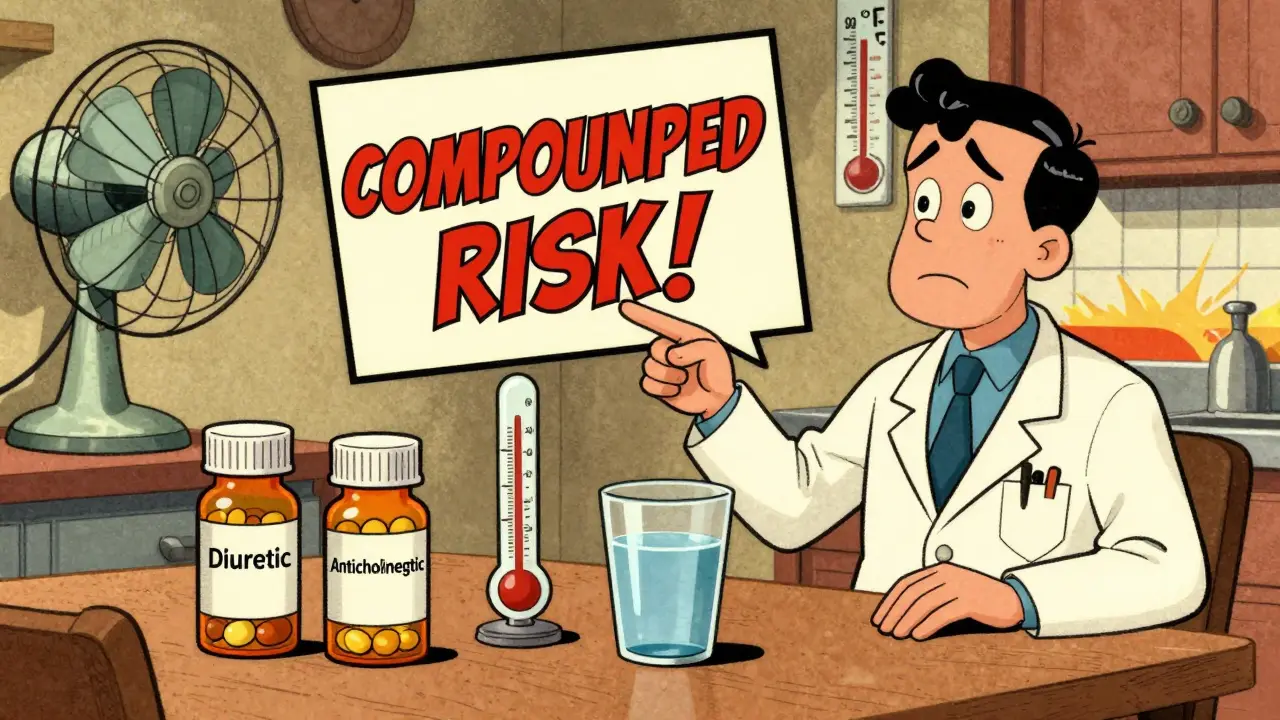
Older adults often take multiple prescriptions. It’s common for someone on a diuretic for blood pressure to also take an anticholinergic for bladder control or depression. When these drugs are taken together, the risks multiply. Diuretics reduce fluid volume. Anticholinergics stop sweating. Together, they create a perfect storm: your body can’t hold onto water, and it can’t release heat. The CDC calls this a “compounded risk.” During heat events, people on both types of medication are far more likely to end up in the hospital-or worse. A 2023 review in the Journal of Thermal Biology found that most studies on this topic were done on young, healthy men in short-term lab settings. That’s not who’s most at risk. The real danger is in older adults with heart disease, kidney problems, or dementia-people who are already vulnerable and often on multiple medications. The science is still catching up, but the real-world data doesn’t lie.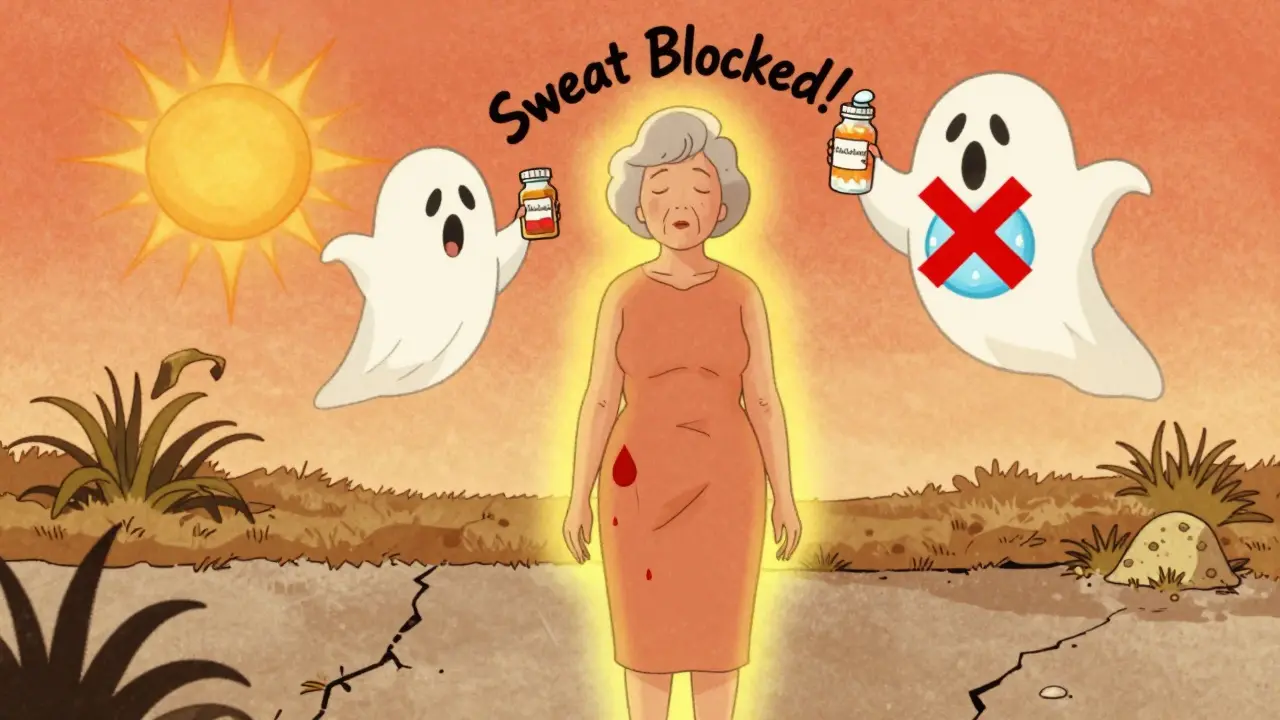
What You Should Do: Practical Steps for Safety
You don’t have to stop your medication. But you do need to adjust how you live during hot weather.- Don’t wait until you’re thirsty to drink. Sip water throughout the day. If you’re on a fluid restriction for heart failure, talk to your doctor about temporary adjustments during heat events. The CDC says it’s okay to loosen fluid limits temporarily when it’s hot.
- Wear the right clothes. Light-colored, loose, breathable fabrics help. Even if you’re not sweating much, air moving over your skin helps with cooling.
- Avoid the sun between 10 a.m. and 4 p.m. Plan errands for early morning or evening. Use a wide-brimmed hat and broad-spectrum SPF 30+ sunscreen. Many anticholinergics make your skin more sensitive to UV rays.
- Know the warning signs. Headache, dizziness, nausea, confusion, rapid heartbeat, or dry, hot skin without sweating are red flags. Don’t brush them off as “just being tired.”
When to Call Your Doctor
If you’re on one of these medications and you start feeling off during hot weather, don’t wait. Contact your provider. You might need:- A temporary dose reduction of your diuretic
- A switch to a different bladder medication with lower anticholinergic burden
- A plan for daily check-ins during heat events
Build a Heat Safety Plan
If you or a loved one is on these medications, create a simple plan:- Keep a list of all medications and their purpose.
- Identify a “buddy”-someone who checks on you twice a day during heat alerts.
- Set phone reminders to drink water every hour.
- Keep a fan or air conditioner running, even if you think it’s not hot enough to need it.
- Have a plan for what to do if symptoms start: call 911 if confused, dizzy, or skin is hot and dry.
The Bigger Picture: Climate Change and Medication Risks
This isn’t just a summer issue anymore. Between 1970 and 2020, the number of days above 90°F in the continental U.S. rose by 47%. By 2025, climate models predict even more frequent, longer, and more intense heat events. The EPA says 92% of heat-related deaths in 2022 involved people taking at least one medication that affects thermoregulation. Researchers at Penn State and the National Institute on Aging are now studying how these drugs affect older adults in real-world heat conditions. Their work may lead to personalized risk scores based on medication combinations, age, and local climate data. For now, the best protection is awareness. If you’re on a diuretic or anticholinergic, you’re not just at risk during a heatwave. You’re at risk every time the temperature climbs above 80°F. And that’s something you need to plan for-every single summer.Can I stop taking my diuretic if it’s too hot?
No. Stopping your diuretic without medical supervision can cause dangerous fluid buildup, high blood pressure, or worsening heart failure. Instead, talk to your doctor about adjusting your dose temporarily during hot weather. Many people need a lower dose in summer, but only your provider can safely make that change.
Do all anticholinergics stop sweating equally?
No. Medications are ranked by anticholinergic burden (ACB) score. Drugs with ACB = 3-like oxybutynin, tolterodine, and amitriptyline-strongly block sweating. Those with ACB = 1 or 2, like some newer bladder meds, have much less effect. Ask your pharmacist to check your medication’s ACB score. Switching to a lower-score drug can reduce heat risk without losing benefits.
Is it safe to use a fan if I’m on anticholinergics?
Yes. Fans help cool your skin through air movement, even if you’re not sweating much. They’re a safe, low-cost way to lower your body temperature. But don’t rely on fans alone in extreme heat. Use them with air conditioning or cool showers for best results.
What if I live alone and don’t have anyone to check on me?
Many communities have free or low-cost wellness check programs for seniors during heat alerts. Contact your local Area Agency on Aging, senior center, or city emergency management office. You can also set automated phone alerts or use a smart speaker to remind you to drink water and check your symptoms daily.
Should I avoid exercise if I’m on these medications?
You don’t have to stop exercising, but timing matters. Avoid outdoor activity when it’s hot. Walk early in the morning or in air-conditioned spaces like malls or community centers. If you feel dizzy, nauseous, or unusually tired during activity, stop immediately. Heat illness can develop fast-don’t push through it.
Angie Thompson
January 26, 2026 AT 07:00Yesss this is so real 😭 I’m on hydrochlorothiazide and last summer I thought I was just ‘being lazy’-turned out I was almost in heat stroke. My mom had to drag me inside because I was mumbling like a zombie. Never ignore dry skin + dizziness. Drink water like it’s your job. 💦🫧
James Nicoll
January 27, 2026 AT 03:11So let me get this straight-our bodies are basically malfunctioning Androids running outdated firmware, and the meds are the bloatware that makes everything crash when it hits 80°F. Thanks, Big Pharma, for the ‘heat-resistant’ package. 🙃
John Wippler
January 28, 2026 AT 17:25People don’t realize this isn’t just about ‘being careful’-it’s systemic. We’ve got millions of seniors on these meds because they work, and we’ve got climate change making summers deadlier every year. But no one’s talking about redesigning care for this new reality. We need public health campaigns, pharmacy alerts, maybe even heat-risk labels on prescriptions. This isn’t personal-it’s public health failure. And we can fix it if we stop treating it like an individual problem.
My grandma’s on oxybutynin and Lasix. She’s got a fan, a water alarm, and my sister checks in every day. That’s the bare minimum. We owe more than that to the people keeping us alive with pills.
rasna saha
January 29, 2026 AT 12:24This is so important. I’m from India and we don’t talk enough about how meds and heat mix. My uncle had a stroke last year during a power cut-he was on a diuretic and didn’t realize he wasn’t sweating. Please share this with your elders. Safety isn’t optional.
Skye Kooyman
January 30, 2026 AT 20:12fan good
stop meds bad
drink water yes
Uche Okoro
January 31, 2026 AT 08:35Thermoregulatory pharmacodynamics are being grossly underprioritized in public health discourse. The pharmacokinetic interaction between anticholinergic burden and evaporative heat dissipation constitutes a high-risk phenotypic vulnerability, particularly in geriatric polypharmacy cohorts. The EPA’s 92% statistic is not merely correlational-it is a direct pharmacological consequence of neurochemical blockade of eccrine gland function under thermal stress. We require institutionalized pharmacovigilance protocols, not anecdotal advice.
shivam utkresth
January 31, 2026 AT 20:10Man, I used to think sweating was just for gym rats. Then my dad got on amitriptyline for his nerves and stopped sweating like… ever. One day he passed out in the garage. Turned out he didn’t even know he wasn’t cooling down. Now we’ve got AC running 24/7, water reminders on his phone, and he switched to a lower ACB med. Big win.
Also, fans are underrated. My cousin in Nigeria says they use wet cloths and ceiling fans like it’s an art form. We could learn a lot.
Aurelie L.
February 2, 2026 AT 13:14I knew someone who died like this. No one saw it coming. She just ‘went to sleep’ in her chair. It’s not a heatwave. It’s a slow murder by prescription.
bella nash
February 2, 2026 AT 14:01It is imperative to underscore that the cessation of pharmacological intervention without the oversight of a licensed medical professional constitutes a violation of established clinical guidelines and may precipitate deleterious physiological outcomes, including but not limited to volume overload, hypertensive crisis, and exacerbation of underlying cardiovascular pathology. The prudent course of action, therefore, is not to discontinue therapy, but rather to implement adjunctive environmental and behavioral modifications in concert with the prescribing physician. This is not a matter of preference-it is a matter of medical necessity.