
Generic Drug Safety in Older Adults: What You Need to Know
 Dec, 26 2025
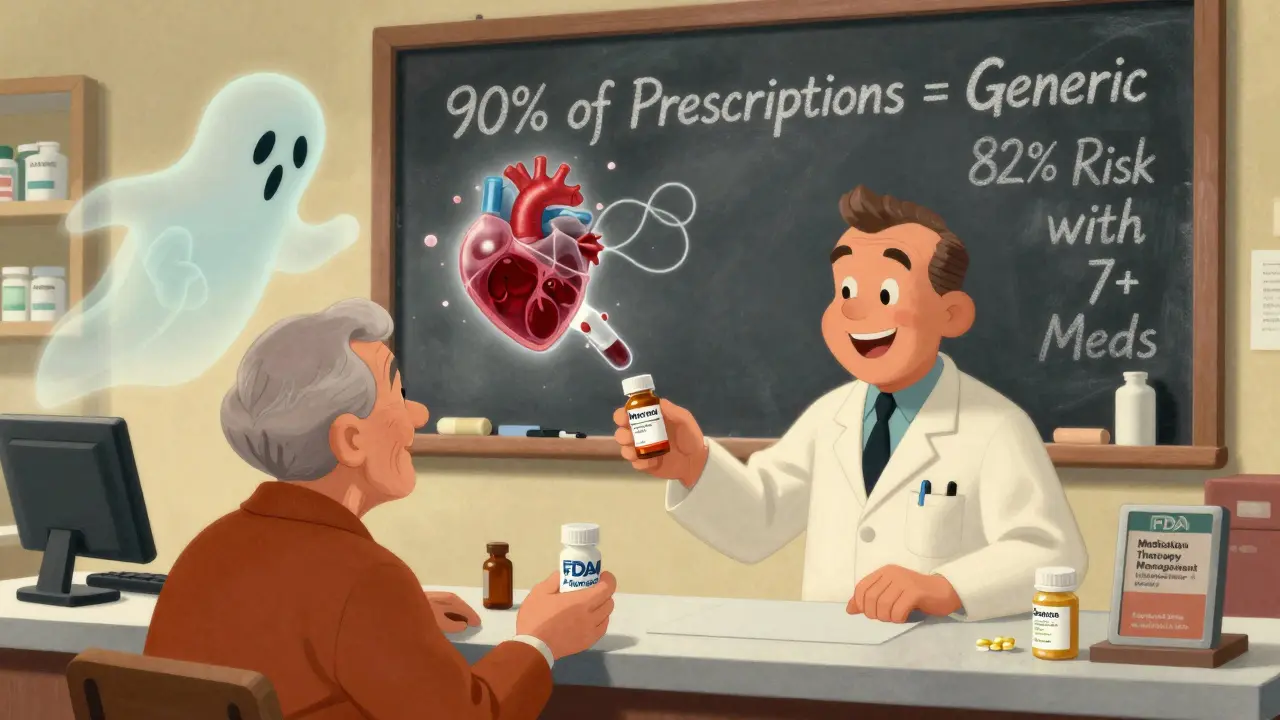
When you’re over 65, taking medication isn’t just about popping a pill-it’s about surviving a minefield of changes in your body, your prescriptions, and even your pharmacy shelf. Generic drugs are everywhere. About 90% of prescriptions for older adults are filled as generics. They’re cheaper, widely available, and approved by the FDA as just as safe and effective as brand-name versions. But here’s the catch: what works for a 40-year-old might be dangerous for an 80-year-old-even if it’s the same drug in a different bottle.
Why Your Body Responds Differently After 65
Your liver doesn’t process drugs like it used to. Your kidneys don’t flush them out as fast. Your body holds onto more fat and less water. These aren’t minor changes-they’re major shifts in how medicine moves through you. A dose that’s perfectly safe at 50 can become an overdose at 75.Studies show that by age 75, drug metabolism can drop by up to 30%. That means a drug stays in your system longer. It builds up. And instead of helping, it starts hurting. This is why a "normal" dose for most adults is often too much for someone older. The Caregiver.org 2023 guide says it plainly: "A 'normal dose' of a medication can be an overdose for many older persons."
Some drugs are especially risky. Beta blockers can slow your heart too much-up to 30% of older adults on them develop bradycardia. Digoxin, used for heart failure, can trigger dangerous heart rhythms in 10-15% of seniors. Insulin and sulfonylureas for diabetes? They can cause low blood sugar so severe it leads to falls, confusion, or even brain injury in 20-25% of cases.
Polypharmacy: The Silent Killer
Taking five or more medications? You’re not alone. The average Medicare beneficiary fills 48 prescriptions a year, and nearly 90% of those are generics. But the more pills you take, the more danger you’re in.Here’s the math:
- Two meds? 13% chance of an adverse reaction.
- Five meds? 58%.
- Seven or more? 82%.
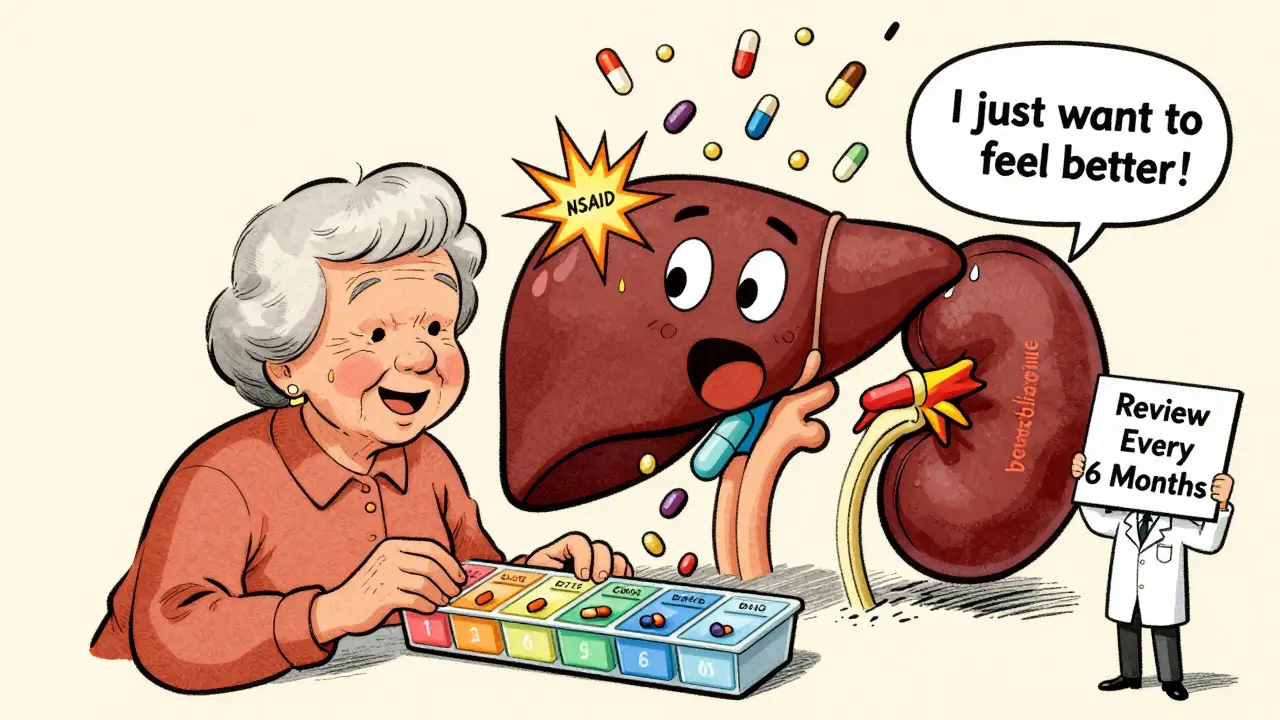
It’s not just about the drugs themselves-it’s about how they interact. A blood thinner plus a painkiller. An antidepressant plus a sleep aid. These combinations can turn harmless pills into silent threats. The Beers Criteria 2023, updated by the American Geriatrics Society, lists dozens of medications that should be avoided or used with extreme caution in older adults-regardless of whether they’re generic or brand-name.
Generic vs. Brand: Is There a Real Difference?
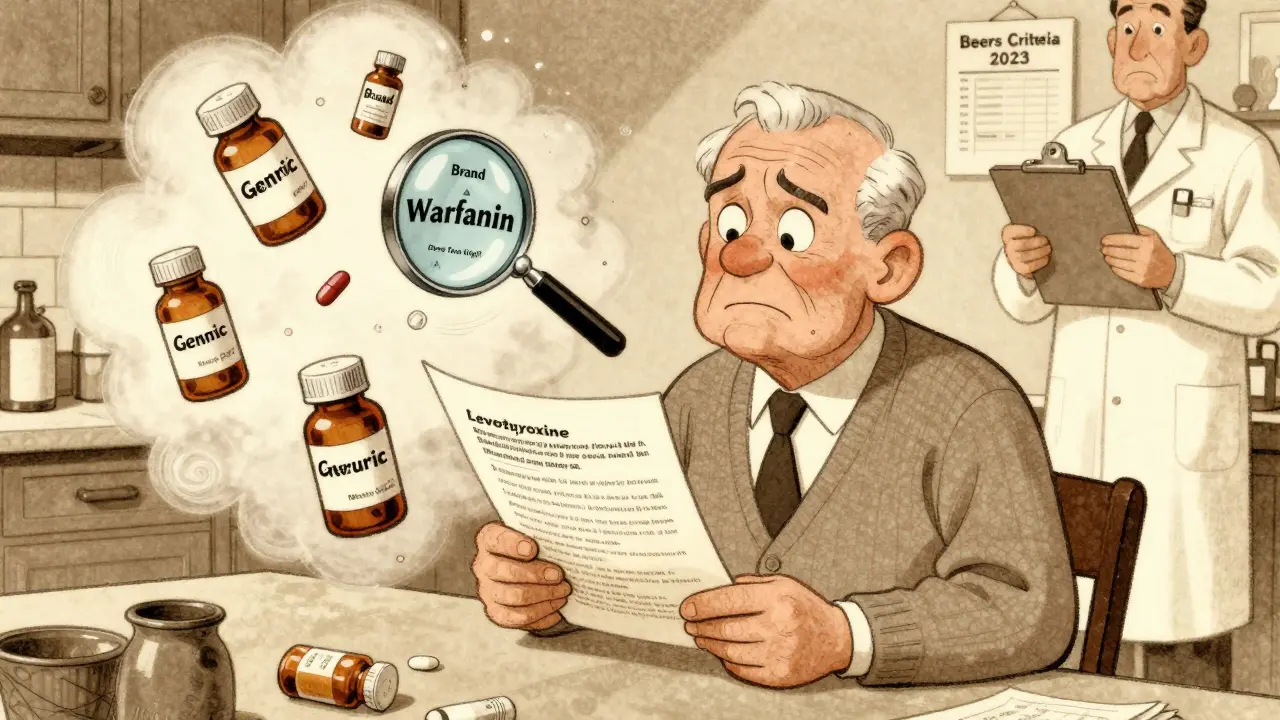
The FDA says no. Generic drugs must contain the same active ingredient, strength, and dosage form as the brand. They must be bioequivalent-meaning they work the same way in your body, within a tight range of 80-125% of the brand’s effect.But for some drugs, that small window matters. Take warfarin, a blood thinner with a narrow therapeutic index. Even tiny changes in blood levels can mean the difference between preventing a clot and causing a bleed. A 2023 study found that 42% of older adults believe generic warfarin is riskier than brand-name Coumadin-even though clinical studies show 98.7% therapeutic equivalence.
And here’s the twist: the fear isn’t always irrational. Some seniors report instability after switching. One Reddit user shared that her 82-year-old mother’s TSH levels went haywire after switching from brand-name Synthroid to generic levothyroxine. It took three dose adjustments over six months to get it right. While this isn’t common, it happens often enough that doctors now monitor thyroid levels closely after any switch.
The same applies to antidepressants, seizure meds, and heart drugs. The Beers Criteria added SNRIs to its list of potentially inappropriate medications for seniors with a history of falls, citing a 37% higher fall risk. That risk exists whether the drug is generic or brand. The problem isn’t the label-it’s the drug itself.
What the Experts Really Say
Dr. Michael Steinman, a geriatrician at UCSF, put it bluntly: "The fundamental issue isn’t generic versus brand, but rather appropriate medication selection considering age-related pharmacokinetic changes and multimorbidity."That’s the real issue. Most drug studies are done on healthy, younger adults. But older people don’t have one disease-they have three, four, or five. Diabetes. Arthritis. Heart failure. Depression. Each condition brings its own meds. And those meds don’t just interact with each other-they interact with aging organs.
Dr. Dima Qato, who led a 2023 study on seniors’ beliefs about generics, found that when pharmacists took time to explain the safety of generics, patient acceptance jumped by 37%. The problem isn’t the science-it’s the lack of clear, calm conversations.
The FDA still stands by its position: generics are safe. But they’re also acknowledging that older adults need extra care. Their 2022 Sentinel Initiative now tracks adverse events by age group. Early data shows generic and brand-name drugs have similar safety profiles-except for a few high-risk cases like warfarin, where reporting rates among adults over 80 are 1.8x higher for generics. That doesn’t mean generics are less safe. It means older adults are more vulnerable-and we’re not always watching closely enough.
How to Stay Safe with Generic Drugs
You don’t have to avoid generics. You just need to manage them smarter.- Get a full medication review every 3-6 months. A pharmacist can spot duplicates, interactions, and outdated prescriptions. Studies show this cuts adverse events by 27%.
- Keep an updated list. Write down every pill, supplement, and OTC drug. Bring it to every doctor visit. This reduces duplicate prescribing by 41% in Medicare patients.
- Ask: "Is this still necessary?" Many seniors stay on medications long after they’re needed. Aspirin for heart protection? It’s no longer recommended for most people over 70-it raises bleeding risk without clear benefit.
- Watch for changes after a switch. If you or a loved one feels different after switching to a generic-more tired, dizzy, confused-don’t assume it’s "just aging." Call your doctor. Check blood levels if it’s a critical drug like warfarin or thyroid hormone.
- Use pill organizers. Color-coded containers or automated dispensers reduce errors by 34%. Confusion between similar-looking pills is a real problem-28% of medication errors in seniors involve generic packaging.
- Request large-print labels. Sixty-five percent of adults over 65 have vision problems. If you can’t read the label, you can’t take the drug safely.
The Bottom Line
Generic drugs aren’t the enemy. They’re a lifeline-saving seniors thousands a year in drug costs. But safety isn’t about the name on the bottle. It’s about matching the drug to the person. A 78-year-old with kidney trouble shouldn’t take the same dose of a drug as a 55-year-old, no matter if it’s generic or brand.The best way to protect yourself or a loved one? Stay informed. Ask questions. Don’t assume a cheaper pill is automatically safe. And never stop monitoring how your body responds.
Medication safety in older adults isn’t about choosing between brand and generic. It’s about choosing the right drug, at the right dose, for the right person-and making sure no one’s left guessing.
Are generic drugs really as safe as brand-name drugs for older adults?
Yes, according to the FDA and the National Institute on Aging, generic drugs are required to meet the same standards for safety, strength, and effectiveness as brand-name drugs. However, older adults may respond differently due to age-related changes in metabolism, kidney function, and body composition. While the active ingredient is identical, differences in inactive ingredients or packaging can sometimes cause confusion or minor variations in how a person feels-especially with narrow therapeutic index drugs like warfarin or levothyroxine. Close monitoring after switching is recommended.
What medications should older adults avoid?
The 2023 Beers Criteria lists dozens of medications that pose higher risks for seniors, regardless of brand or generic status. These include: benzodiazepines (like diazepam), anticholinergics (like diphenhydramine), nonsteroidal anti-inflammatories (NSAIDs like ibuprofen), muscle relaxants (like cyclobenzaprine), and certain antipsychotics. Drugs like rivaroxaban and SNRIs also carry increased risks for falls or bleeding in older adults. Always check the Beers Criteria list with your doctor or pharmacist before starting or continuing any medication.
Can switching from brand to generic cause problems?
For most drugs, no. But for drugs with a narrow therapeutic index-like warfarin, levothyroxine, phenytoin, or lithium-even small changes in blood levels can cause issues. Some seniors report feeling different after a switch, even when lab results show equivalence. If you notice new side effects-dizziness, fatigue, confusion, or unstable lab values-contact your provider. They may need to recheck blood levels or consider switching back temporarily.
How can I reduce the risk of adverse drug reactions?
Start by simplifying your regimen. Ask your doctor: "Is this medication still necessary?" Get a full medication review with a pharmacist every 3-6 months. Use a pill organizer. Keep an updated list of all medications-including supplements and OTC drugs-and bring it to every appointment. Avoid alcohol with sedatives or painkillers. And never stop or change a dose without talking to your provider.
What should I do if I think a generic drug isn’t working?
Don’t assume it’s the generic. First, check if you’re taking it correctly-timing, food interactions, missed doses. Then, ask your doctor to check blood levels if applicable (e.g., thyroid, warfarin, seizure meds). If levels are normal and symptoms persist, the issue may be another drug, an underlying condition, or aging itself. In rare cases, switching back to brand-name may be considered-but only after ruling out other causes.
Are there any new safety tools for older adults taking generics?
Yes. The FDA launched a pilot program in Q2 2024 requiring enhanced labeling for high-risk generic drugs used by older adults, including clearer warnings and larger print. The American Geriatrics Society is also developing AI-driven tools to predict individual medication risks based on age, kidney function, and current drug list. Meanwhile, Medicare and many pharmacies now offer free medication therapy management (MTM) services-where a pharmacist reviews all your meds and gives you a personalized action plan.
Angela Spagnolo
December 27, 2025 AT 09:27Wow, this post really hit home… I’ve been helping my mom manage her meds for years, and I swear, switching her to generic levothyroxine was a nightmare-she got so dizzy, her TSH went wild, and we thought it was dementia at first. Took three tries and a year to stabilize. I get that generics are fine for most, but for older folks? It’s not just chemistry-it’s personal. I wish pharmacies would warn us before switching… they just slap on a new label and call it a day.
Sarah Holmes
December 28, 2025 AT 01:08It is an egregious and unconscionable failure of the medical-industrial complex to allow the substitution of generic pharmaceuticals for elderly patients without mandatory, physician-ordered, pharmacokinetic monitoring. The FDA’s 80-125% bioequivalence standard is not a safety threshold-it is a statistical loophole exploited by corporations to offload risk onto the frail. This is not medicine. This is actuarial cruelty dressed in white coats.
Jay Ara
December 29, 2025 AT 11:36my grandpa took 8 pills a day and switched to generics without telling anyone. one day he just stopped eating. turned out the new generic for his blood pressure made him dizzy-he’d fall walking to the fridge. now we keep a list, use a pill box, and always ask the pharmacist. simple stuff, but it saves lives. don’t overthink it, just stay alert.
Michael Bond
December 30, 2025 AT 04:50Generic isn’t the problem. Overprescribing is.
Kuldipsinh Rathod
December 31, 2025 AT 07:57my aunt switched from brand to generic warfarin and her INR went from 2.4 to 4.8 in two weeks. no one told her to get tested. she almost bled out. now she only takes brand and we pay out of pocket. worth every penny. safety > savings.
SHAKTI BHARDWAJ
December 31, 2025 AT 09:45OH MY GOD I KNEW IT!! I TOLD MY DOCTOR THAT GENERIC LEVOTHYROXINE WAS A TRAP!! MY MOM STARTED FALLING AND FORGETTING THINGS AND THEY SAID IT WAS "JUST AGING" BUT I KNEW!! NOW SHE'S ON BRAND AND SHE'S HERSELF AGAIN!! THE FDA IS IN THE POCKET OF BIG PHARMA!! THEY DON'T CARE ABOUT OLD PEOPLE!!
Matthew Ingersoll
January 1, 2026 AT 20:41There’s a cultural component here too. In many immigrant families, the pharmacist is the trusted medical authority. When a generic is switched without explanation, it’s not just a drug change-it’s a breach of trust. I’ve seen elders refuse meds because they don’t recognize the pill’s shape or color. Packaging matters as much as chemistry. The FDA’s new labeling initiative is a step, but it needs to be global, not just American.
carissa projo
January 2, 2026 AT 15:58Let’s not romanticize brand-name drugs as some sacred, untouchable elixir-because they’re not. But let’s also not reduce aging to a math problem where ‘bioequivalent’ equals ‘safe.’ The body isn’t a test tube, and a 78-year-old with three chronic conditions isn’t a 45-year-old with a single prescription. What we need isn’t just better labeling or stricter monitoring-it’s a shift in mindset: from treating diseases to honoring the whole person. The right drug, at the right dose, for the right person-that’s not a slogan. It’s a sacred promise we’ve forgotten how to keep.
david jackson
January 2, 2026 AT 16:00Okay, I’ve been reading this whole thing and I just need to say-this isn’t even about generics versus brand. This is about how our entire healthcare system treats older adults like statistical noise. We run clinical trials on 30-year-olds. We let pharmacists switch meds without consent. We don’t train doctors in geriatric pharmacology. We don’t fund medication therapy management for seniors. We don’t even make labels readable. And then we act shocked when someone has a bad reaction? This isn’t a drug problem. This is a society problem. We’ve normalized neglect. And now we’re blaming the pills. The pills don’t care. The pills don’t know who’s taking them. The people who designed the system? They do. And they’re still making the same decisions.