
Eyelid Dermatitis: How Cosmetic Allergens Trigger Reactions and How to Treat Them
 Jan, 22 2026
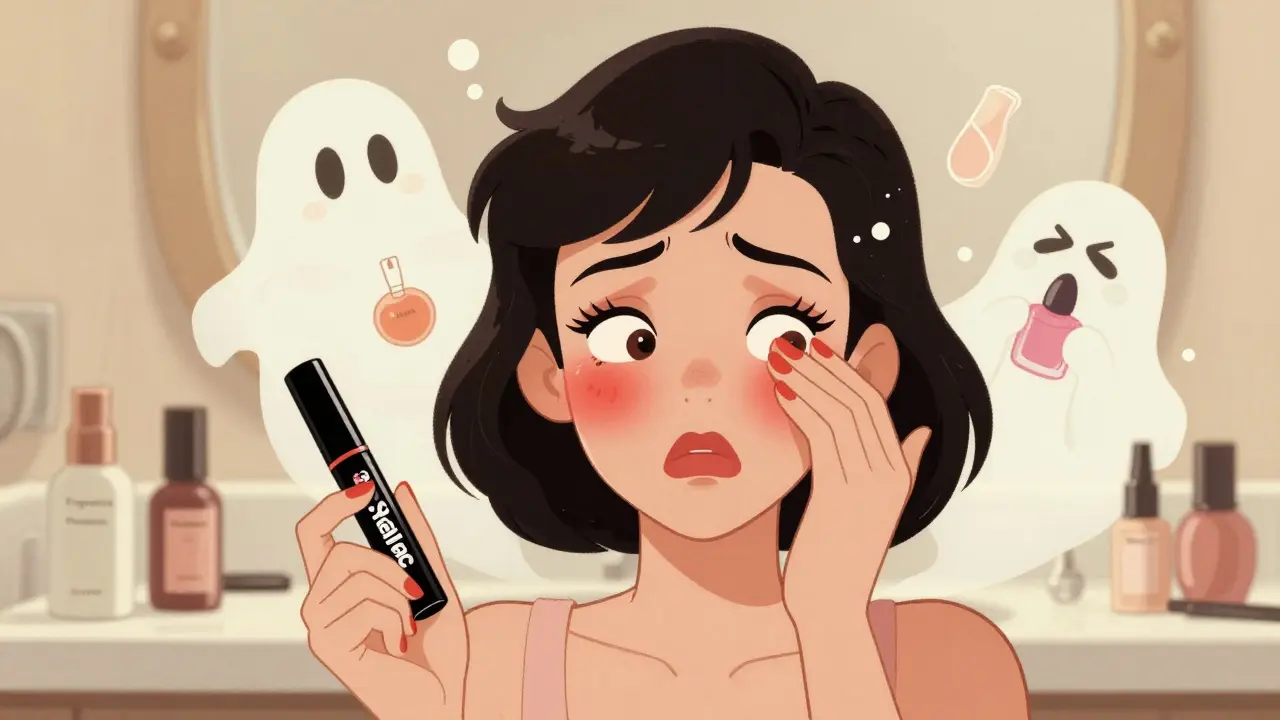
The skin around your eyes is the thinnest on your entire body-just 0.55 millimeters thick. That makes it incredibly sensitive. When this area becomes red, itchy, swollen, or flaky, it’s often not just dryness or fatigue. It’s likely eyelid dermatitis, a condition most often caused by something you’re putting on your face every day. And chances are, you have no idea what it is.
Unlike acne or general dry skin, eyelid dermatitis doesn’t clear up with a new moisturizer. It’s an immune reaction. Your body sees something harmless-like a fragrance, a preservative, or even your nail polish-as a threat. And it responds with inflammation. This isn’t rare. According to a 2023 NIH study, 74% of all eyelid dermatitis cases are allergic contact dermatitis (ACD), meaning your immune system is the culprit, not just irritation.
Why Your Eyelids Are So Vulnerable
Your eyelids aren’t just thin-they’re exposed. Every time you apply mascara, rub your eyes after touching your phone, or let shampoo run down your face during a shower, you’re introducing potential triggers. The skin there doesn’t have the same protective barrier as your forearm or back. It’s unprotected, frequently touched, and often occluded by skin folds that trap allergens.
What makes this worse? Most people assume the problem is their eye cream or eyeliner. But studies show that 42% of cases come from indirect exposure. That means your nail polish, your hair dye, or even your hand lotion can be the real source. You touch your fingers to your face, and boom-symptoms appear 24 to 48 hours later. That delay is why so many people miss the connection.
The Top 7 Allergens You’re Probably Exposed To
Not all allergens are created equal. Some show up in almost every product. Here’s what’s actually triggering reactions, based on data from over 200 patients in a 2021 NIH study:
- Nickel (28.7%)-Found in cheap eyeglass frames, eyelash curlers, and even some magnetic eyelashes
- Shellac (21.4%)-The resin used in gel nail polish
- Preservatives (18.9%)-Parabens, formaldehyde releasers like quaternium-15, and methylisothiazolinone
- Topical antibiotics (15.3%)-Neomycin and bacitracin in eye drops or ointments
- Fragrances (14.6%)-Even "natural" or "unscented" products can contain hidden fragrance compounds
- Acrylates (12.1%)-Used in long-wear mascara and waterproof eyeliner
- Surfactants (9.8%)-Sodium lauryl sulfate in cleansers and makeup removers
Notice something? Fragrances and preservatives are common in general contact dermatitis-but on the eyelids, nickel and shellac are bigger players. That’s because of how these products are used. You don’t just dab a little cream on your face-you swipe gel polish on your nails, then rub your eyes. You wear magnetic lashes with metal components. You wash your hair and let the conditioner drip down.
Why Most People Get It Wrong
Doctors who aren’t dermatologists often misdiagnose eyelid dermatitis. They see redness and assume it’s blepharitis, dry eyes, or an infection. They prescribe antibiotic drops or steroid creams without identifying the cause. And that’s where things go wrong.
Here’s the hard truth: clinical history alone correctly identifies triggers in only 37% of cases. That means if you tell your doctor, "I started using a new mascara," they’ll believe you-but you might be wrong. The real trigger could be your new hand soap, your acrylic nails, or even your laundry detergent.
Dr. Erin Warshaw from Wake Forest School of Medicine says, "Patients will swear they’ve stopped using everything, but they forget they changed their nail polish three weeks ago." And that’s the problem. The reaction is delayed. The allergen is hidden. The source is invisible.
How to Know for Sure: Patch Testing
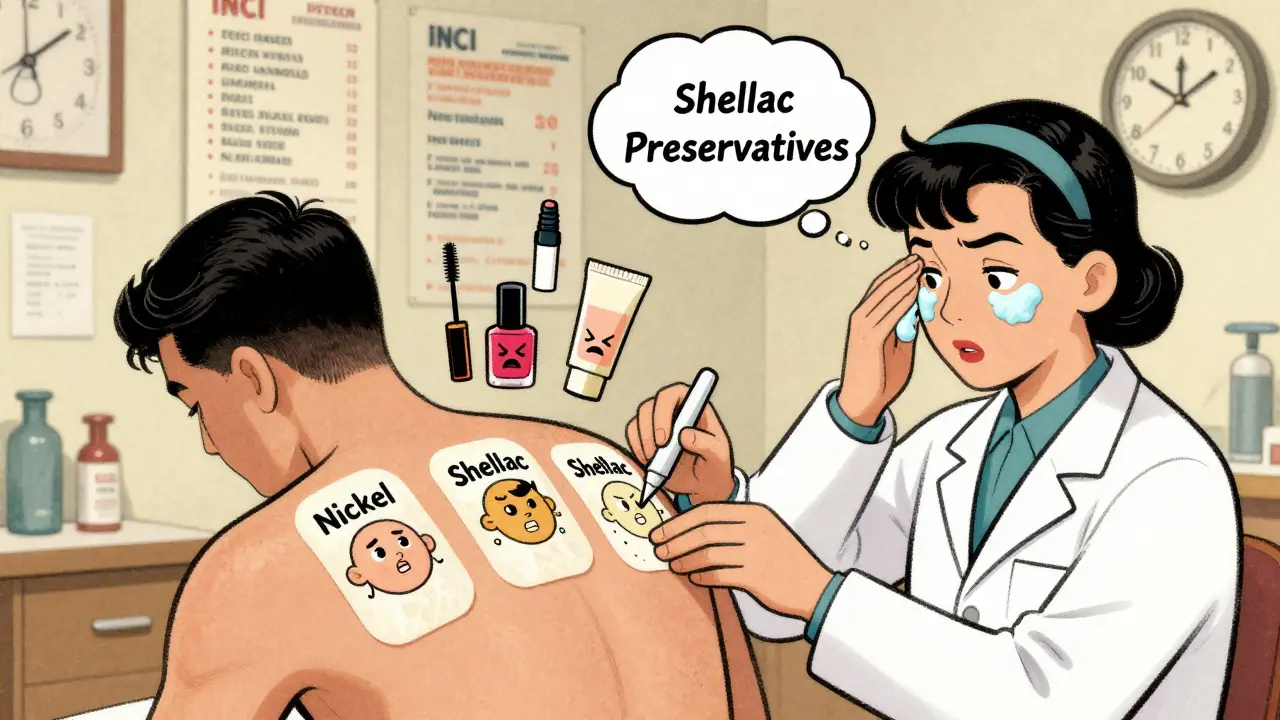
If you’ve had eyelid dermatitis for more than a few weeks, you need patch testing. It’s not optional. It’s the only way to know what’s causing it.
Patch testing involves placing small amounts of common allergens on your back, covered with patches. You leave them on for 48 hours, then return for readings at 72 and 96 hours. The test looks for delayed reactions-exactly how your eyelid dermatitis works.
When done right, patch testing has 95% accuracy. The American Academy of Dermatology recommends using the TRUE Test panel plus extra allergens for eye products. Why extra? Because standard panels miss acrylates, shellac, and some botanicals found in "clean" beauty products.
One patient, "MakeupLover87," posted on Reddit about a 3-year struggle with swollen eyelids. She tried every eye cream, avoided all makeup, and still had flare-ups. Patch testing revealed she was allergic to toluene sulfonamide formaldehyde resin-a chemical in her gel nail polish. Once she stopped wearing it, her eyelids cleared in 48 hours.
What to Do While Waiting for Test Results
You don’t have to wait months to feel better. The American Contact Dermatitis Society recommends a 3-phase approach:
- Days 1-3: Stop everything. No makeup, no eye creams, no fragranced cleansers. Wash your face with plain water or a soap-free cleanser. Use cool compresses to reduce swelling.
- Days 4-14: Moisturize, but smart. Use only petroleum jelly (Vaseline) or a simple ointment like Aquaphor. These have no additives. Avoid anything labeled "hypoallergenic"-that term isn’t regulated. Stick to one ingredient.
- Day 15+: Avoid your triggers. Once you know what you’re allergic to, remove it from your life. That means reading labels, switching products, and being careful about hand-to-face contact.
Patients who follow this protocol exactly have a 68% success rate. Those who just try to "avoid cosmetics" overall? Only 32% improve.
Topical Steroids: Use With Extreme Caution
Many doctors will prescribe a steroid cream. But the eyelid skin is so thin, even mild steroids can cause damage if used too long. High-potency steroids like clobetasol can cause skin thinning in as few as 7-10 applications. Worse, if the steroid drips into your eye, it can raise eye pressure and lead to glaucoma.
That’s why the FDA approved Eysuvis 0.25% in December 2022-the first steroid specifically formulated for eyelid dermatitis. It’s designed to be safe for short-term use on the eyelids and doesn’t cause ocular side effects in clinical trials.
But even Eysuvis isn’t a cure. It’s a bridge. You still need to find and remove the allergen. Otherwise, you’ll be back on steroids again and again.
What About "Clean Beauty"?
"Clean," "natural," and "organic" products are not safer. In fact, they’re often riskier. A 2023 JAMA Dermatology study found that 33% of "natural" eye products contain unlisted botanical allergens-like ragweed, chamomile, or calendula from the Compositae family. These plants are common in herbal skincare and can trigger severe reactions in sensitive people.
Just because a product says "no parabens" doesn’t mean it’s free of allergens. It might have tea tree oil, lavender, or essential oils instead. And those are just as likely to cause a reaction.
How to Avoid Triggers Long-Term
Once you know your allergens, avoiding them is simple-but requires effort.
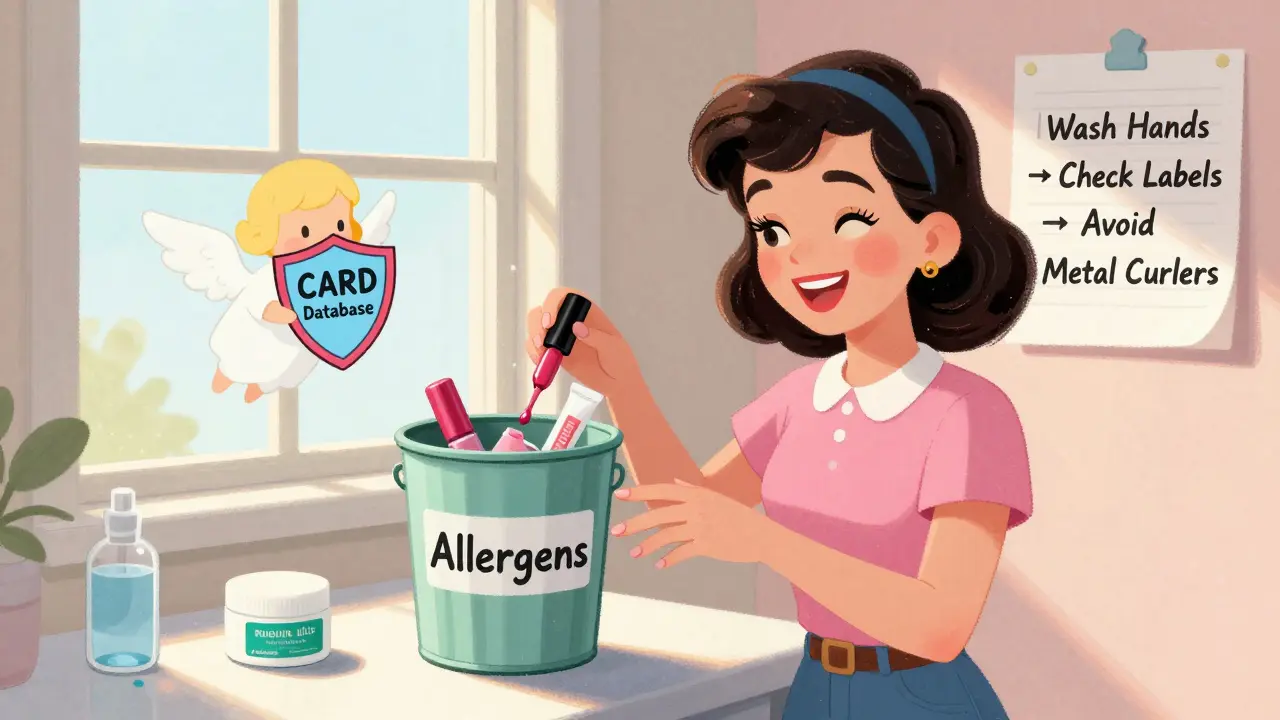
- Use the Contact Allergen Replacement Database (CARD)-updated monthly by the University of Louisville. It lists over 12,800 verified safe products across 188 categories.
- Download the Preservative Finder app. It scans ingredient labels and flags 37 common problematic preservatives.
- Learn INCI names. "Fragrance" isn’t enough. Look for "limonene," "linalool," "geraniol," or "eugenol"-they’re hidden fragrance allergens.
- Wash your hands before touching your face. Especially after applying nail polish, hair dye, or sunscreen.
- Replace metal eyelash curlers with plastic ones. Avoid magnetic lashes unless you know they’re nickel-free.
People who take these steps see results. A 2022 survey by Eczema.org showed that 52% of patients cleared up in 1-2 weeks after avoiding their allergens. Another 29% took 3-6 weeks. Only 19% needed extra treatment.
Who Gets This-and Why?
Women make up 78% of cases, with an average age of 34.7. Men account for only 22%, usually older (average 41.2). Why? Because women are more likely to use nail polish, eye makeup, and hair dyes-products linked to the top allergens.
But it’s not just about gender. It’s about exposure. The Global Contact Dermatitis Market reports a 4.7% annual rise in eyelid dermatitis cases since 2018. Why? Because cosmetic products are getting more complex. There are now 28% more preservatives on the market than five years ago. More ingredients = more chances for a reaction.
Even regulations are catching up. The EU now requires clearer labeling of fragrance allergens. The American Academy of Dermatology predicts this will reduce misdiagnosis by 15-20% in the next three years.
What’s Next for Diagnosis and Treatment
Technology is helping. A new AI tool called DermAI Contact (launched in beta in 2023) analyzes your symptoms and suggests likely allergens before you even get patch tested. It’s 76% accurate.
Researchers are also watching for new allergens. Magnetic lashes? They contain nickel alloys. "Long-wear" mascaras? They’re full of acrylates. Even "biodegradable" glitter can contain allergens.
The European Contact Dermatitis Research Group predicts a 25% drop in chronic cases by 2027-thanks to better testing, better education, and more collaboration between dermatologists and eye doctors.
But the key hasn’t changed. You still need to know what’s triggering you. And you still need to stop using it.
Can eyelid dermatitis be cured?
Yes-but only if you identify and avoid the specific allergen causing it. Eyelid dermatitis isn’t a disease you’re born with; it’s a reaction to something you’re exposed to. Once you remove that trigger, symptoms typically clear up in days to weeks. There’s no permanent cure for sensitivity, but you can live symptom-free by avoiding your allergens.
Is eyelid dermatitis the same as eczema?
Not exactly. Atopic dermatitis (eczema) is a genetic condition that causes dry, itchy skin in multiple areas, often starting in childhood. Eyelid dermatitis is usually allergic contact dermatitis-triggered by external substances. Someone can have both, but the causes and treatments are different. Eczema needs long-term skin barrier repair; eyelid dermatitis needs allergen removal.
Can I use over-the-counter hydrocortisone on my eyelids?
No. Even 1% hydrocortisone can be too strong for the eyelids. It can cause skin thinning, stretch marks, or even increase eye pressure. Only use steroid creams on your eyelids if they’re prescribed by a dermatologist and specifically labeled for eyelid use. Petroleum jelly is safer while you wait for patch test results.
Why do my symptoms come back after they clear up?
You probably didn’t fully remove the allergen. Maybe you switched mascara but kept using the same eyelash curler. Or you thought you stopped wearing nail polish, but you started using a new brand that still contains shellac. Eyelid dermatitis returns when the trigger is still in your environment. Patch testing helps you find every source.
Are "hypoallergenic" products safe for eyelid dermatitis?
No. The term "hypoallergenic" has no legal definition in the U.S. It means nothing. A product labeled that way can still contain fragrances, preservatives, or botanicals that trigger reactions. Always check the ingredient list. Look for products with fewer than five ingredients and no fragrance, dyes, or preservatives.
How long does patch testing take?
The process takes about a week. Patches are applied on Day 1 and left on for 48 hours. You return on Day 3 for the first reading, then again on Day 5 or 6 for final readings. Some allergens react later, so the full process is 96-120 hours. Results are usually available within 7 days.
Can children get eyelid dermatitis from cosmetics?
Yes, though it’s less common. Children can react to preservatives in baby wipes, shampoos, or even sunscreen. If a child has persistent eyelid redness and itching, patch testing may be needed. Parents should also check if the child touches their eyes after playing with toys coated in nickel or after handling craft glue.
If your eyelids have been red and itchy for more than a week, don’t guess. Don’t try more creams. Don’t wait for it to go away. Get patch tested. The answer is out there-and once you find it, your eyelids will thank you.
Darren Links
January 23, 2026 AT 20:27Kevin Waters
January 24, 2026 AT 01:01Kat Peterson
January 24, 2026 AT 12:04Jamie Hooper
January 25, 2026 AT 01:27Husain Atther
January 25, 2026 AT 08:55Helen Leite
January 26, 2026 AT 19:55Izzy Hadala
January 28, 2026 AT 16:04Shelby Marcel
January 29, 2026 AT 17:47blackbelt security
January 31, 2026 AT 13:37Tommy Sandri
February 2, 2026 AT 08:12asa MNG
February 4, 2026 AT 01:02Sushrita Chakraborty
February 5, 2026 AT 16:20