
Digoxin Interactions: What Heart Patients Need to Monitor
 Dec, 15 2025
When you're taking digoxin for heart failure or atrial fibrillation, it's not just about the pill you swallow each morning. The real danger often comes from what else you're taking - or eating - and how it changes how digoxin works in your body. This isn't a drug you can ignore. Even small changes in your routine can push your digoxin levels into the danger zone. And unlike newer heart meds, digoxin doesn't give you much room for error. The difference between helping your heart and harming it can be as little as 0.5 ng/mL in your blood.
Why Digoxin Is So Tricky
Digoxin, sold under names like Lanoxin and Crystodigin, has been used since the 1930s. It comes from the foxglove plant and works by making your heart beat stronger and more regularly. But it's not forgiving. The safe range is tiny: 0.5 to 0.9 ng/mL. Go above 2.0 ng/mL, and you risk serious toxicity - nausea, vision changes, irregular heartbeat, even cardiac arrest. About 1 in 25 people on digoxin experience toxicity, even when they're taking the right dose. That’s why monitoring isn’t optional. It’s life-saving.
Older adults, especially those over 65, are at higher risk. So are people with kidney problems, low body weight, or low potassium. If your kidneys aren’t filtering well, digoxin builds up. If your potassium is low, your heart becomes more sensitive to digoxin’s effects. And here’s the catch: many common meds and foods can cause both of those problems.
Top 5 Dangerous Drug Interactions
Some drugs don’t just mix poorly with digoxin - they turn it into a ticking time bomb.
- Dronedarone (Multaq): Used for atrial fibrillation, this drug can spike digoxin levels by over 50%. In the PALLAS trial, patients on both drugs had a 2.5-times higher risk of sudden death. If you're starting dronedarone, your digoxin dose must be cut in half - immediately.
- Verapamil and Diltiazem: These calcium channel blockers slow your heart rate and also block digoxin from leaving your body. Together, they can cause heart rates below 40 bpm. That’s not just slow - it’s dangerous. Many patients end up needing a pacemaker.
- Amiodarone: This powerful antiarrhythmic increases digoxin levels by up to 100%. One patient on Reddit shared that after starting amiodarone, his digoxin level jumped from 0.8 to 1.9 ng/mL in two weeks. He ended up in the ER with blurred vision and vomiting.
- Quinidine: Another antiarrhythmic, quinidine cuts kidney clearance of digoxin by nearly half. Even if your digoxin dose was fine before, adding quinidine can push you into toxicity.
- Rifampin: This antibiotic, often used for tuberculosis, can slash digoxin levels by 40%. That means your heart failure symptoms might come back - not because your condition worsened, but because the drug stopped working.
What You Eat Matters More Than You Think
It’s not just pills. Your breakfast can mess with digoxin.
- High-fiber foods: Oatmeal, bran, whole grains, and even apples can reduce digoxin absorption by 20-30%. One study showed patients who ate oatmeal with their pill had lower blood levels. Solution? Take digoxin at least 2 hours before or after these foods.
- Black licorice: This sweet treat contains glycyrrhizin, which drains potassium from your body. Low potassium + digoxin = high risk of deadly arrhythmias. Even a few pieces a week can be dangerous.
- Milk and dairy: Calcium in milk can bind to digoxin in the gut and reduce absorption. Don’t take your pill with a glass of milk.
- Antacids: Aluminum- or magnesium-based antacids (like Tums or Maalox) can cut digoxin absorption by up to 30%. If you need heartburn relief, choose something like famotidine instead.
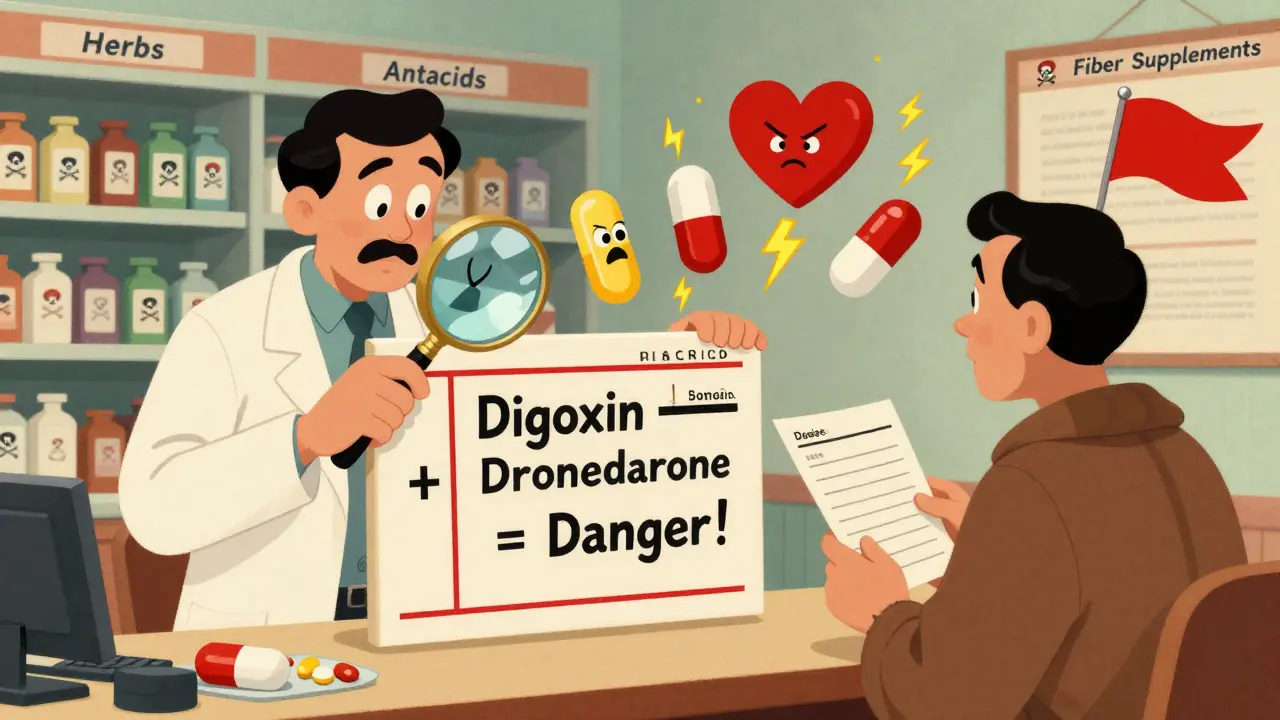
Herbs and Supplements That Can Kill
Many people think natural means safe. That’s not true with digoxin.
- St. John’s Wort: This popular herbal remedy for depression boosts a liver enzyme that flushes digoxin out of your system. Studies show it can drop digoxin levels by 25%. Your heart failure symptoms return - and you don’t know why.
- Hawthorn: Often taken for heart health, hawthorn can prolong the QT interval on your ECG. When combined with digoxin, it raises the risk of torsades de pointes, a life-threatening rhythm.
- Psyllium fiber: Found in Metamucil and similar products, psyllium can reduce digoxin absorption by 30-40% if taken within two hours. Take it at bedtime, not with your morning pill.
What You Must Monitor - Every Week
If you’re on digoxin, your doctor should be checking these things regularly:
- Serum digoxin level: Every 3-6 months if stable. But if you start or stop any new medication, test it weekly for two weeks.
- Potassium level: Keep it above 4.0 mmol/L. If it drops below 3.5, your risk of toxicity jumps. Your doctor may prescribe potassium supplements or switch you to a potassium-sparing diuretic like spironolactone.
- Creatinine and kidney function: Digoxin is cleared by the kidneys. If your creatinine rises above 1.5 mg/dL, your dose likely needs adjustment.
- Heart rate: If your pulse drops below 50 bpm consistently, call your doctor. Don’t just skip your dose - get checked.
- Weight: Losing weight? Your digoxin dose may be too high now. Gaining weight? You might need more.
A new risk score from the American College of Cardiology helps doctors spot trouble early. If you’re over 75, have low potassium, kidney issues, take verapamil, or weigh less than 60 kg - you’re in the high-risk group. Weekly blood tests aren’t optional for you.
What to Do If You Feel Off
Digoxin toxicity doesn’t always come with a warning. But these signs mean stop and call your doctor:
- Nausea, vomiting, or loss of appetite
- Blurred vision, yellow or green halos around lights
- Heartbeat that feels too slow, too fast, or irregular
- Dizziness, confusion, or extreme fatigue
Don’t wait. Go to the ER if you have visual changes or chest pain. Digoxin toxicity can be reversed with an antidote called digoxin immune fab (Digibind), but only if caught early.

Why Digoxin Is Still Used - And Who Benefits Most
Yes, digoxin prescriptions have dropped 38% since 2010. Newer drugs like SGLT2 inhibitors and ARNIs are safer and more effective. But digoxin still has a place.
It’s most helpful for people with:
- Heart failure with reduced ejection fraction who still feel tired despite taking all the right meds
- Persistent atrial fibrillation where controlling the heart rate is the main goal
- Low income - digoxin costs $4-6 a month, while newer drugs can cost $500+
It’s not for everyone. But for the right patient, with careful monitoring, it still works.
Bottom Line: Stay in Control
Digoxin isn’t dangerous because it’s bad. It’s dangerous because it’s powerful - and easy to mess up.
Here’s your action plan:
- Take digoxin at the same time every day - ideally on an empty stomach.
- Avoid black licorice, high-fiber meals, and antacids within 2 hours of your dose.
- Never start a new medication, herb, or supplement without checking with your doctor or pharmacist.
- Know your digoxin level and potassium level. Ask for a copy of your lab reports.
- If you feel off, don’t guess. Call your heart specialist immediately.
With the right habits and awareness, you can stay safe and keep your heart strong. Digoxin isn’t going away - but you need to be smarter than the drug interactions trying to hurt you.
Can I take digoxin with my morning oatmeal?
No, not at the same time. High-fiber foods like oatmeal can reduce digoxin absorption by 20-30%. Take your digoxin at least 2 hours before eating oatmeal or other high-fiber foods. Many patients find it easiest to take digoxin right after waking up, then eat breakfast 2 hours later.
What should I do if I miss a dose of digoxin?
If you miss a dose and remember within 12 hours, take it right away. If it’s been more than 12 hours, skip the missed dose and take your next one at the regular time. Never double up. Digoxin builds up slowly in your system, so one missed dose won’t cause immediate problems - but doubling up can push you into toxicity.
Does alcohol affect digoxin?
Moderate alcohol doesn’t directly interact with digoxin. But heavy drinking can damage your liver and kidneys, which affects how your body clears digoxin. It can also worsen heart failure symptoms and trigger arrhythmias. Limit alcohol to one drink a day - and talk to your doctor if you drink more.
Why do I need to check my potassium so often?
Low potassium (hypokalemia) makes your heart extra sensitive to digoxin. Even a normal digoxin level can become toxic if your potassium drops below 3.5 mmol/L. Diuretics, vomiting, diarrhea, and even licorice can lower potassium. Checking it monthly helps prevent dangerous spikes in digoxin’s effect on your heart.
Can I take digoxin if I have kidney disease?
Yes - but with extreme caution. Digoxin is cleared by the kidneys. If your creatinine clearance is below 50 mL/min, your dose must be lowered. If it’s below 15 mL/min, many guidelines recommend avoiding digoxin entirely. Your doctor will adjust your dose based on kidney function tests and monitor you closely.
Is digoxin safe for elderly patients?
It can be - but older adults are at much higher risk. Patients over 75 are nearly 3 times more likely to experience toxicity. This is because kidneys slow down with age, body weight is often lower, and people in this group are more likely to be on multiple interacting drugs. If you’re over 75, your doctor should start you on a lower dose (0.125 mg daily) and check levels more frequently.
What’s the safest way to stop digoxin?
Never stop digoxin suddenly unless instructed by your doctor. Abruptly stopping can cause your heart rate to speed up or your heart failure symptoms to return quickly. If your doctor decides to stop it, they’ll usually taper the dose slowly over several days and replace it with another medication, like a beta-blocker or ivabradine, depending on your condition.
Next Steps: Protect Yourself
Keep a written list of every medication, supplement, and herb you take - including over-the-counter drugs and vitamins. Bring it to every appointment. Ask your pharmacist to screen for interactions every time you pick up a new prescription. Use a pill organizer with alarms to stay on schedule. And if you ever feel strange - dizzy, nauseous, seeing halos - don’t wait. Call your cardiologist or go to the ER. Your life depends on catching digoxin problems early.
jeremy carroll
December 15, 2025 AT 23:07Edward Stevens
December 17, 2025 AT 09:53Alexis Wright
December 18, 2025 AT 19:20Daniel Wevik
December 19, 2025 AT 01:02Rich Robertson
December 20, 2025 AT 21:49Natalie Koeber
December 21, 2025 AT 12:24Rulich Pretorius
December 23, 2025 AT 03:34Thomas Anderson
December 23, 2025 AT 15:47