
Clarithromycin Drug Interactions: Dangerous Combinations to Avoid
 Dec, 4 2025
Clarithromycin Drug Interaction Checker
This tool helps you identify potentially dangerous interactions between clarithromycin and other medications. Based on FDA and clinical evidence, some combinations can cause severe toxicity or death.
Remember: Always consult your doctor or pharmacist before making any medication changes.
Select medications to check for interactions with clarithromycin.
Clarithromycin is an antibiotic that works well against certain bacterial infections - pneumonia, bronchitis, sinus infections, and skin infections. But here’s the catch: it doesn’t just fight bacteria. It also messes with how your body processes dozens of other medications. And that’s where things get dangerous.
Why Clarithromycin Is Different From Other Antibiotics
Most antibiotics don’t interfere much with other drugs. Azithromycin, for example, is often chosen over clarithromycin precisely because it doesn’t disrupt liver enzymes. But clarithromycin? It’s a strong inhibitor of CYP3A4, a key enzyme in your liver and gut that breaks down about half of all prescription medications. When this enzyme is blocked, those drugs build up in your bloodstream - sometimes to toxic levels.This isn’t theoretical. In 2020, the FDA documented 58 serious or fatal cases linked to clarithromycin and colchicine use together. That’s just what got reported. Real numbers are likely much higher.
The Deadliest Combo: Clarithromycin and Colchicine
If you’re taking colchicine for gout or familial Mediterranean fever, this is critical: do not take clarithromycin with it.Colchicine is already a narrow-therapeutic-index drug - meaning the difference between a helpful dose and a deadly one is tiny. Clarithromycin can increase colchicine levels in your blood by over 280%. That’s not a slight bump. That’s a spike into the danger zone.
Real cases show the result: severe diarrhea, muscle breakdown (rhabdomyolysis), kidney failure, and death. One 76-year-old woman with chronic gout died 11 days after starting clarithromycin for a cold. She was on her usual colchicine dose. Her body couldn’t clear the drug anymore. The toxicity built up silently, then overwhelmed her system.
The FDA now requires a boxed warning on clarithromycin labels - the strongest kind - specifically calling out colchicine as a life-threatening combination. The Institute for Safe Medication Practices lists this pairing as a Category A high-alert interaction. That’s the same level as insulin and heparin mix-ups.
Statins: The Silent Killer
Another major danger: statins. If you’re on simvastatin or lovastatin for high cholesterol, clarithromycin can cause your muscle tissue to break down - a condition called rhabdomyolysis. This isn’t rare. One case involved a 68-year-old man who went into the ICU after just 72 hours on clarithromycin and simvastatin 40mg. He needed dialysis.Atorvastatin is less risky, but still dangerous. The Mayo Clinic lists 142 contraindicated combinations with clarithromycin, and statins make up a large chunk of them. Even if your doctor says it’s "okay," ask: Is there a safer alternative? Azithromycin doesn’t do this. Switching antibiotics can save your life.
Heart Medications: QT Prolongation and Torsades de Pointes
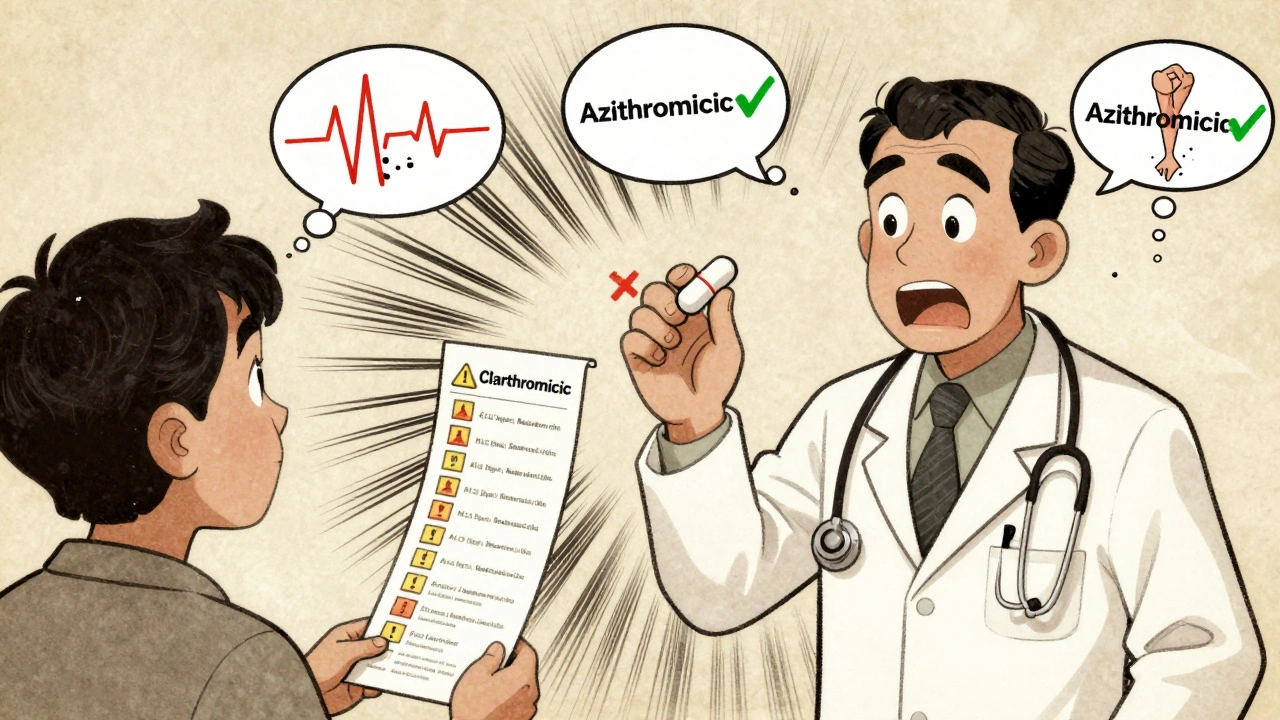
Clarithromycin can also lengthen your heart’s QT interval - the time it takes for your heart to recharge between beats. When combined with other QT-prolonging drugs like amiodarone, sotalol, or even some antidepressants, it can trigger a deadly heart rhythm called torsades de pointes.The American Heart Association found clarithromycin increases this risk by 2.7 times compared to antibiotics that don’t affect QT. That’s why doctors are told to avoid it in patients with existing heart rhythm problems, low potassium, or those already on drugs like verapamil or diltiazem.
Dr. David Graham of the FDA warned back in 2013: "The risk of serious cardiac events is higher with clarithromycin than with amoxicillin." That’s not a small caution. That’s a red flag.
Other Dangerous Interactions
It’s not just colchicine and statins. Clarithromycin can dangerously raise levels of:- Digoxin - can cause nausea, confusion, and fatal heart rhythms
- Warfarin - increases bleeding risk, even if INR was stable
- Theophylline - can cause seizures and heart palpitations
- Ergotamine - causes severe blood vessel spasms, limb ischemia, even gangrene
- Rivaroxaban and apixaban - increases bleeding risk significantly
- Some seizure medications like carbamazepine - can reduce effectiveness or cause toxicity
And it’s not just pills. Even over-the-counter supplements like St. John’s wort can interact unpredictably. Your pharmacist should be the first person you tell before starting clarithromycin.
Who’s Most at Risk?
Older adults are the most vulnerable. A 2023 study found that 42% of patients over 65 taking clarithromycin were also on at least one contraindicated medication. That’s nearly half. The Beers Criteria - the gold standard for safe prescribing in older adults - explicitly says: avoid clarithromycin in seniors on CYP3A4 substrates.People with kidney disease are also at higher risk. The European Medicines Agency found a 4.3-fold increase in colchicine toxicity in those with severe renal impairment. If your kidneys aren’t working well, your body can’t clear either drug. The combination becomes a time bomb.
And here’s the scary part: many of these interactions happen because the patient doesn’t know. They’ve been on statins for years. They take colchicine for gout. Then they get a cold. Their doctor prescribes clarithromycin. No one checks their full med list. It’s not negligence - it’s a systemic blind spot.
What Should You Do?
If you’re prescribed clarithromycin, ask these three questions:- "Am I taking anything that’s metabolized by CYP3A4?"
- "Is there a safer antibiotic I can take instead?"
- "Can you check my full medication list before I start this?"
Don’t assume your doctor knows every pill you take. Bring a list - including supplements, vitamins, and OTC drugs. Pharmacists can run automated interaction checks. Use them.
If you’re already on clarithromycin and you take any of the drugs listed above, stop immediately and call your doctor. Don’t wait for symptoms. Toxicity can hit fast - within days.
Alternatives Exist - And They’re Safer
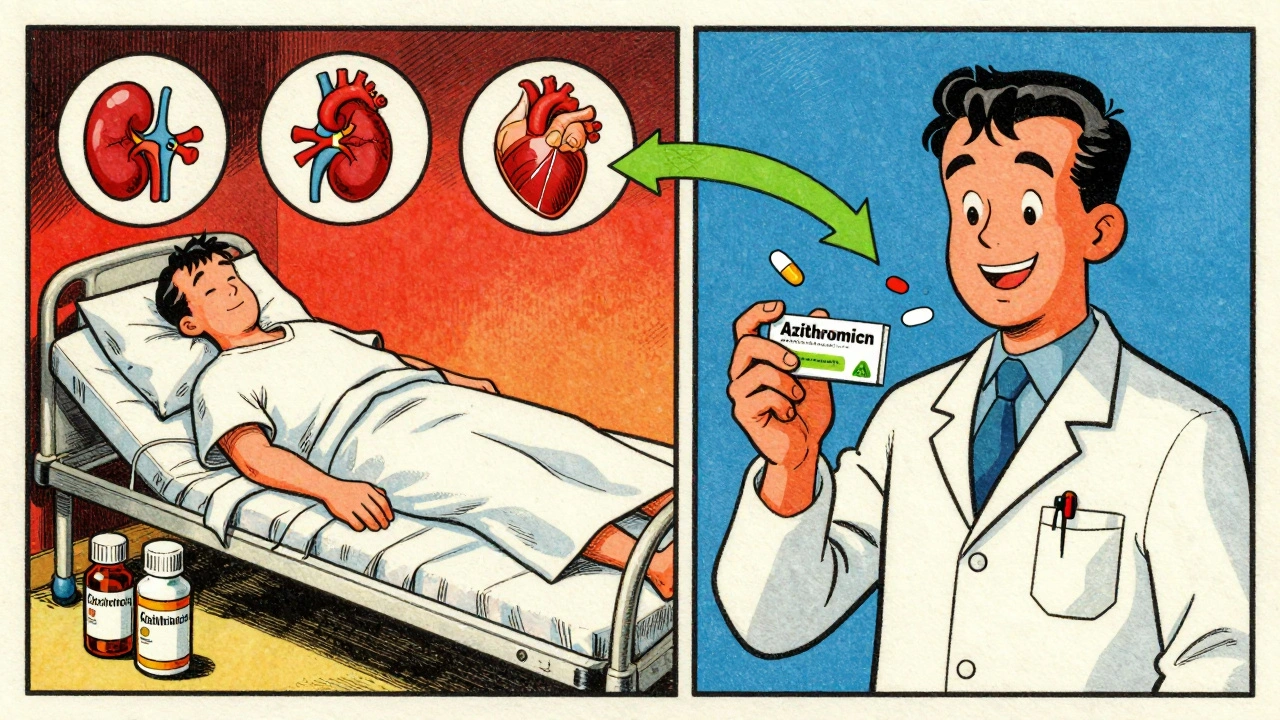
Azithromycin is the go-to alternative. It’s just as effective for most respiratory and skin infections, but it doesn’t block CYP3A4. It has only four absolute contraindications, compared to clarithromycin’s 142. Since 2015, prescriptions for azithromycin have surged while clarithromycin use has dropped by 28%. Why? Doctors are learning the hard way.The American College of Physicians now recommends azithromycin as the first-choice macrolide for anyone taking three or more medications. That’s not a suggestion - it’s a guideline based on safety data.
Even when clarithromycin is needed - like for Mycobacterium avium complex in HIV patients - experts recommend reducing doses of interacting drugs by 50-75% and monitoring closely. But for routine infections? There’s almost never a reason to choose it.
The Bigger Picture
Clarithromycin isn’t going away overnight. It’s still used for complex infections. But its role is shrinking. The FDA, EMA, and CDC all agree: its interaction risks outweigh its benefits for most patients.Some pharmaceutical companies are working on modified-release versions with less enzyme inhibition. But those won’t be available until 2026 or later. Until then, the safest choice is simple: avoid clarithromycin unless absolutely necessary.
If you’ve ever wondered why your doctor switched your antibiotic, now you know. It wasn’t random. It was survival.
Can I take clarithromycin with a statin?
No - especially not simvastatin or lovastatin. Clarithromycin can cause dangerous muscle damage (rhabdomyolysis) by increasing statin levels in your blood. Atorvastatin is less risky but still not safe without close monitoring. Azithromycin is the preferred alternative.
Is clarithromycin safe if I have kidney problems?
Not if you’re also taking colchicine. People with severe kidney disease are 4.3 times more likely to develop fatal colchicine toxicity when on clarithromycin. Even if you’re not on colchicine, kidney impairment slows the clearance of clarithromycin itself, increasing the risk of side effects. Always tell your doctor about your kidney function.
What are the signs of clarithromycin toxicity?
Symptoms depend on what drug is interacting. With colchicine: severe diarrhea, vomiting, muscle pain, weakness, numbness. With statins: unexplained muscle pain, dark urine, fatigue. With heart drugs: dizziness, fainting, irregular heartbeat. If you feel worse after starting clarithromycin, seek help immediately - don’t wait.
Why is azithromycin safer than clarithromycin?
Azithromycin doesn’t significantly inhibit the CYP3A4 enzyme, so it doesn’t cause dangerous buildup of other medications. It’s just as effective for most common infections - colds, sinus infections, strep throat - and has only four absolute contraindications. For patients on multiple medications, it’s the clear safety choice.
Should I stop clarithromycin if I’m on colchicine?
Yes - stop immediately and contact your doctor. Even a single dose of clarithromycin while on colchicine can trigger life-threatening toxicity. Do not wait for symptoms. This interaction has caused death within days. Your doctor can prescribe azithromycin instead.
Rupa DasGupta
December 5, 2025 AT 00:35Marvin Gordon
December 6, 2025 AT 11:37ashlie perry
December 6, 2025 AT 16:16Juliet Morgan
December 8, 2025 AT 10:15Norene Fulwiler
December 8, 2025 AT 13:49William Chin
December 10, 2025 AT 12:51Katie Allan
December 11, 2025 AT 08:44Deborah Jacobs
December 13, 2025 AT 00:57James Moore
December 14, 2025 AT 04:17Kylee Gregory
December 14, 2025 AT 22:48Lucy Kavanagh
December 15, 2025 AT 17:57Chris Brown
December 16, 2025 AT 13:07Stephanie Fiero
December 17, 2025 AT 07:17Stephanie Bodde
December 18, 2025 AT 19:12an mo
December 20, 2025 AT 08:13