
Bupropion for Smoking Cessation: What You Need to Know About Drug Interactions
 Dec, 17 2025
Bupropion Safety Checker
Bupropion Safety Assessment
This tool helps you determine if bupropion (Zyban) is safe for you based on your current medications and health conditions. Always consult your doctor before making changes to your medication regimen.
Current Medications
Health Conditions
Safety Assessment Result
Quitting smoking is hard. Even harder when you’re on other medications. If you’re considering bupropion to quit smoking, you need to know how it interacts with other drugs - because some combinations can be dangerous. Bupropion, sold under the brand name Zyban, isn’t just another quit-smoking pill. It works differently than nicotine patches or varenicline. It targets your brain’s dopamine and norepinephrine systems, which helps reduce cravings and withdrawal symptoms. But that same mechanism means it can clash with other medications in ways you might not expect.
How Bupropion Actually Works
Bupropion was originally developed as an antidepressant (Wellbutrin), but doctors noticed patients who took it for depression also smoked less. That led to its approval for smoking cessation in 1997. Unlike nicotine replacement therapies that flood your body with nicotine, bupropion doesn’t contain nicotine at all. Instead, it blocks the reuptake of dopamine and norepinephrine - two brain chemicals tied to reward and focus. This helps smooth out the crash you feel when you stop smoking. It also weakens the way nicotine binds to brain receptors, making cigarettes less satisfying.
Studies show bupropion doubles your chances of quitting compared to a placebo. In clinical trials, about 20% of people stayed smoke-free after six months using bupropion, versus just 7-10% on placebo. It’s especially helpful for people who worry about weight gain after quitting - users often report less weight gain than those using nicotine patches. But it doesn’t work overnight. You need to start taking it 1 to 2 weeks before your quit date. That’s because it takes time for the drug to build up in your system. If you wait until the day you quit to start taking it, you’re likely to fail.
Major Drug Interactions You Must Avoid
Not all drug interactions are mild. Some can lead to seizures, serotonin syndrome, or even death. Here are the top three interactions you absolutely must avoid.
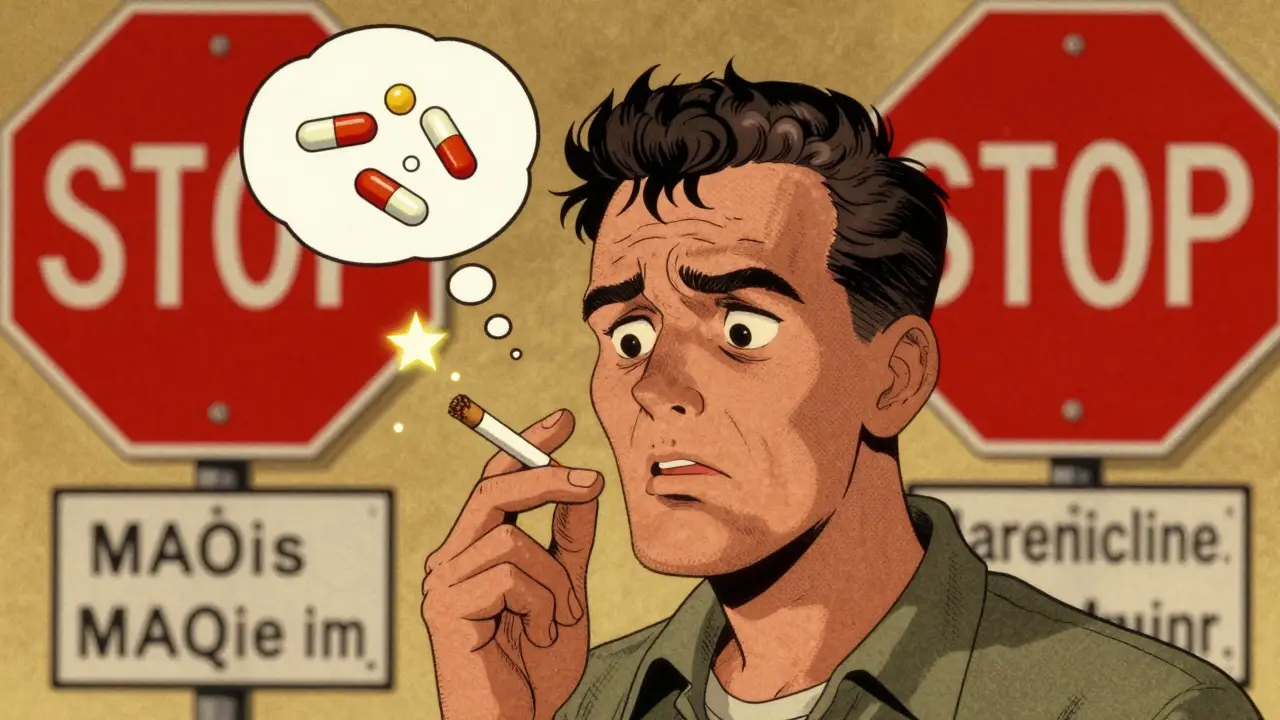
- MAO inhibitors (MAOIs) - This is the most dangerous interaction. MAOIs are used to treat depression and Parkinson’s. Taking bupropion with an MAOI - even if you stopped the MAOI just two weeks ago - can cause a life-threatening spike in blood pressure, seizures, or serotonin syndrome. The FDA requires a strict 14-day washout period between stopping an MAOI and starting bupropion. Common MAOIs include phenelzine (Nardil), tranylcypromine (Parnate), and selegiline (Emsam).
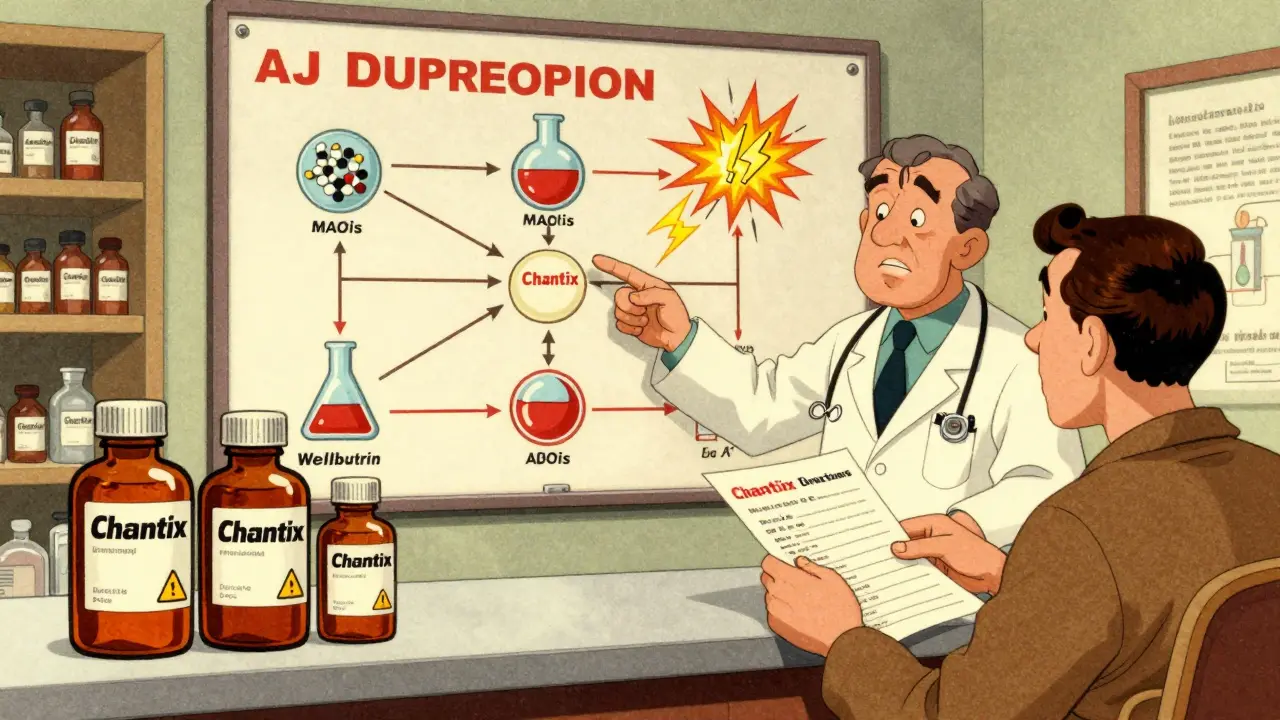
- Varenicline (Chantix) - While some studies suggest combining bupropion and varenicline might improve quit rates, the FDA has issued warnings against this combo due to reports of serious neuropsychiatric side effects like agitation, hostility, and suicidal thoughts. The EAGLES trial showed similar safety profiles, but real-world data from the CDC and FDA databases show increased emergency visits when both drugs are used together. Most doctors won’t prescribe both unless it’s a last-resort case with close monitoring.
- Other bupropion products - Don’t take Zyban if you’re already on Wellbutrin, Aplenzin, or any other bupropion-containing medication. You’ll overdose on the drug, raising your seizure risk dramatically. The total daily dose of bupropion should never exceed 450 mg.
Other Medications That Can Cause Problems
Even if a drug isn’t listed as a direct contraindication, it can still interfere with bupropion. Here’s what to watch for:
- Antidepressants - SSRIs like sertraline (Zoloft) or fluoxetine (Prozac) can increase the risk of seizures when combined with bupropion. Bupropion lowers the seizure threshold, and so do some other antidepressants. This isn’t a hard rule - many people take them together safely - but your doctor needs to know you’re on both.
- Stimulants - ADHD meds like Adderall or Ritalin, or even over-the-counter decongestants like pseudoephedrine, can raise your heart rate and blood pressure. Bupropion does the same. Together, they can push your system into overdrive. If you’re on stimulants, your doctor may need to lower the dose of one or both drugs.
- Alcohol - Heavy drinking while on bupropion increases seizure risk. Even moderate alcohol use can make insomnia or anxiety worse. Most guidelines recommend avoiding alcohol completely during treatment.
- Seizure-triggering drugs - Antibiotics like ciprofloxacin, antipsychotics like clozapine, and even some asthma inhalers can lower your seizure threshold. If you have a history of seizures, bupropion is off-limits. Even if you’ve never had one, your doctor should screen you for risk factors like head injury, alcohol withdrawal, or eating disorders.
Who Shouldn’t Take Bupropion
Bupropion isn’t for everyone. You should avoid it if you:
- Have a seizure disorder - Even one past seizure disqualifies you. The risk is about 1 in 1,000 at normal doses, but it jumps significantly if you have other risk factors.
- Have an eating disorder - Anorexia or bulimia increases seizure risk. This is a hard contraindication.
- Are allergic to bupropion - Symptoms include rash, swelling, trouble breathing.
- Are currently withdrawing from alcohol or benzodiazepines - Withdrawal can trigger seizures, and bupropion makes that worse.
- Are under 18 - Safety and effectiveness haven’t been established in adolescents.
Also, if you’re taking any medication that’s metabolized by the CYP2B6 liver enzyme - which includes some antidepressants, antivirals, and painkillers - your body may process bupropion too slowly or too fast. Genetic testing for CYP2B6 status is available but not routine. If you’ve tried bupropion before and it didn’t work, you might be a slow metabolizer. Your doctor might adjust your dose or switch you to something else.
Side Effects and How to Manage Them
Most people tolerate bupropion well, but side effects are common. The biggest one? Insomnia. About 24% of users report trouble sleeping. The fix? Take your second dose before 5 p.m. Don’t take it late in the day. Dry mouth and headache are also common - drink more water and chew sugar-free gum. Nausea happens in about 13% of people. Take your pills with food to reduce it.
Some people report mood changes - anxiety, irritability, or feeling “wired.” These usually fade after a week or two. But if you feel unusually agitated, hopeless, or have thoughts of self-harm, call your doctor immediately. The FDA requires a black box warning for increased risk of suicidal thoughts in young adults under 25.
One big myth: bupropion causes weight loss. It doesn’t. But many people don’t gain the weight they usually do after quitting smoking. That’s because it suppresses appetite slightly and reduces the reward you get from eating. That’s a plus for many, but not a reason to take it if you’re underweight.
How Bupropion Compares to Other Quitting Aids
Here’s how bupropion stacks up against the other main options:
| Medication | How It Works | 6-Month Quit Rate | Common Side Effects | Best For |
|---|---|---|---|---|
| Bupropion (Zyban) | Blocks dopamine/norepinephrine reuptake; blocks nicotine receptors | 19-23% | Insomnia, dry mouth, headache | People avoiding nicotine, those with depression, weight-conscious quitters |
| Varenicline (Chantix) | Partial nicotine receptor agonist | 22-25% | Nausea, vivid dreams, mood changes | Heavy smokers, those with strong cravings |
| Nicotine Replacement (Patch, Gum) | Delivers controlled nicotine | 16-18% | Skin irritation, jaw pain, dizziness | People who want immediate relief, those with heart disease |
| Combination (Bupropion + NRT) | Dual mechanism | 28-31% | Combination of side effects | Highly addicted smokers, those who failed single therapy |
Bupropion is cheaper than varenicline - a 30-day supply of generic bupropion costs around $35, while Chantix runs over $500. It’s also the only non-nicotine option that doesn’t require daily use of patches or gum. If you hate the idea of replacing one addiction with another, bupropion is your best bet.
Real-World Experience: What Users Say
On Drugs.com, bupropion has a 6.8/10 rating. Half the users say it helped. The other half say it didn’t work - or made things worse. The most common complaint? “It didn’t kick in fast enough.” That’s because it takes 7-10 days to reach therapeutic levels. If you quit smoking on day one and feel no relief, don’t give up. Stick with it.
One Reddit user wrote: “Zyban eliminated my cravings completely after 10 days - I didn’t miss smoking at all.” Another said: “I got terrible insomnia. Couldn’t sleep for two weeks. Quit the pills.”
Those who stick with the full 7-9 week course have a 63% success rate at 3 months. Those who quit early? Only 41%. The key isn’t just the drug - it’s completing the course.
What’s New in 2025
In 2023, the FDA approved a new combo: bupropion plus a nicotine patch. Early results show a 31% quit rate at six months - better than either alone. This is now an option for heavy smokers who need extra help.
Researchers are also testing a new version of bupropion that’s less likely to cause seizures. Early trials show promise. And genetic testing is becoming more common - if you’re a slow metabolizer (about 1 in 4 people), your doctor might prescribe a lower dose to avoid side effects.
There’s also growing evidence that bupropion helps with vaping cessation. A 2024 study found it reduced e-cigarette use by 40% in young adults - similar to its effect on cigarettes.
Final Checklist Before Starting Bupropion
- Have you been off MAOIs for at least 14 days?
- Do you have a history of seizures, anorexia, or bulimia?
- Are you currently taking any other antidepressants, stimulants, or seizure-triggering drugs?
- Have you started bupropion at least 1-2 weeks before your quit date?
- Do you know to take the second dose before 5 p.m. to avoid insomnia?
- Have you told your doctor about all medications, supplements, and alcohol use?
If you answered yes to all of these, you’re ready to go. Bupropion isn’t magic - but for many, it’s the best shot they’ve had at quitting for good. Just make sure you’re not mixing it with something that could hurt you.
Can I take bupropion with nicotine patches?
Yes, combining bupropion with nicotine patches is not only safe - it’s often recommended for heavy smokers. Studies show this combo increases quit rates to 31% at six months, compared to 22% with bupropion alone. The patch handles immediate cravings, while bupropion reduces the brain’s reward response to smoking. Your doctor will likely lower your patch dose to avoid too much nicotine exposure.
How long does bupropion take to work for quitting smoking?
It takes 7 to 10 days for bupropion to reach effective levels in your blood. That’s why you start taking it 1-2 weeks before your quit date. If you wait until you quit to start the pill, you’ll likely still experience strong cravings and may give up. Don’t expect immediate relief - stick with it.
Does bupropion cause weight loss?
Bupropion doesn’t cause weight loss, but it often prevents the weight gain that comes after quitting smoking. Many users report gaining less than 5 pounds, compared to 15-20 pounds with other methods. This is because bupropion slightly reduces appetite and lessens the reward you get from eating. It’s not a weight-loss drug, but it helps avoid the most common reason people go back to smoking.
Can I drink alcohol while taking bupropion?
It’s best to avoid alcohol completely. Drinking increases your risk of seizures, especially if you’re a heavy drinker or going through withdrawal. Even moderate drinking can worsen insomnia and anxiety - two common side effects of bupropion. If you do drink, limit it to one drink occasionally and never binge.
What should I do if I miss a dose of bupropion?
If you miss a morning dose, take it as soon as you remember - but only if it’s before 5 p.m. If it’s later, skip the dose. Never double up to make up for a missed dose. Missing doses can increase seizure risk and reduce effectiveness. If you miss two or more doses in a row, call your doctor. You may need to restart the titration schedule.
Monte Pareek
December 18, 2025 AT 18:41Bupropion saved my life when I quit smoking in 2020. I was on Zoloft too and my doc warned me about seizure risk but we monitored it close. Took it for 10 weeks, started two weeks before quit date like they say, and boom no cravings. I didn’t gain weight like my wife who did patches. She gained 18 pounds and cried every day. I lost 5. Not because bupropion burns fat but because food just didn’t feel like a reward anymore. Also stopped drinking cold turkey because I read the seizure thing and I ain’t risking it. I’m 42 now and smoke free for four years. You can do it but don’t half ass it. Start early. Don’t skip doses. And if you feel wired after day 5, that’s normal. Just don’t take it after 4pm. I learned that the hard way.
Kelly Mulder
December 20, 2025 AT 13:41Let me just say-this article is profoundly inadequate. The FDA’s warning on varenicline-bupropion co-administration is not merely a ‘concern’-it is a clinically documented catastrophe waiting to happen. I’ve reviewed the EAGLES trial data, the FDA Adverse Event Reporting System entries, and the CDC’s 2022 pharmacovigilance bulletin. The neuropsychiatric adverse events are not anecdotal-they are statistically significant. And yet, here we are, treating this like a casual pharmacy aisle decision. The author neglects to mention that bupropion’s CYP2B6 polymorphism affects 27% of the population, and yet no genetic screening is recommended? This is not medicine. This is negligence dressed in bullet points.
mark shortus
December 21, 2025 AT 06:16OKAY SO I TRIED BUPROPION AND IT WAS LIKE MY BRAIN GOT STUCK ON A TREADMILL RUNNING AT 120MPH WHILE SOMEONE PLAYED ALARM CLOCK SOUNDS AT MAX VOLUME IN MY EAR. I SLEPT ZERO HOURS FOR 17 DAYS. I STARTED CRYING FOR NO REASON. I THOUGHT MY DOG WAS SPYING ON ME. I THOUGHT THE TV WAS TALKING TO ME. I QUIT THE PILLS ON DAY 9. I WENT BACK TO SMOKING. I’M NOT SORRY. I’D RATHER HAVE A CIGARETTE AND A NORMAL BRAIN THAN A ‘SMOKE-FREE’ LIFE WHERE I FEEL LIKE I’M LIVING INSIDE A PSYCHIATRIC EMERGENCY ROOM. THIS DRUG ISN’T A HELP. IT’S A TERRORIST.
Chris Clark
December 22, 2025 AT 08:42Hey I’m from Canada and we’ve got a lot of folks using bupropion up here too. One thing people don’t talk about is how it helps with vaping. My nephew was on e-cigs 24/7 and switched to bupropion last year. He said the ‘throat hit’ from vaping didn’t satisfy anymore. He quit cold turkey and didn’t even crave it. Also, if you’re on stimulants like Adderall, talk to your doc about lowering the dose. I took 20mg Adderall and 150mg bupropion and my heart felt like it was trying to escape my chest. Cut the Adderall to 10mg and boom-no more palpitations. Don’t assume it’s all in your head. Your body’s signaling something. And yes, the insomnia is real. I took mine at 7am and 1pm and slept fine. After 3pm? Forget it.
William Storrs
December 24, 2025 AT 07:23You got this. I know it feels impossible right now. I was there. I tried patches, I tried gum, I tried cold turkey and ended up smoking three packs in one day. Then I tried bupropion. First week felt like nothing. Second week I still craved. Third week? I walked past a smoker and didn’t even notice. That’s the magic. It doesn’t make you feel great. It just makes smoking feel pointless. And yeah, insomnia sucks-but take the second dose before 4pm and your body adjusts. You’re not weak for needing help. You’re brave for trying. Keep going. One day at a time. You’re not alone.
Guillaume VanderEst
December 24, 2025 AT 18:22Interesting read. I tried this back in 2019. Took it for 6 weeks. Had a weird metallic taste in my mouth the whole time. Couldn’t sleep. Felt like I was vibrating. Didn’t help with cravings. Quit after 42 days. Went back to smoking. No shame. Not everyone’s body reacts the same. I think the real issue is we treat quitting like a math problem-take pill, stop craving. But it’s emotional. It’s habit. It’s ritual. The drug might help with the chemistry, but the mind? That’s the real battle. Still, props to the doc who wrote this. At least it’s detailed. Most stuff out there is just ‘try harder’ nonsense.
Henry Marcus
December 25, 2025 AT 05:28Wait… so bupropion is a ‘smoking cessation’ drug… but it was originally an antidepressant… and now they’re combining it with nicotine patches… and the FDA is okay with this… and they’re not telling you that this is part of a Big Pharma plan to keep people medicated forever? Think about it: if you quit smoking cold turkey, you’re done. But if you’re on bupropion + patch + maybe varenicline later… you’re a customer. And who’s monitoring your CYP2B6? Not your doctor. Not your pharmacist. They’re just pushing pills. And the ‘seizure risk’? That’s the cover story. The real danger is the dopamine rewiring-they’re not helping you quit smoking. They’re making you dependent on the solution. And the 2025 ‘new version’? That’s just Phase 3 of the plan. Wake up. This isn’t medicine. It’s a subscription.
Carolyn Benson
December 26, 2025 AT 15:14It’s ironic, isn’t it? We’re told to quit smoking to live longer, yet we’re prescribed a drug that alters the very neurotransmitters that give us meaning-dopamine, norepinephrine. We’re told to ‘stick with it’ for 7-9 weeks, but what are we sticking to? A chemical illusion of freedom? The real addiction isn’t nicotine. It’s our belief that we need a pill to be whole. Bupropion doesn’t cure craving. It replaces it with a different kind of emptiness. And yet, we call this progress. We call this science. We call this healing. But I wonder… if you take away the craving, and you take away the reward, what’s left? Just you. And that’s the part no one wants to talk about.