
Blood Pressure Medication Safety in Older Adults: How to Reduce Orthostatic Hypotension Risks
 Dec, 4 2025
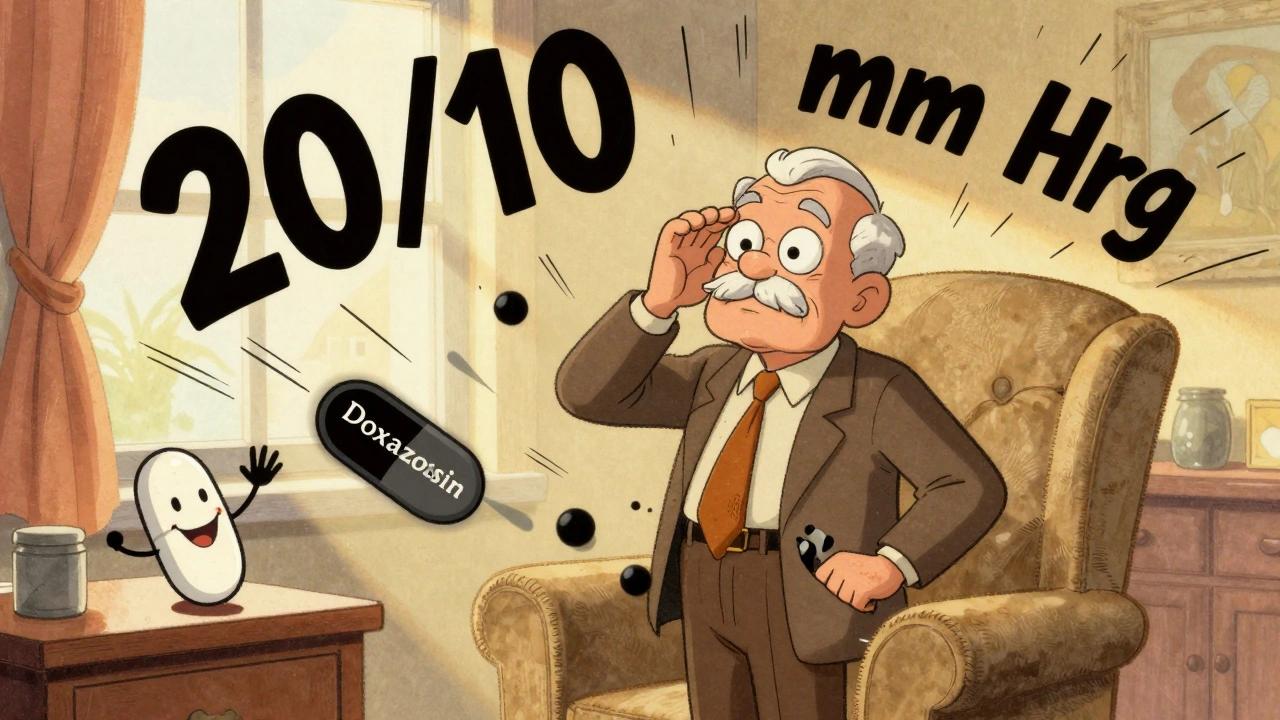
Standing up from a chair and feeling dizzy? That’s not just aging-it could be a dangerous side effect of your blood pressure medication. For older adults, orthostatic hypotension is a silent risk hiding in plain sight. It’s when your blood pressure drops too fast after standing, leaving you lightheaded, unsteady, or even falling. And here’s the twist: the very drugs meant to protect your heart might be making this worse.
What Exactly Is Orthostatic Hypotension?
Orthostatic hypotension isn’t just a quick dizzy spell. It’s a measurable drop in blood pressure-20 mm Hg in systolic or 10 mm Hg in diastolic-within three minutes of standing. This isn’t rare. Between 3% and 26% of older adults with high blood pressure experience it. That’s up to 1 in 4 people on antihypertensives. The risk climbs with age because the body’s natural blood pressure regulators slow down. Baroreflexes don’t snap back as fast. Blood vessels don’t tighten as quickly. The heart doesn’t pump as hard when you stand.What makes this dangerous? Falls. One fall in an older adult can lead to a broken hip, a hospital stay, or even death. And yet, many doctors and patients still believe that lowering blood pressure too much causes this problem. The truth? It’s the opposite.
Which Blood Pressure Drugs Carry the Highest Risk?
Not all blood pressure medications are created equal when it comes to orthostatic hypotension. Some are far more likely to trigger it than others.- Alpha blockers (like doxazosin, terazosin): These are the biggest culprits. Up to 28% of older adults taking them experience orthostatic hypotension. They relax blood vessels too much, especially when standing.
- Beta-blockers (like metoprolol, atenolol): These slow the heart rate and reduce cardiac output. Studies show they triple the risk of sustained low blood pressure when standing. Odds ratio: 3.36.
- Diuretics (like furosemide, hydrochlorothiazide): These drain fluid, which lowers blood volume. Less fluid means less pressure to maintain when you stand.
- Central sympatholytics (like clonidine): These act on the brain to reduce nerve signals that keep blood pressure up. They’re especially risky in frail seniors.
On the other hand, some drugs are much safer:
- ACE inhibitors (like lisinopril) and ARBs (like losartan): These have the lowest risk-only 8-10% of users develop orthostatic hypotension. In fact, multiple studies show they may actually help prevent it.
- Amlodipine and isradipine (calcium channel blockers): These are better tolerated than older CCBs like diltiazem. Amlodipine’s slow action means blood pressure drops gently, not suddenly.
Here’s the bottom line: If you’re on an alpha blocker or a beta-blocker and you’re dizzy when you stand, it’s not just "getting older." It’s a red flag.
Why More Aggressive Blood Pressure Control Might Be Safer
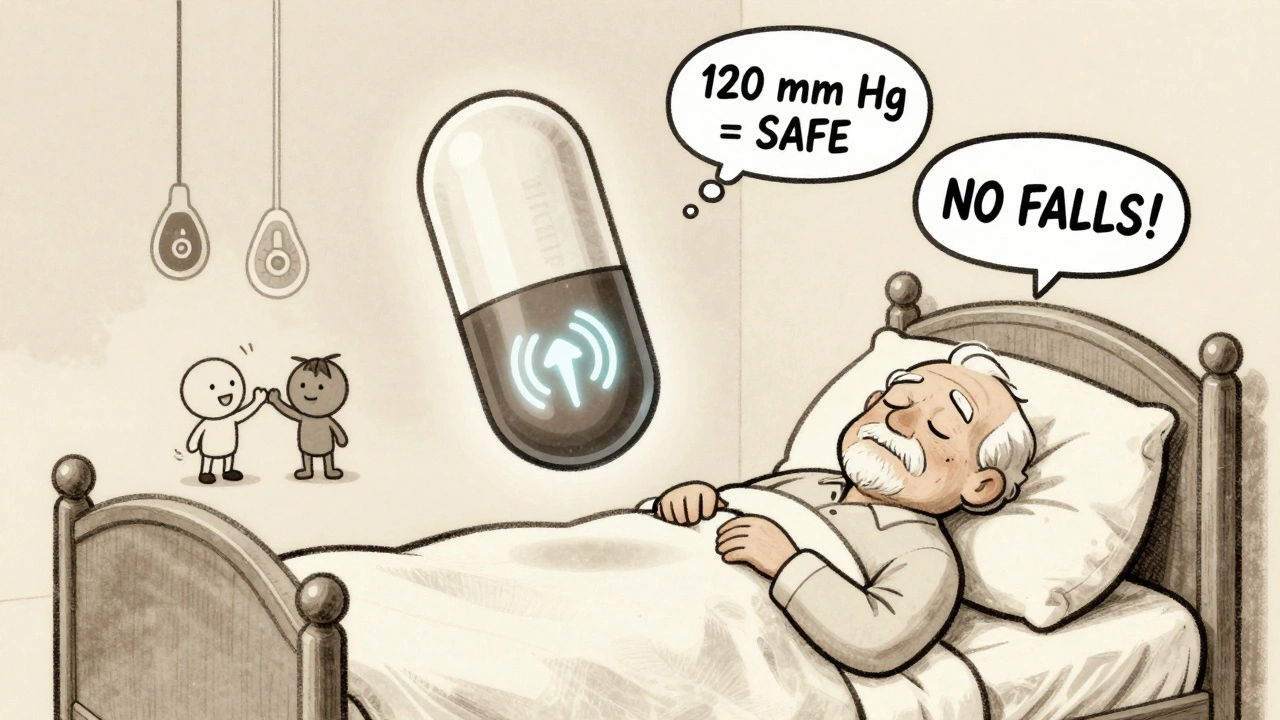
Here’s the part that surprises most people: treating high blood pressure more aggressively doesn’t increase orthostatic hypotension risk-it lowers it.The SPRINT trial, one of the largest studies ever done on elderly hypertension, compared two groups: one aiming for systolic blood pressure below 120 mm Hg, the other below 140 mm Hg. The intensive group had no more episodes of orthostatic hypotension than the standard group. In fact, a meta-analysis of 18,000 patients showed that tighter control reduced orthostatic hypotension risk by 17%.
Why? Because uncontrolled high blood pressure damages the baroreflex system over time. When you bring it under control with the right meds, the system starts to recover. It’s not the low number that’s dangerous-it’s the wild swings and chronic high pressure that break your body’s ability to adapt.
So if your doctor says, "We’re lowering your blood pressure because you’re at risk for falls," they’re working from outdated thinking. The evidence now says: treat high blood pressure properly, and you reduce fall risk.
What to Do If You’re Dizzy When You Stand
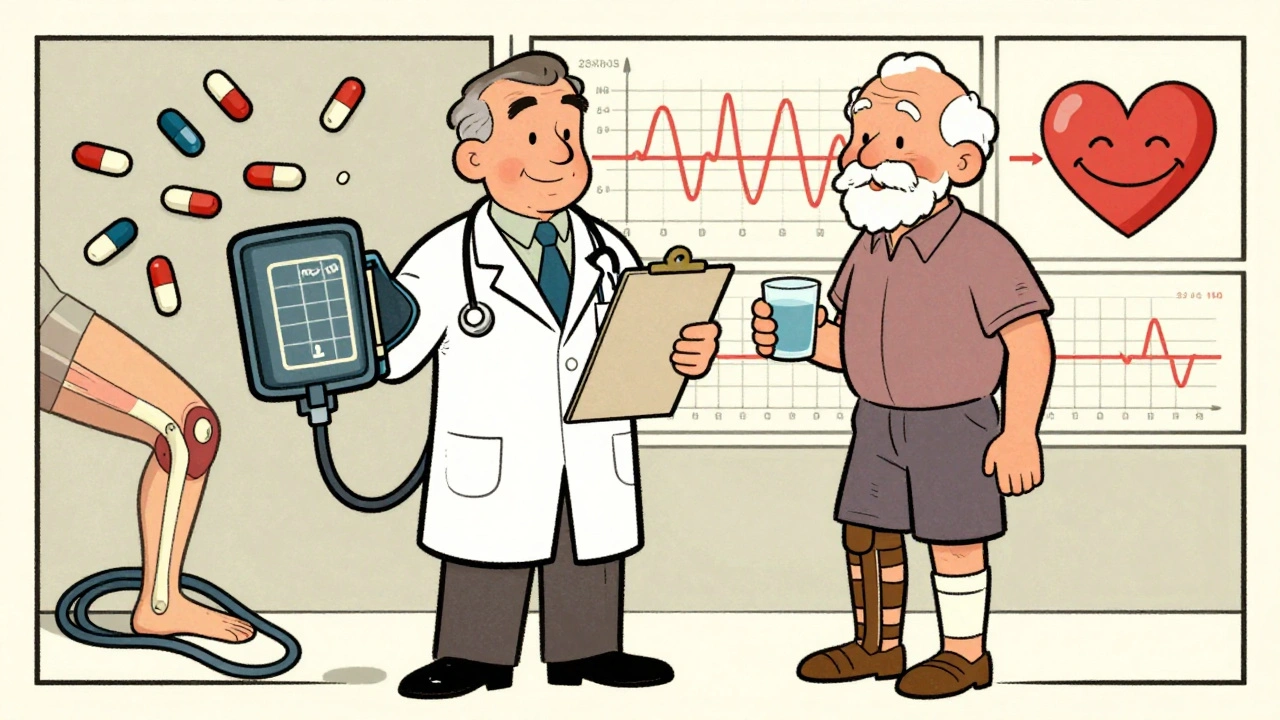
If you’re experiencing dizziness, blurred vision, or weakness when standing, don’t ignore it. Don’t just stop your meds. Don’t assume it’s normal. Here’s what to do:- Track your symptoms. Write down when it happens: after meals? After urinating? When you stand up fast? This helps your doctor spot patterns.
- Get your blood pressure checked standing and lying down. A single reading won’t cut it. You need two measurements: one after lying for 5 minutes, then one right after standing. A drop of 20/10 mm Hg confirms orthostatic hypotension.
- Ask for a medication review. Bring a full list of everything you take-prescriptions, supplements, even over-the-counter painkillers. Some NSAIDs and antidepressants can make this worse.
- Ask about switching meds. If you’re on an alpha blocker or beta-blocker, ask if an ACE inhibitor or ARB could work instead. Many seniors feel better after the switch-up to 65% report less dizziness and fewer falls.
Non-Medication Strategies That Actually Work
Medication changes are key-but they’re not the whole story. Simple daily habits can cut your risk dramatically.- Stand up slowly. Don’t jump out of bed. Sit on the edge for 30 seconds. Then stand for another 30 seconds before walking.
- Drink water before standing. Dehydration makes orthostatic hypotension worse. A glass of water before getting up can help maintain blood volume.
- Wear compression stockings. These help push blood back up from your legs, reducing the drop when you stand. They’re not glamorous, but they work.
- Elevate the head of your bed. Raising the head by 6-10 inches helps reduce nighttime blood pressure spikes and improves morning stability.
- Avoid large meals and hot showers. Both can cause blood to pool in your belly or skin, lowering pressure. Eat smaller meals. Keep showers lukewarm.
These aren’t "nice to have" tips. They’re clinical recommendations backed by the European Society of Cardiology and the American Heart Association. Patients who follow them see improvement in 2-4 weeks.
When Medication Is Still Needed-And What’s New
Some people still need drugs to manage symptoms. If lifestyle changes aren’t enough, your doctor might consider:- Midodrine (Orvaten): A vasoconstrictor that tightens blood vessels. Works quickly but needs multiple daily doses.
- Droxidopa (Northera): Converts to norepinephrine to boost blood pressure. Approved for neurogenic orthostatic hypotension.
- Fludrocortisone: Helps retain salt and water to increase blood volume. Can cause swelling or high blood pressure when lying down.
These are not first-line treatments. They’re for when the root cause-medication or physiology-can’t be fixed any other way.
And there’s new hope on the horizon. Two experimental drugs currently in Phase II trials are designed to release their effect only when you’re standing-not when you’re lying down. Imagine a pill that knows your posture. It’s not science fiction anymore.
What Your Doctor Should Be Doing
The American Geriatrics Society Beers Criteria (2023 update) says this clearly: Alpha blockers and certain beta-blockers are potentially inappropriate for older adults with orthostatic hypotension. That means doctors should avoid starting them in seniors unless there’s no other option.Yet, many still do. Why? Outdated training. Fear of uncontrolled hypertension. Lack of time for medication reviews.
Here’s what good care looks like:
- Review all medications at least once a year-especially after a fall or dizziness episode.
- Use ACE inhibitors or ARBs as first-line for seniors, especially if they have diabetes or kidney disease.
- Check standing blood pressure at every visit if the patient is over 70 and on antihypertensives.
- Don’t reduce or stop antihypertensives just because orthostatic hypotension is present-if the patient is asymptomatic. The real danger is uncontrolled supine hypertension, not the standing drop.
That last point is critical. Dr. Harry Goldblatt from Case Western Reserve says it best: "The problem isn’t the standing blood pressure. It’s the supine hypertension." Lowering your blood pressure too much at night might be what’s really harming you.
Final Takeaway: It’s Not About Lowering Blood Pressure-It’s About Managing It Wisely
High blood pressure in older adults isn’t a problem to be solved with one-size-fits-all pills. It’s a balancing act. The goal isn’t to get your number as low as possible. It’s to keep you safe, steady, and active.Orthostatic hypotension isn’t inevitable. It’s often preventable. By choosing the right medications, making small daily changes, and asking the right questions, you can protect your heart without putting your balance at risk.
If you or a loved one is on blood pressure meds and feels dizzy when standing, don’t wait. Talk to your doctor. Ask: "Could this be from my medication?" "Is there a safer alternative?" "Should we check my standing blood pressure?"
Because living longer shouldn’t mean living in fear of your next step.
Is orthostatic hypotension a normal part of aging?
No, it’s not normal. While the risk increases with age due to natural changes in blood pressure regulation, orthostatic hypotension is often caused or worsened by medications-not just aging. Many seniors experience it because they’re on drugs like alpha blockers or beta-blockers that aren’t the best choice for their condition. It’s treatable and often preventable.
Should I stop my blood pressure medicine if I feel dizzy when standing?
Never stop your medication on your own. Stopping abruptly can cause dangerous spikes in blood pressure, especially when lying down. Instead, talk to your doctor. They can check your standing and lying blood pressure, review your meds, and switch you to a safer option like an ACE inhibitor or ARB if needed.
Which blood pressure meds are safest for older adults?
ACE inhibitors (like lisinopril) and ARBs (like losartan) have the lowest risk of causing orthostatic hypotension. Amlodipine and isradipine (calcium channel blockers) are also safer choices than older CCBs like diltiazem. Avoid alpha blockers (doxazosin, terazosin) and most beta-blockers (metoprolol, atenolol) if you’re at risk for falls or dizziness.
Can lifestyle changes help with orthostatic hypotension?
Yes, and they’re essential. Stand up slowly, drink water before getting up, wear compression stockings, elevate the head of your bed, avoid large meals and hot showers, and stay hydrated. These steps can reduce dizziness in 2-4 weeks and often work better than adding more drugs.
Is it true that treating high blood pressure too aggressively can cause more falls?
No, that’s a myth. The SPRINT trial and multiple meta-analyses show that more intensive blood pressure control (targeting below 120 mm Hg) does not increase fall risk. In fact, it reduces orthostatic hypotension risk by 17%. The real danger is leaving high blood pressure untreated, which damages blood vessels and increases stroke and heart attack risk.
How often should older adults have their blood pressure checked in standing and lying positions?
At least once a year if you’re over 70 and on blood pressure medication. If you’ve had dizziness, falls, or recent medication changes, check every 3-6 months. Don’t wait for symptoms-many people adapt to dizziness and don’t report it until they fall.
Elizabeth Crutchfield
December 5, 2025 AT 00:39i literally stood up from my couch yesterday and saw stars 😅 thought i was gonna pass out. my dr just said "you're getting older" but this post? game changer. i'm calling them monday to ask about switching from doxazosin.
Ben Choy
December 6, 2025 AT 20:06Finally! Someone said it out loud. My mum’s on metoprolol and has fallen twice this year. We’ve been begging her doctor to switch her to losartan-no luck. She’s 78, active, hates the dizziness. This post gave me the courage to push harder. Thank you for the SPRINT trial cite-that’s the ammo we need.
Jenny Rogers
December 8, 2025 AT 13:56It is imperative to underscore that the pathological manifestation of orthostatic hypotension in geriatric populations is not an inevitable consequence of senescence, but rather an iatrogenic artifact of pharmacological mismanagement. The conflation of normative age-related physiological decline with medication-induced hemodynamic instability constitutes a profound epistemological error in contemporary clinical practice. The SPRINT trial, while methodologically robust, does not negate the cardinal principle of therapeutic nihilism in the context of polypharmacy. One must interrogate the ontological assumptions underlying the normalization of pharmacological intervention in the elderly. The body is not a machine to be calibrated; it is a dynamic system requiring ontological respect, not dosage adjustments.
zac grant
December 9, 2025 AT 22:10Big picture: orthostatic hypotension in older adults is a baroreflex dysfunction + medication synergy problem. Alpha-blockers? Big red flag. Beta-blockers? Double red flag. ACEi/ARBs? Gold standard. The real win is that aggressive BP control actually improves baroreflex sensitivity over time-your body relearns how to regulate. Compression stockings + hydration + slow stands = 70% symptom reduction in clinical cohorts. This isn't anecdotal-it's guideline-grade. If your doc isn't checking standing BP annually after 70, find a new one.
michael booth
December 10, 2025 AT 13:56Carolyn Ford
December 11, 2025 AT 00:05Heidi Thomas
December 12, 2025 AT 18:56Alex Piddington
December 14, 2025 AT 17:35Thank you for this comprehensive overview. As a geriatric nurse practitioner, I see this daily. Many patients are on outdated regimens because of inertia in prescribing. The most powerful intervention isn't a new drug-it's the simple act of asking: "When was the last time we checked your standing BP?" We need systemic change: standing BP checks at every visit for seniors on antihypertensives should be standard of care. And yes, midodrine has its place-but only after first-line optimization. Let's stop blaming aging and start optimizing care.
Libby Rees
December 15, 2025 AT 22:26