
Arrhythmia Procedures: Catheter Ablation and Device Therapy Explained
 Jan, 16 2026
What Happens When Your Heart Skips a Beat?
When your heart doesn’t beat in a steady rhythm, it’s not just a flutter you feel in your chest-it can be life-changing. Arrhythmias like atrial fibrillation (AFib) cause irregular, often rapid heartbeats that leave people tired, dizzy, and anxious. For many, medications help-but they don’t fix the root problem. That’s where catheter ablation and device therapy come in. These aren’t last-resort options anymore. They’re now standard, proven ways to restore normal rhythm and improve quality of life.
Catheter Ablation: Turning Off the Faulty Wiring
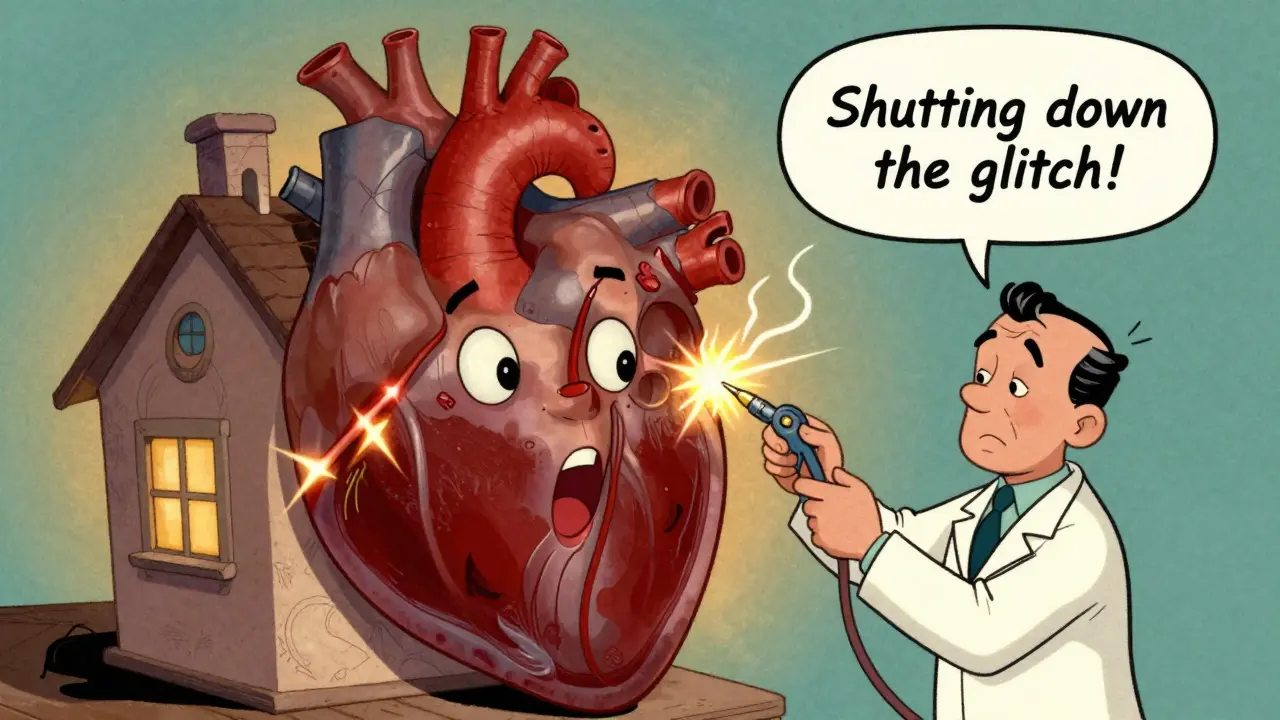
Think of your heart like a house with faulty electrical wiring. Sometimes, extra signals start firing in the wrong places, making the heart race or flutter. Catheter ablation finds those bad signals and shuts them down.
A thin, flexible tube (a catheter) is threaded through a vein in your leg or arm, up to your heart. Once in place, it delivers energy-either heat (radiofrequency) or extreme cold (cryoablation)-to scar a tiny area of tissue. This scar blocks the abnormal electrical path. The goal? Stop the arrhythmia before it starts.
The most common target is the pulmonary veins, where AFib usually begins. A procedure called pulmonary vein isolation (PVI) surrounds each vein with a ring of scar tissue, trapping the faulty signals. It’s not surgery. No cuts. No open chest. Most people go home the same day or the next.
Which Energy Works Best? Radiofrequency vs. Cryoablation
Not all ablation tools are the same. Two main types dominate today’s clinics:
- Radiofrequency ablation uses heat, typically around 50-70°C. Modern catheters like the THERMOCOOL SMARTTOOTH a radiofrequency catheter with contact force sensing and Ablation Index technology measure how firmly the tip touches the heart wall. Too little contact? The lesion won’t stick. Too much? You risk damaging tissue. The Ablation Index combines contact force, time, and power into one number-giving doctors a real-time score for how effective each burn is.
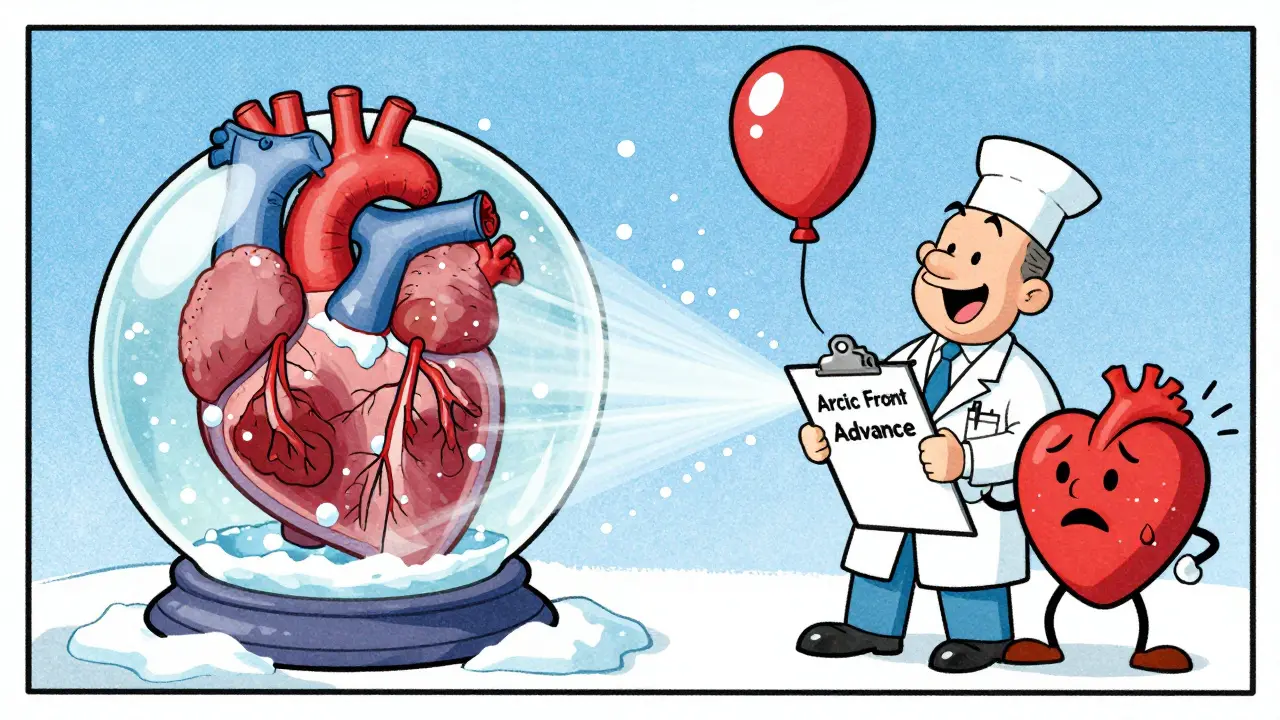
- Cryoablation freezes tissue at -55°C to -65°C using a balloon catheter filled with nitrous oxide. The Arctic Front Advance a cryoballoon system by Medtronic for pulmonary vein isolation freezes all four pulmonary veins at once. It’s faster-about 90 to 120 minutes-and has a shorter learning curve for doctors.
Studies show radiofrequency with contact force has a 71% success rate at 12 months, compared to 58-65% for older methods. Cryoablation is slightly less effective but safer for some patients because it doesn’t risk damaging the esophagus. Both are better than drugs alone.
Why Ablation Beats Medication for Many Patients
Doctors used to start with pills-beta-blockers, antiarrhythmics, blood thinners. But drugs don’t cure arrhythmias. They just mask them. And they come with side effects: fatigue, dizziness, even worsening heart rhythm.
A 2020 analysis of nearly 1,800 patients found ablation cut arrhythmia recurrence by 58% compared to drugs. For people with heart failure and AFib, the benefit was even bigger: a 48% drop in death risk. Another study showed patients who had ablation improved their heart pumping ability by over 5%-something drugs rarely do.
And it’s not just physical. Many patients report less anxiety. One man on Reddit said, “After my second ablation, I went from daily palpitations to zero episodes in nine months. The mental relief? That’s priceless.”
Device Therapy: Pacemakers and ICDs for When Ablation Isn’t Enough
Not every arrhythmia can be fixed by burning or freezing tissue. Some hearts need help keeping a steady rhythm. That’s where devices come in.
- Pacemakers are small generators implanted under the skin, usually near the collarbone. They send tiny electrical pulses to make the heart beat when it’s too slow. Used for bradycardia or heart block.
- Implantable Cardioverter Defibrillators (ICDs) do more. They monitor for dangerous fast rhythms like ventricular tachycardia or fibrillation. If one starts, the device delivers a shock to reset the heart. It’s like having a personal emergency responder inside your chest.
These aren’t replacements for ablation-they’re partners. Some patients get ablation first. If the rhythm still crashes, then an ICD is added. Others, especially those with heart failure, get both at the same time.
What You Can Expect During and After the Procedure
Before the procedure, you’ll fast overnight. You’ll get sedation-not full anesthesia-so you’re relaxed but awake. The procedure takes 2 to 4 hours. You might feel pressure when the catheter moves, but not pain.
Afterward, you’ll lie flat for a few hours to prevent bleeding at the entry site. Most people go home the next day. You’ll feel sore for a few days. Avoid heavy lifting for a week. Some people have mild chest discomfort or skipped beats for a few weeks-that’s normal as the heart heals.
Success isn’t always instant. About 20% of patients need a second procedure, especially if they have persistent AFib. But after two attempts, over 80% are free from arrhythmias without drugs.
Cost, Access, and the Future
Catheter ablation costs between $16,000 and $21,000 in the U.S. That sounds high. But over time, it saves money. Fewer hospital visits. Fewer drugs. Less time off work. Studies show it pays for itself in 3 to 8 years.
Access is still uneven. Urban hospitals have the tech and trained teams. Rural areas? Only 40% as many centers. That’s a real problem. If you’re in a small town and need this, ask your doctor about referrals to regional electrophysiology centers.
What’s next? Pulsed field ablation (PFA) is coming fast. It uses electric pulses instead of heat or cold. Early results show 86% success in 12 months-with almost no risk to nearby organs like the esophagus. The Farapulse system got FDA approval in 2023. It’s faster too: under 80 minutes. By 2025, AI tools will help doctors see exactly where lesions are forming in real time.
Who Should Consider This?
You’re a good candidate if:
- You have symptoms like palpitations, shortness of breath, or fatigue from AFib
- Medications didn’t work or caused bad side effects
- You have heart failure and AFib-this combo sees the biggest survival benefit
- You’re young and active and want to get back to full life without drugs
You might not be a good fit if:
- Your arrhythmia is very mild and doesn’t bother you
- You have severe lung or kidney disease that makes the procedure risky
- You’re not willing to accept a small chance of complications
Complications Are Rare-But Real
Major complications happen in about 8% of cases. The most serious is cardiac tamponade-bleeding around the heart. It occurs in 1.2% of procedures and needs emergency drainage. Other risks include stroke (under 1%), phrenic nerve injury (1.5-3% with cryoablation), and damage to the esophagus (rare with radiofrequency).
But here’s the key: these risks drop sharply with experienced teams. Centers that do more than 100 ablations a year have half the complication rate of low-volume centers. Ask your doctor: “How many of these do you do each year?”
Real Stories, Real Results
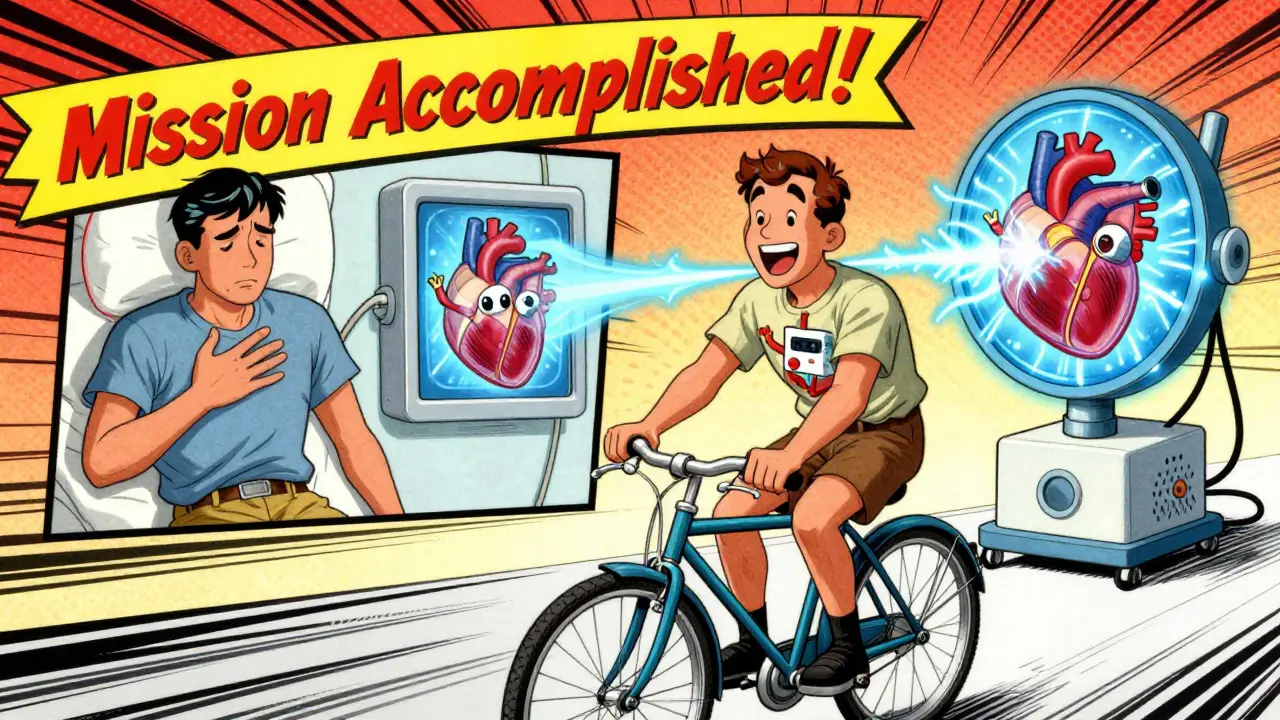
John, 58, had persistent AFib for five years. He tried three drugs. Each made him more tired. He couldn’t ride his bike anymore. After cryoballoon ablation in March 2022, he was free of AFib. He stopped all meds. By June, he was back in a cycling race.
Another patient, Lisa, 67, had heart failure and AFib. Her ejection fraction was 28%. After ablation, it jumped to 35%. Her doctor said, “You’re not just living longer-you’re living better.”
These aren’t outliers. They’re the new normal.
Is catheter ablation considered surgery?
No. Catheter ablation is a minimally invasive procedure, not open-heart surgery. It’s done through small incisions in the groin or neck, using thin tubes (catheters) guided to the heart. There are no large cuts, no ribs opened, and no general anesthesia. Recovery is much faster than with surgery.
How long does it take to recover from ablation?
Most people go home the day after the procedure. You’ll feel tired for a few days and may have mild chest discomfort. Avoid heavy lifting or strenuous activity for about a week. It can take up to 3 months for the heart tissue to fully heal, and some people experience occasional skipped beats during that time. This is normal. Full recovery means returning to your usual energy levels and being free from arrhythmia symptoms.
Will I still need to take blood thinners after ablation?
Yes-for at least 2 to 3 months after the procedure. Even if your rhythm is normal, the heart tissue is healing and can still form clots. Your doctor will assess your stroke risk using tools like CHA₂DS₂-VASc. If your risk remains high, you may need to stay on blood thinners long-term, regardless of whether you have AFib episodes.
Can arrhythmia come back after ablation?
Yes, in about 20% of cases, especially with persistent AFib. The heart can heal in ways that create new abnormal pathways. A second ablation is common and often successful. After two procedures, over 80% of patients remain free from arrhythmias without drugs. Success rates are higher with contact force catheters and experienced centers.
Is ablation better than a pacemaker?
They serve different purposes. Ablation treats fast, irregular rhythms like AFib by fixing the electrical problem. A pacemaker treats slow heart rates by making the heart beat when it doesn’t. Some people need both: ablation to stop AFib, and a pacemaker to keep the heart from beating too slowly afterward. One doesn’t replace the other-they’re tools for different problems.
What’s the success rate for atrial fibrillation ablation?
For paroxysmal AFib (episodes that start and stop on their own), success is about 70-80% after one procedure. For persistent AFib (longer episodes), it’s 60-70%. With a second procedure, success jumps to 80-85%. Newer technologies like contact force catheters and pulsed field ablation are pushing those numbers even higher.
Next Steps: What to Do If You’re Considering This
If you’re tired of medications, feel your heart racing for no reason, or have been told you have AFib with heart failure, talk to a cardiac electrophysiologist-not just your general cardiologist. Ask:
- Do you use contact force catheters and Ablation Index?
- How many ablations do you perform each year?
- Do you offer cryoablation or radiofrequency? Which do you recommend for me?
- What’s your complication rate?
Don’t accept “we’ll try drugs first” as the only answer. If your symptoms are affecting your life, ablation is a valid first option. The evidence is clear: for many, it’s not just better-it’s life-changing.
Jody Fahrenkrug
January 17, 2026 AT 03:53Also, the recovery was way easier than I thought. Just took it easy for a week and boom - back to normal.
Samyak Shertok
January 17, 2026 AT 16:03Stephen Tulloch
January 17, 2026 AT 19:51And cryoablation? Cute. But if your doc doesn’t know the difference between lesion depth and contact force, you’re just a guinea pig with insurance. Don’t be that guy.
Joie Cregin
January 18, 2026 AT 20:35And hey - if you’re scared, talk to someone who’s been there. You’re not alone.
Rob Deneke
January 19, 2026 AT 19:35Chelsea Harton
January 21, 2026 AT 09:37waneta rozwan
January 21, 2026 AT 13:57And don’t get me started on the cost. $20k for a ‘fix’ that fails 20% of the time? You’re not healing, you’re gambling. With your life.
Kasey Summerer
January 23, 2026 AT 12:11Bobbi-Marie Nova
January 24, 2026 AT 07:59Allen Davidson
January 25, 2026 AT 18:02And if you’re young and active - don’t wait. Do it now. Your future self will thank you.
john Mccoskey
January 26, 2026 AT 23:06